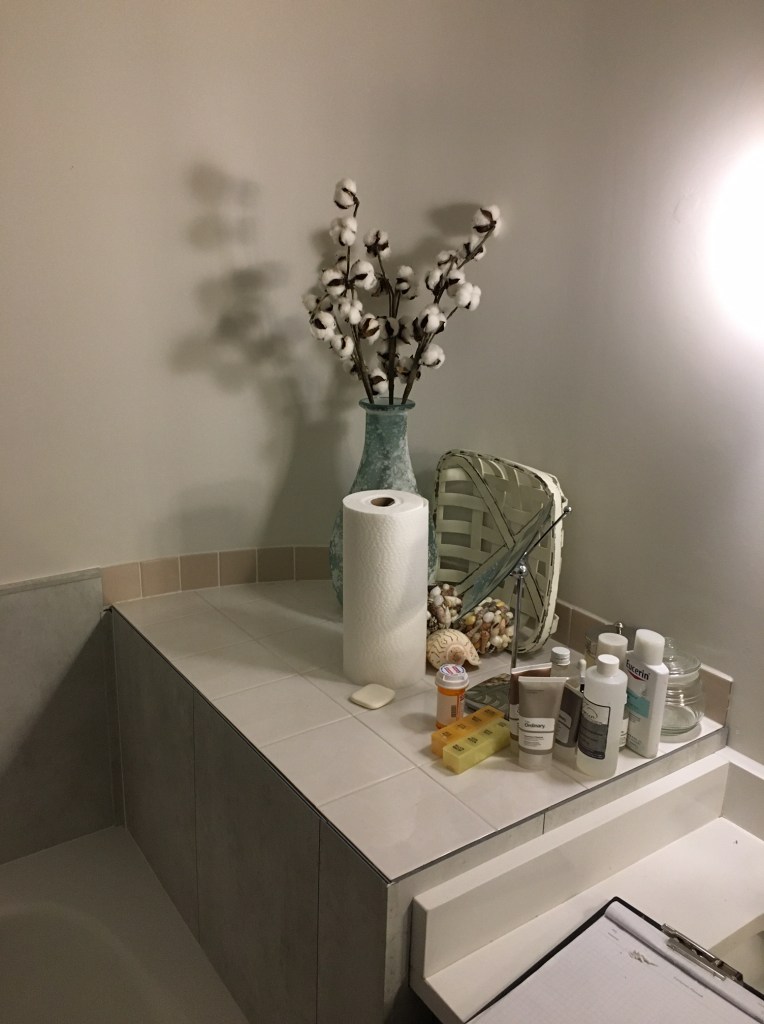
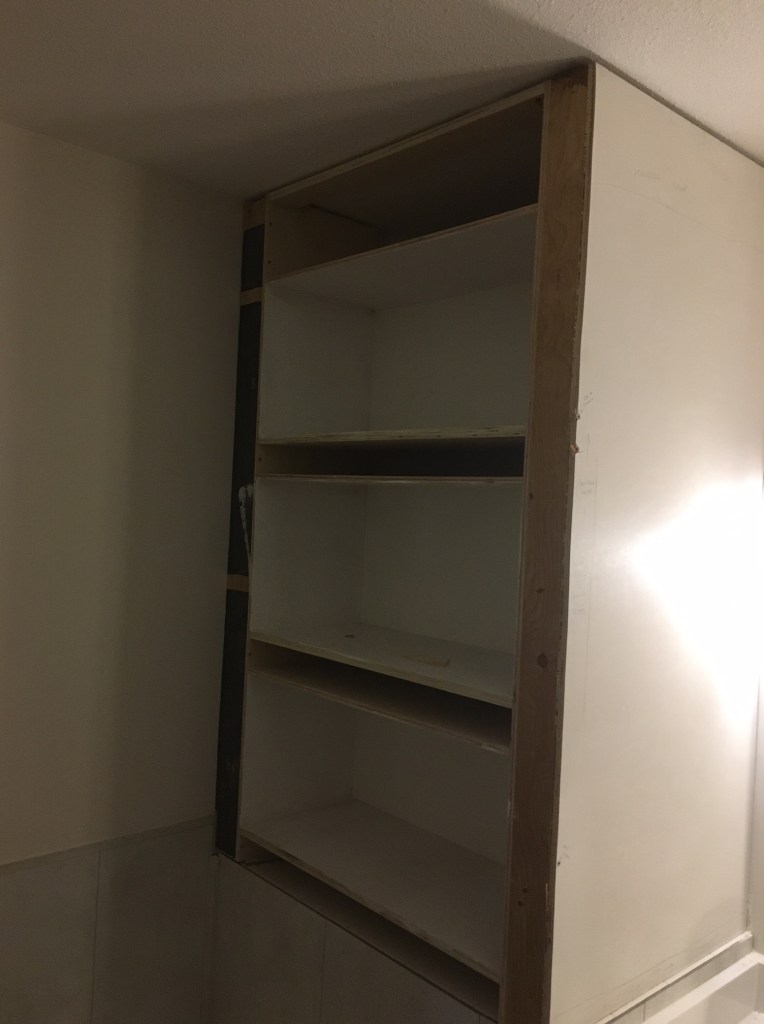
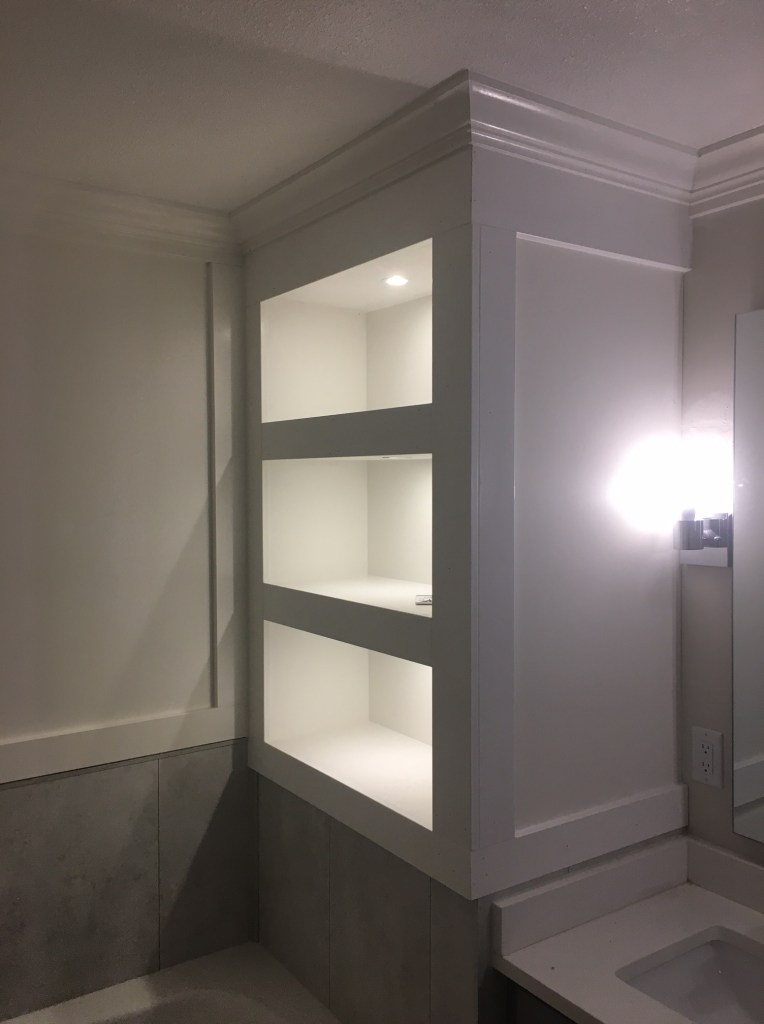
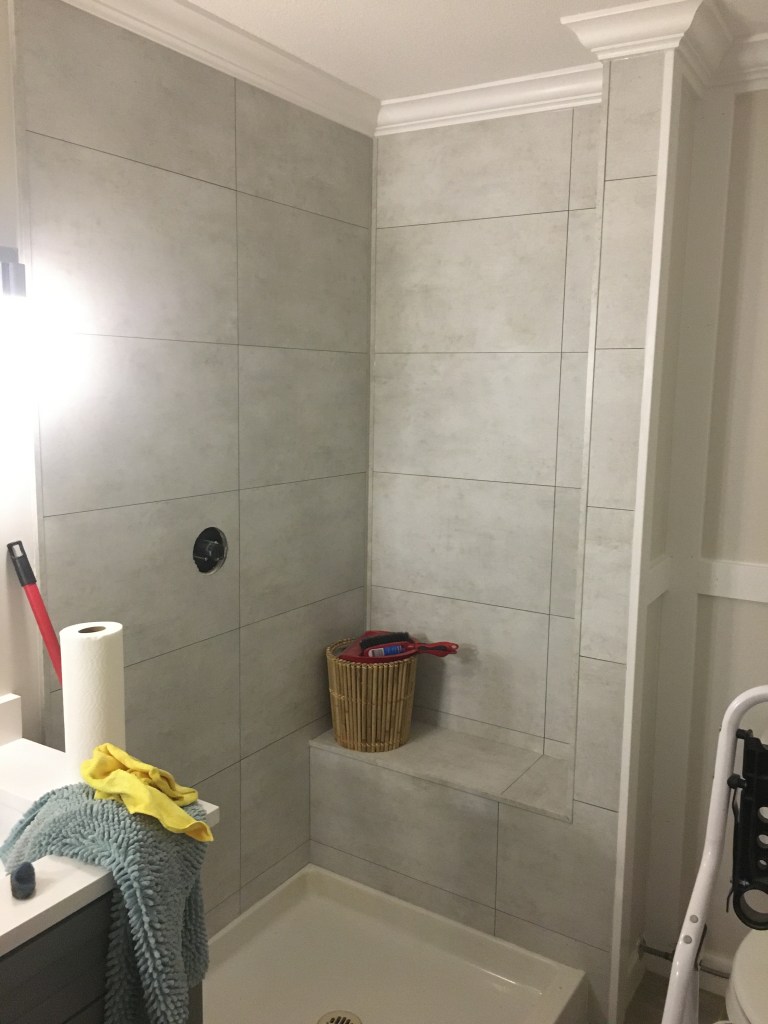
Pursuant to my previous post about PVC tiles, comes another update in the corner of the bathroom. There was a curved inside wall that my customer didn’t like; and the tiles needed to be covered up. So we put in a shelf. There is some dead space behind to account for the curve in the wall:
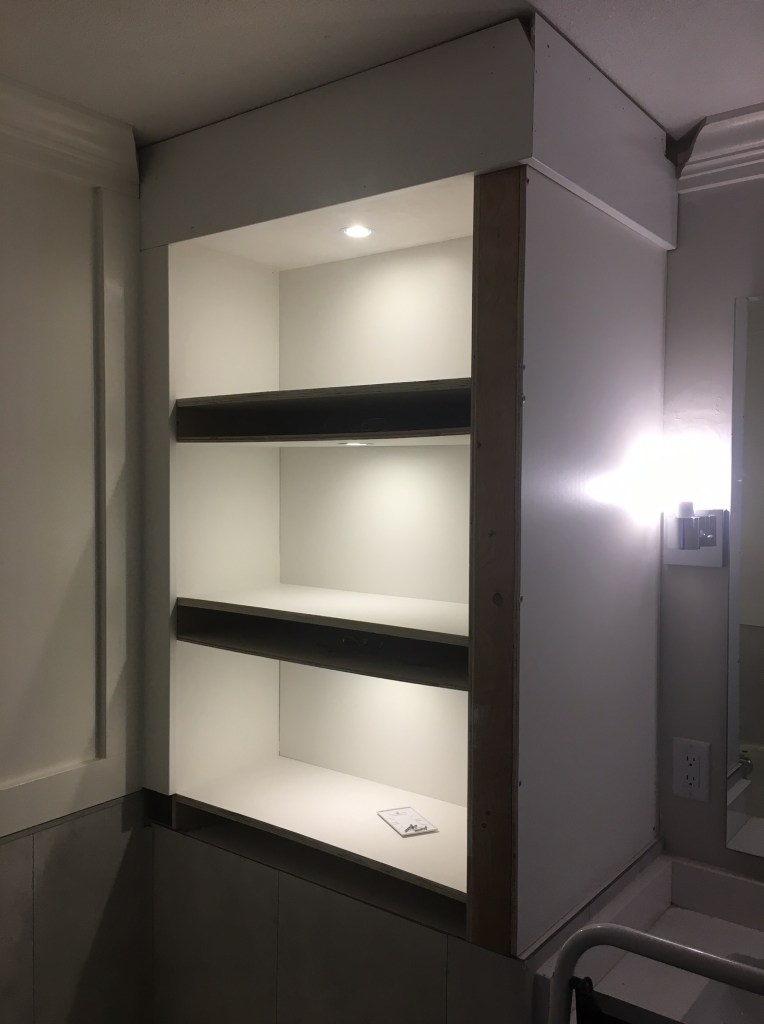
The panel, however, cut out some light so the bath area became darker. An electrician installed some pot lights in the shelf…it does help a bit. Finished off with more mouldings; and Tom will give it the final coat of paint!
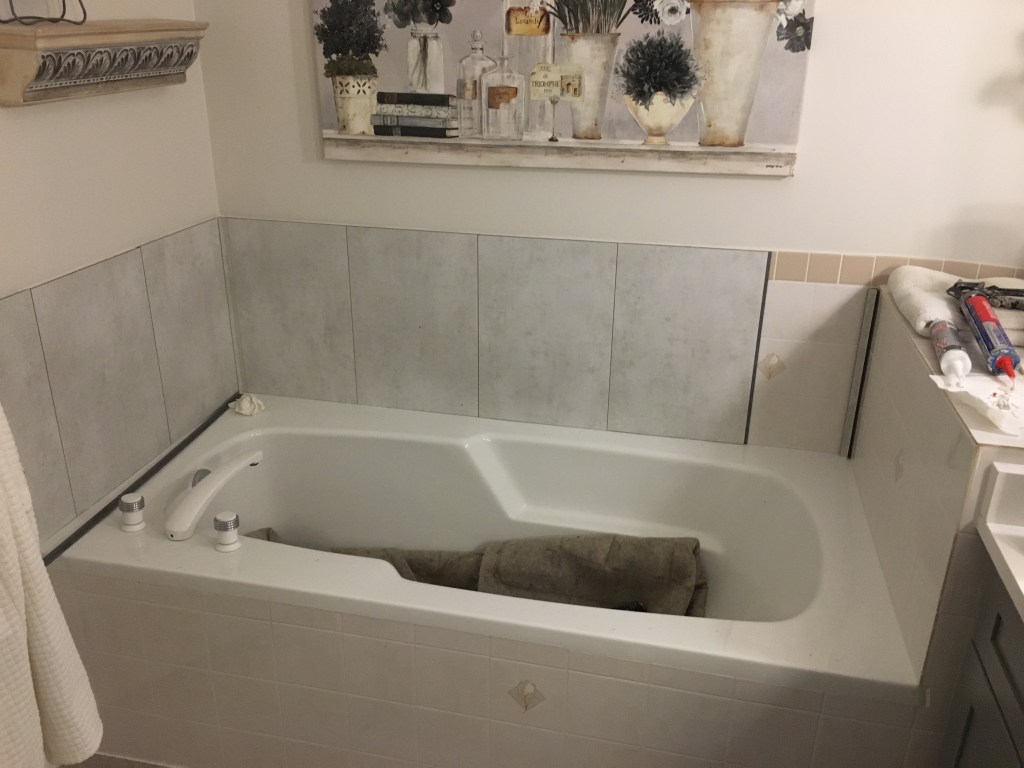
Joan wanted to update her bathroom, did some research and ordered a type of PVC tile from Dumawall. I installed them according to the instructions. It was such an easy product to work with – for the first project – the bathtub.
Before/During new tile installation
The reason they are so easy is because there is no prep other than to clean the existing tiles. They are glued on with Loctite. No grouting is needed as they interlock, similar to flooring. They provide a kit with inside and outside corners as well.
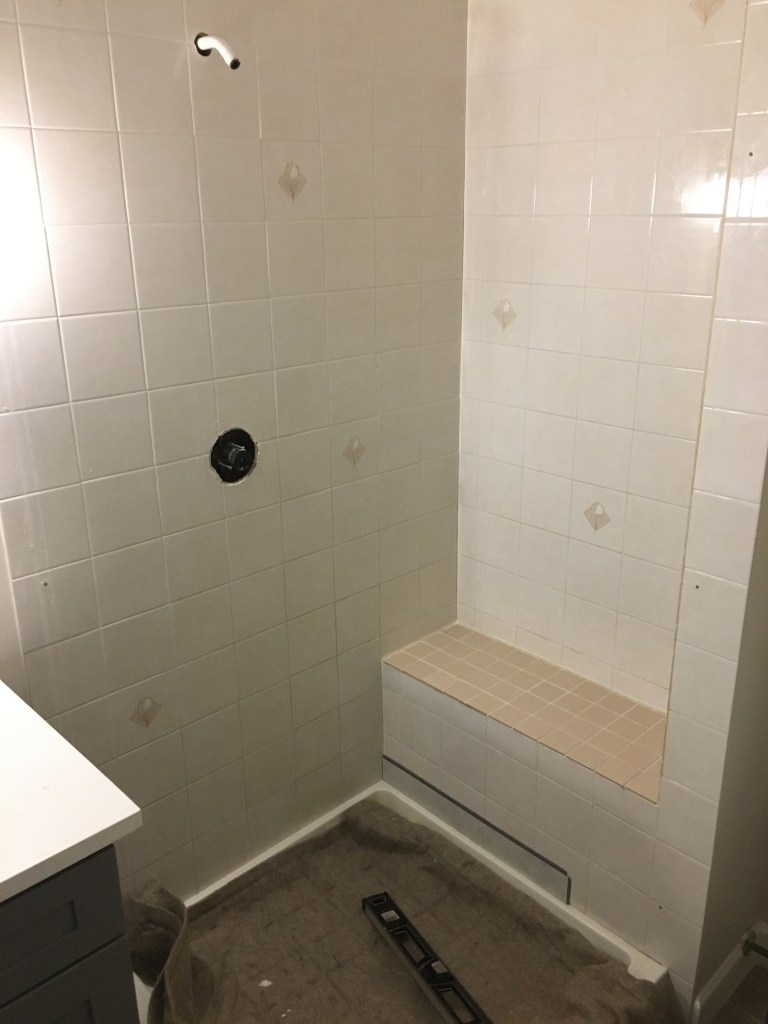
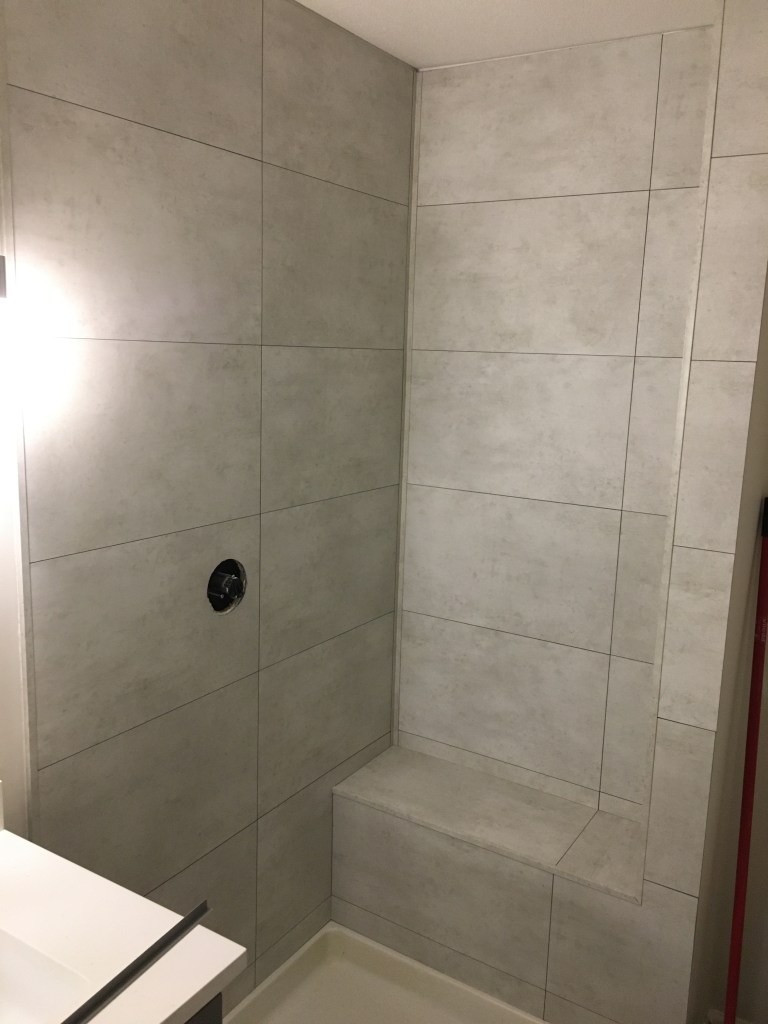
The shower was harder – but only because it had more corners (ie. the bench) and everything had to be levelled so carefully. That is the one issue I can see for DIYers–getting an area like this level. There is not much forgiveness with the 1/16″ gap between tiles–if you are out even an eighth of an inch, it will be very obvious by the time you get to the top of the shower! I put a bead of silicone behind the joints where there would be more water…and made sure to seal all the corners later as well.
Before and after tiling over shower
Lastly was some crown moulding 🙂 I don’t necessarily recommend putting it above a shower area, but have seen it done before with no issues, and with plenty of paint and caulking…should be just fine.
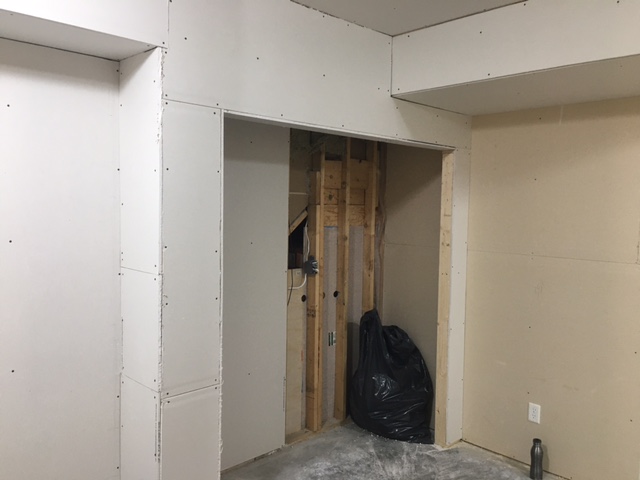
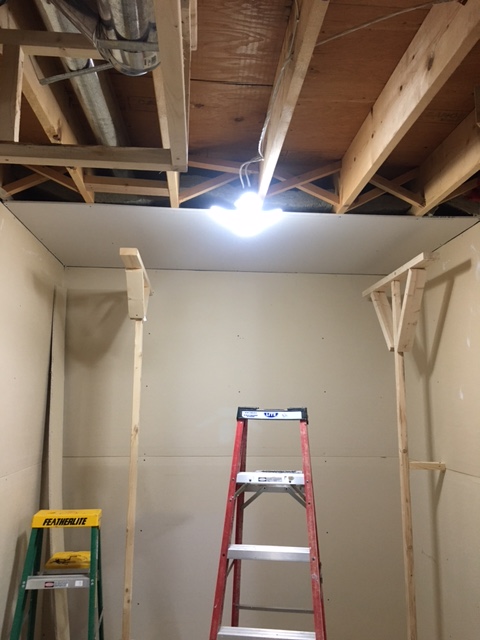
I recently did some work in a basement room for Gene and Susanne. They had a mostly unfinished basement storage room that they wanted to convert into an office. The first step was to frame some bulkheads in to cover up the plumbing etc. They also wanted a closet framed in one corner, which will get barn doors eventually. It was only a 200 sf room, but with 8.5′ ceilings and lots of corners and angles. Here are some pictures of the closet/bulkhead area:
They painted it and I am waiting to see what they want for flooring before I come back and install baseboards and casings.
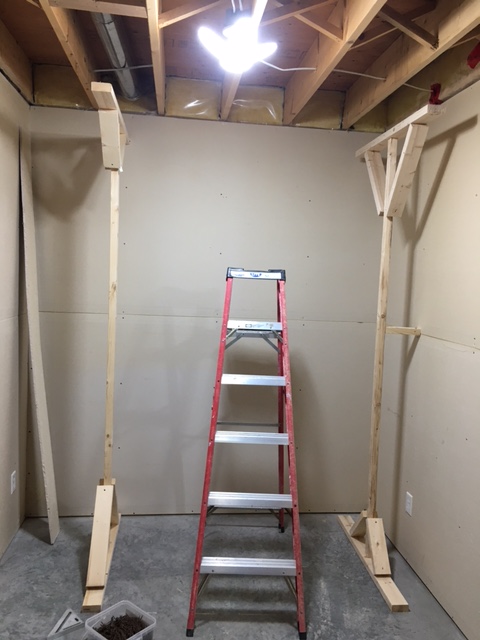
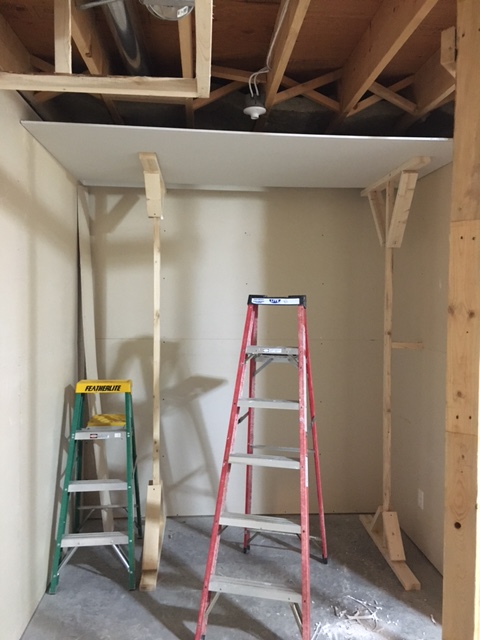
Also while boarding the ceiling, I tried a homemade lifter to hold the boards up. I had recently boarded a garage and struggled to hold the boards in place and screw them in — they are “lightweight” but that is still 40-50 lbs. So I screwed together a couple of stands:
Next I slid the board up on top. It was harder than I anticipated due to the tight fit of the room.
Now I just had to lift it 6″, and if I got tired, I could let it fall. (After I did a couple of these I added some blocks to squeeze the sheet in place to make it even easier.). When I was done I took apart the lifters and used the wood for other projects.
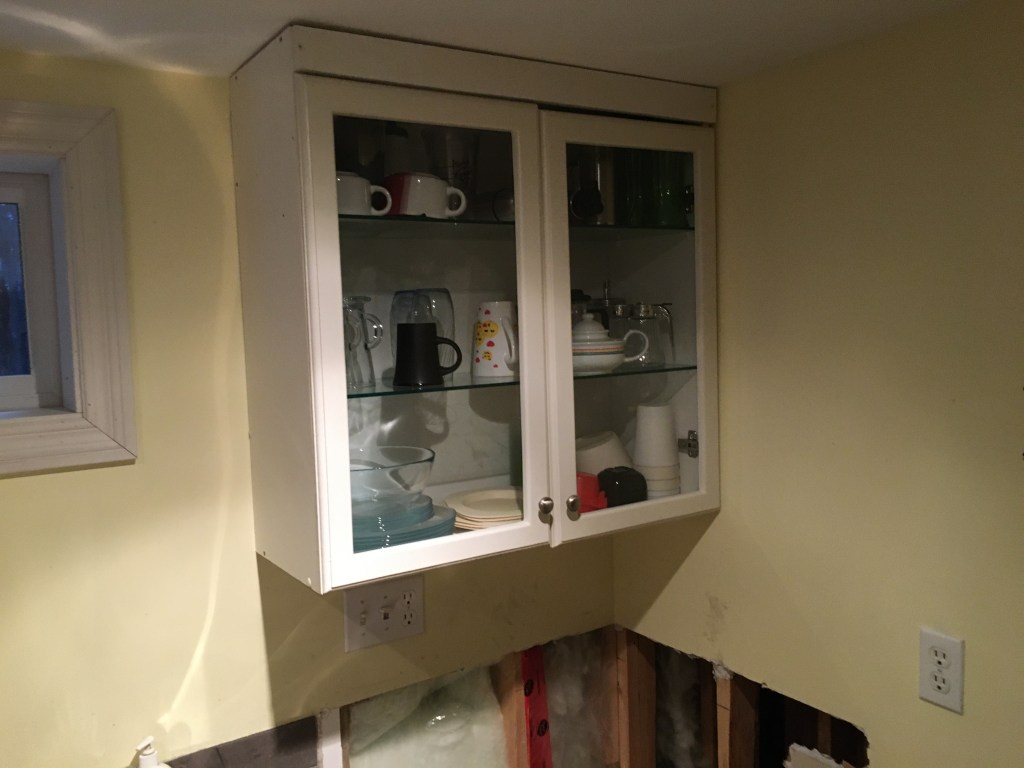
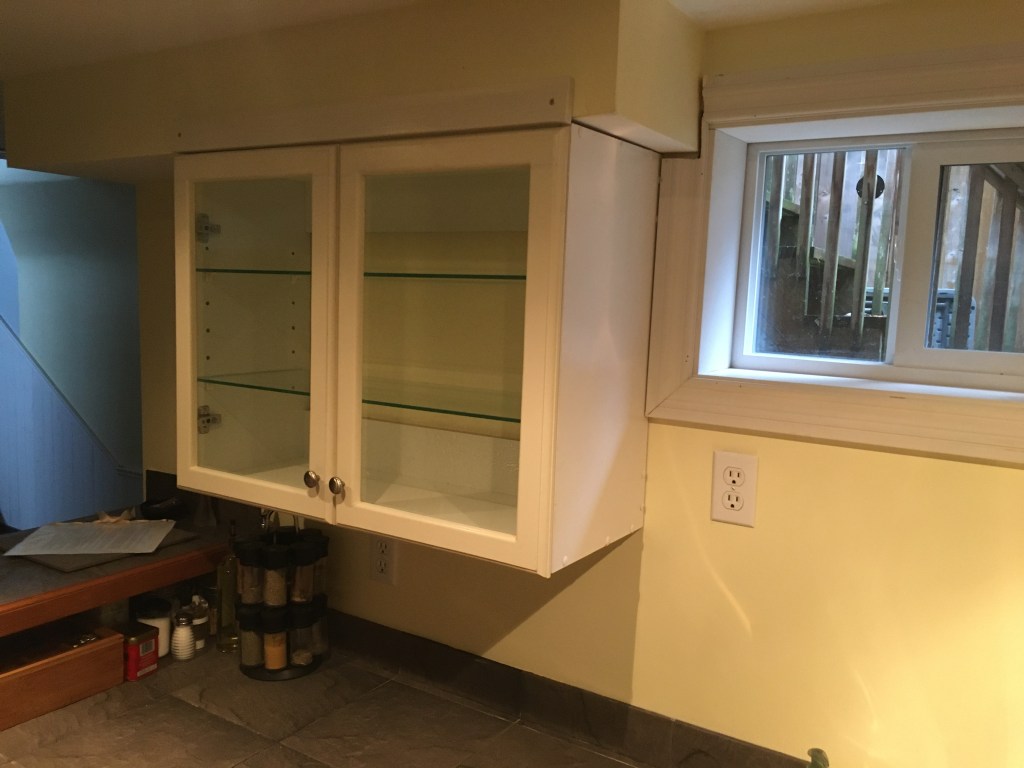
Debbie had a nice glass cabinet in her suite and wanted another one. She already had the shelves and the doors; the problem was that the doors were too big for the space where the new cabinet would go.
existing cabinet
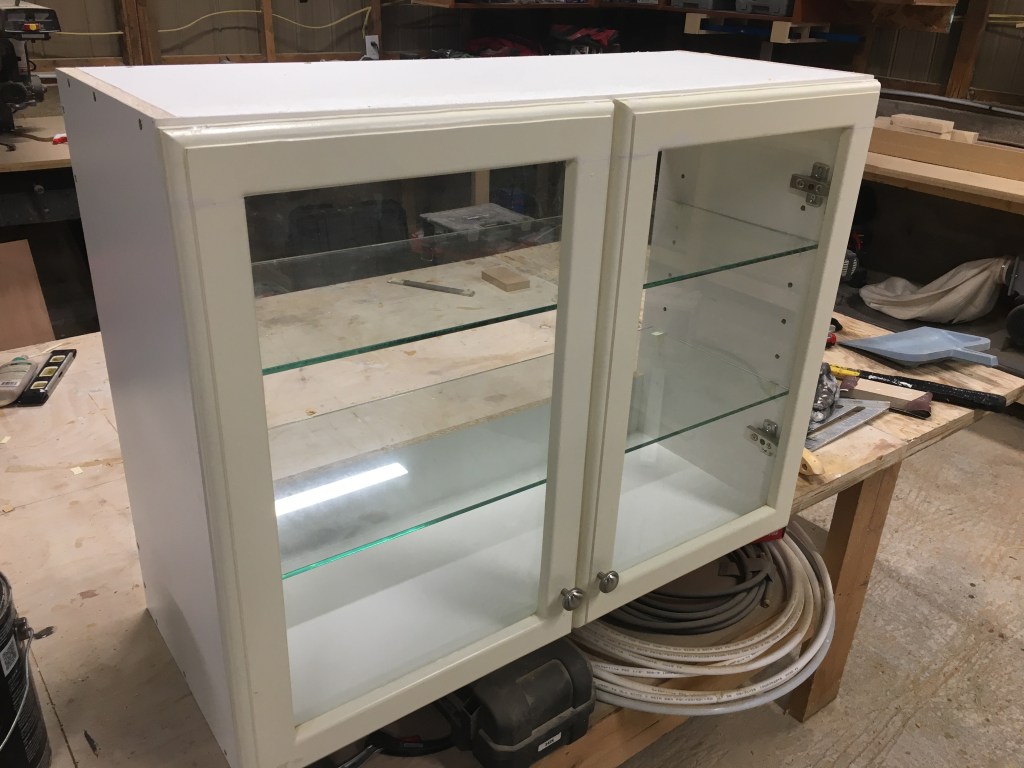
So I took the doors to my workshop and carefully cut them shorter. I cut the frame on the tablesaw, being careful not to nick the glass; then I scored the glass with a small cutting wheel and snapped it off.
Then I glued the top part of the frame back on. There is a small line where the joint shows, but it’s not too bad with a bit of touch up paint.
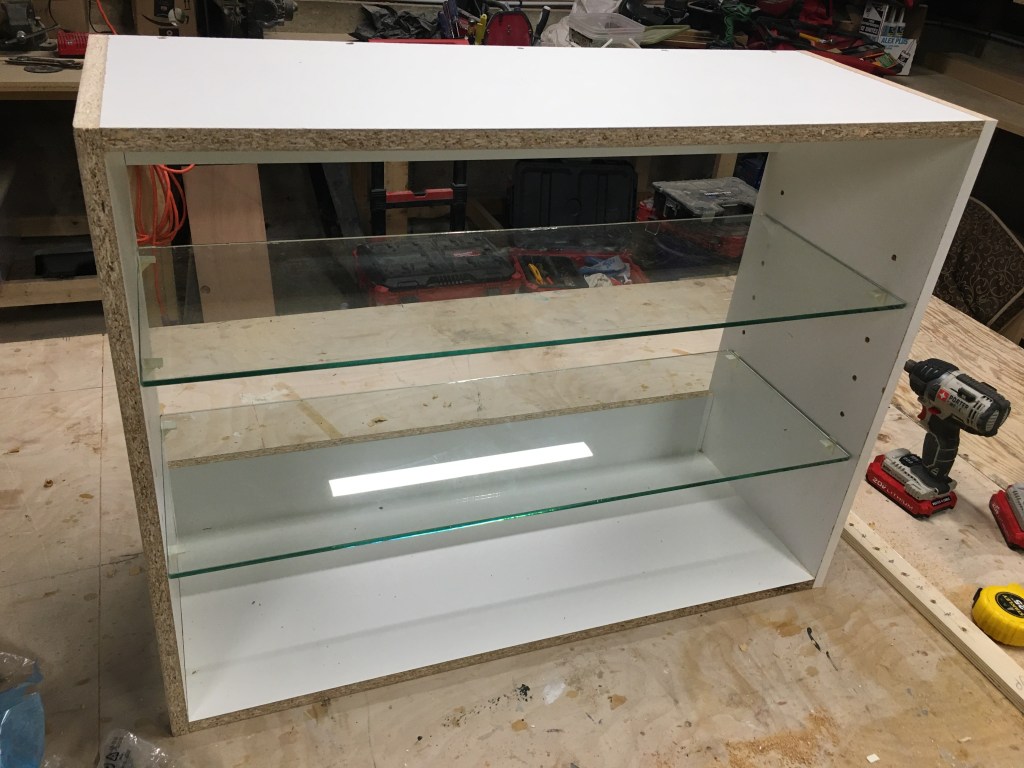
Then I build the rest of the cabinet and installed it.
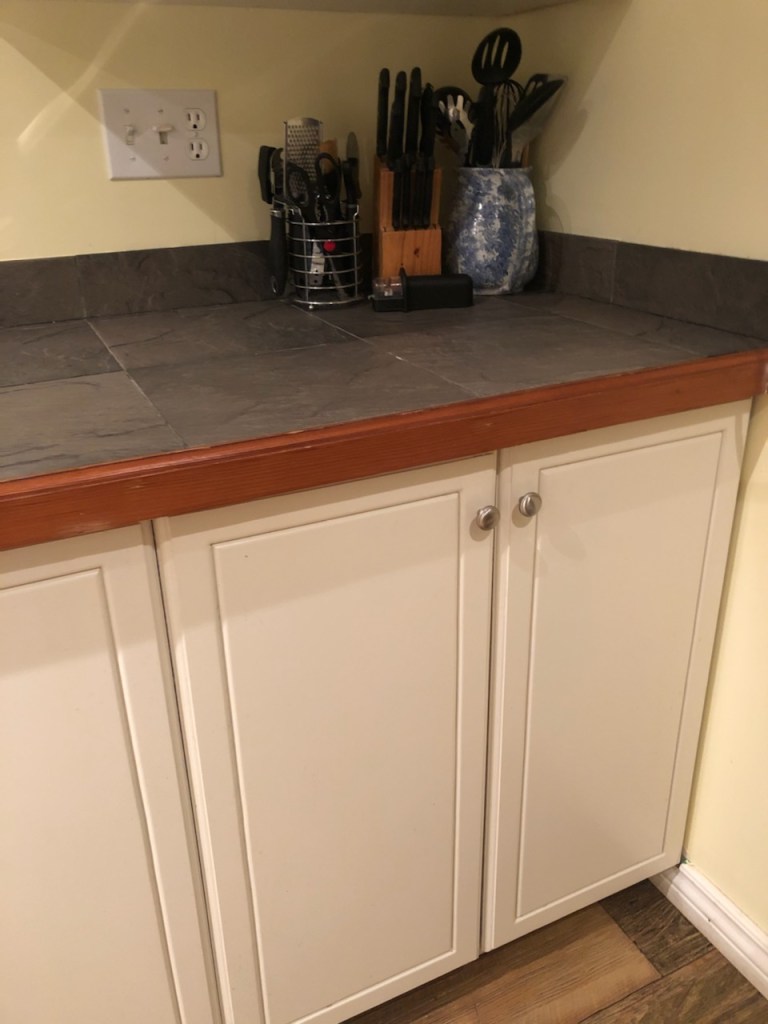
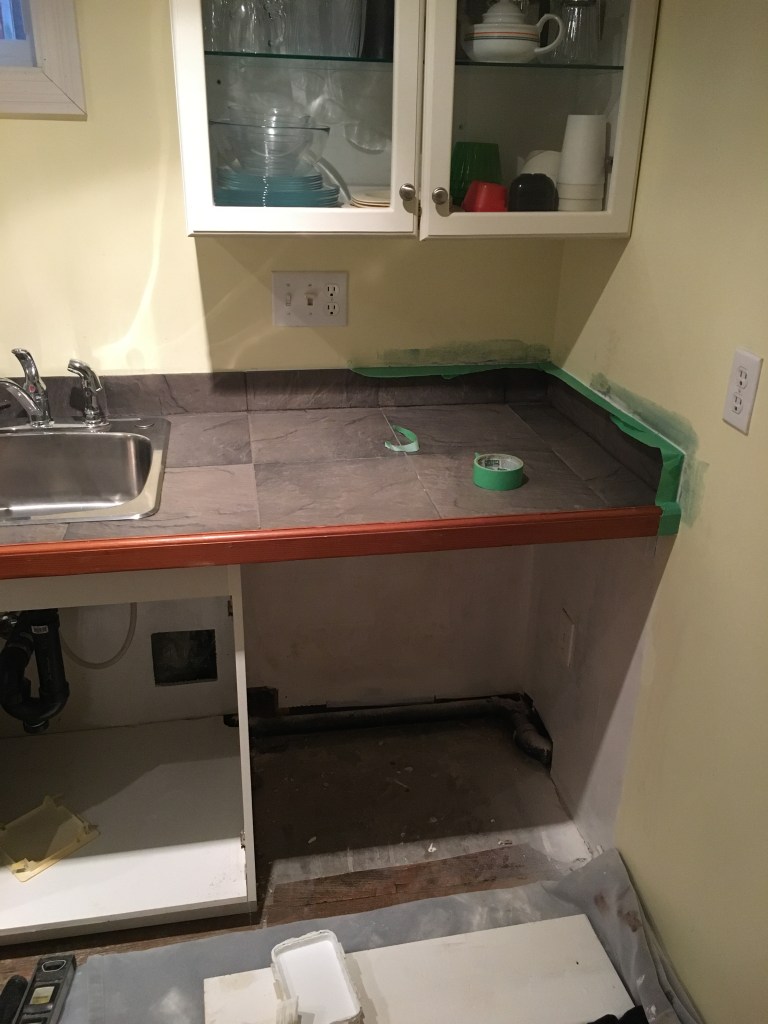
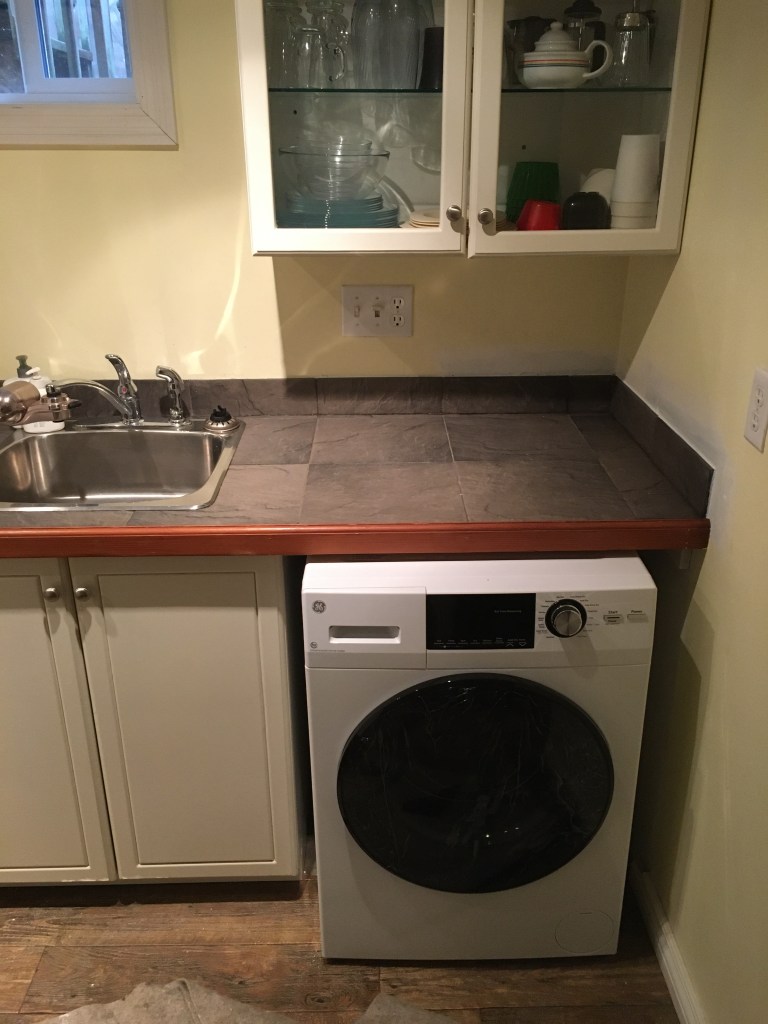
Debbie bought a cool washer/dryer combo for her suite; it washes AND dries the clothes in one little place. She needed to remove part of her tile countertop so that the plumber could access the wall behind and move some pipes around. There was also a cabinet to remove.
I took out the cabinet, then the front stick of the countertop off, then cut the plywood build-up from below. The grout was hard to remove; I think it was cement as opposed to regular tile grout. I ground it out with a couple of grinders.
After the plumbing was done, I came back and stuck it all back together. The hardest part was the backsplash–it took the wall with it.





 handyandrew.ca