Here is a video I made for Gallery 7 about the process of carving custom foam balusters for Anastasia railings. Most of it focuses on the work of my dad, Chris, who did the lion’s share of the work. (Note: set design and painting was done by Hayley Bamford.)
Jobs Blog
The Little Mermaid set design & build
I recently designed and built the set for VTT Centre Stage’s production of The Little Mermaid Jr.
Here are a bunch of build photos!
The first main thing to build for rehearsals were the stairs. There are 4 of them and I am quite proud of them. They are wavy, interlocking, and fit together with a wavy platform as well. Their main purpose was to give levels for the many performers. But they were versatile as they could be used for the sides of the ship, and the various palaces.
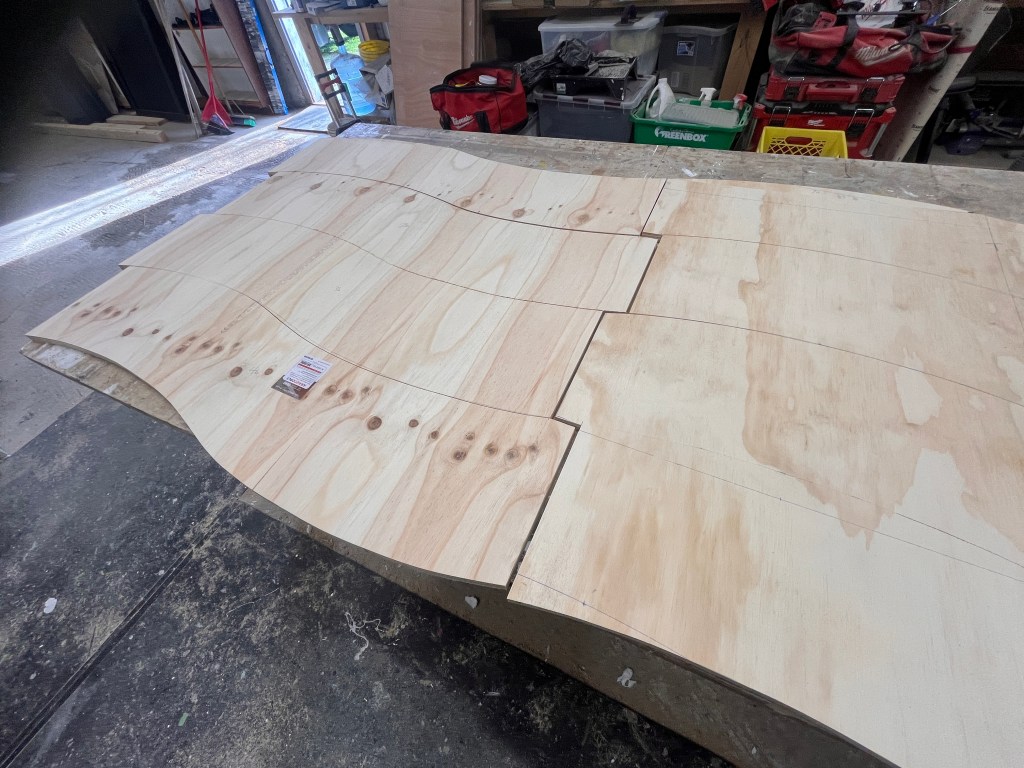
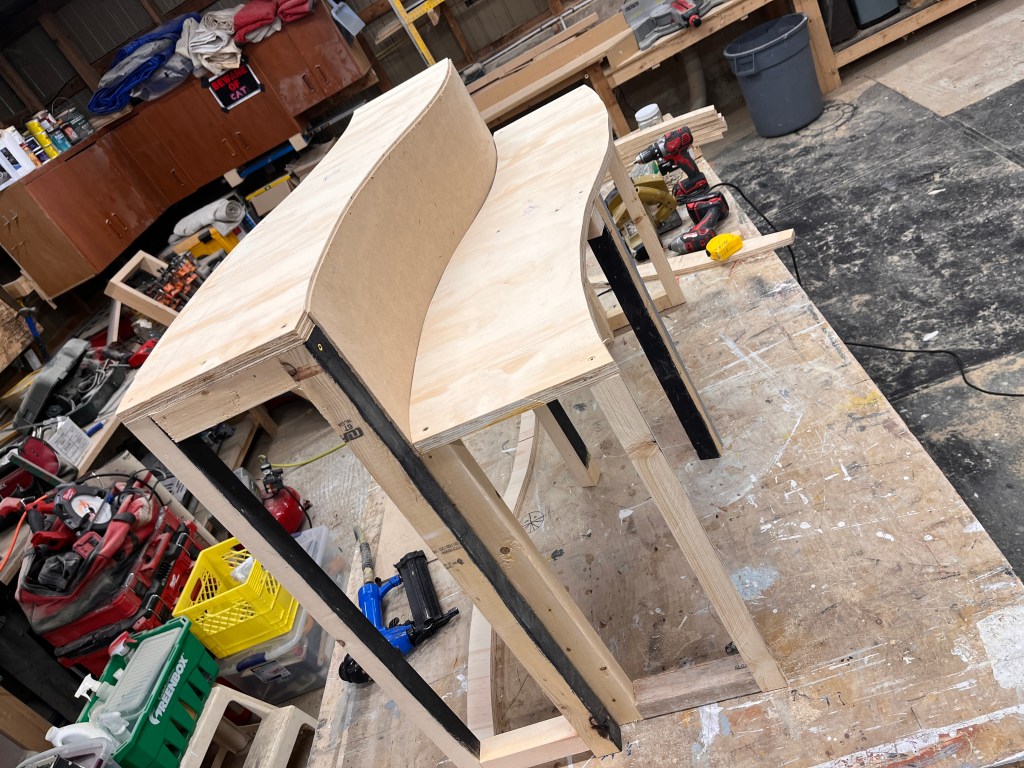
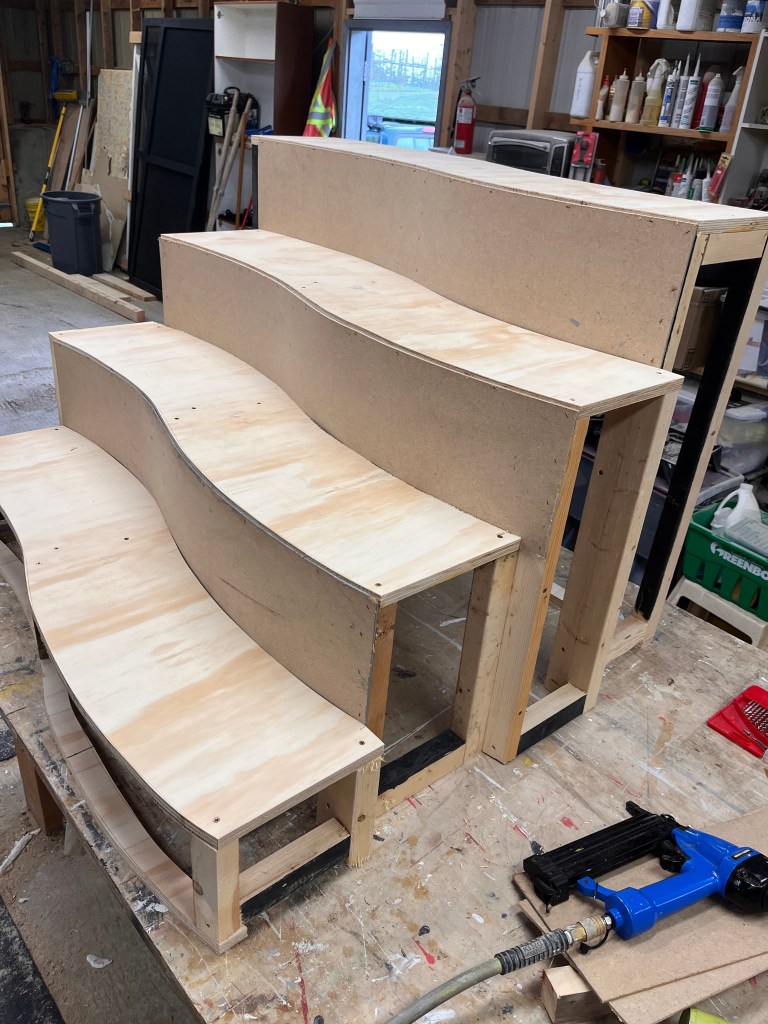
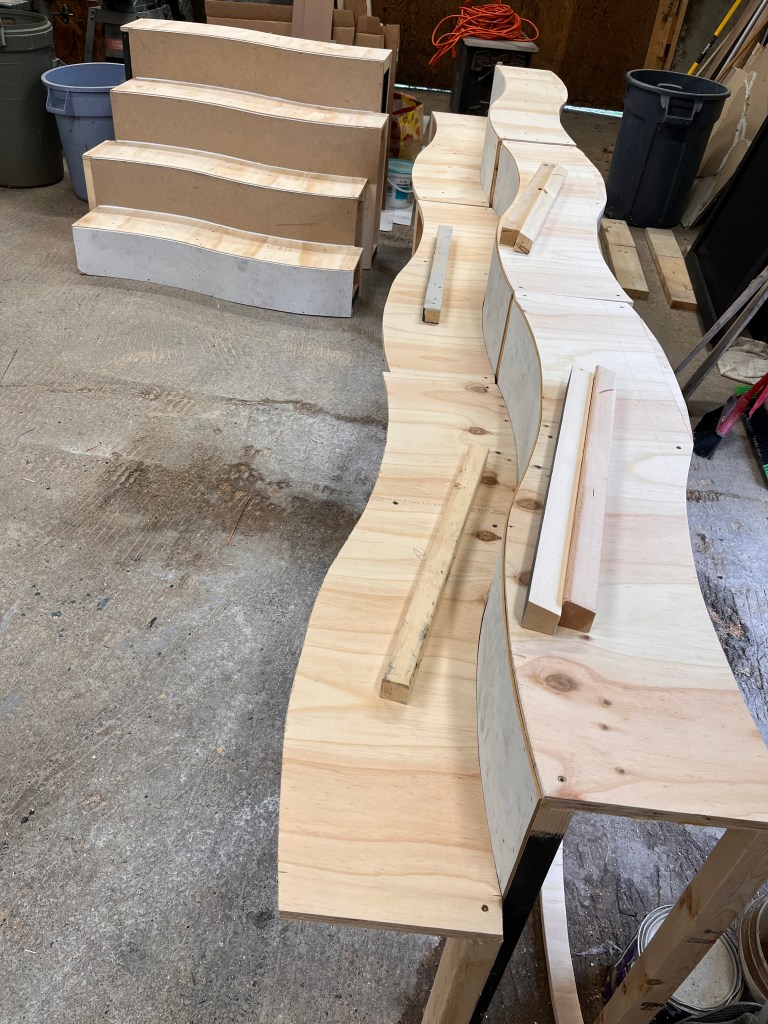
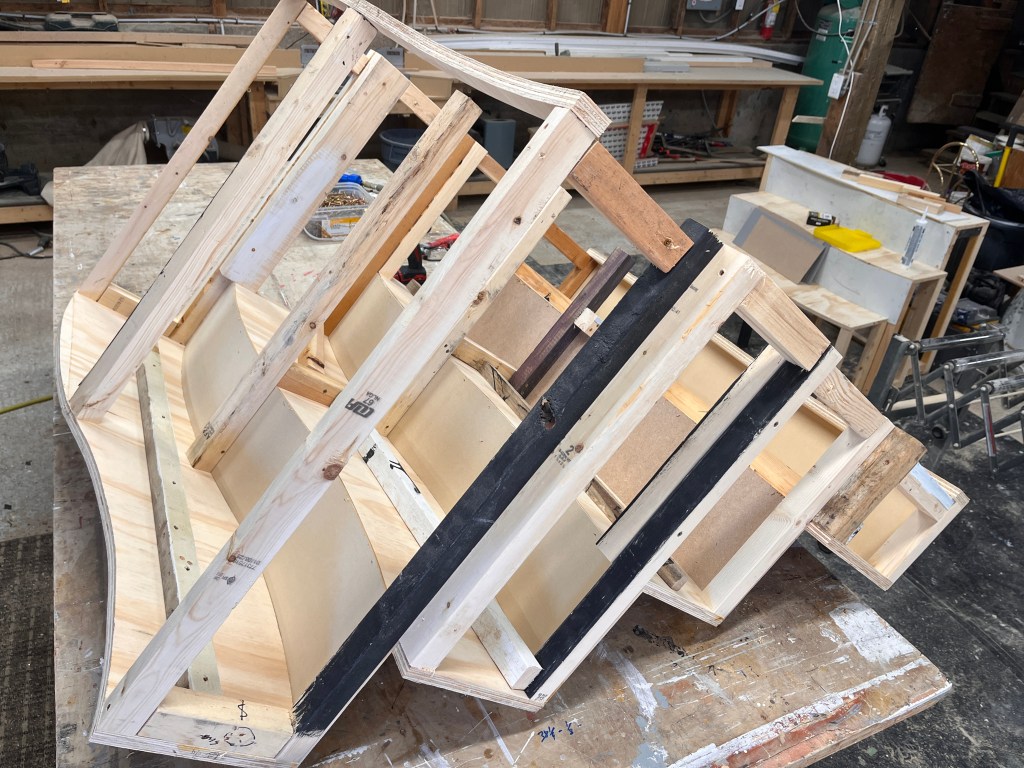
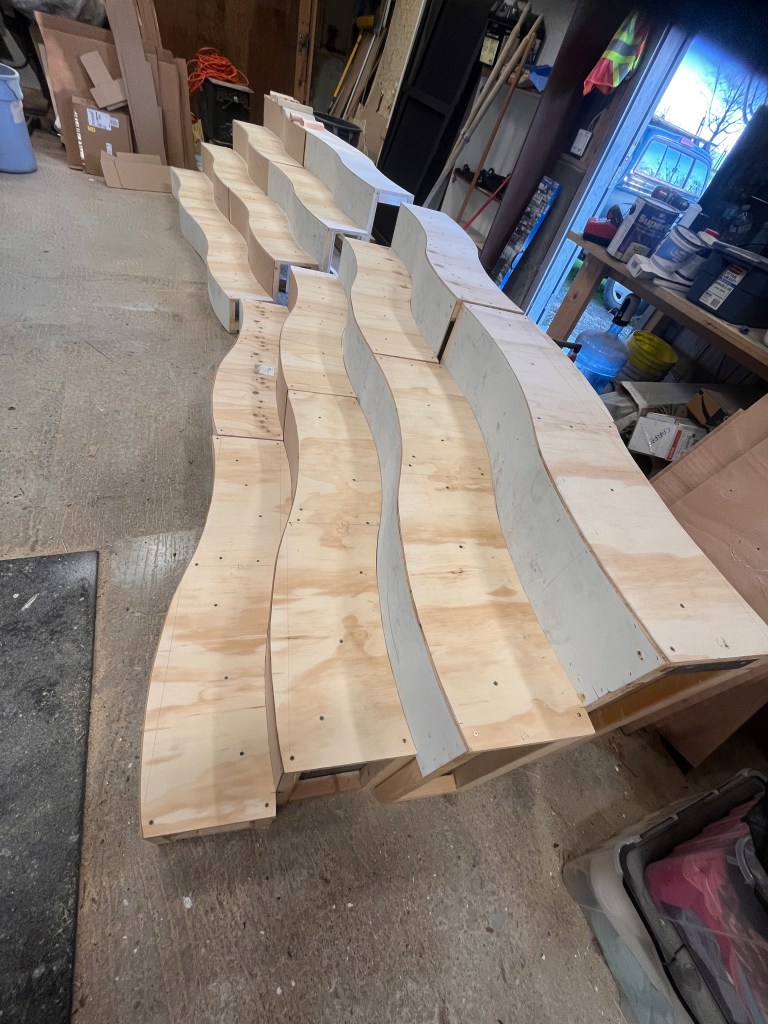
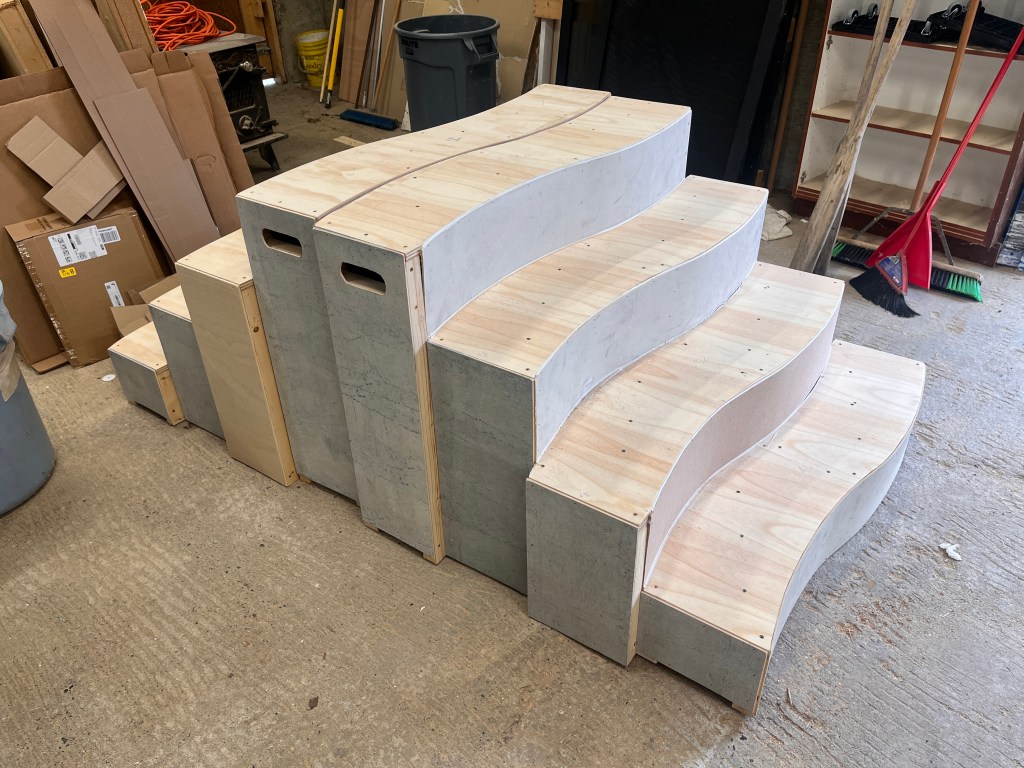
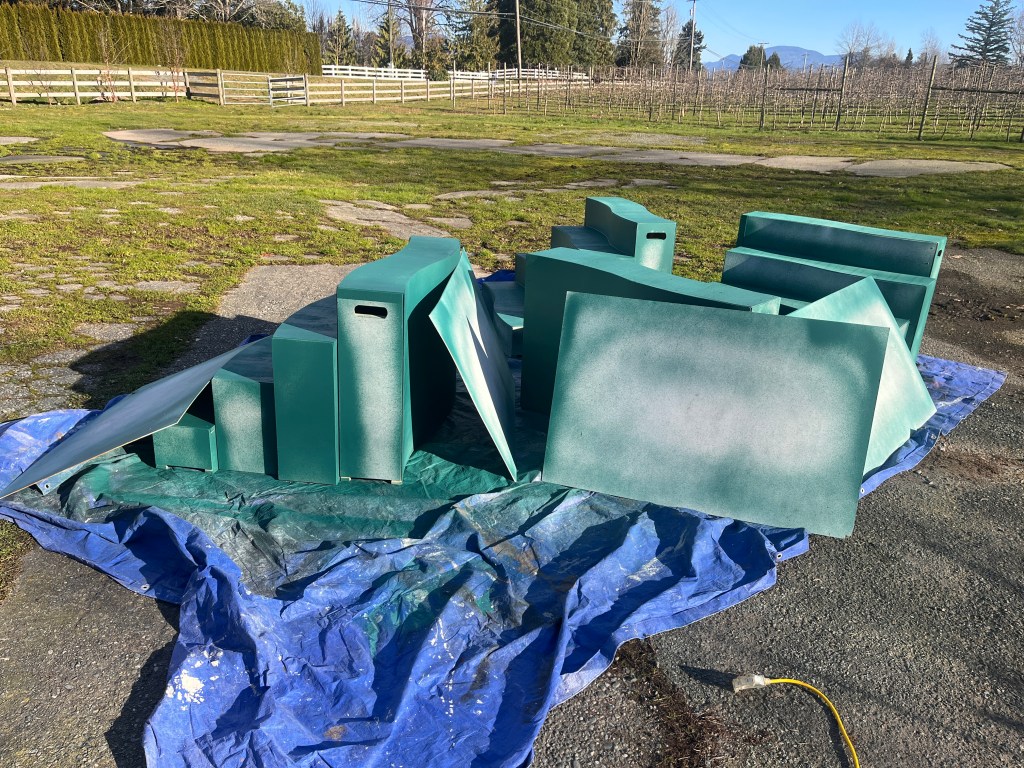
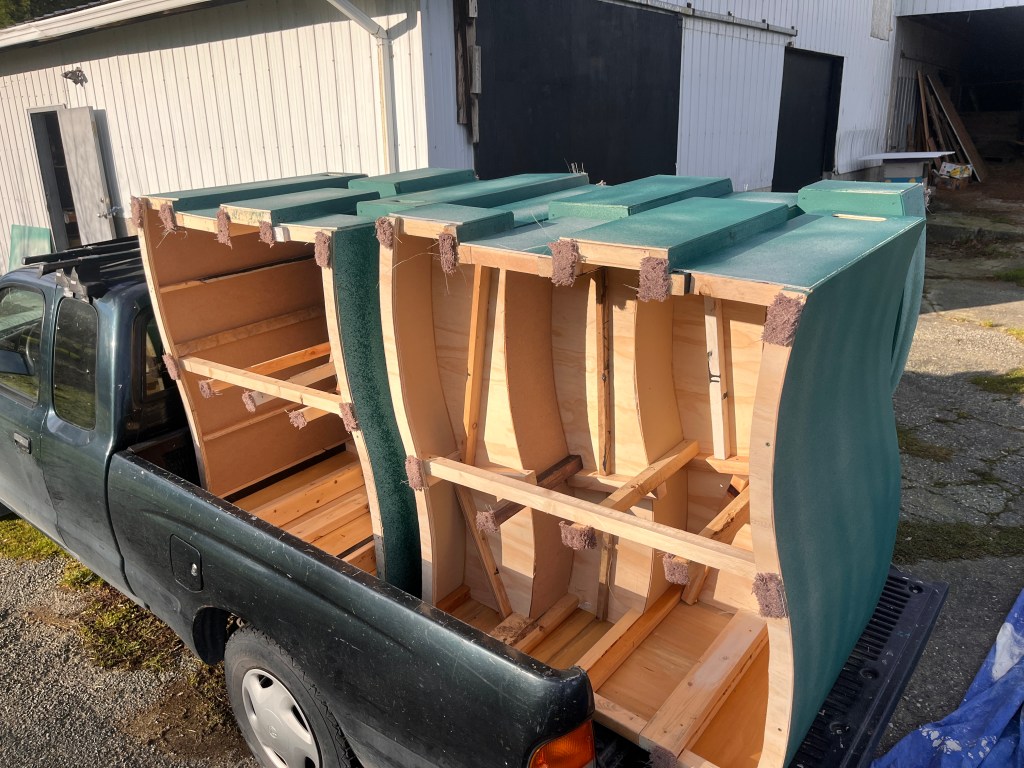
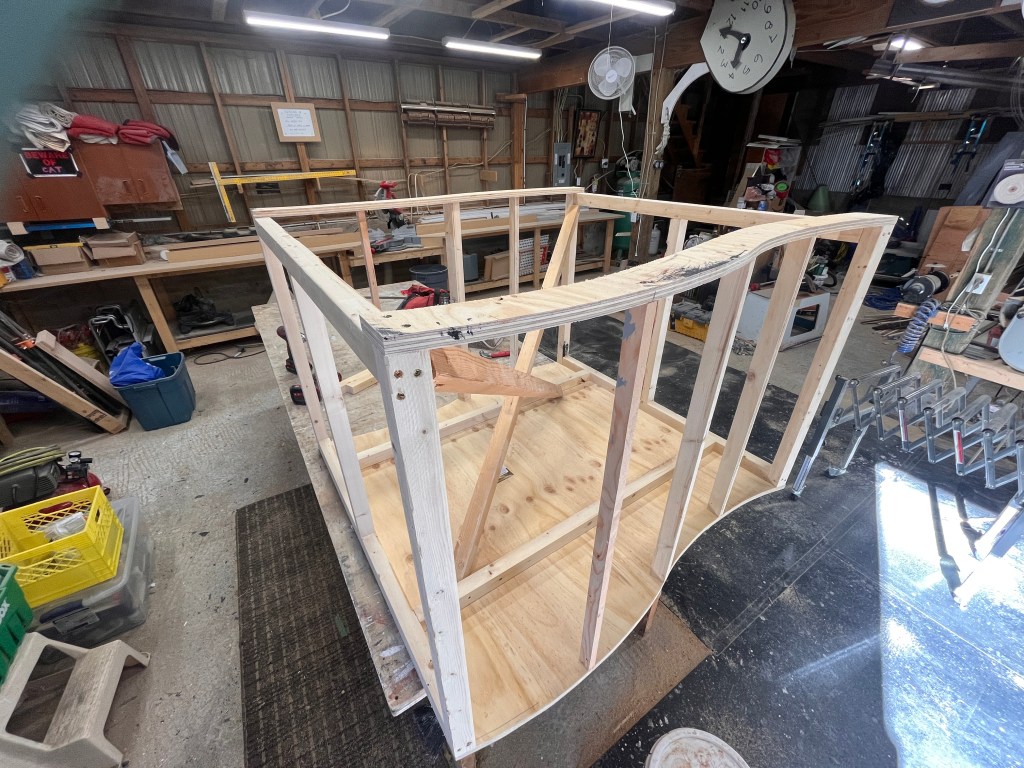
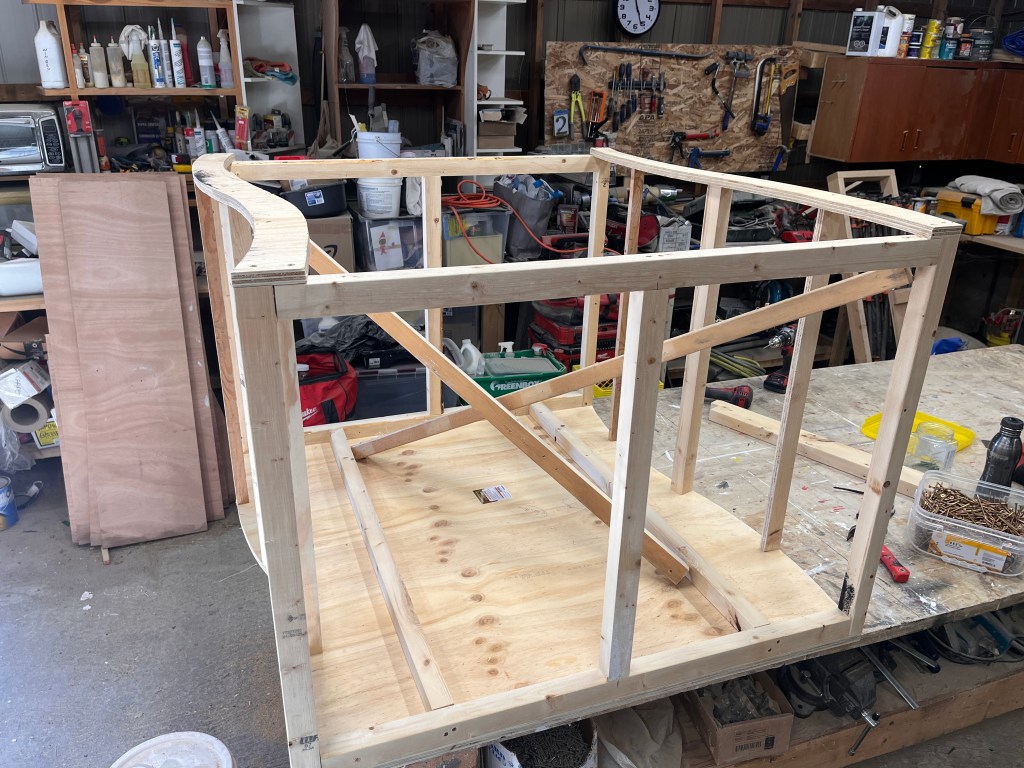
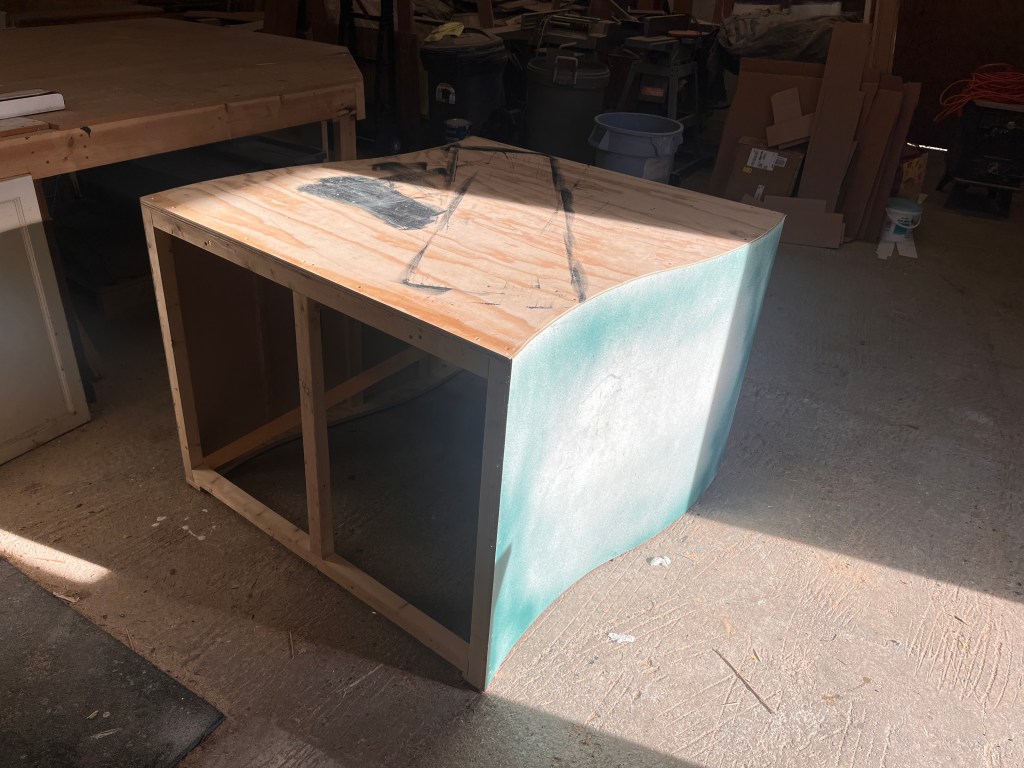
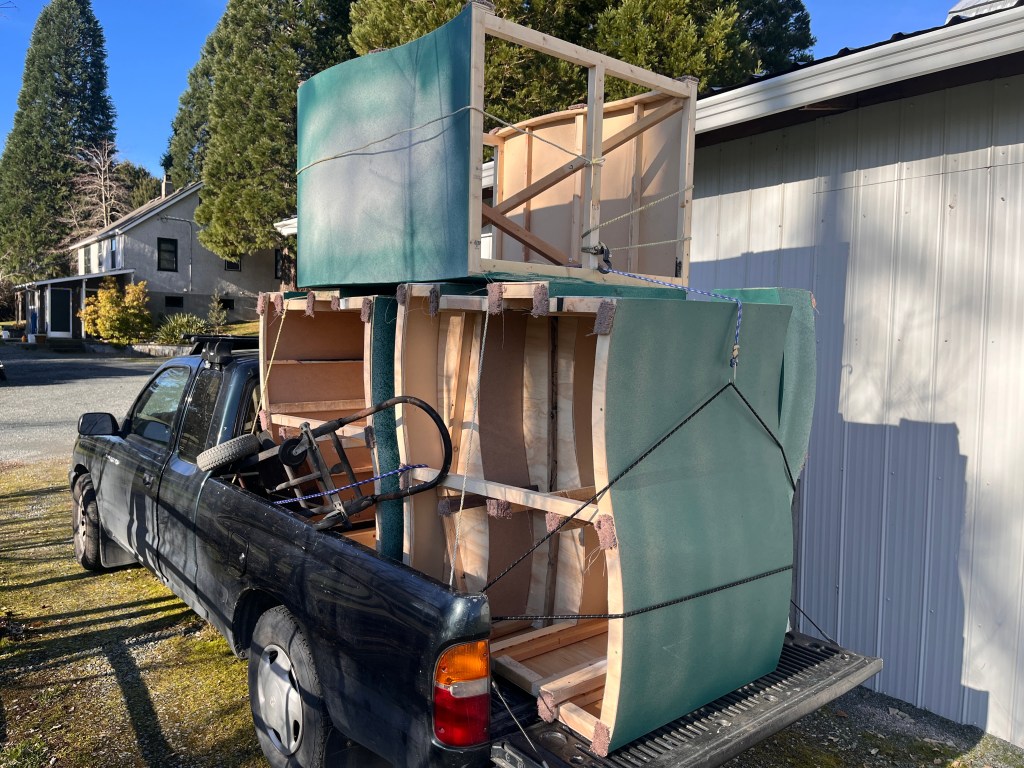
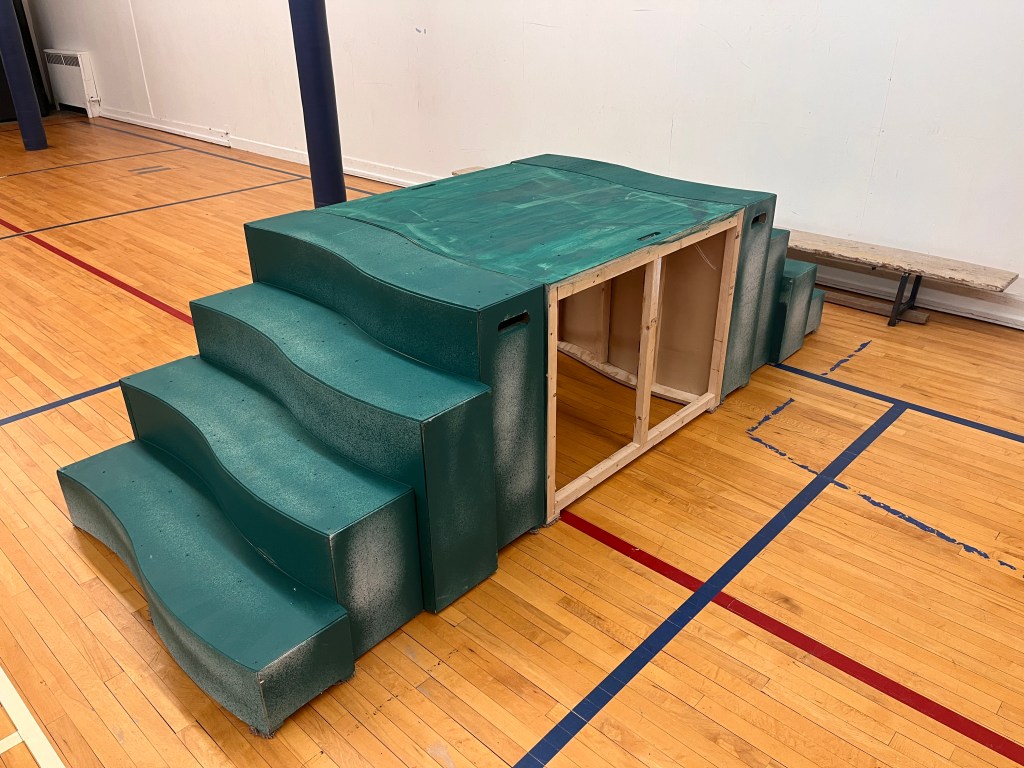
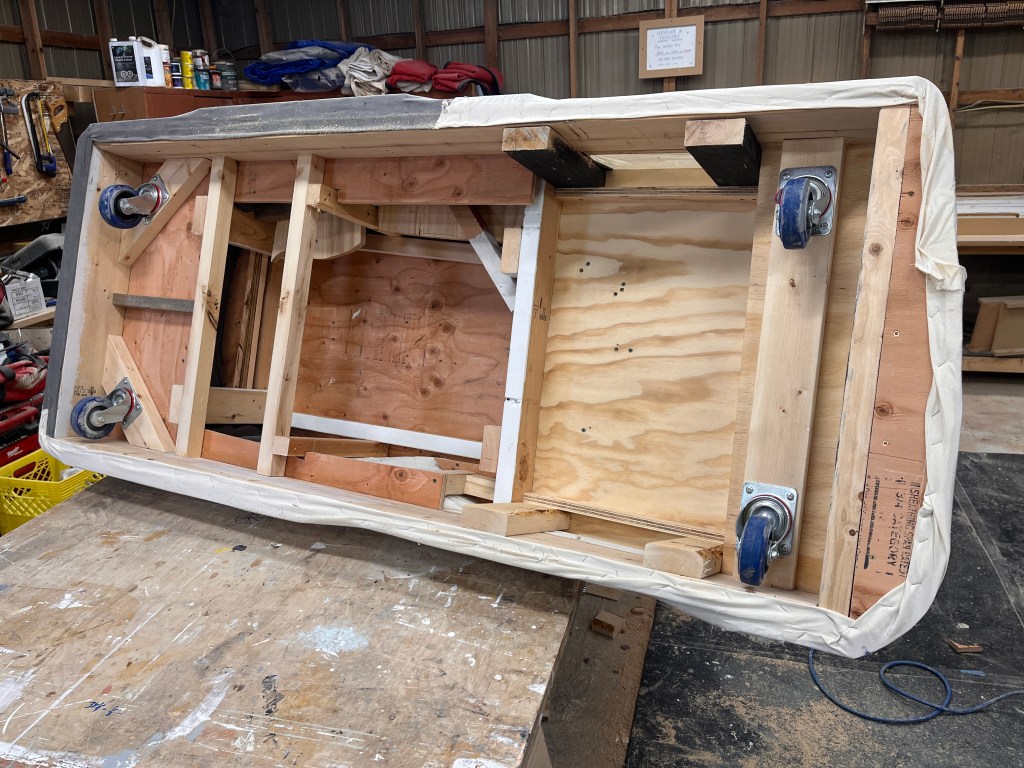
I then made a large rock on casters. (I also provided 5 other lighter rocks that I had made for Anne)
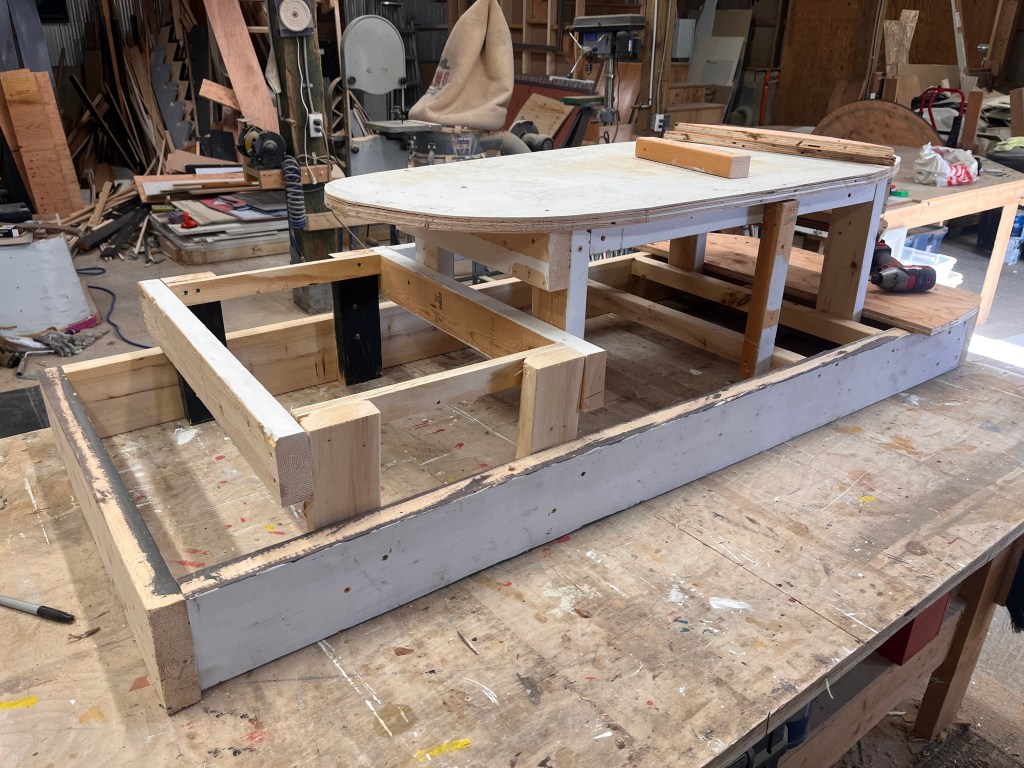
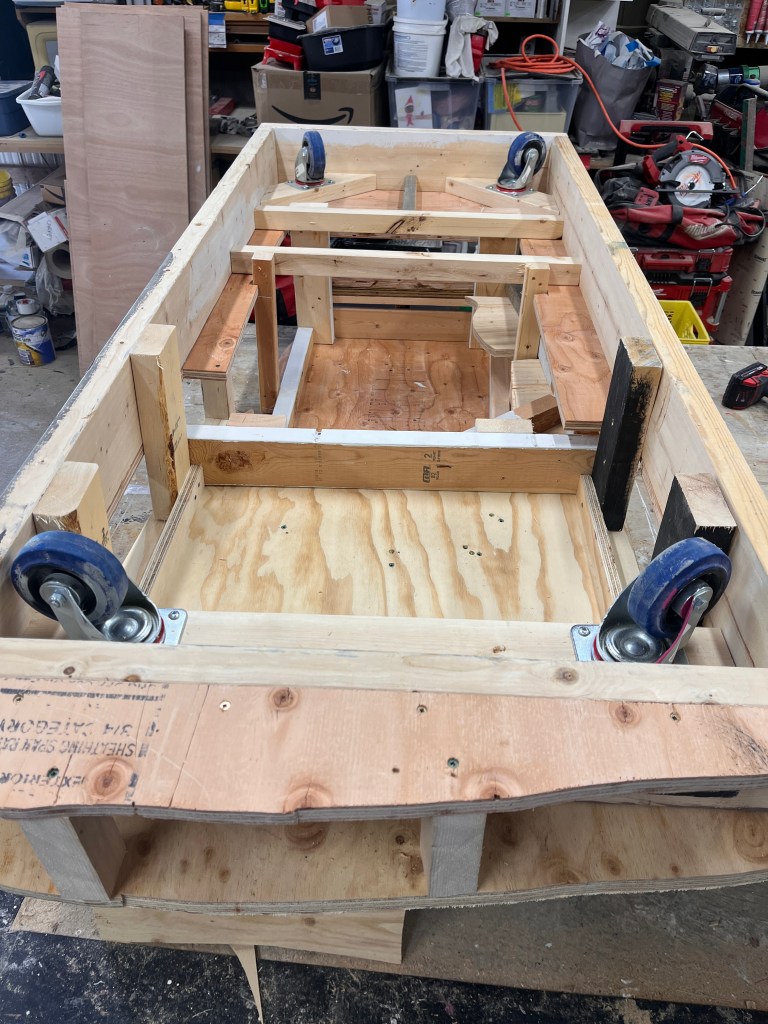
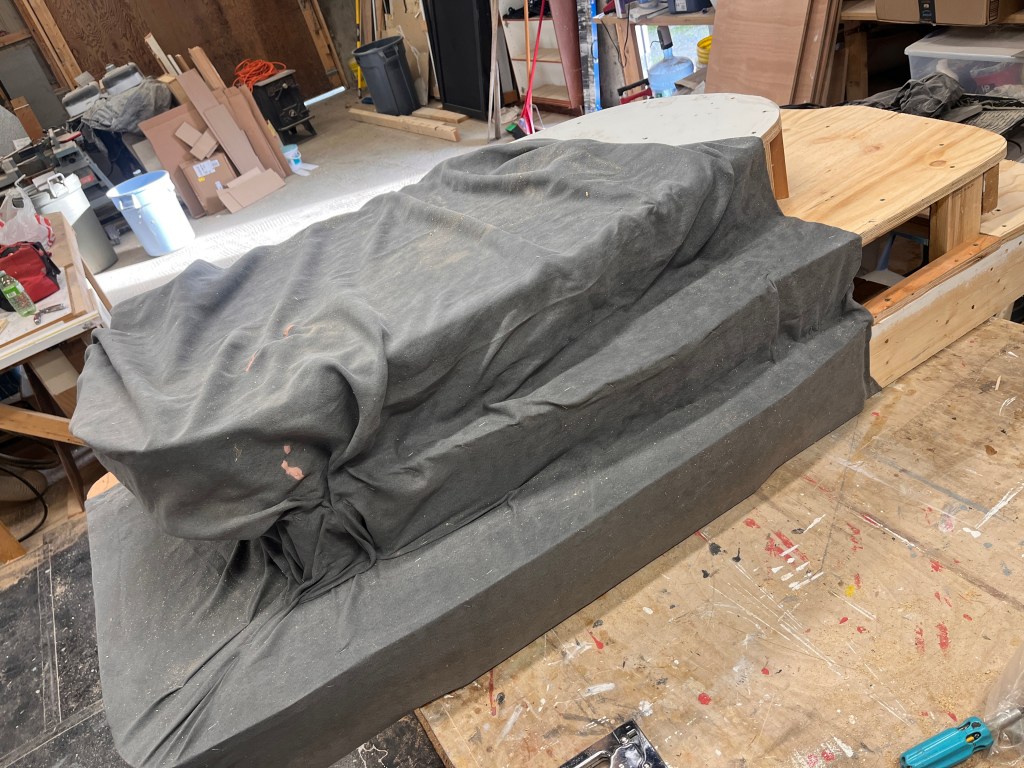
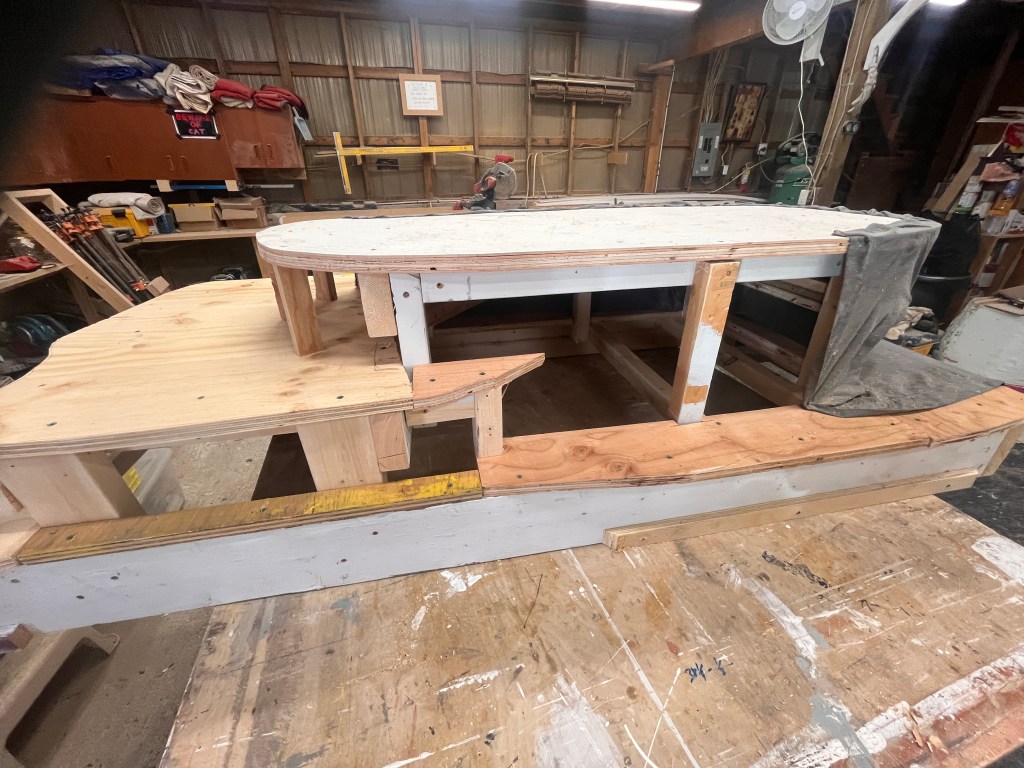
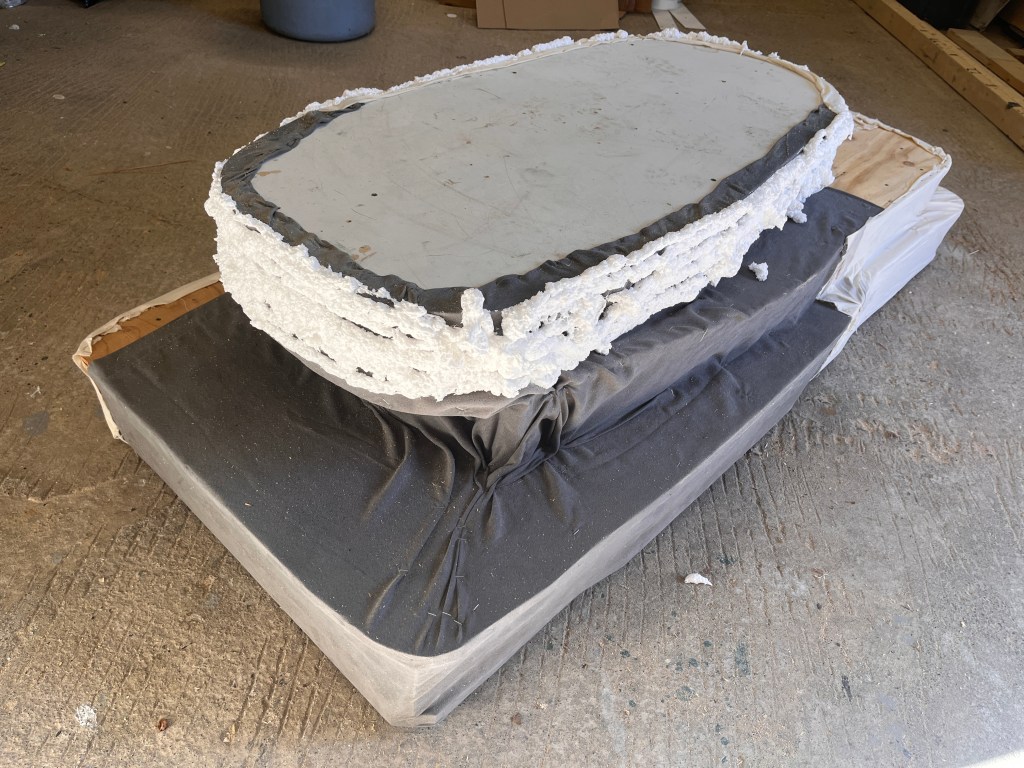
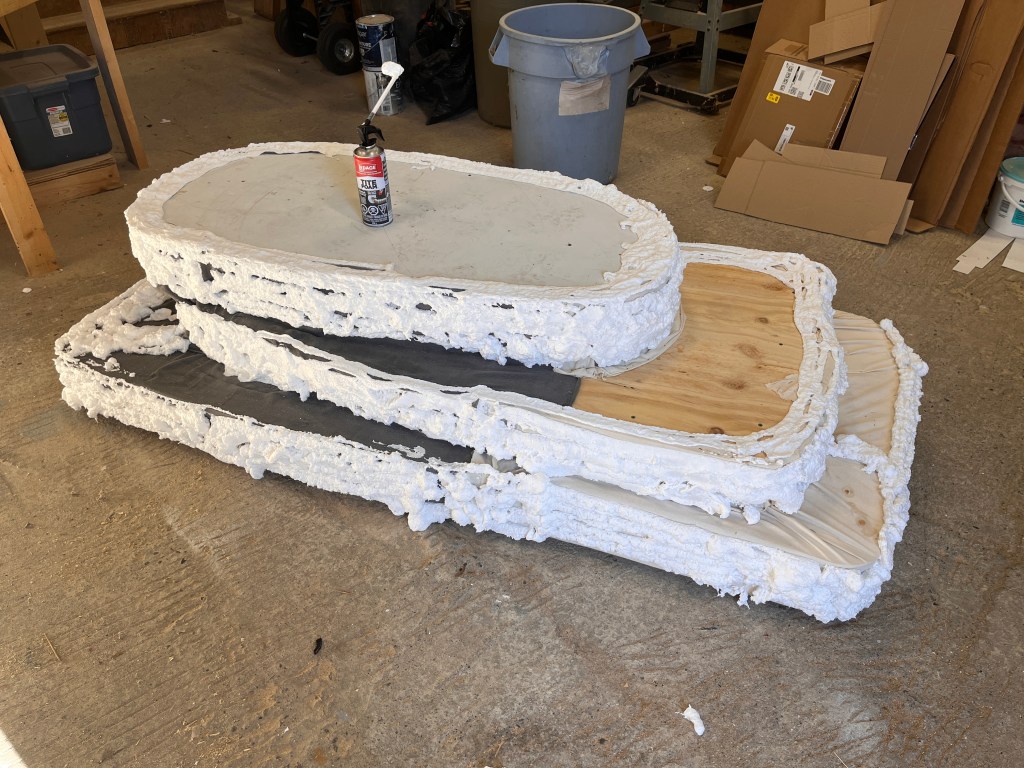
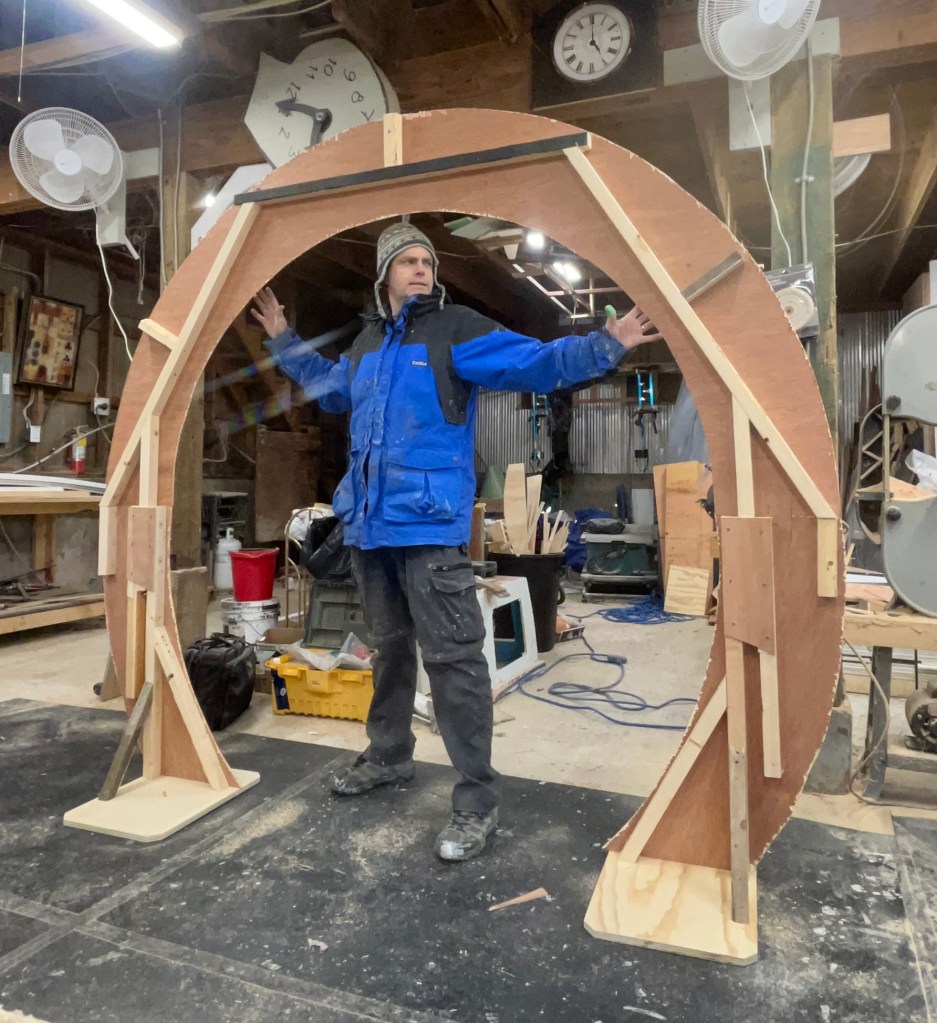
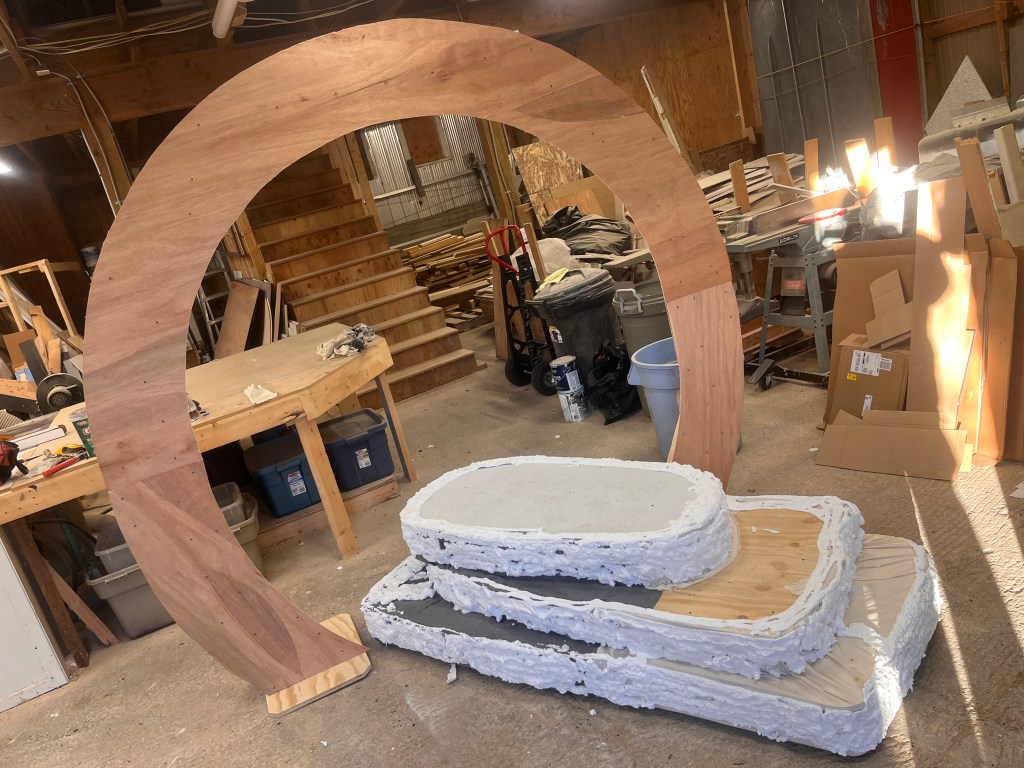
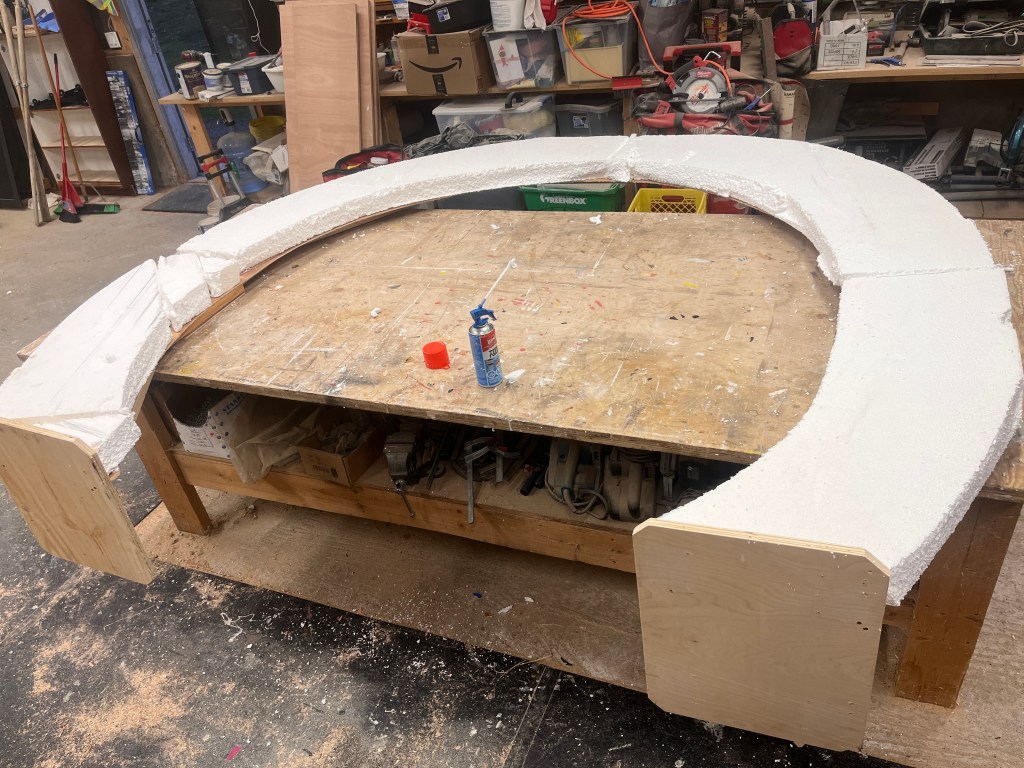
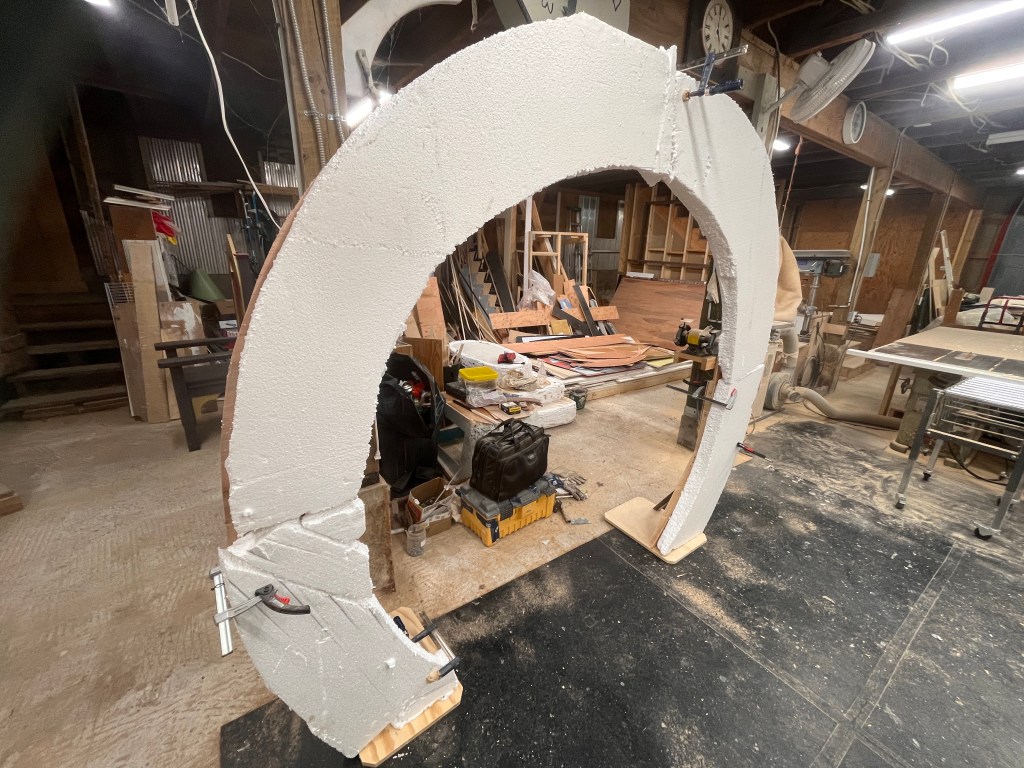
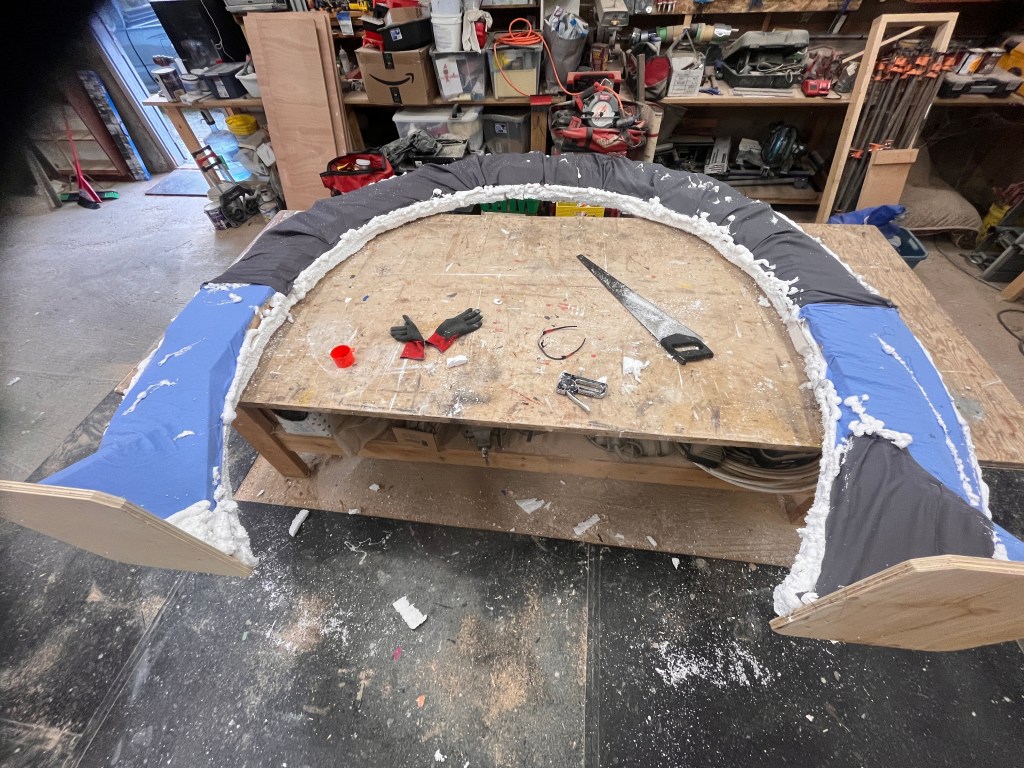
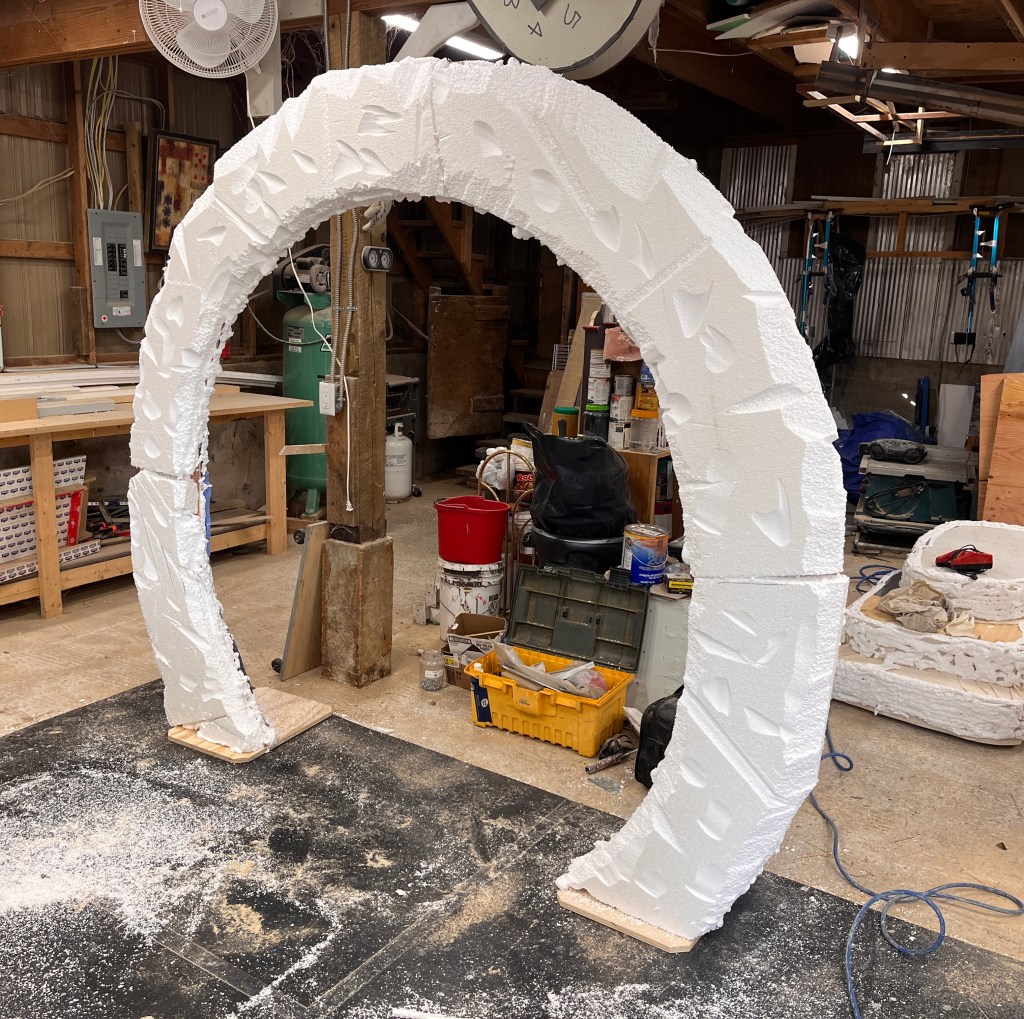
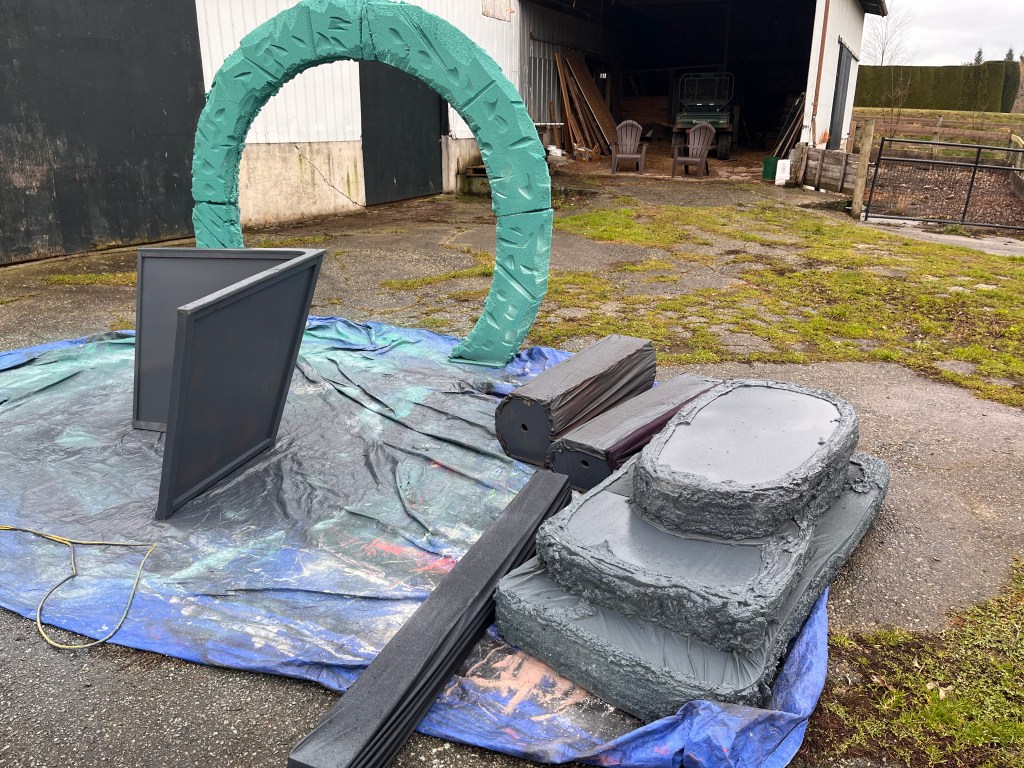
The next project was a custom styrofoam arch and a ship’s hull. I used expanding spray foam to glue styrofoam to a 2×2 & luan frame. I then carved the styrofoam with a circular saw.
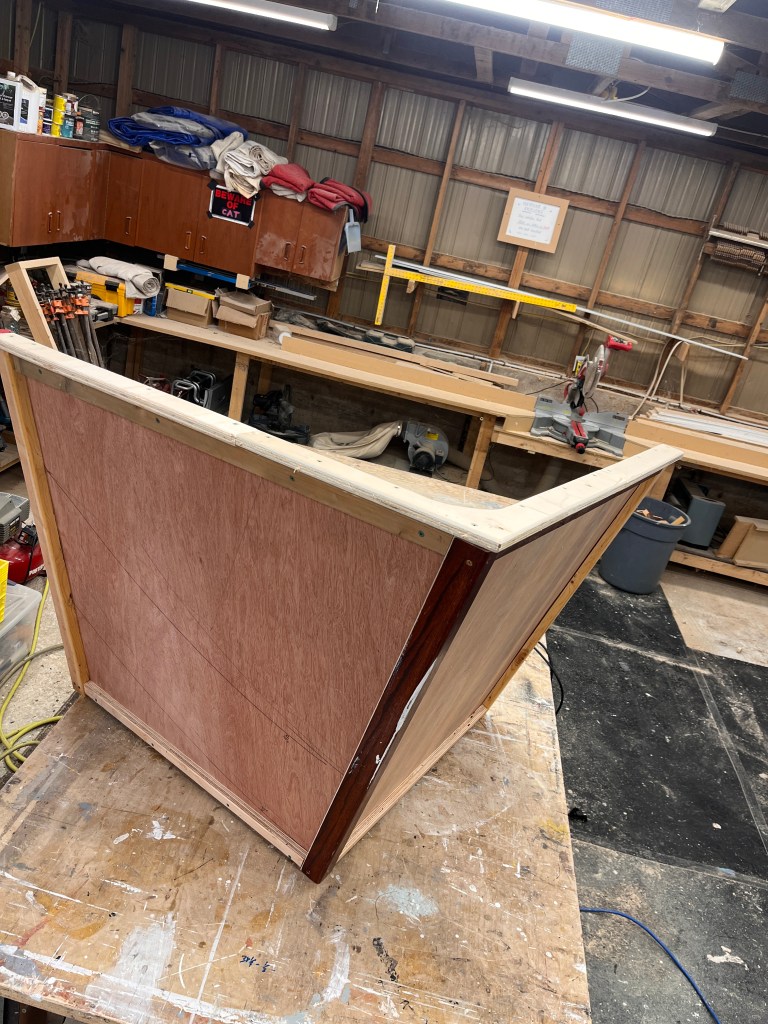
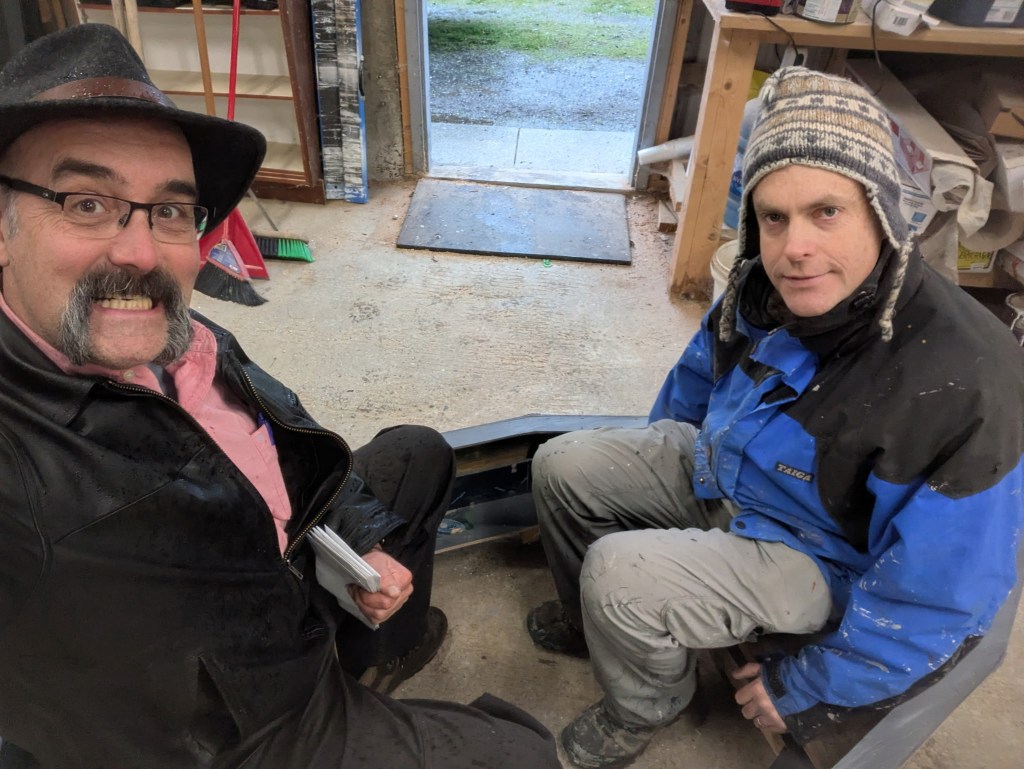
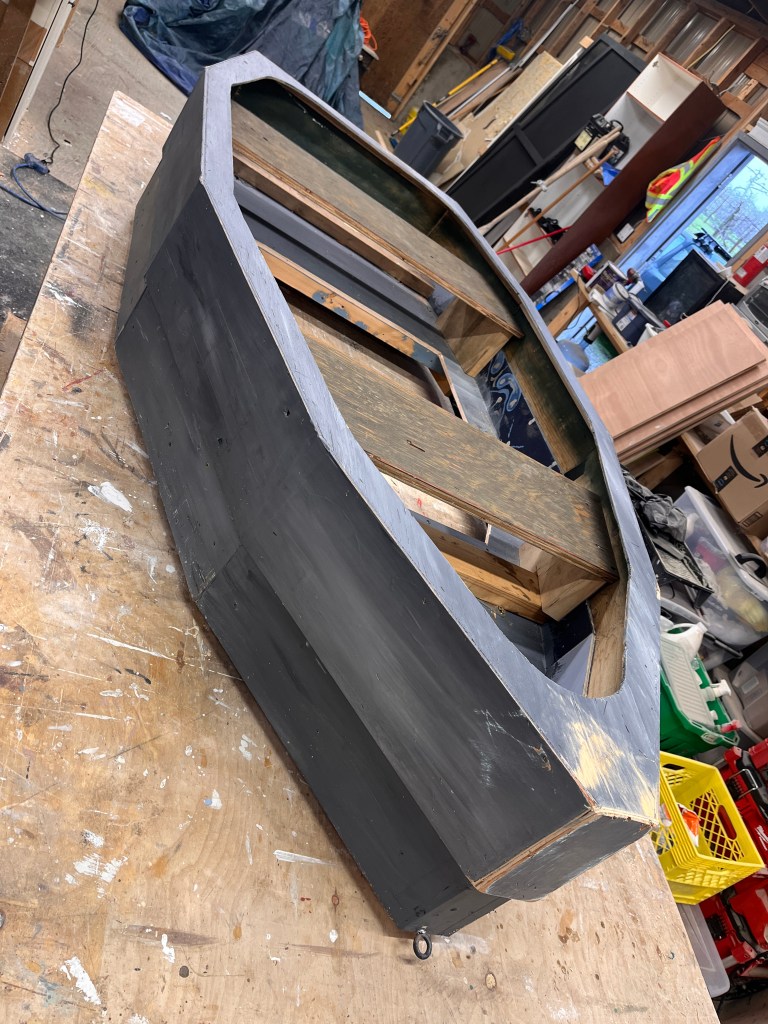
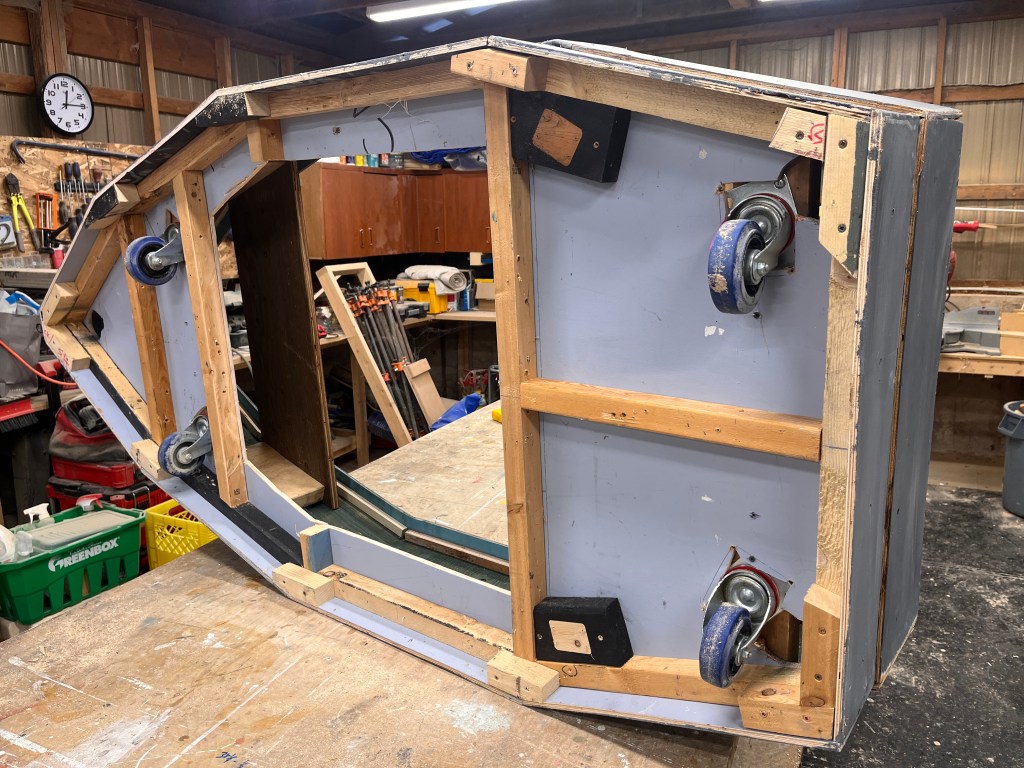
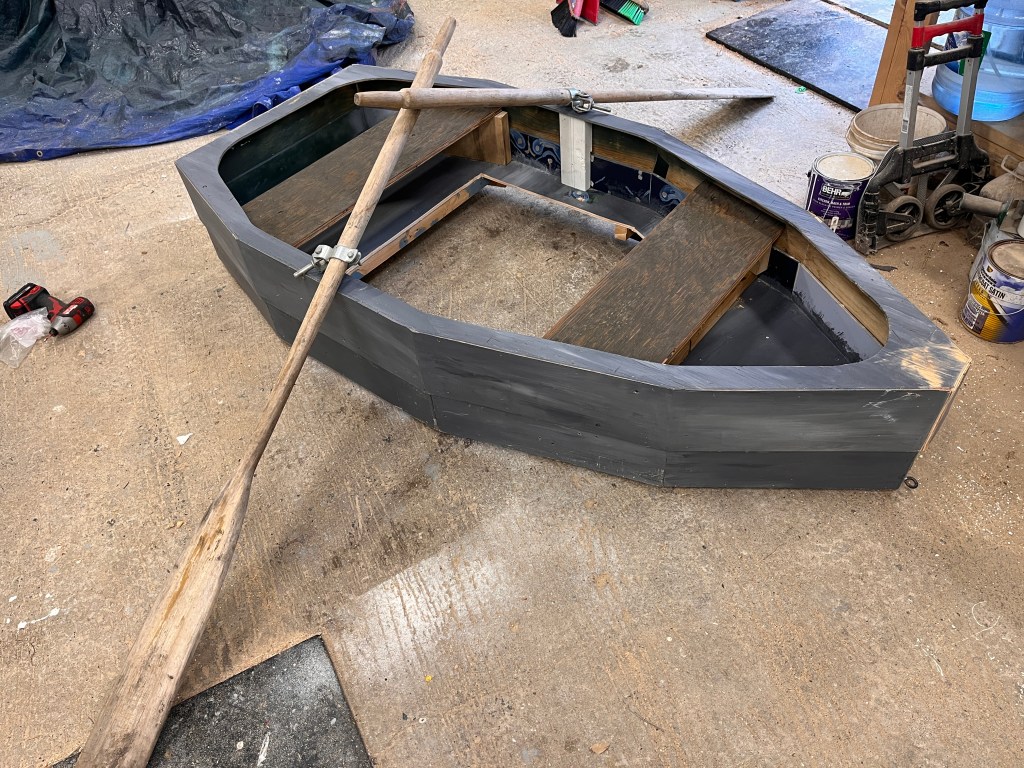
I modified the boat I made for Anne into a row-able boat. Dave and I went fishing with it, in the workshop. Later the school requested I make it higher because the actor’s knees were visible moving (it was foot propelled). I did make it higher, but felt it did ruin the effect a bit because it was so high.
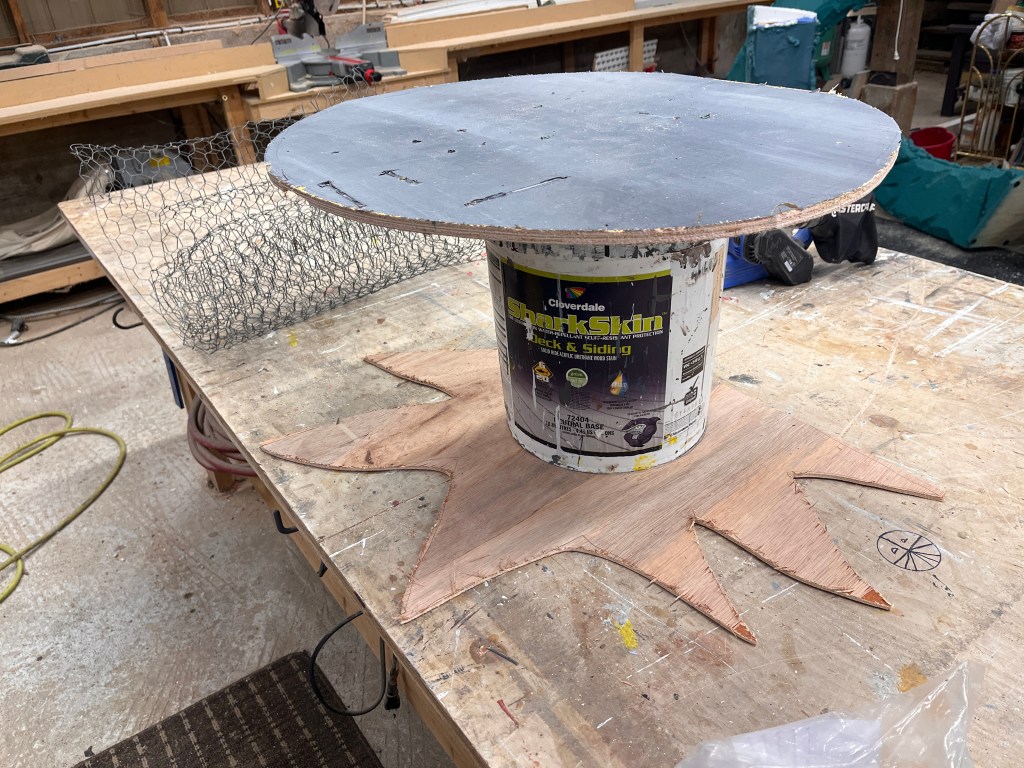
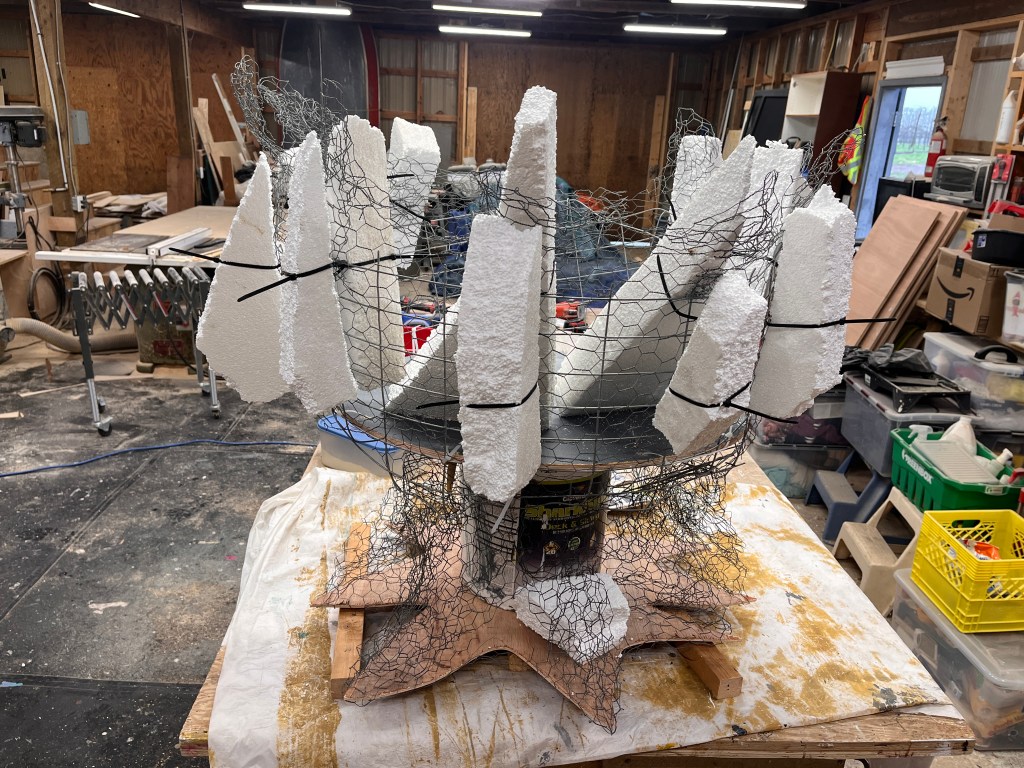
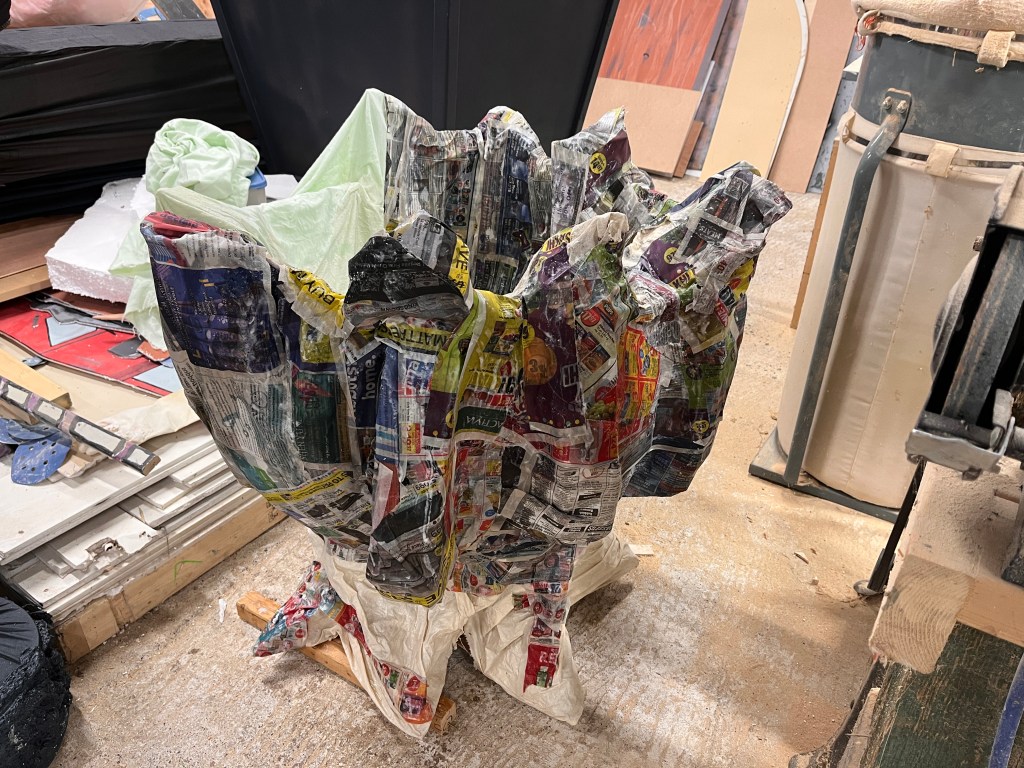
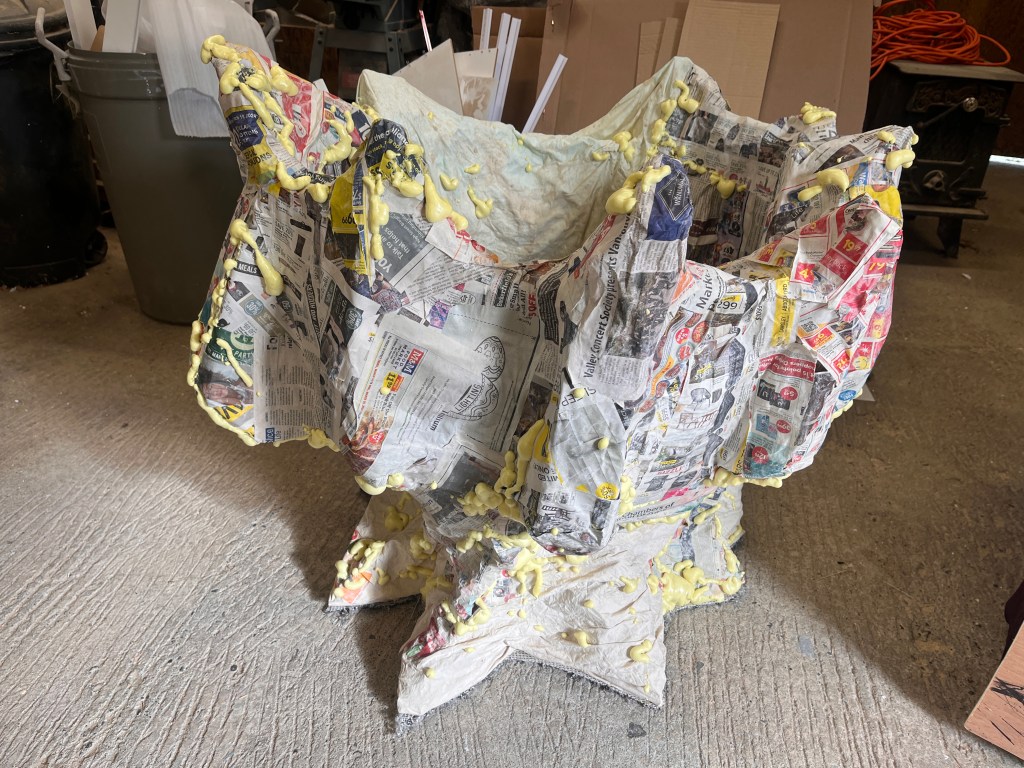
Next I worked on Ursula’s cauldron. I made it out of a bucket, chicken wire and paper mache. It was quite fragile and large and ultimately the school asked me for another smaller one because this one was awkward to use, and falling apart a bit… I ended up passing it on to another school and built the smaller one as requested, which worked quite well. I stuck purple lights inside and a battery powered fog machine and got a very cool effect.
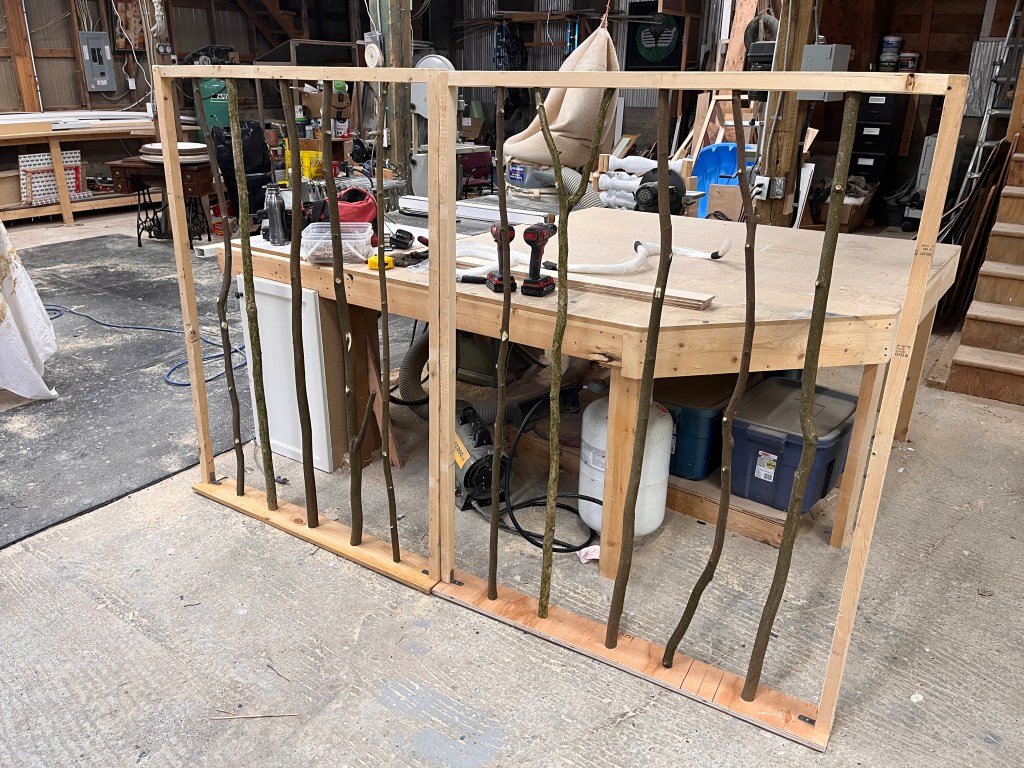
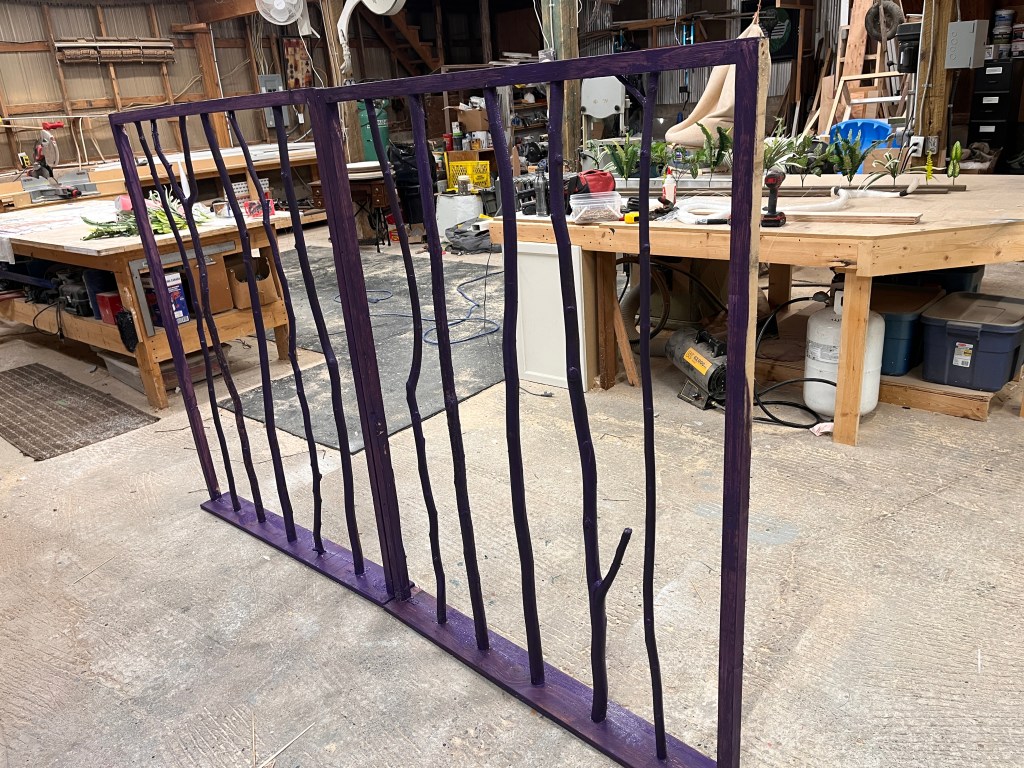
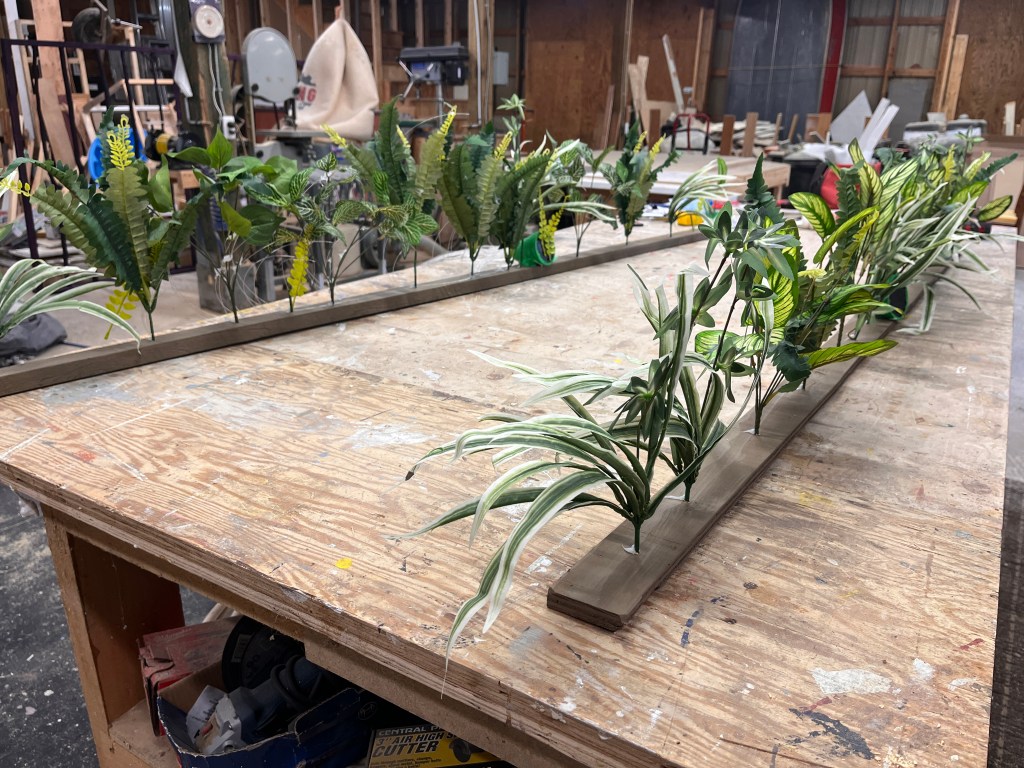
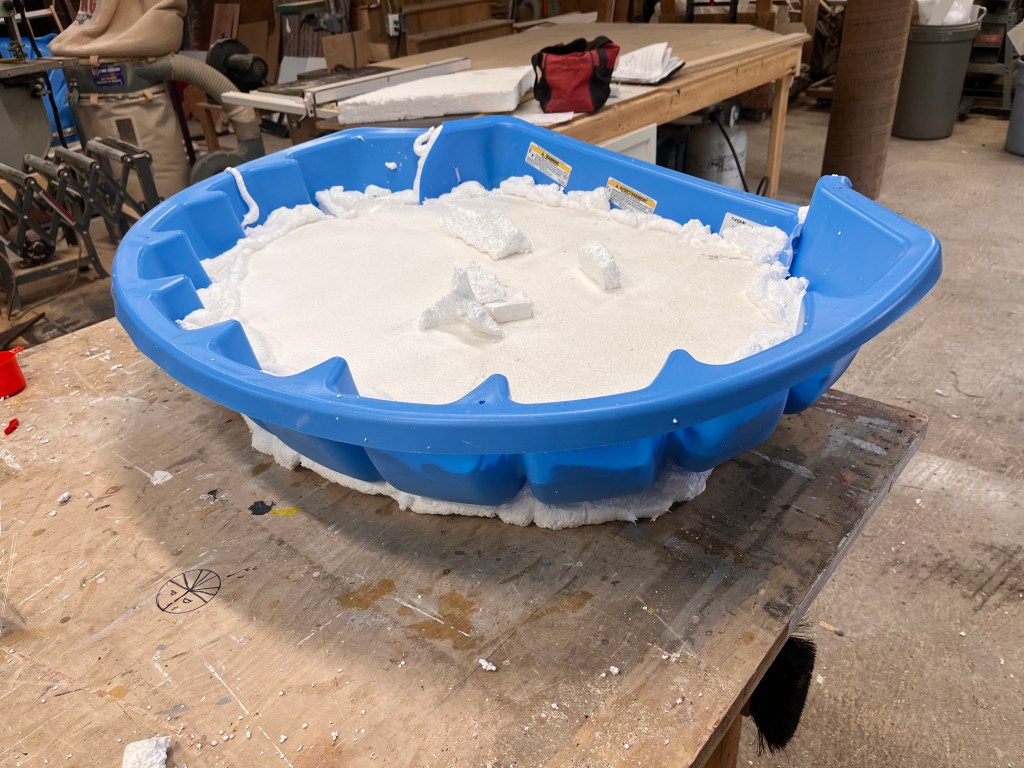
A few other little things – some jail bars made of crooked branches, a half shell, reeds and columns…
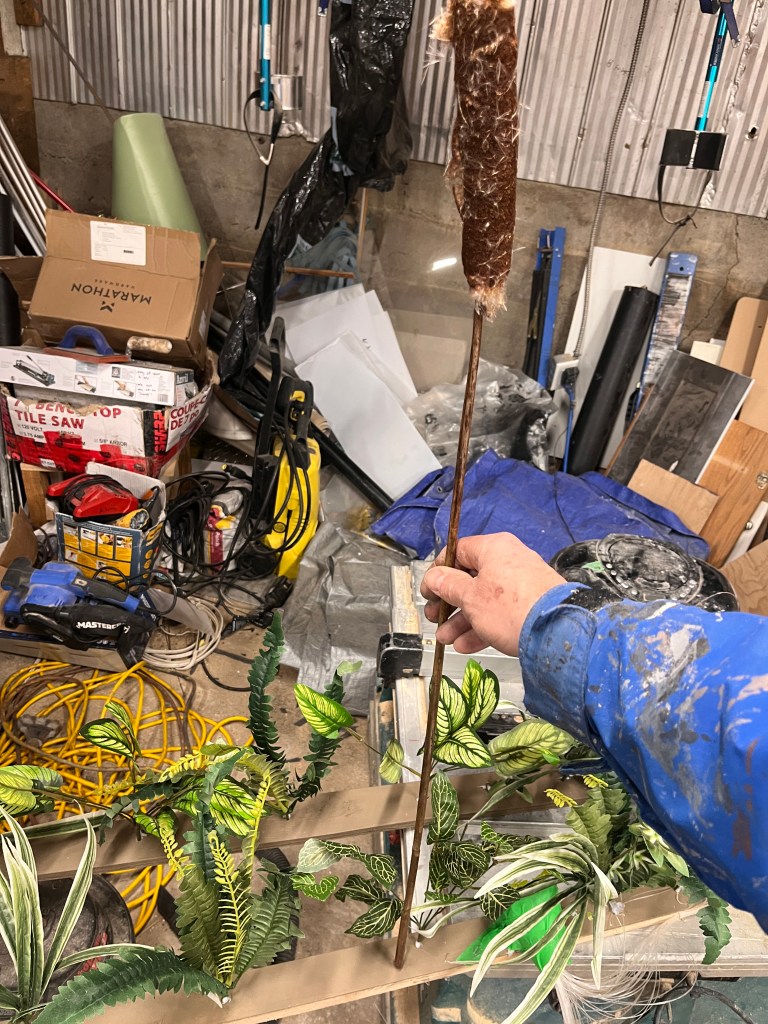
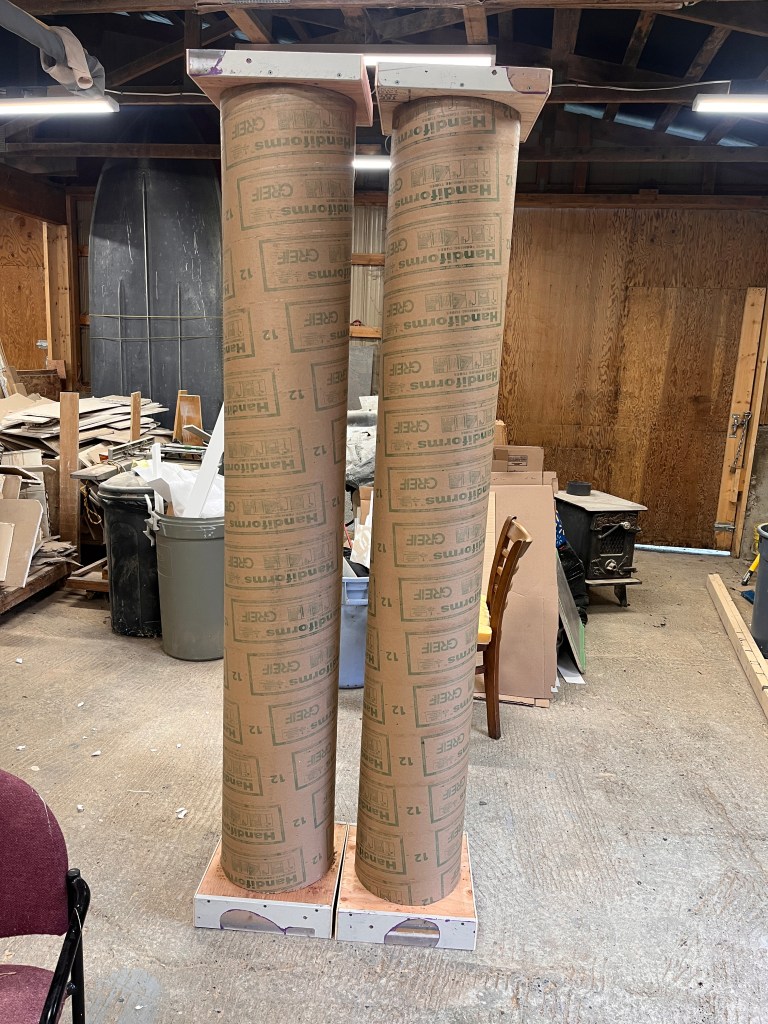
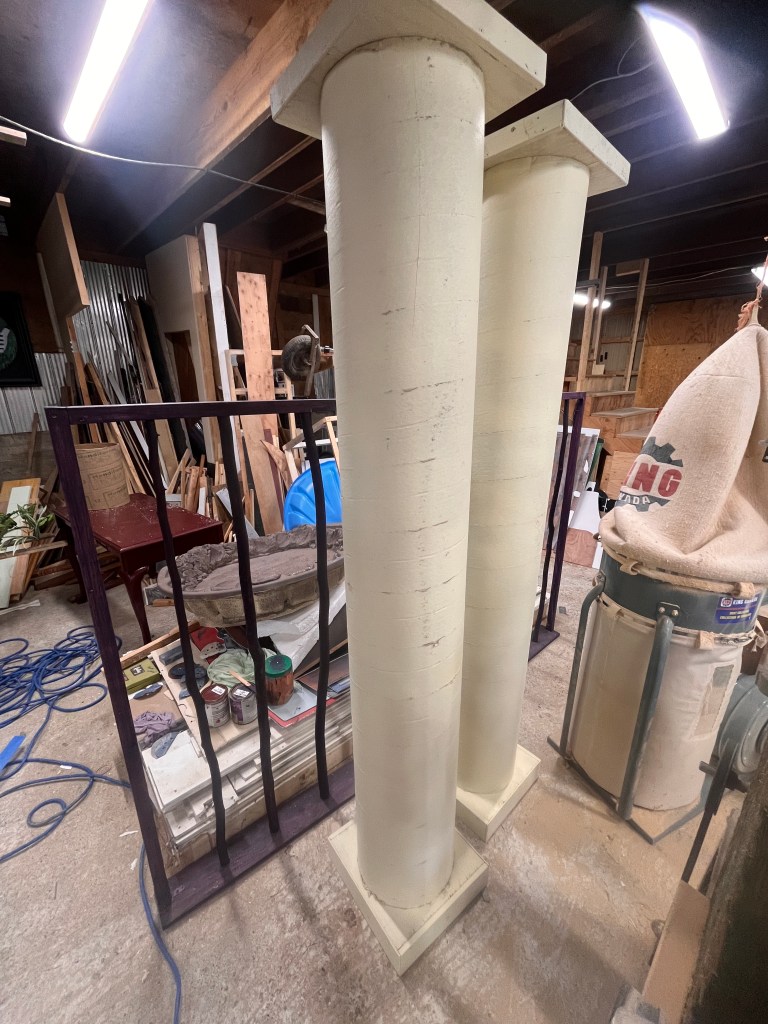
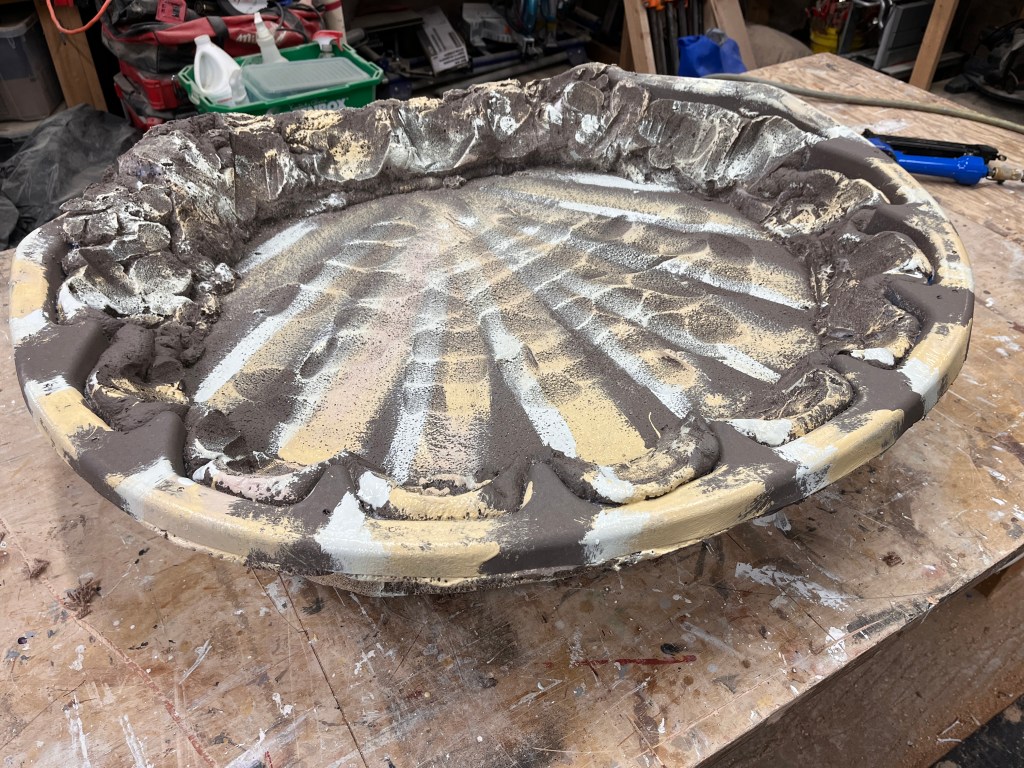
And last but not least, the piece de resistance, the vinyl floor!
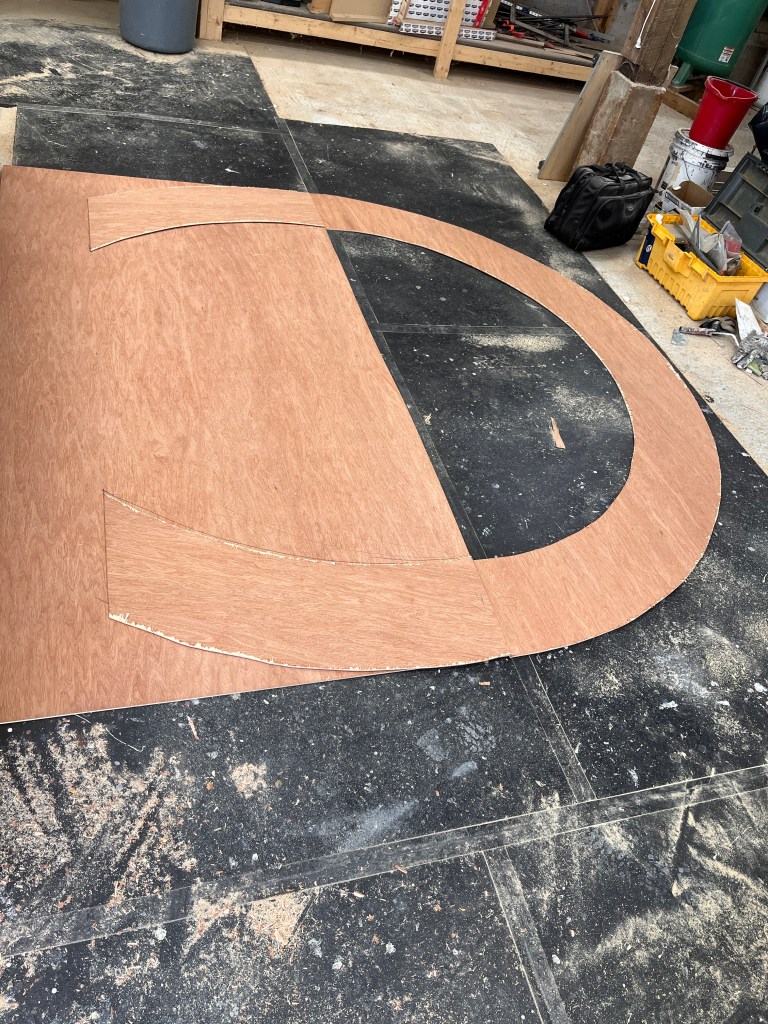
This was my 3rd time painting this large chunk of sheet vinyl in the school gym. On Friday night I did the base coat and all the texturing, let it dry overnight, and on Saturday I put a clear coat on it and prepared it for rolling up on Sunday when the cast was back. I was going for a sandy ocean floor but I added some “wavy light” lines with my spray gun, which seemed a tad bold at the time but I think it really worked out well.
What generally works for me when buying floor paint, is that I go to my local pro paint store (Cloverdale Paint where I rarely shop because their paint is so expensive, but it’s also very good quality and I know it will stick nicely to the vinyl). They usually have a variety of 5 gallon pail “mistints” that are very reasonably priced. I buy a few other 1 gallon mistints and mix my own base colour and go from there. In this case I was quite worried that my mixed base colour turned out too pink, so I added quite a bit of texture over it, and it turned out very good.
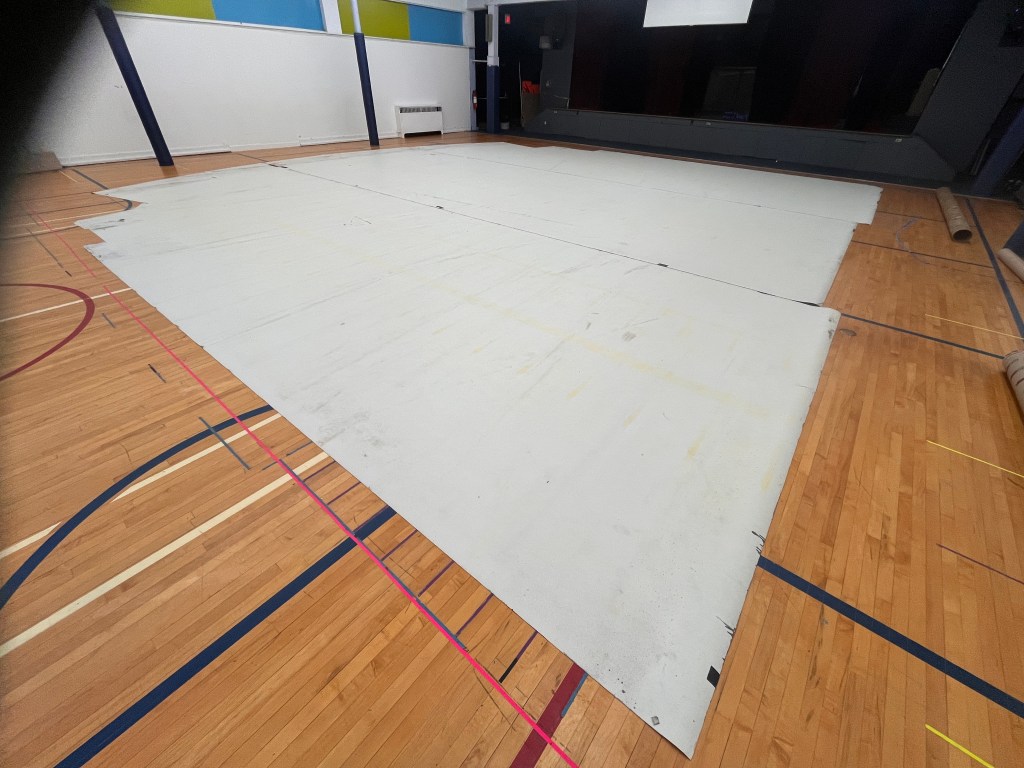
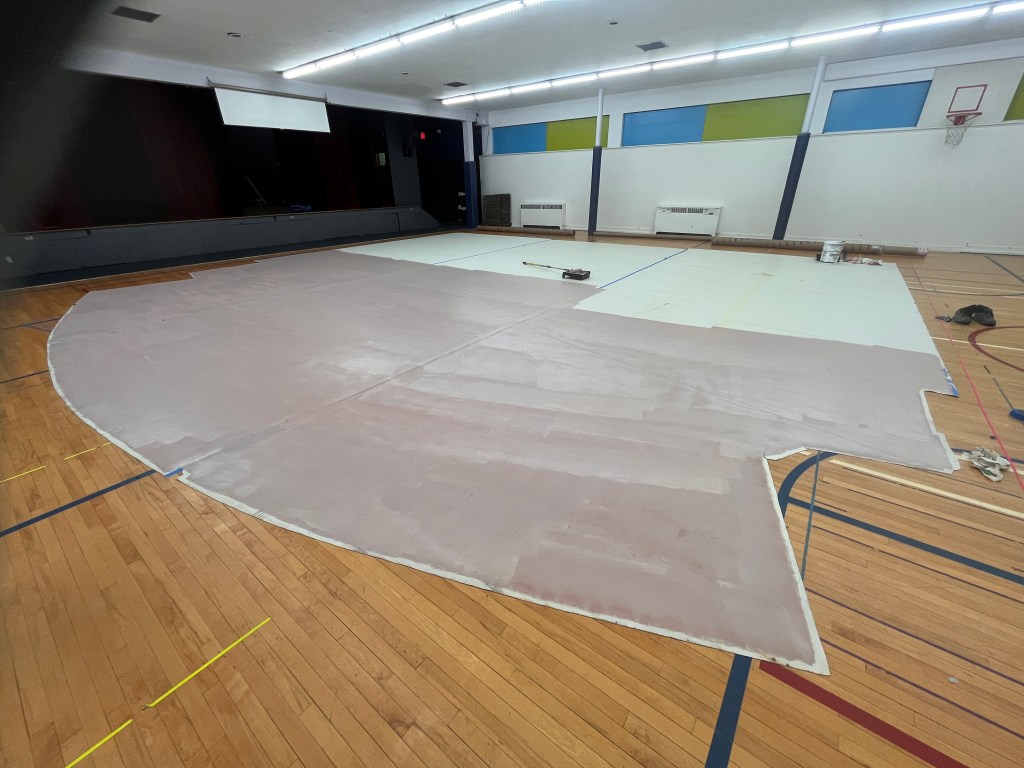
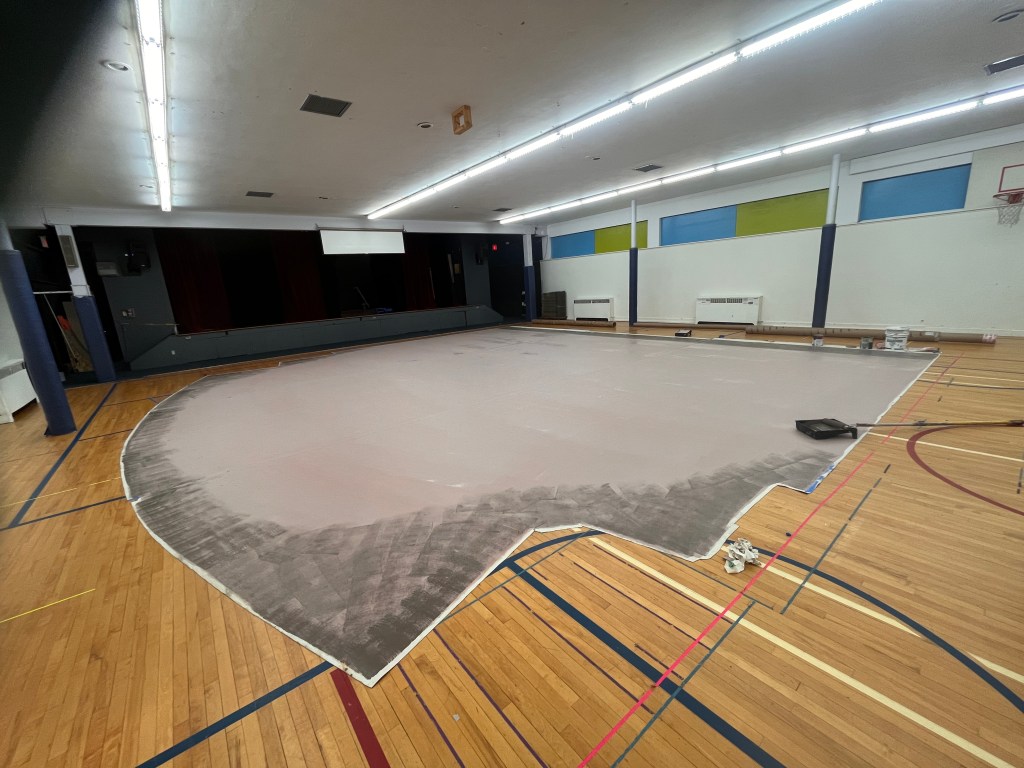
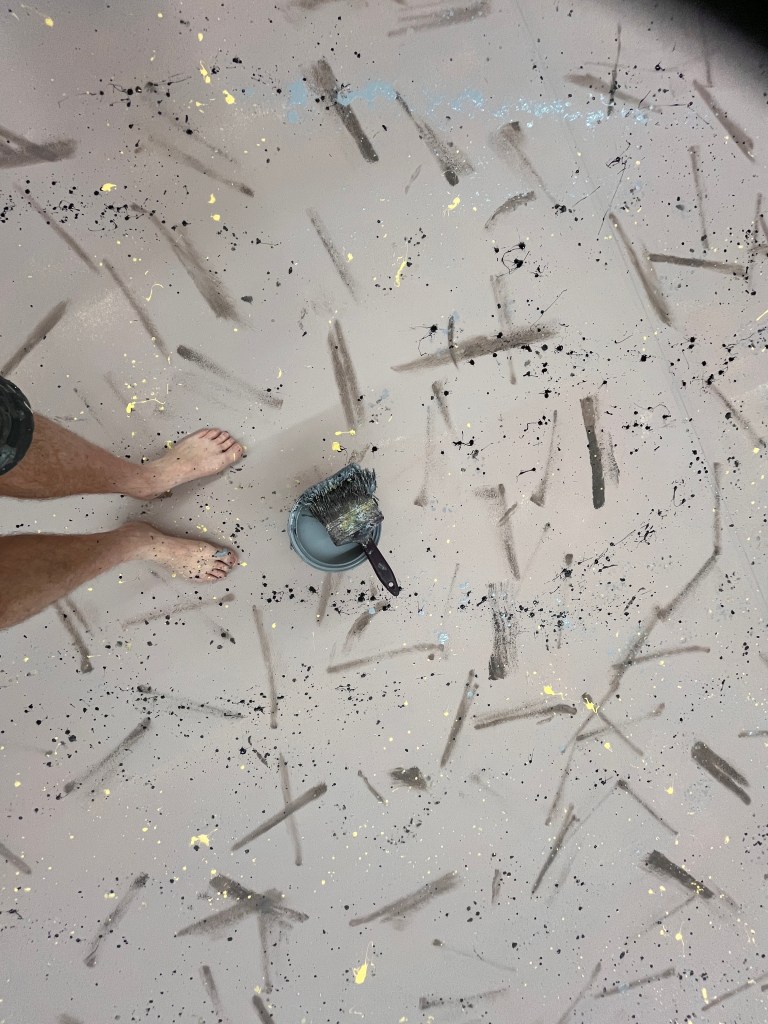
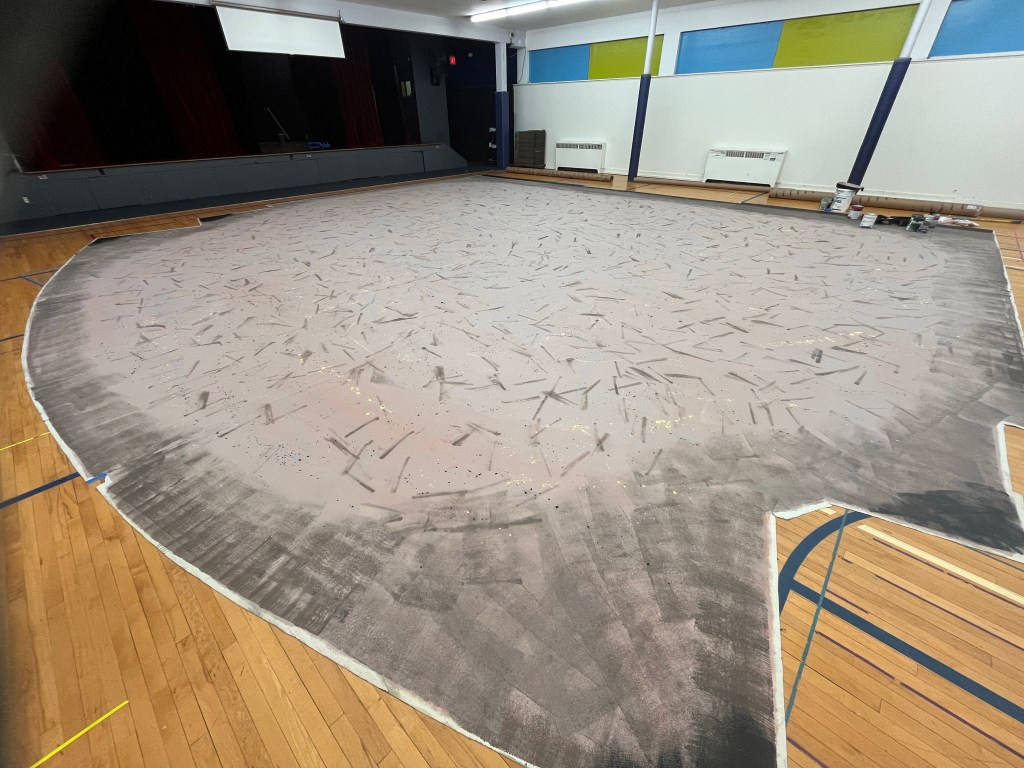
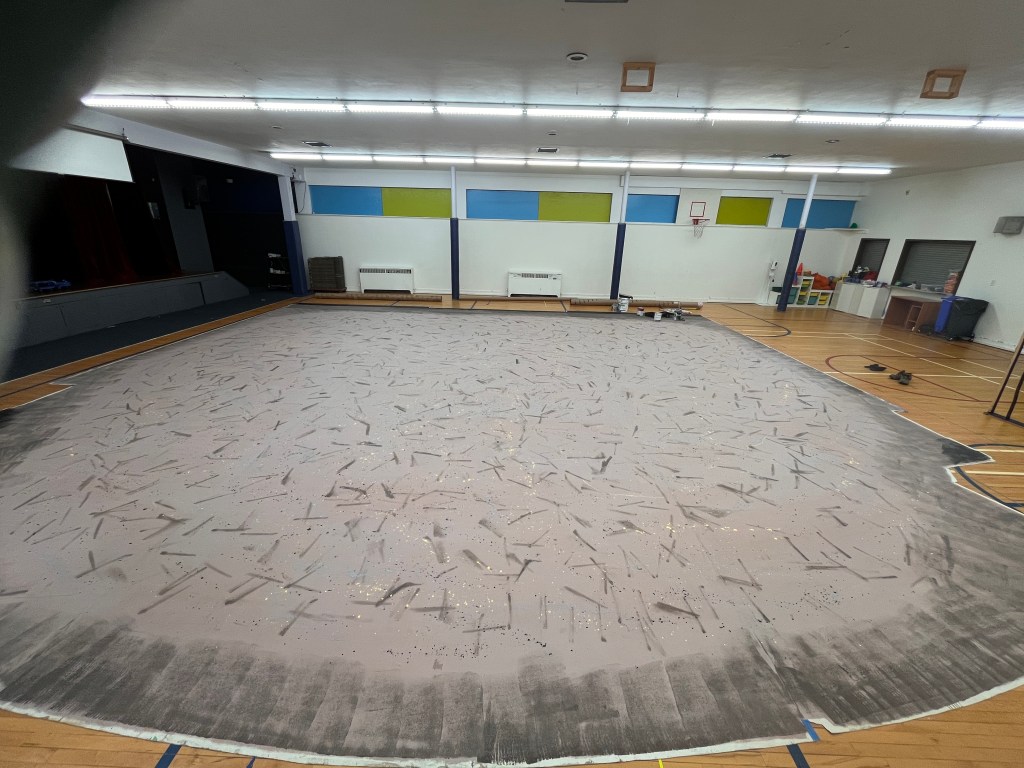
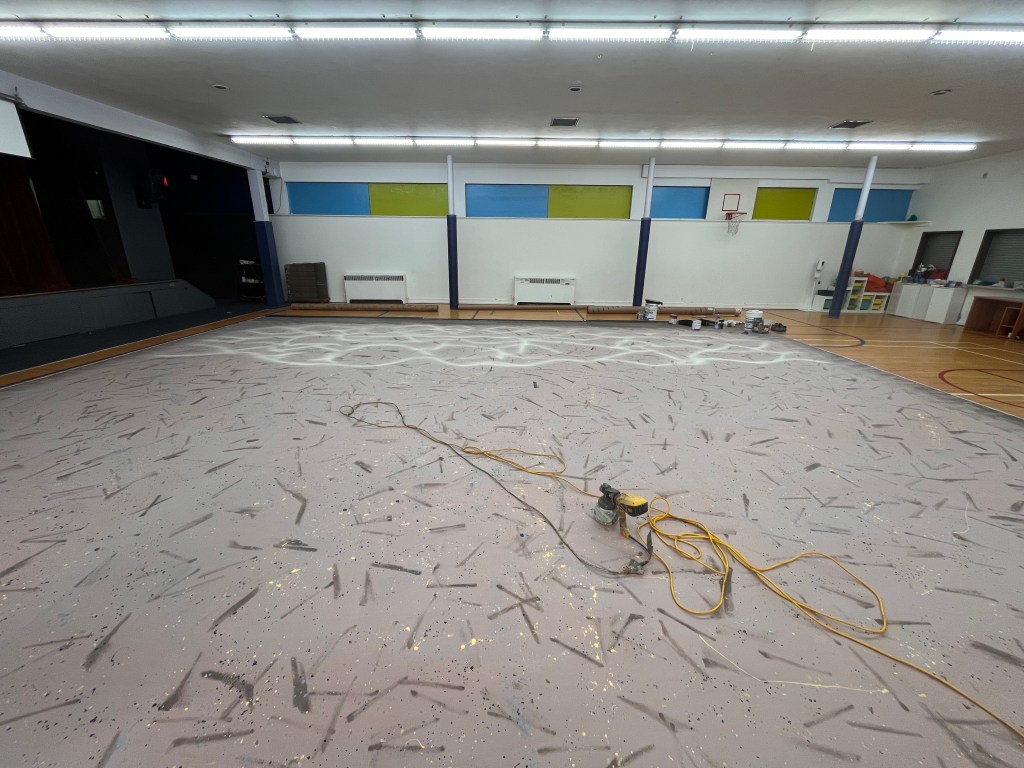
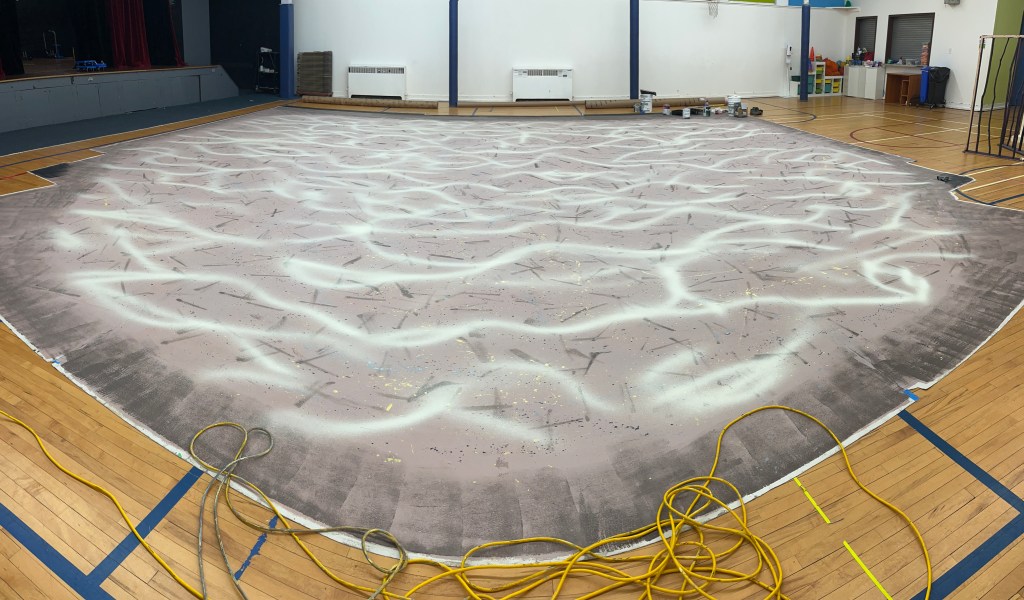
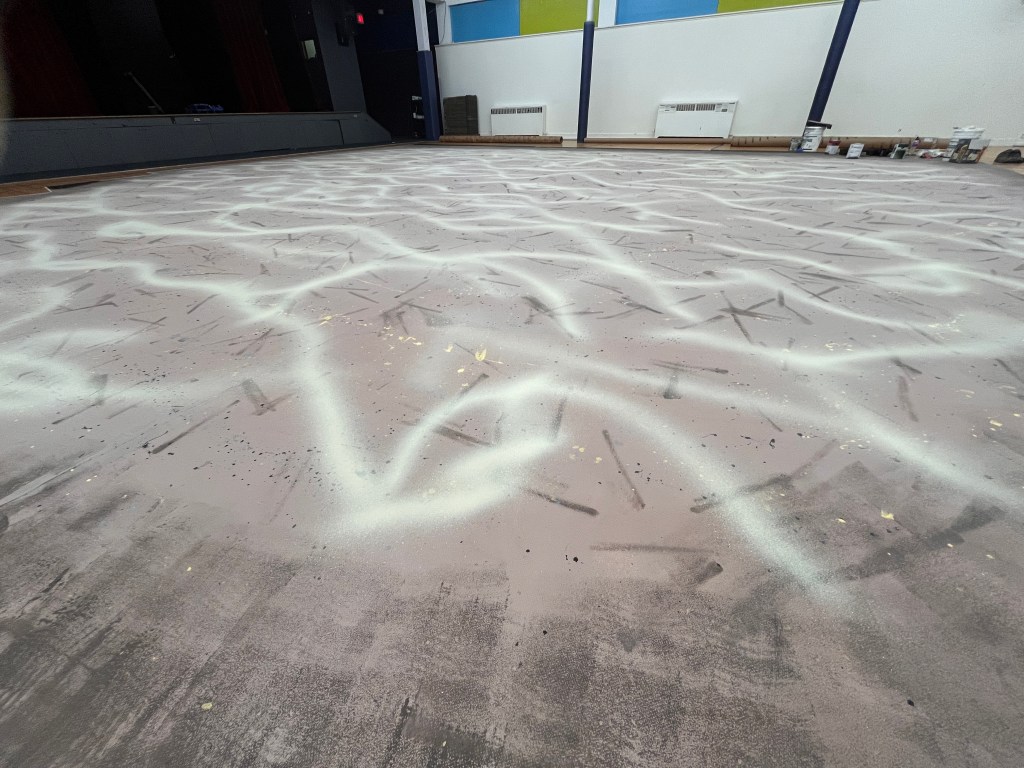
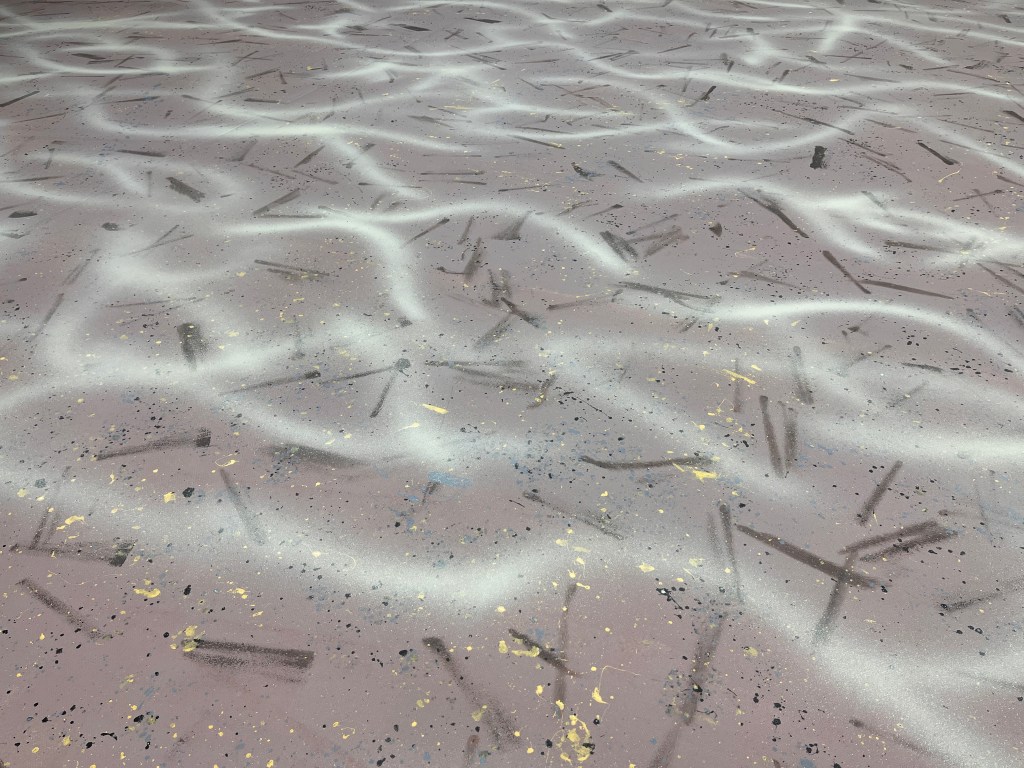
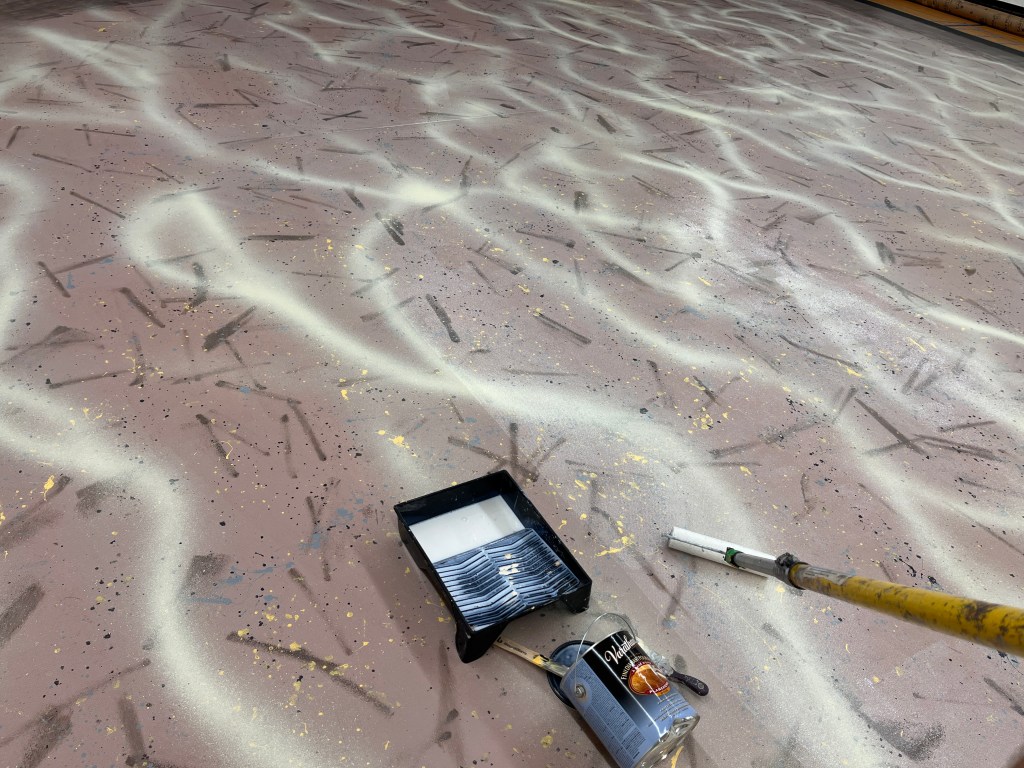
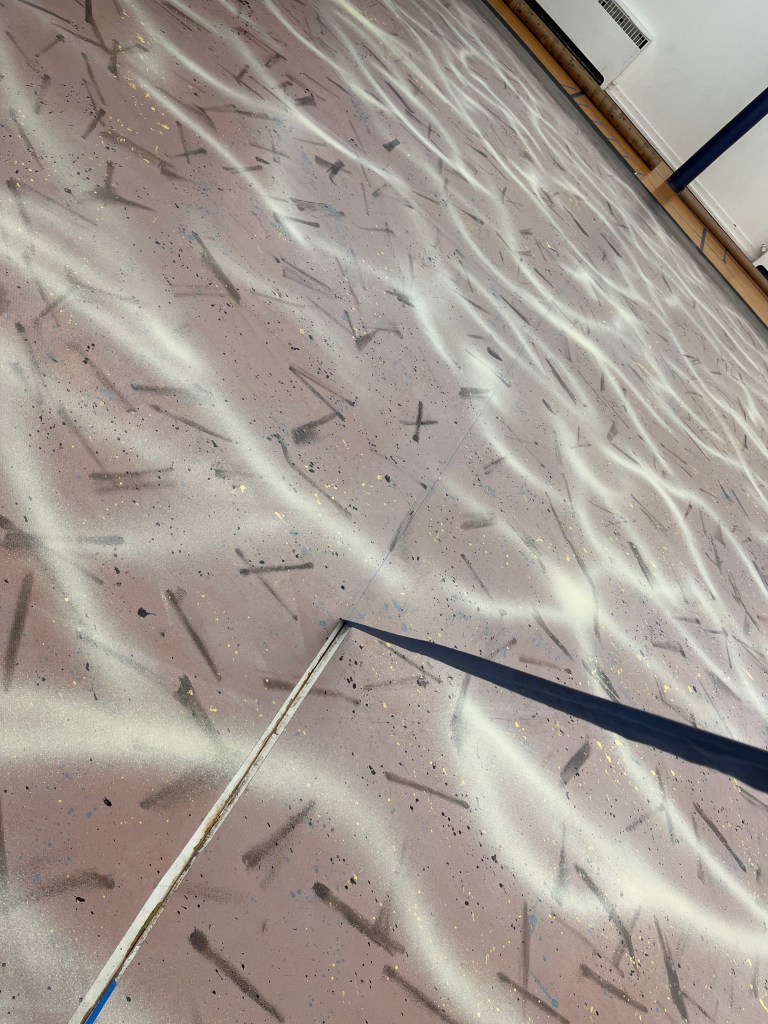
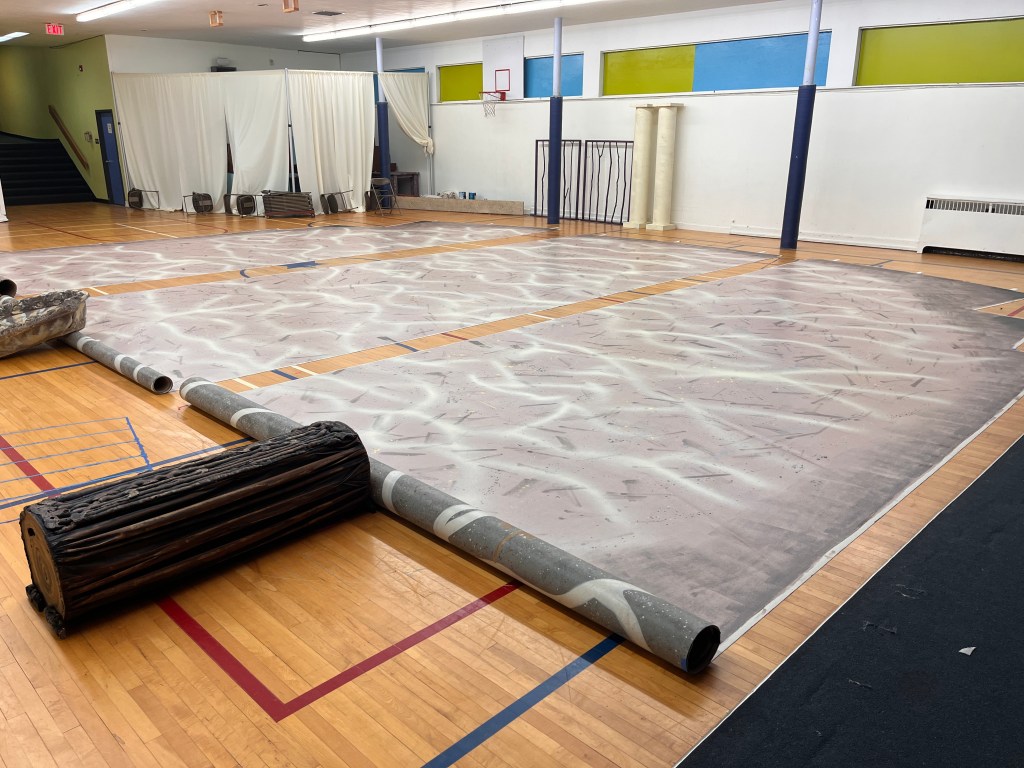
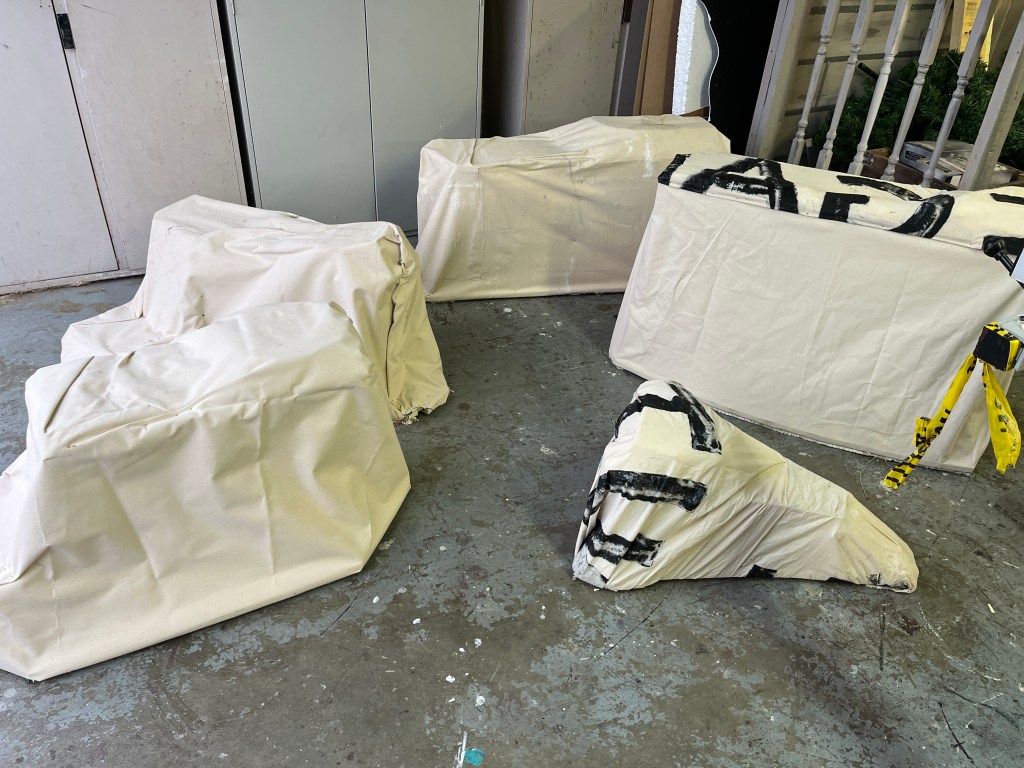
And then finally it was load-in day! Due to the nature of the set design, there was no large structure to build on site! So it was a matter of laying down the floor, painting the seams, and sliding all the set pieces around while V built lights. I also repainted part of the stairs. (I should mention I didn’t paint much of the set at all actually – a parent volunteer did most of it and did a fantastic job).
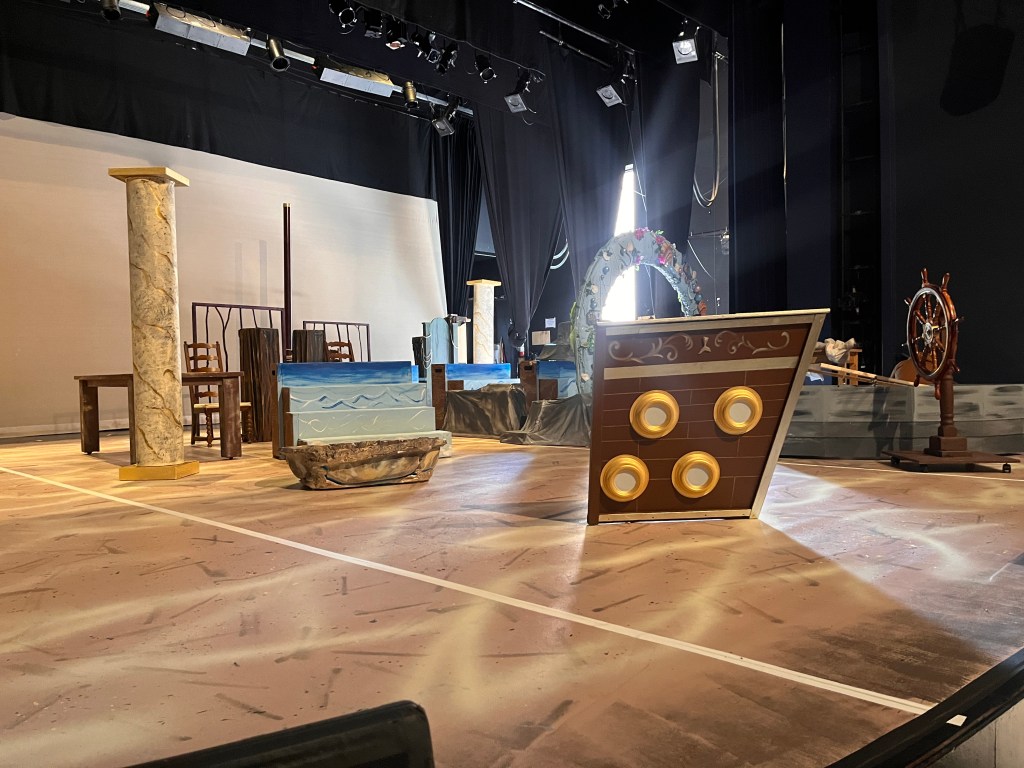
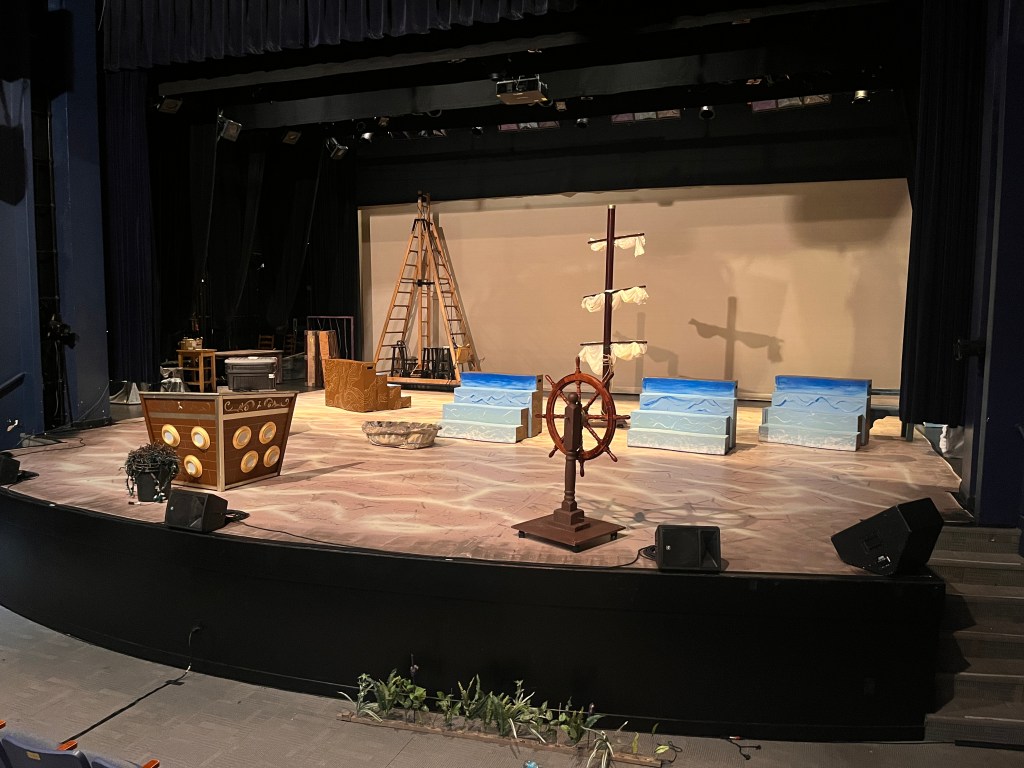
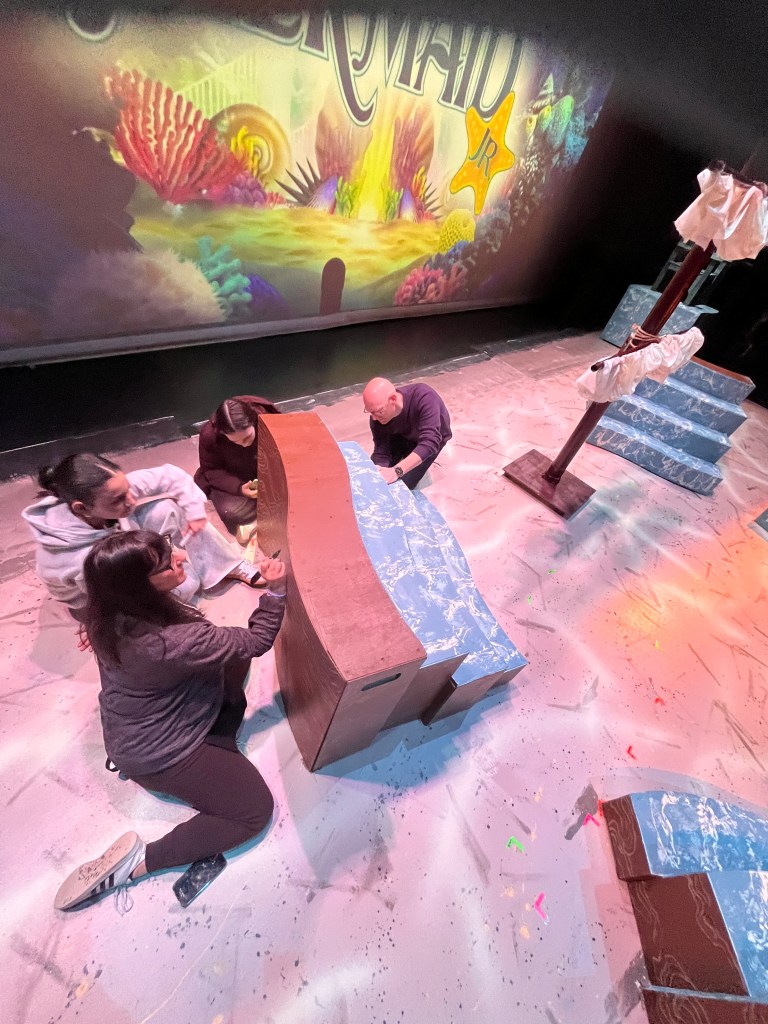
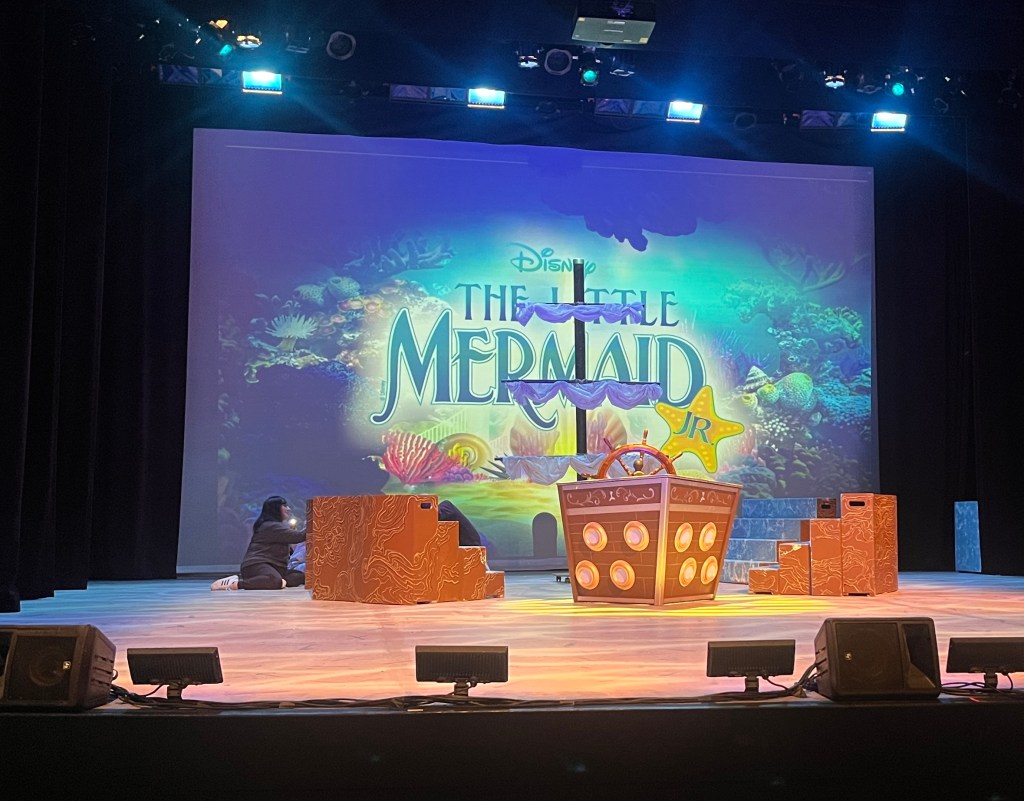
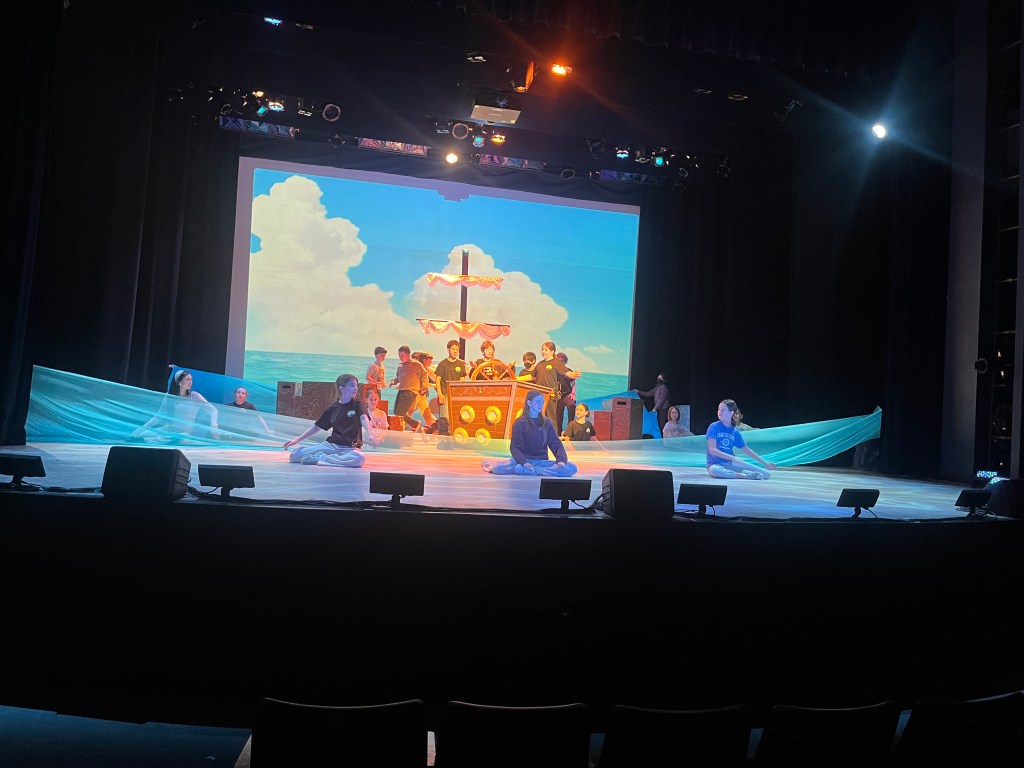
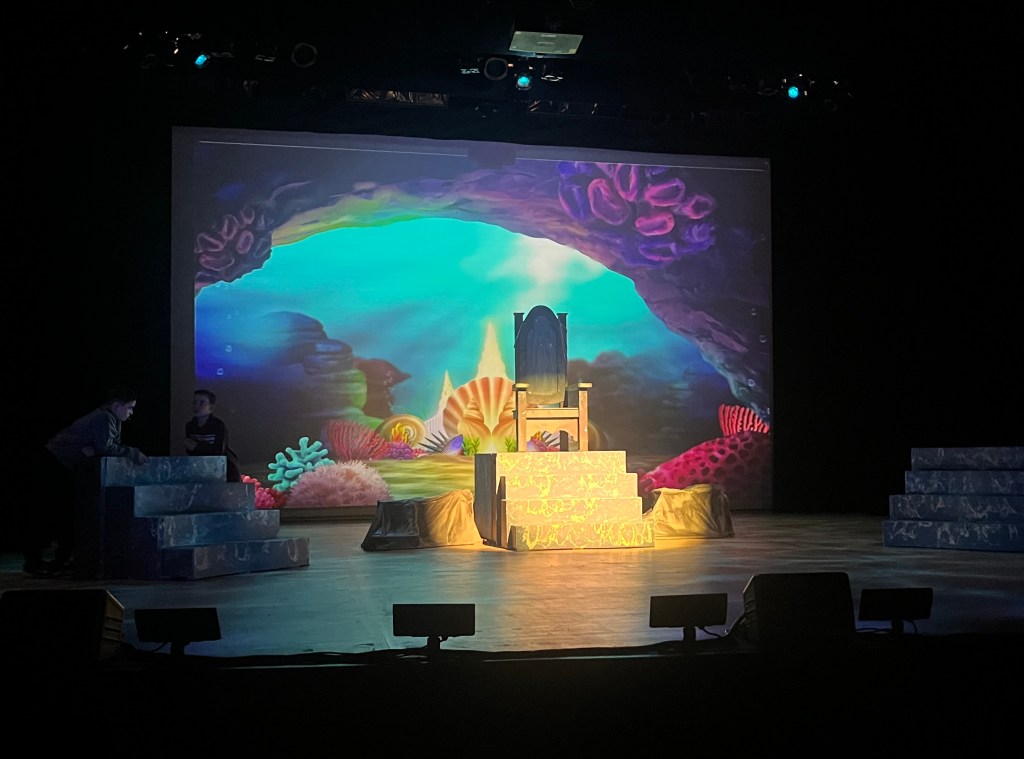

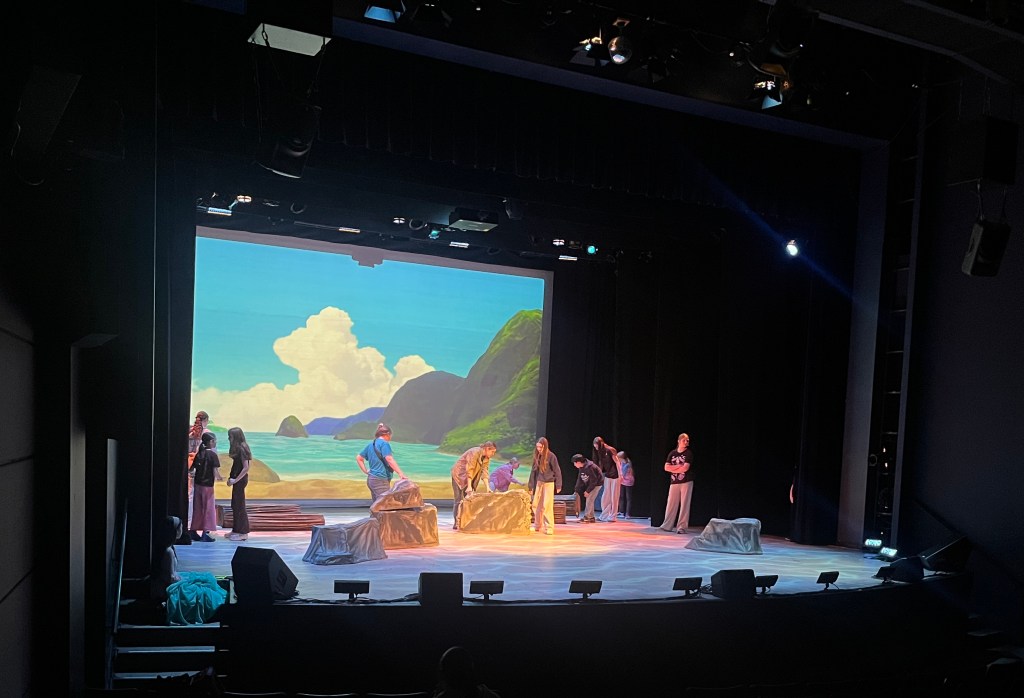
More production photos to come, hopefully! But here is the last scene with the kids (all 70 of them!) before we took it all down:

Set Build: Glory
Gallery 7 Theatre recently presented a play called Glory by Tracey Power. On the surface it is a hockey play about a very succesful women’s team that played in Ontario in the 1930’s. It has a variety of themes, however; and is a different type of play than many I’ve seen. I was tasked with building the (simple) set and as our set designer was out of commission at the time, I also took on the painting and a few of the projections.
Director is Gabe Kirkley, and set designer is Jeff Kiers.
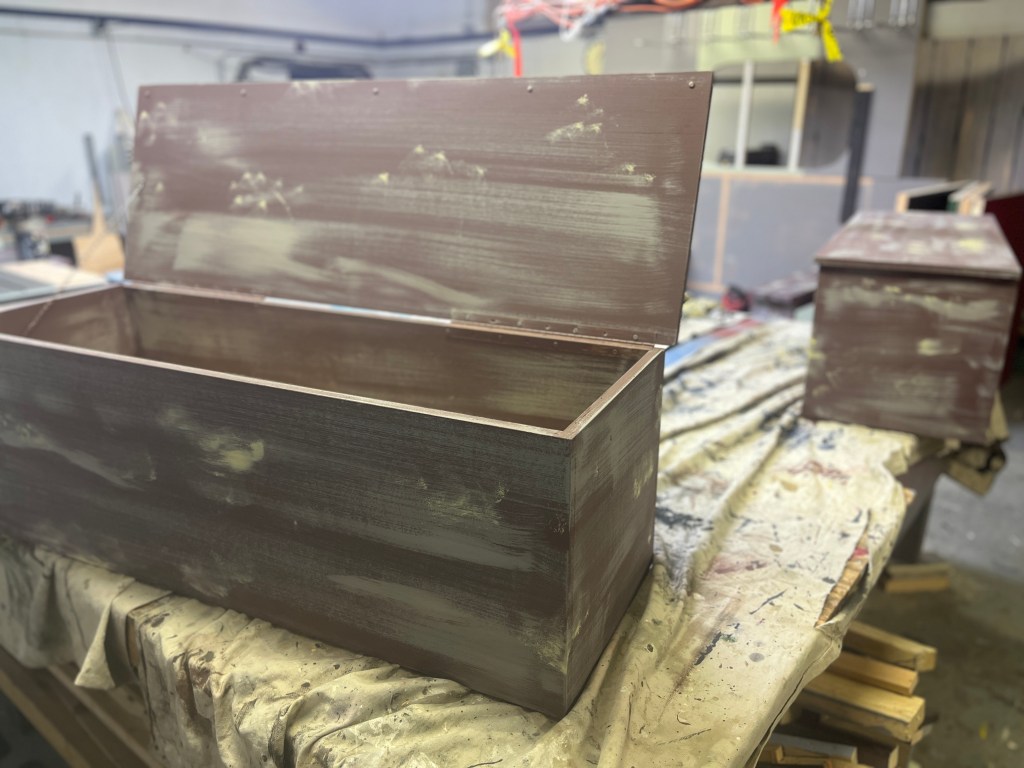
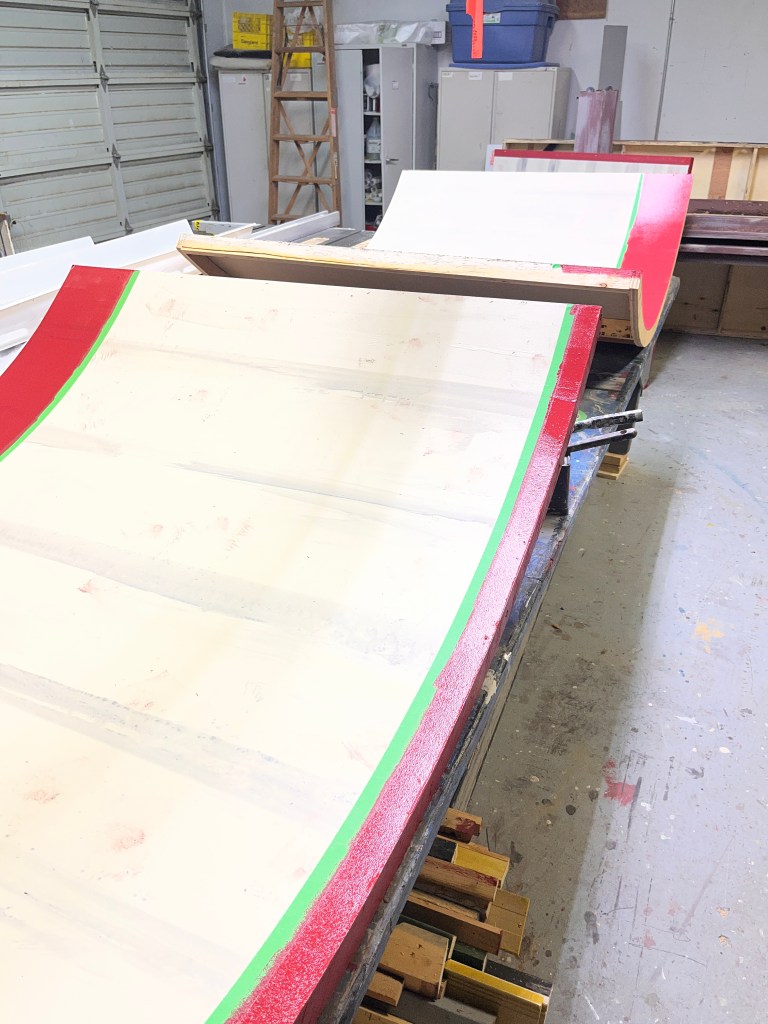
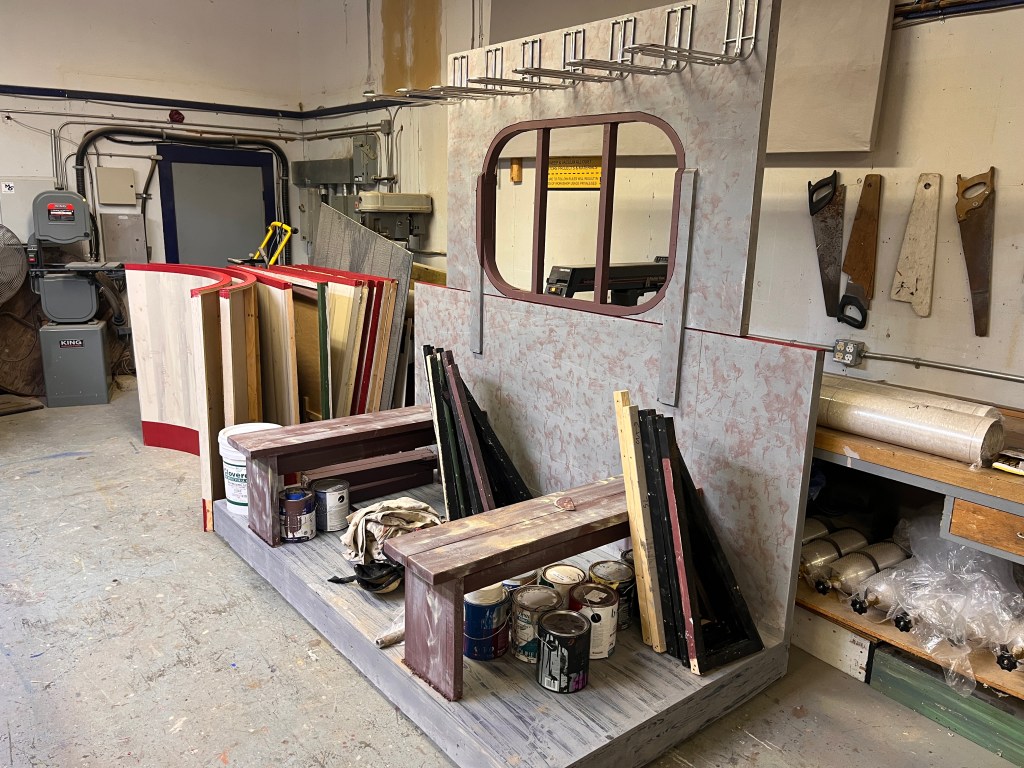
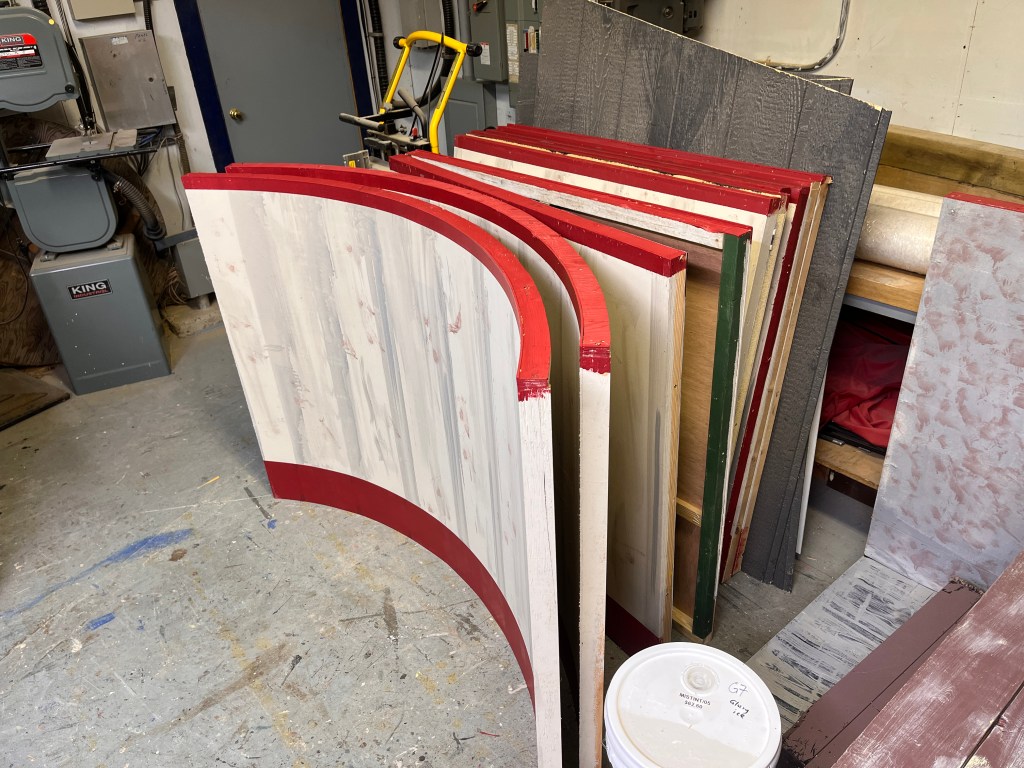
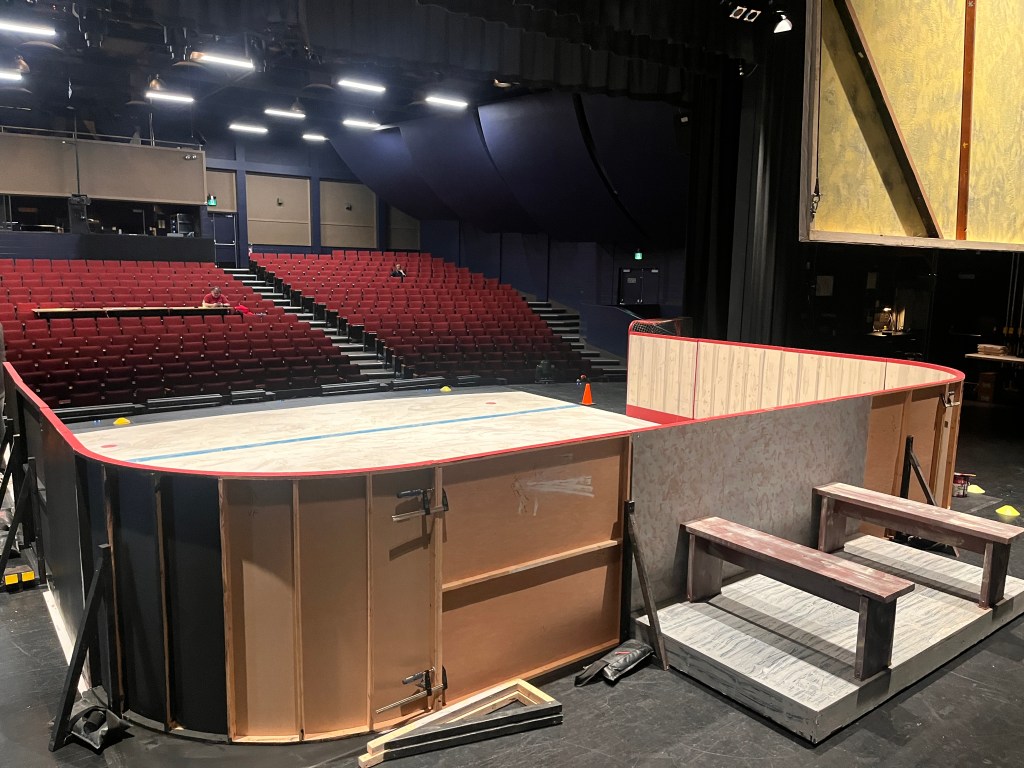
Here are some photos from the build.
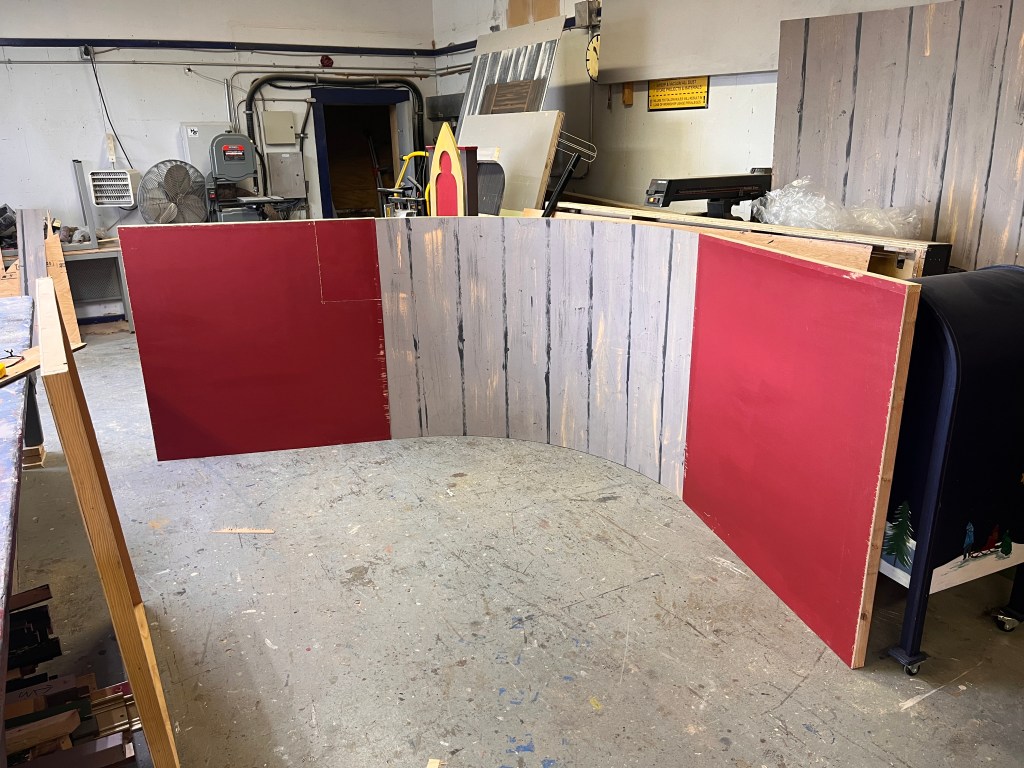
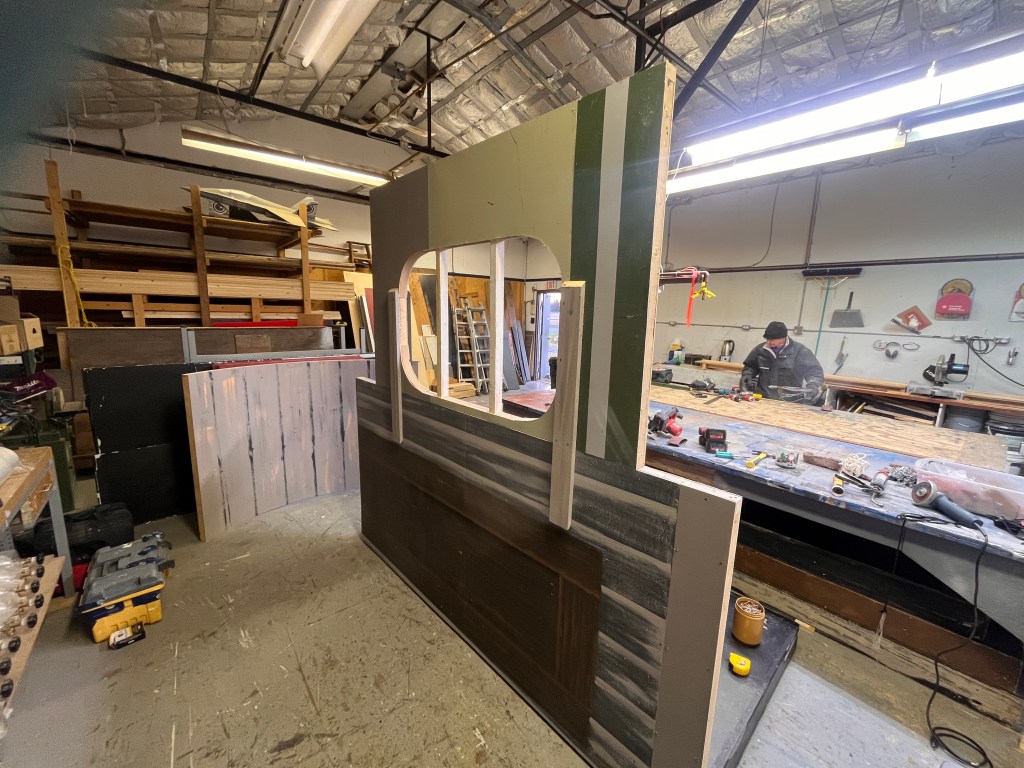
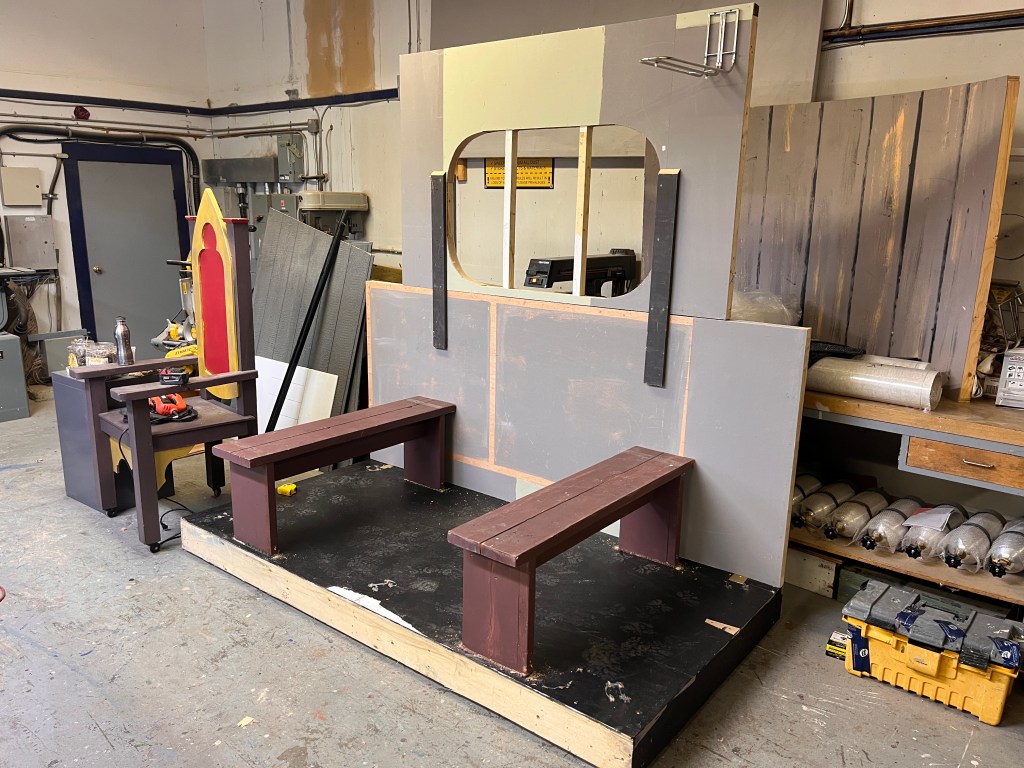
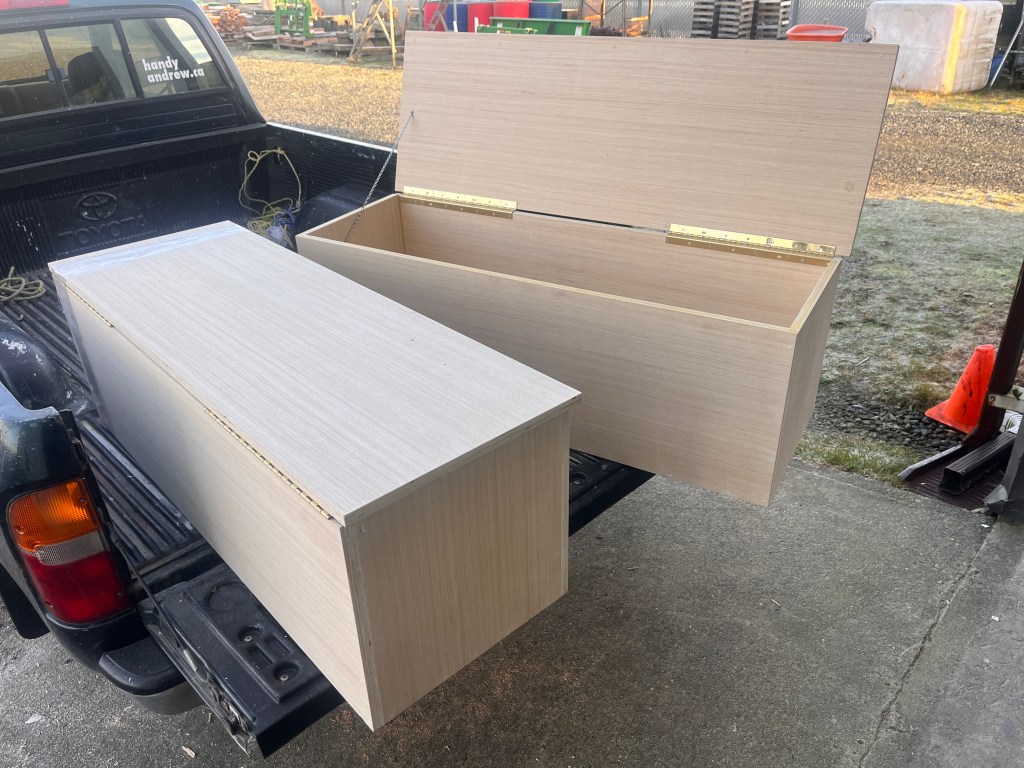
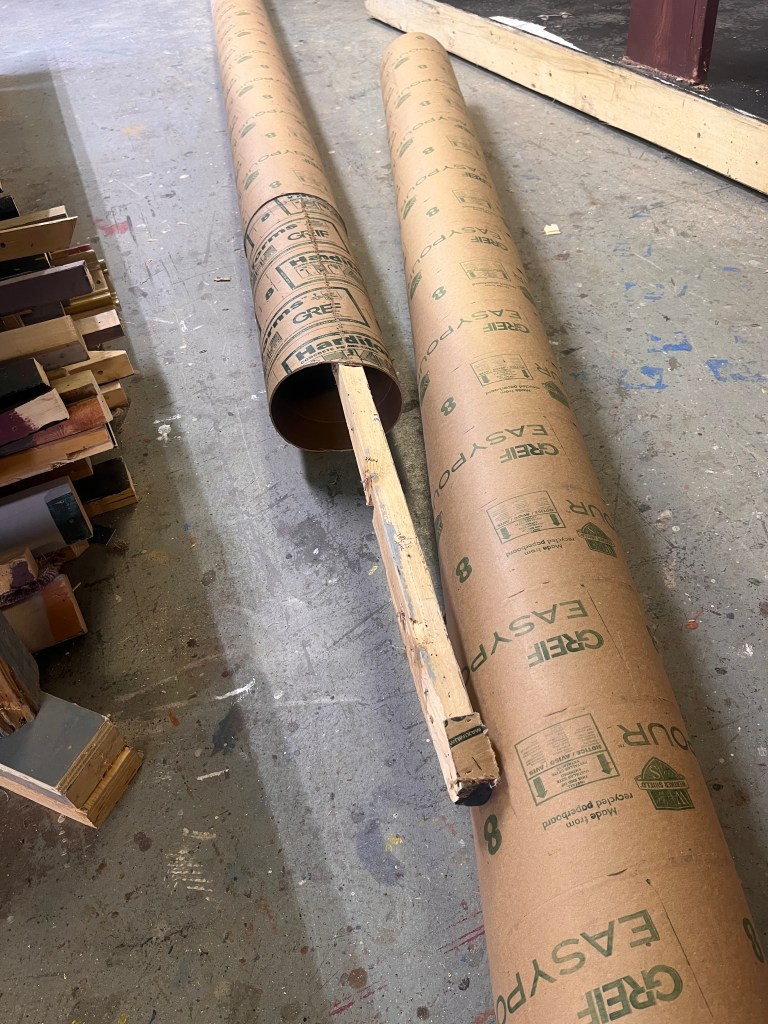
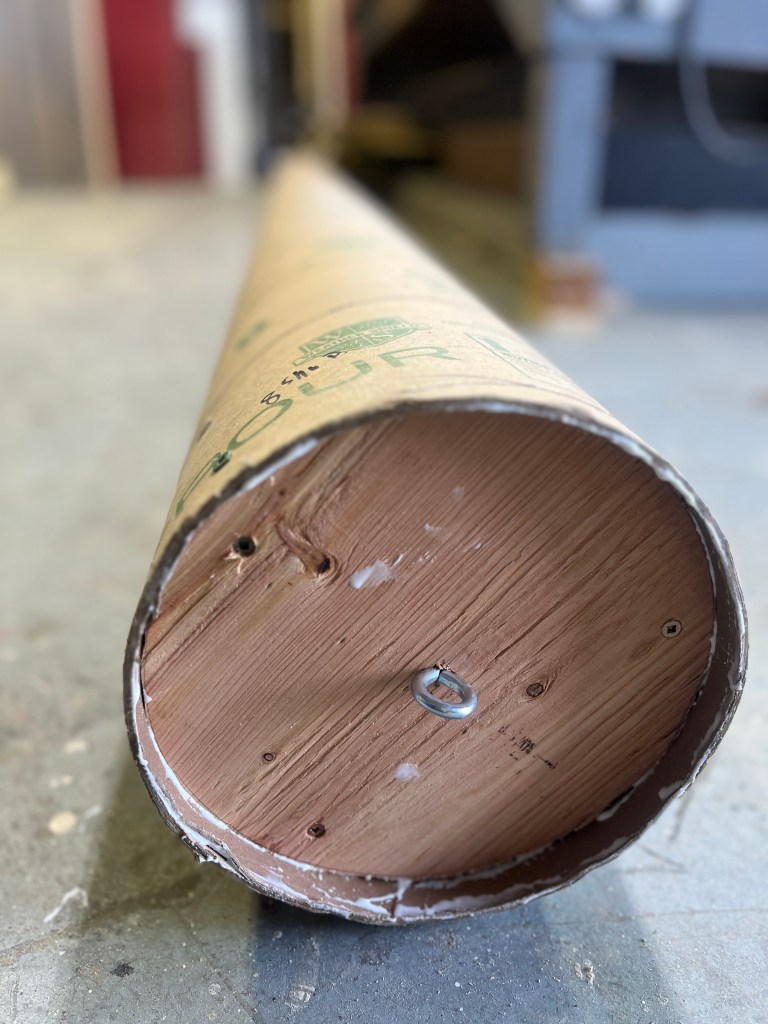
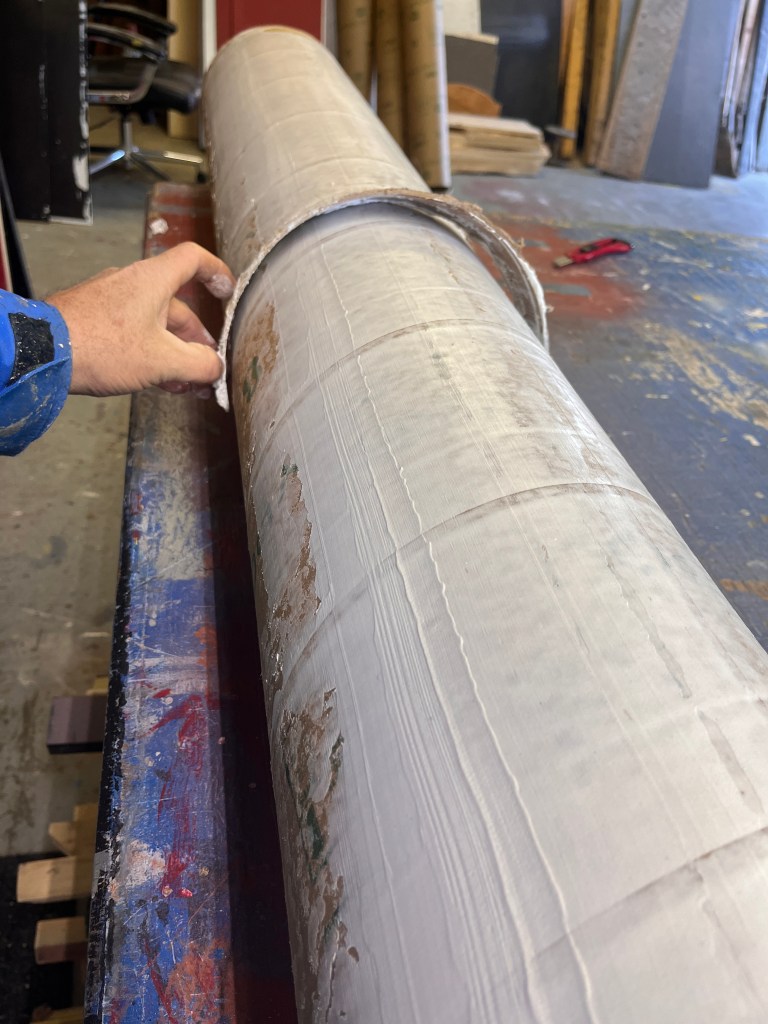
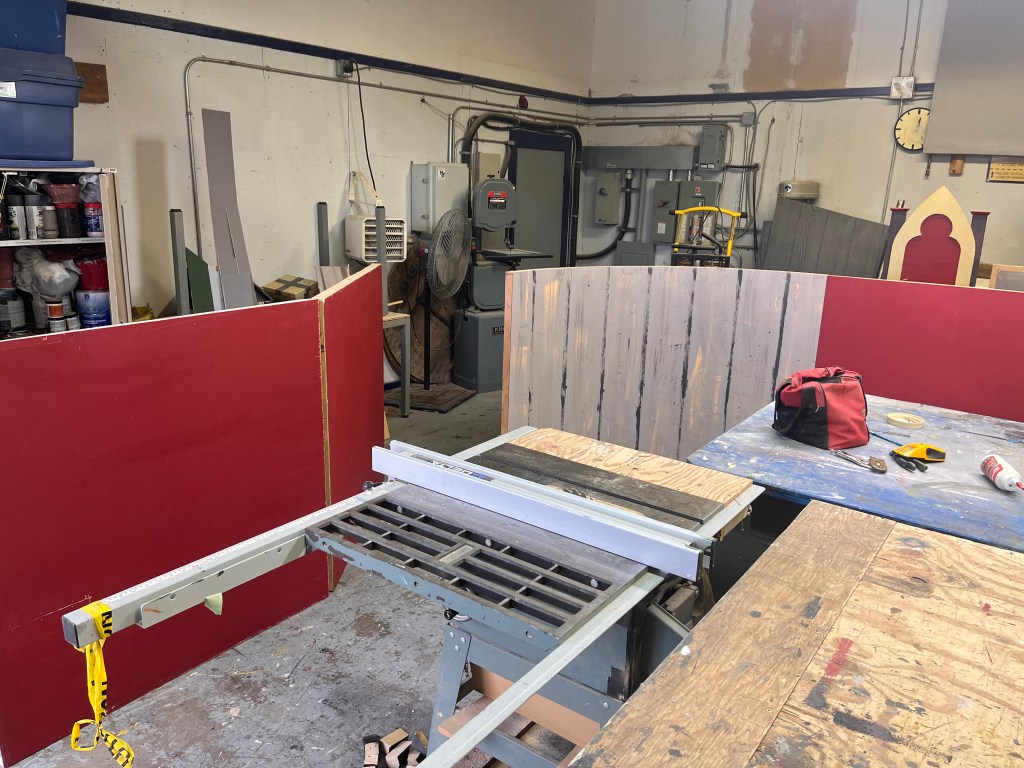
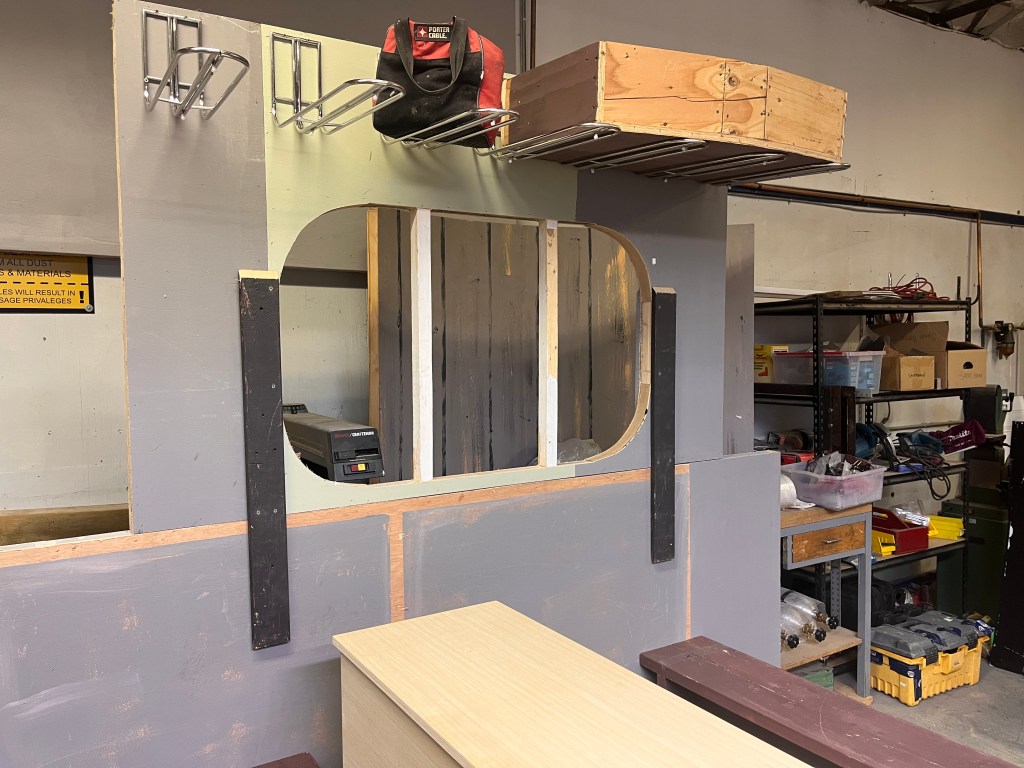
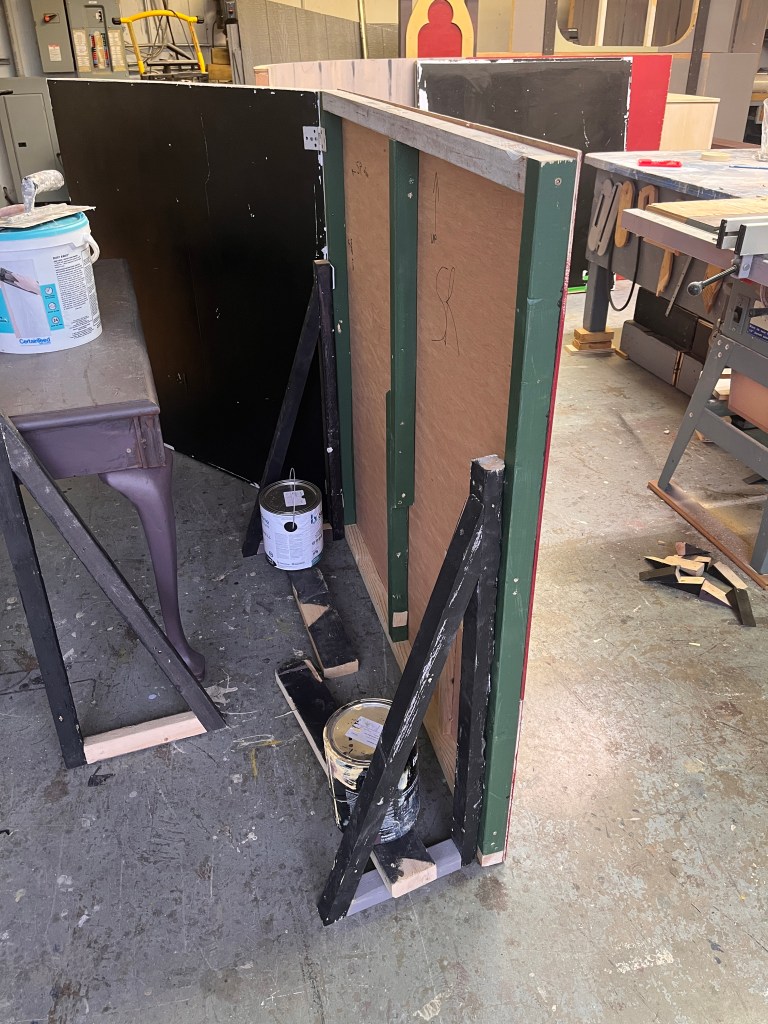
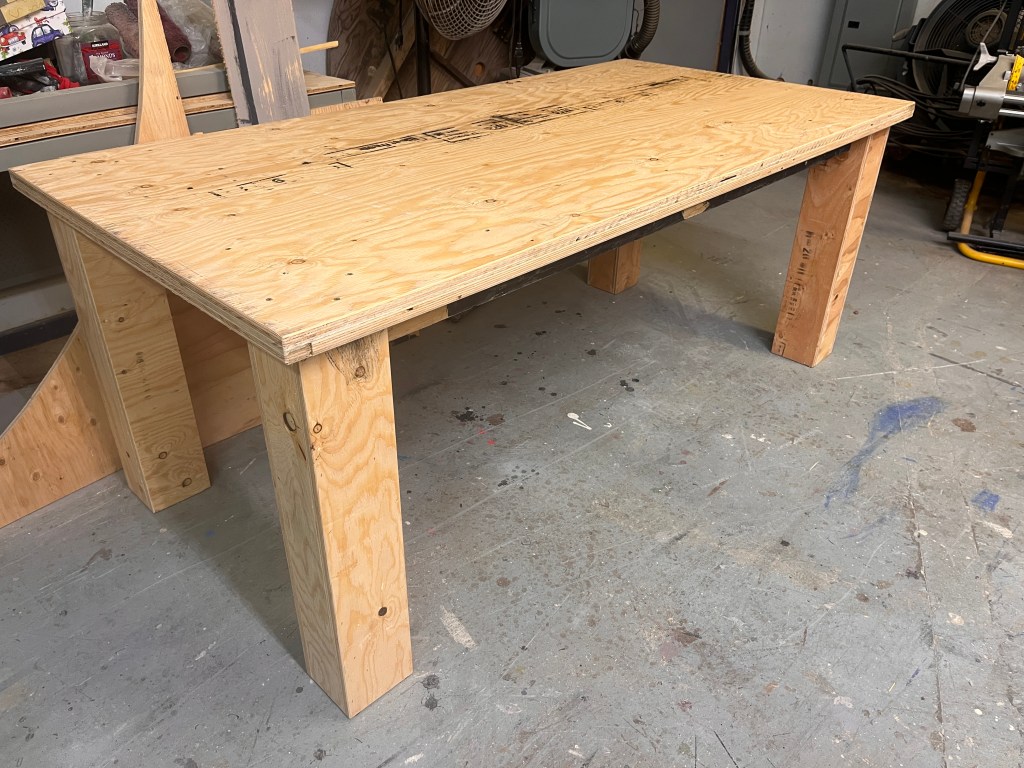
As you can see it is basically a hockey rink with some furniture. A few more photos once painting started:
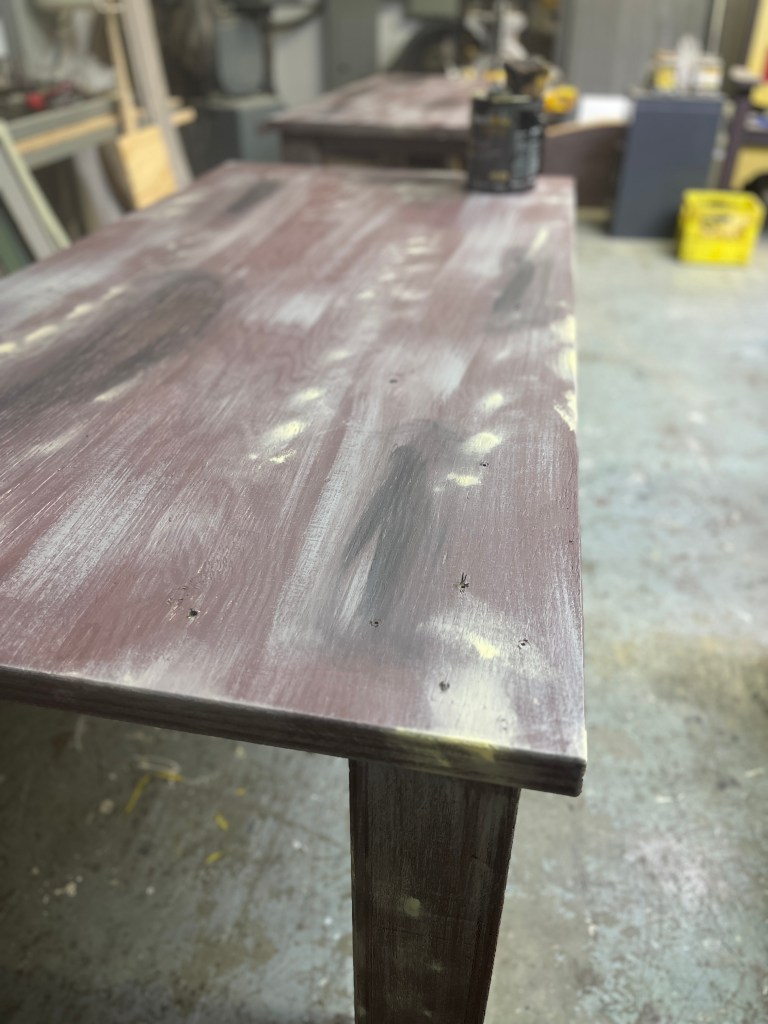
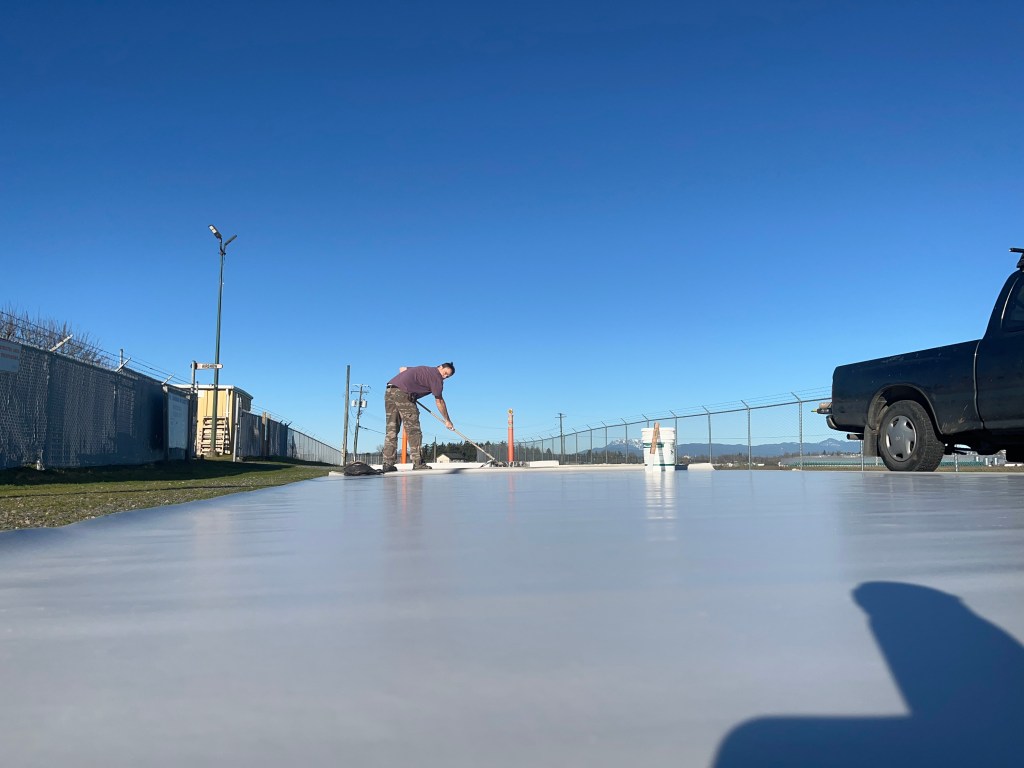
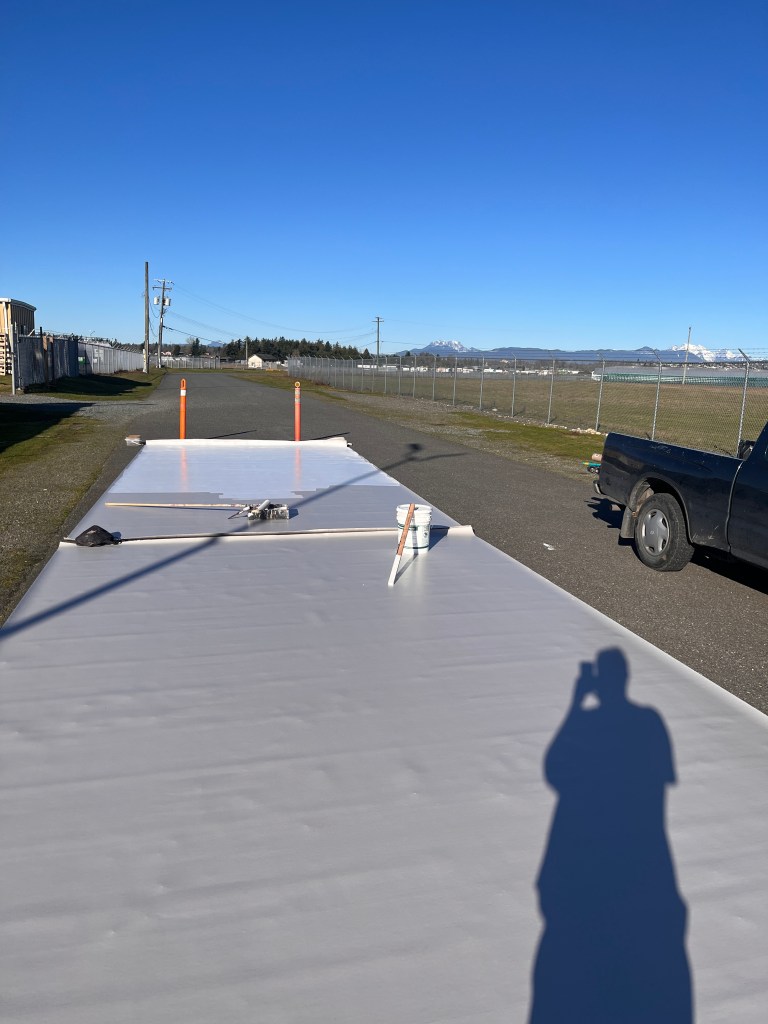
And a few photos from tech week:
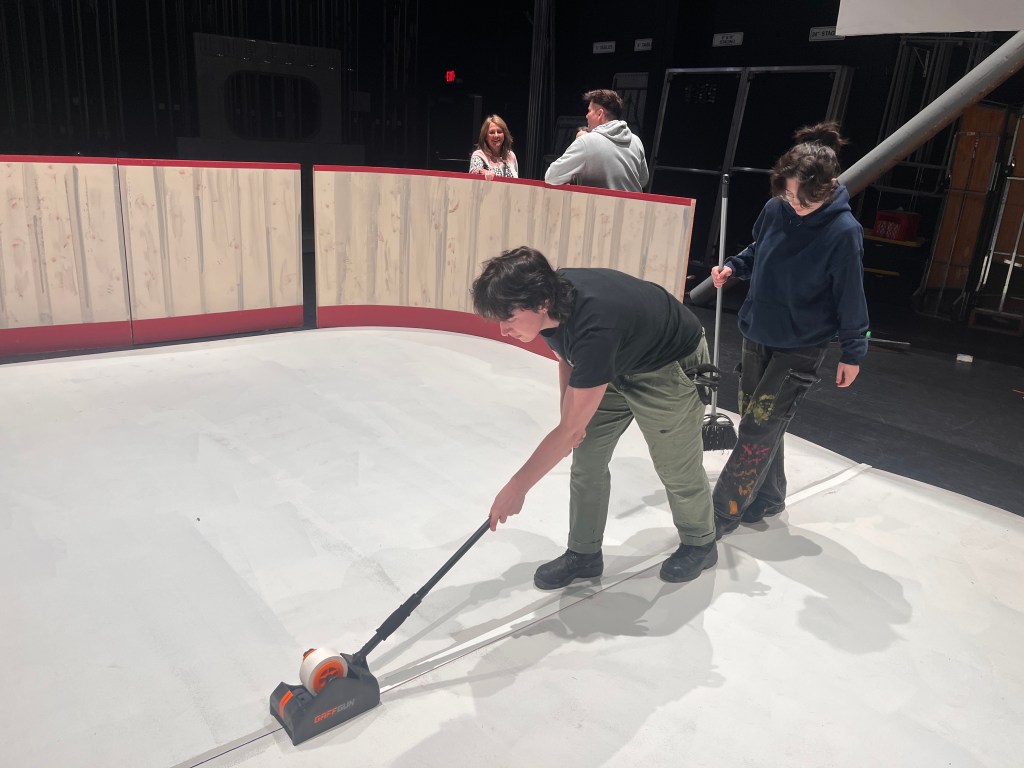
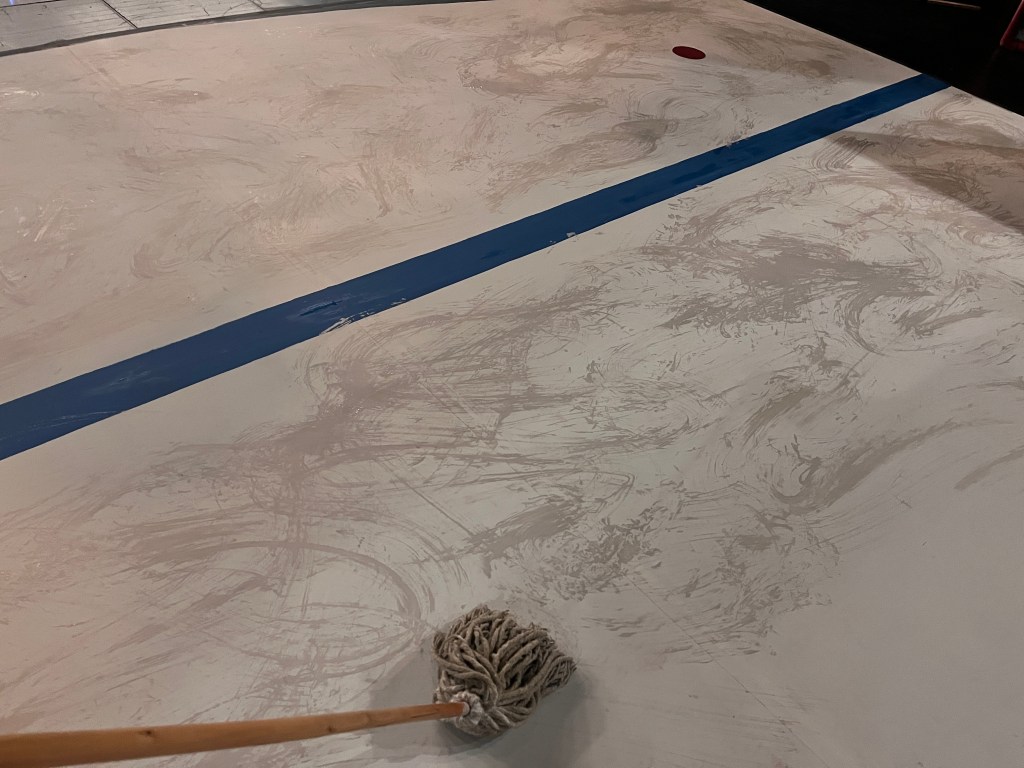
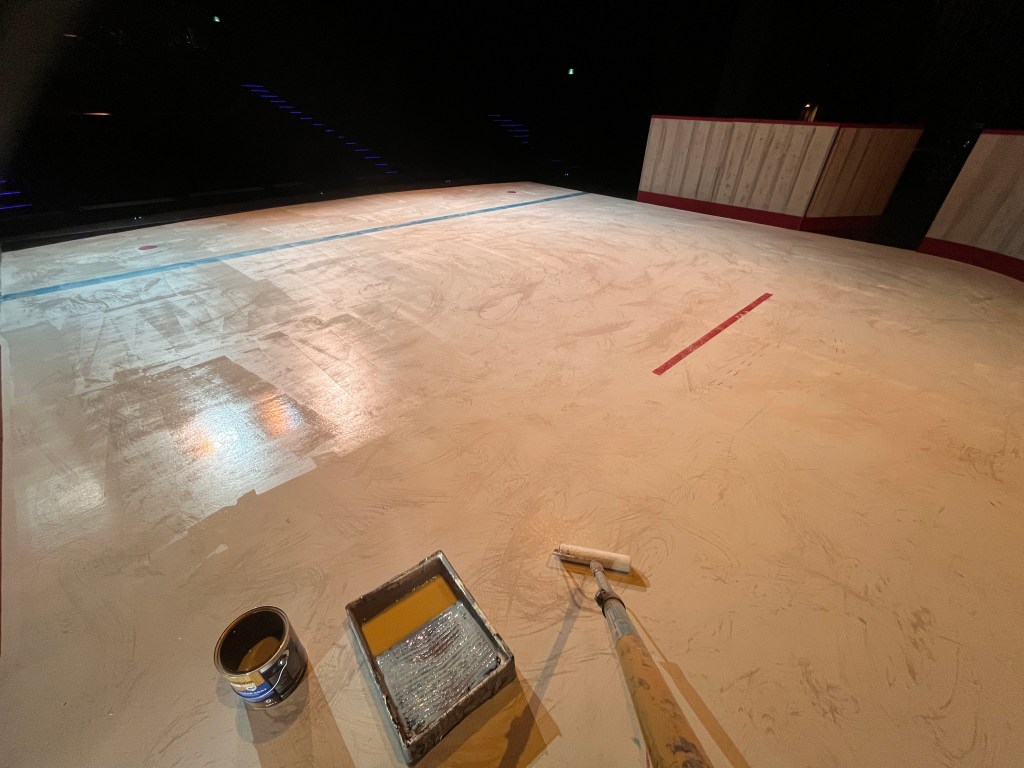
The “ice” turned out better than I expected. We used cheap sheet vinyl sourced from our local End of the Roll. I painted the bottom of it a light grey (it still looked bright white under lights). Then added some other colours to make it look dirtier, a couple coats of clear coat to protect it… it lasted the whole run but definitely got scuffed up by the hockey sticks and boots.
Official production photos to come….
Set Build: Charley’s Aunt
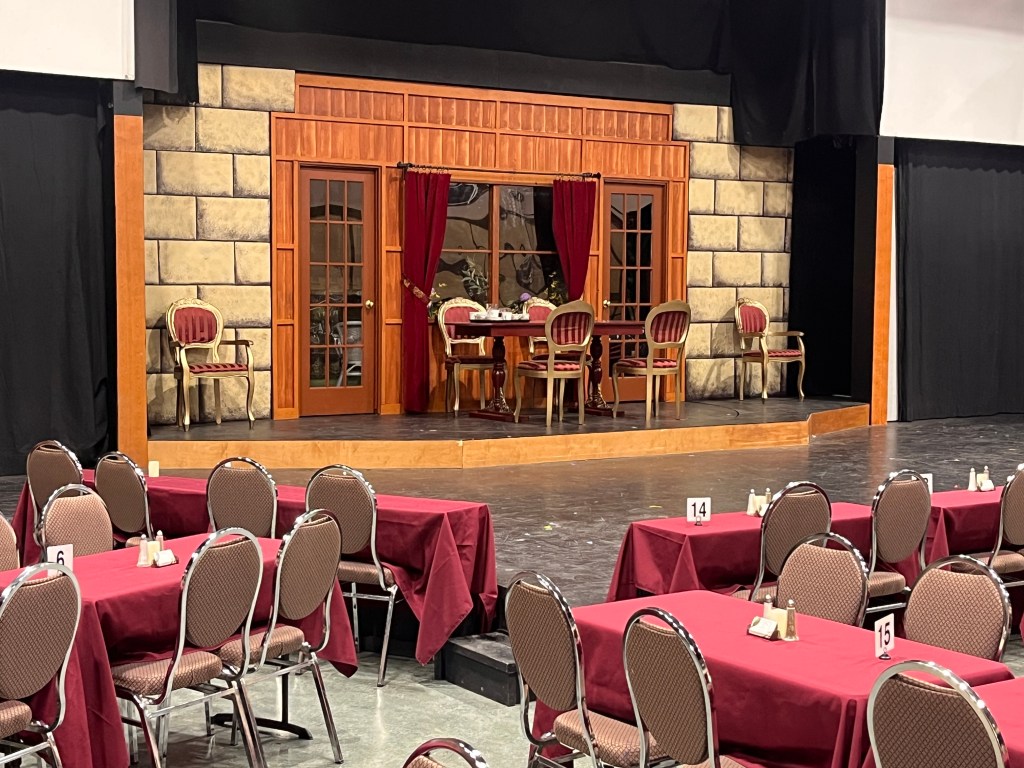
My first build for Theatre in the Country (TIC) is in the books! Charley’s Aunt is now playing in Langley: http://www.theatreinthecountry.com
It was a new experience for me – building on site instead of in a workshop – and with quite a large team of support, from carpenters to painters to set designers and set decorators – many of them volunteers. Combined with a simple set plan, it all came together relatively quickly.
It’s a funny play with some strong lead characters and delicious plot twists.
Set Build: Miracle on 34th St.
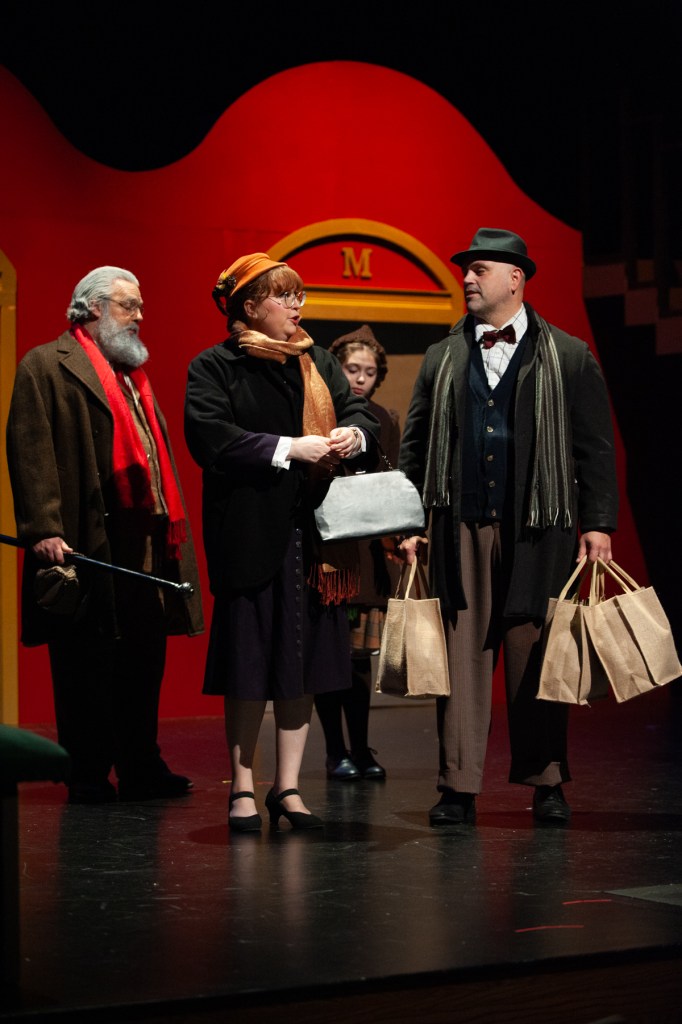
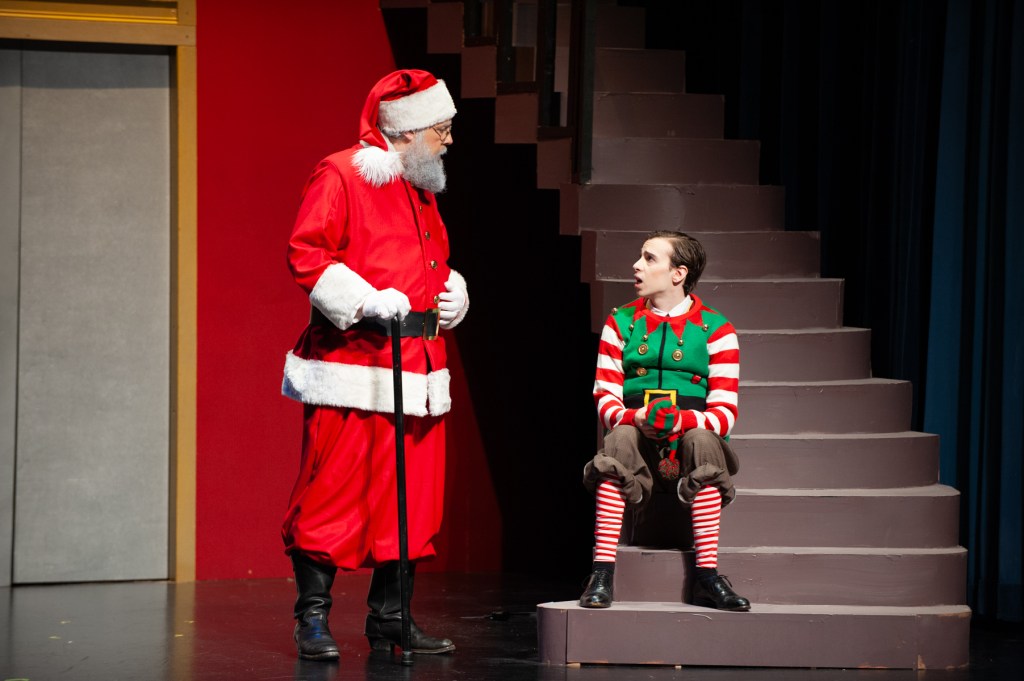
Gallery 7‘s nearly-sold-out production of Miracle on 34th St runs for another week. Here are a few build photos.
Set Design is by Sheldon Jeans, Director is Sarah Green.
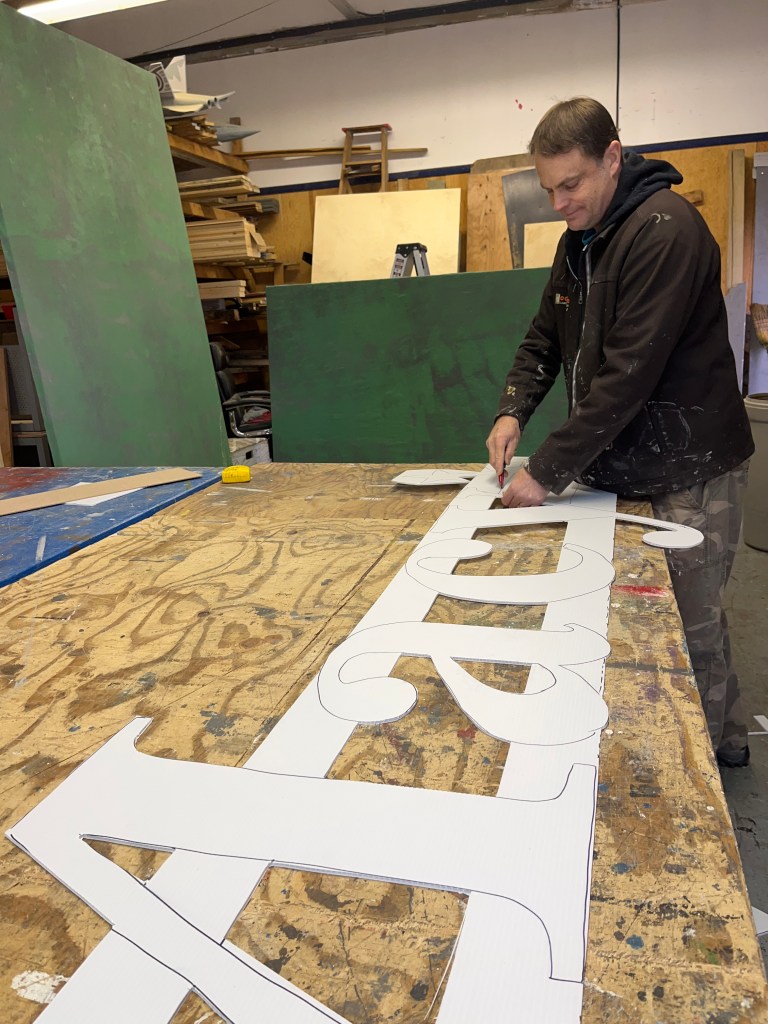
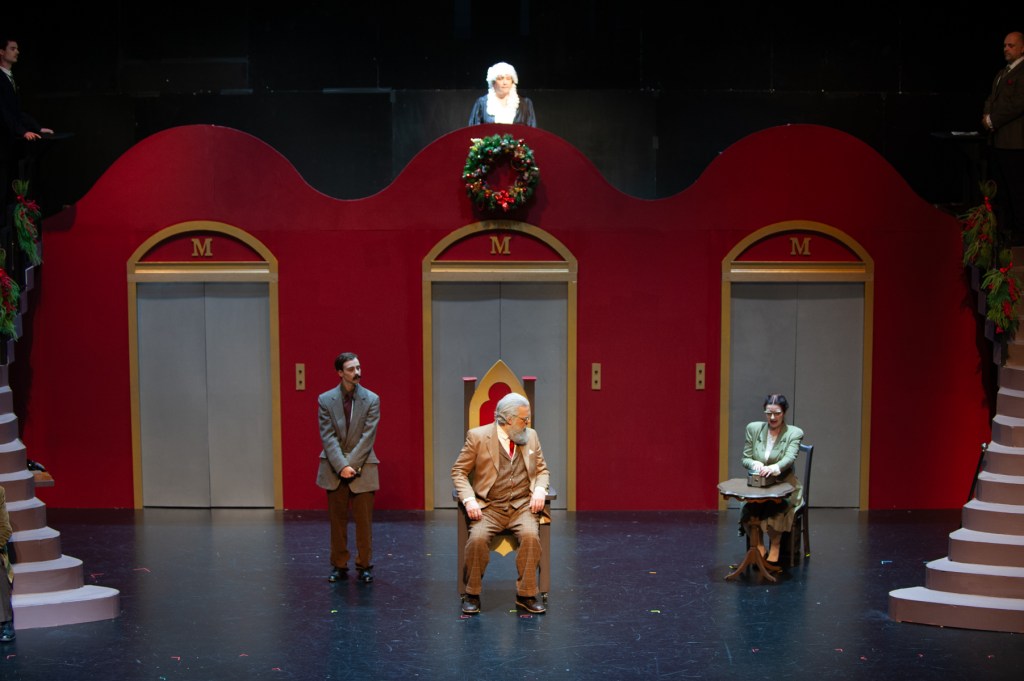
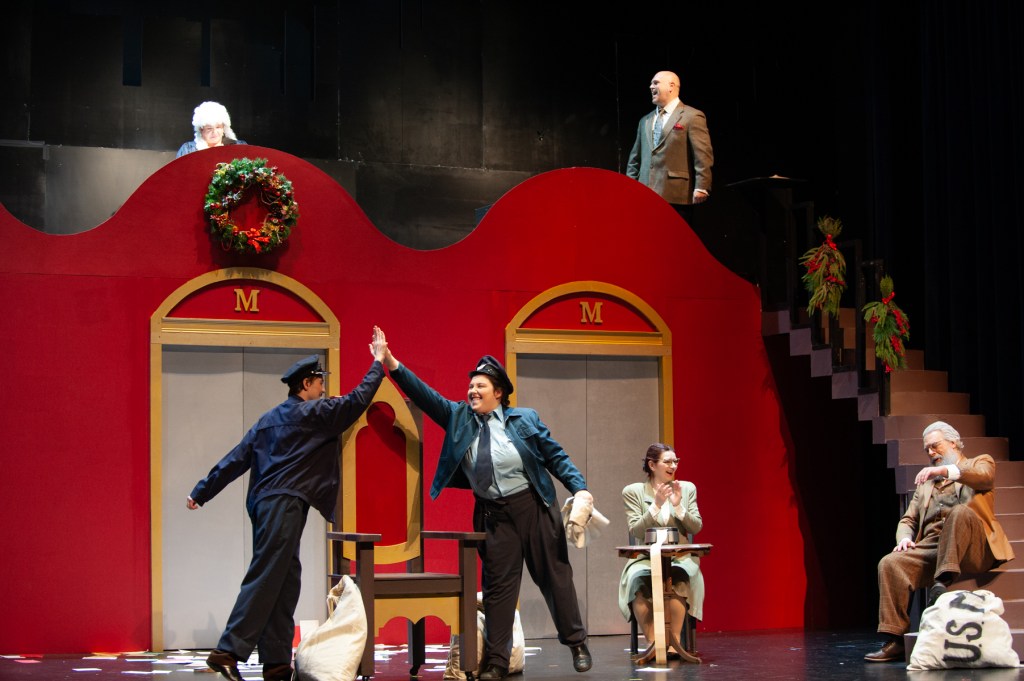
Stairs, stairs and more stairs… it took 5 days in the shop to make mirror sets of these: 14 curved steps, had to be portable, had to be able to walk under the top part…
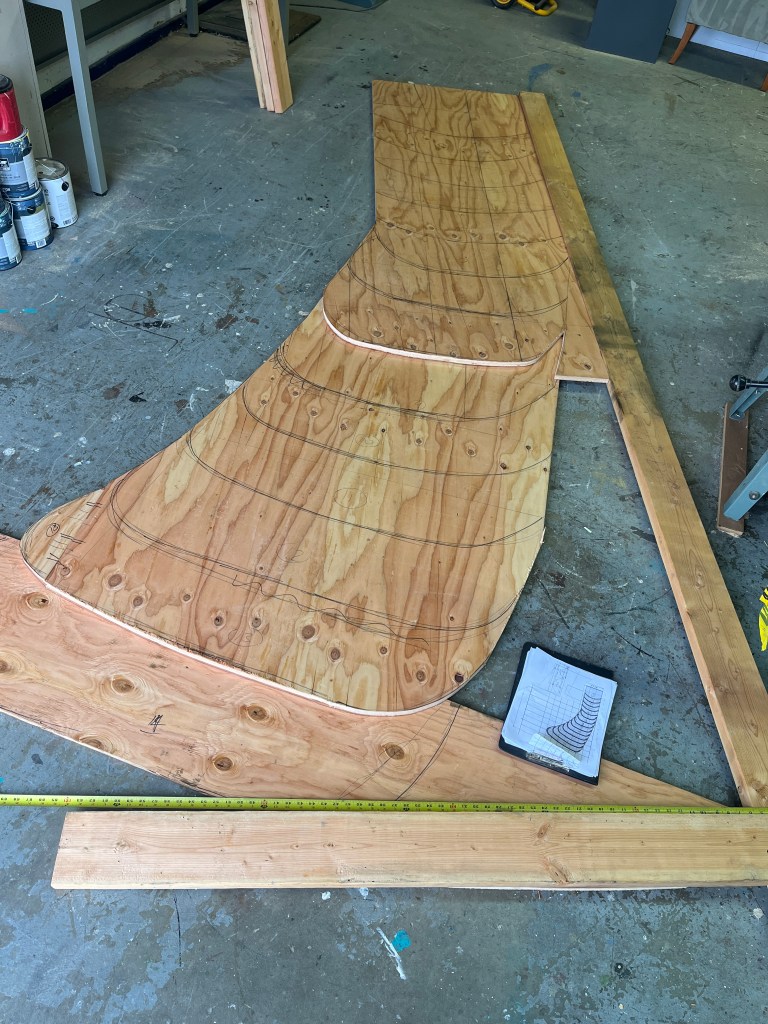
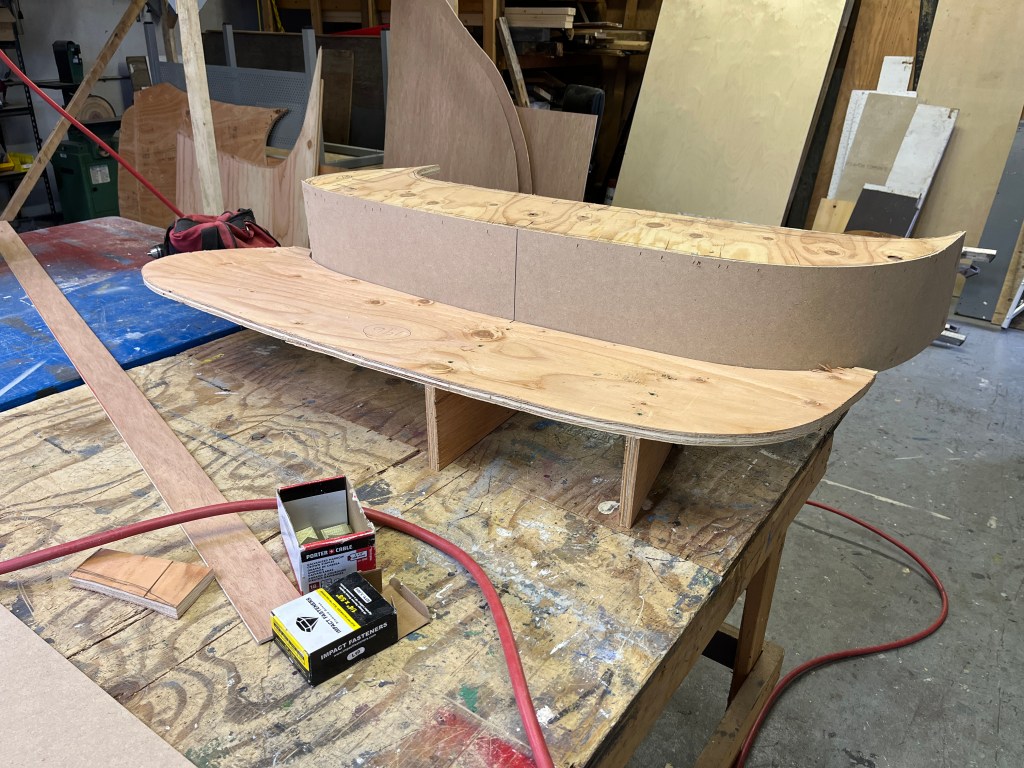
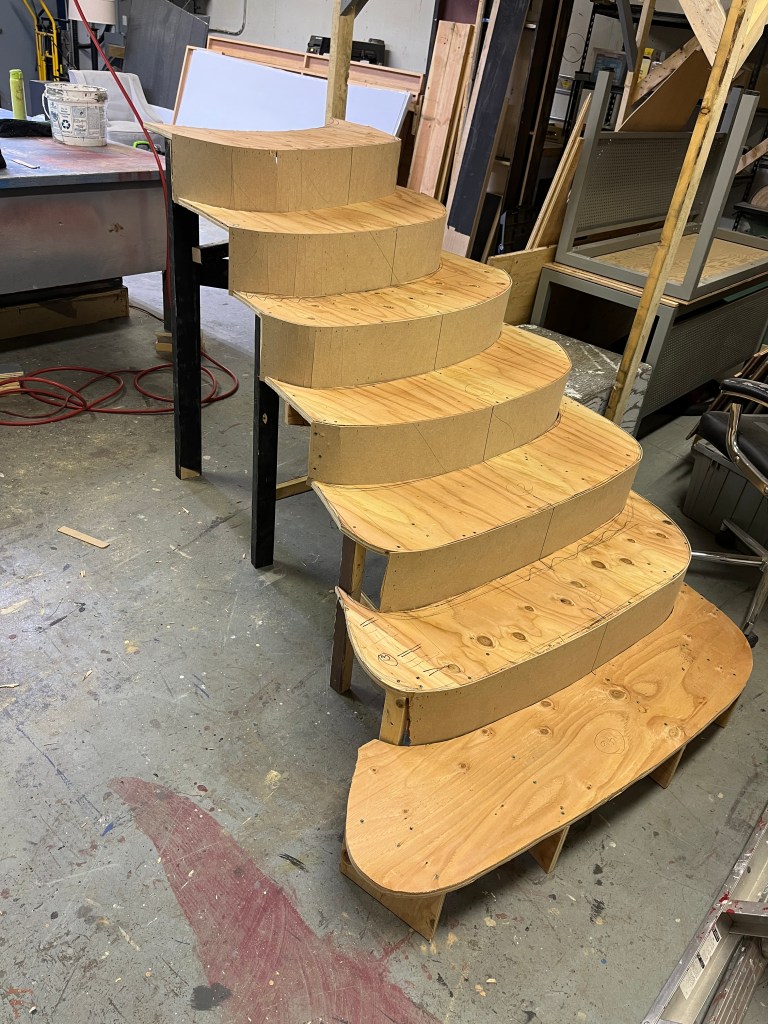
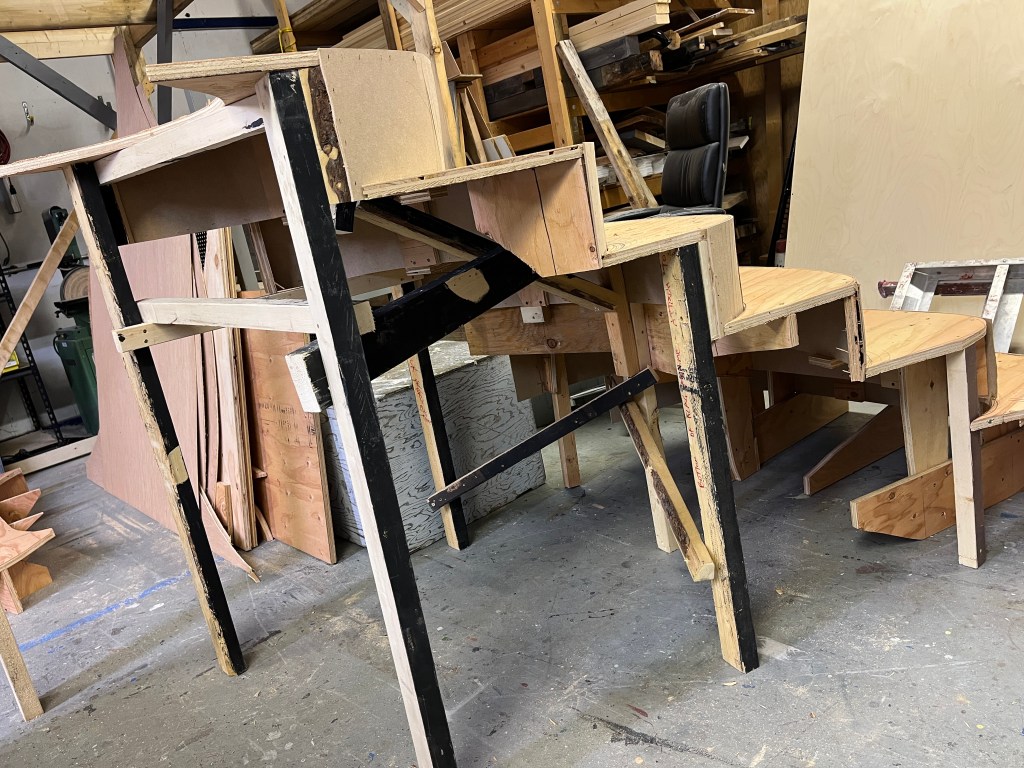
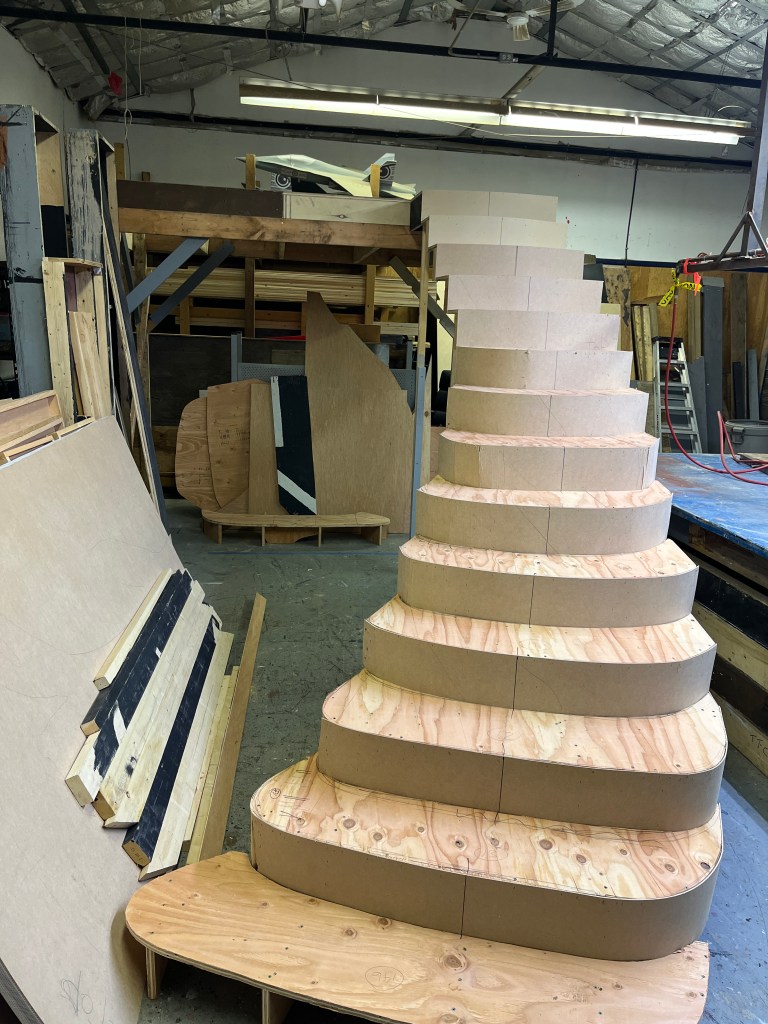
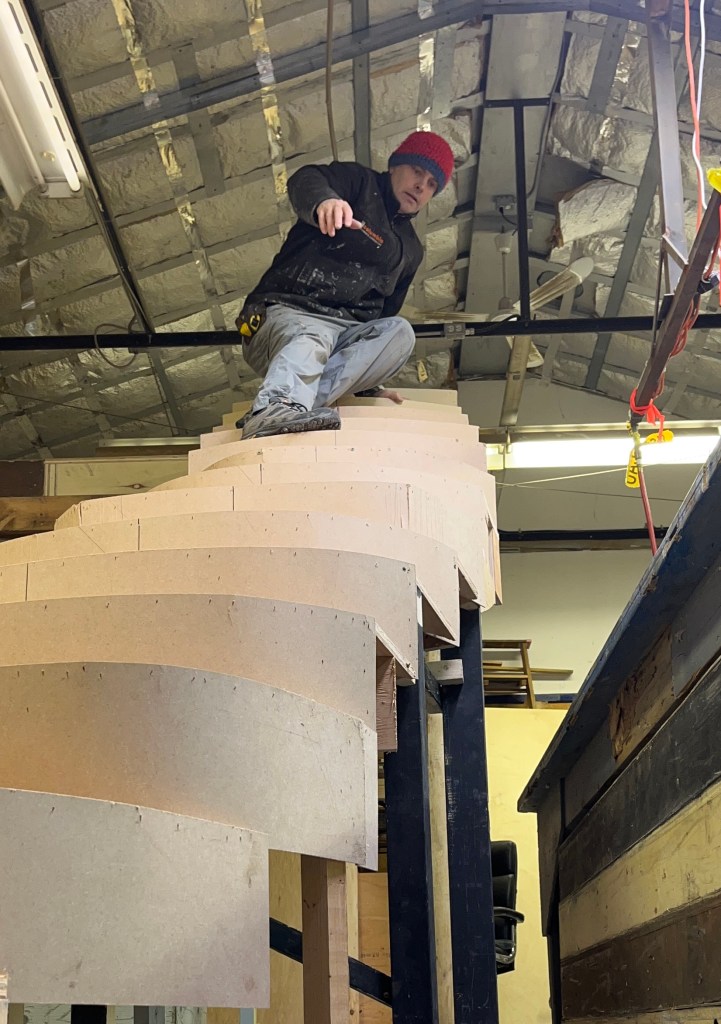
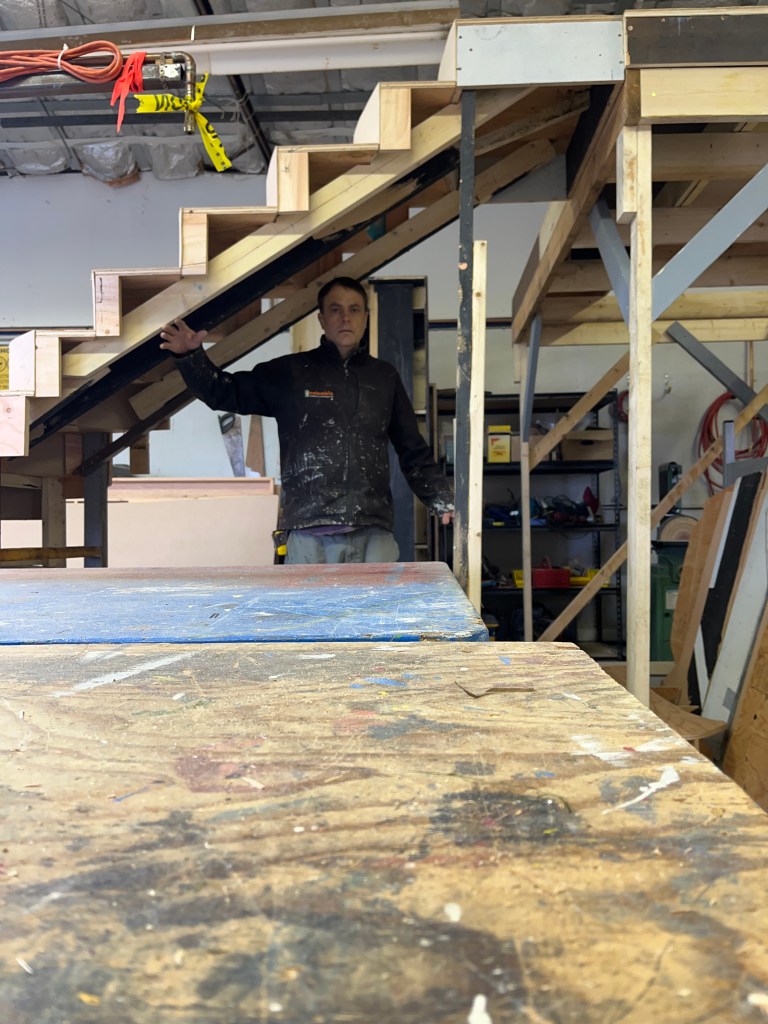
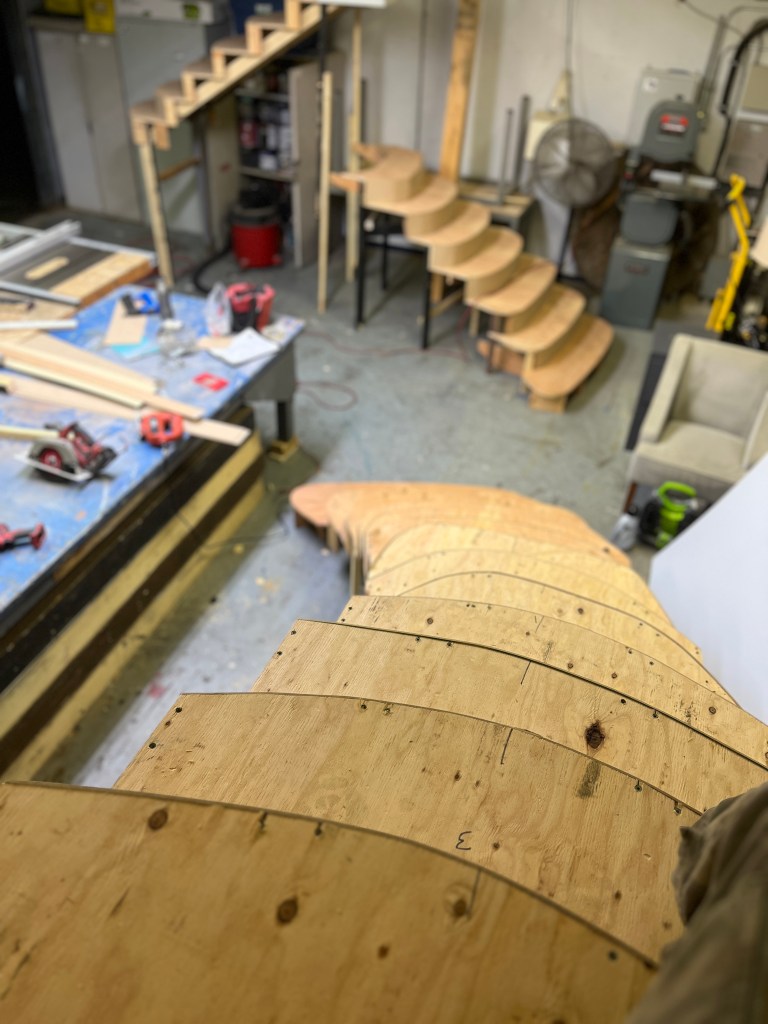
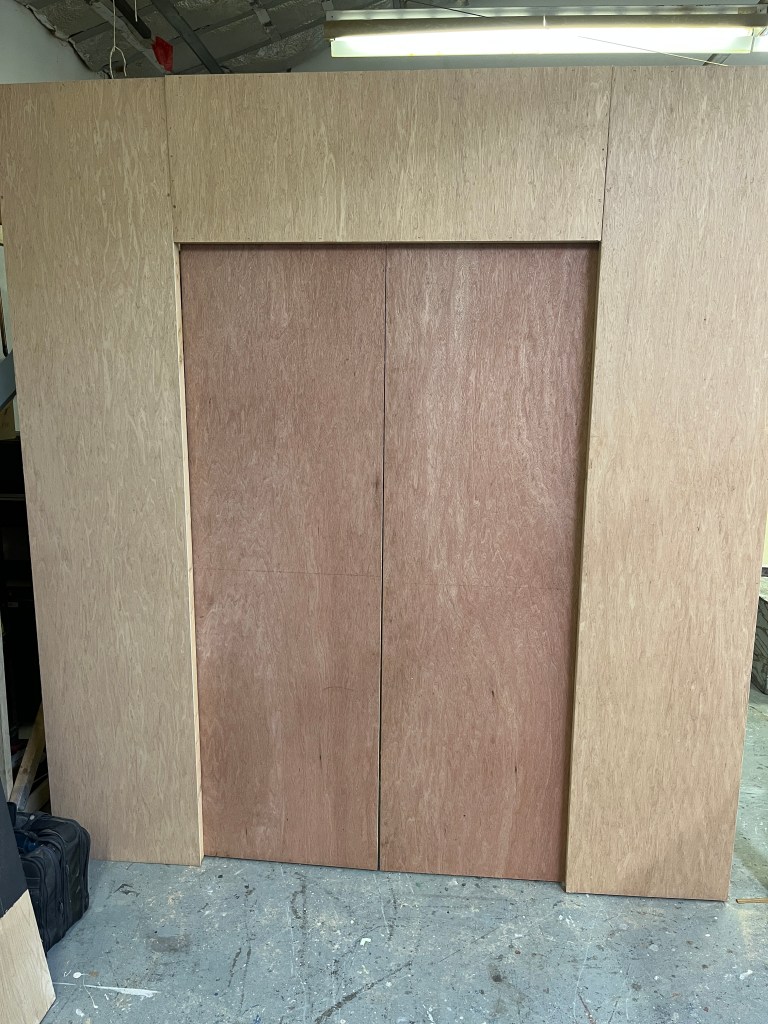
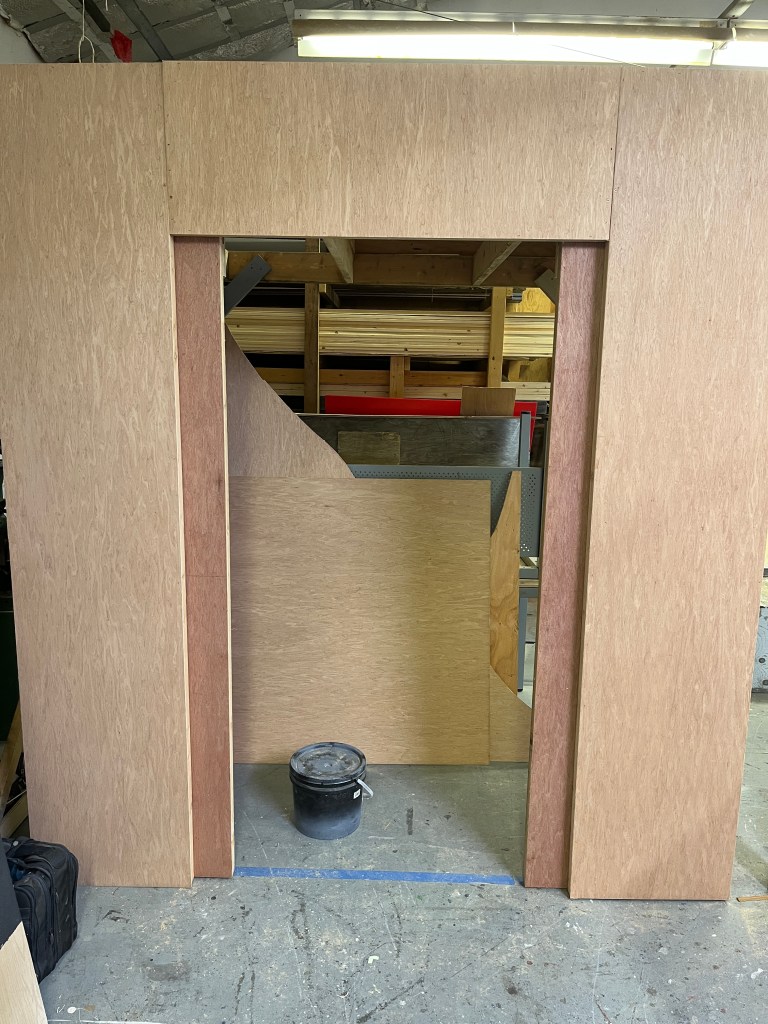
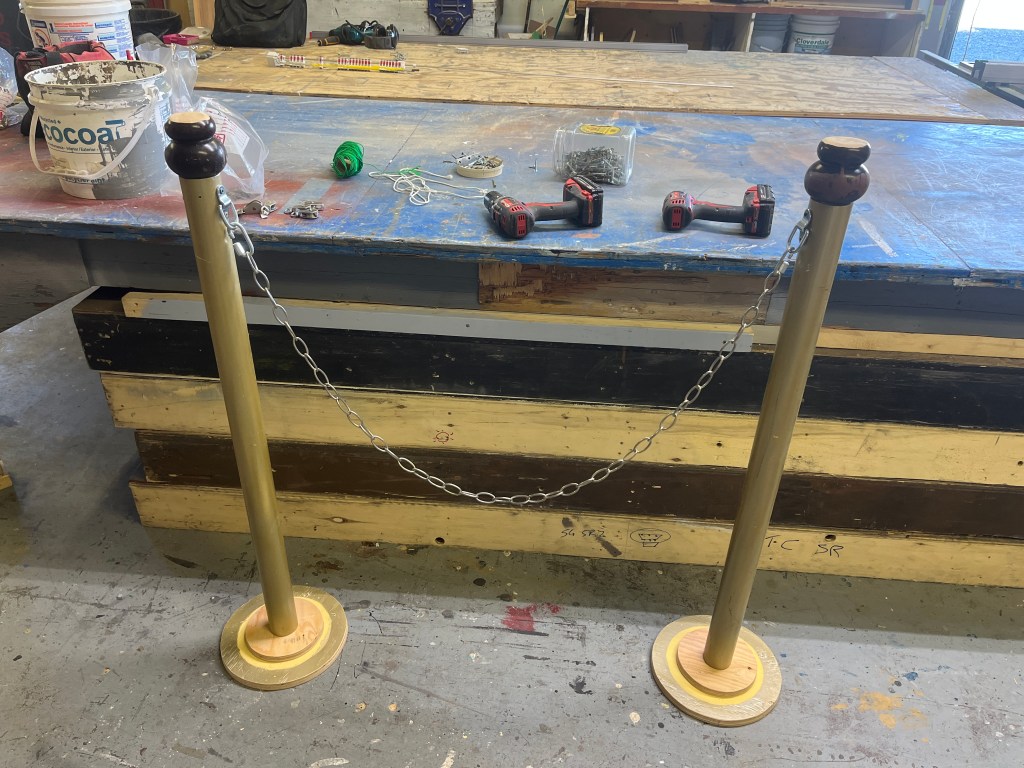
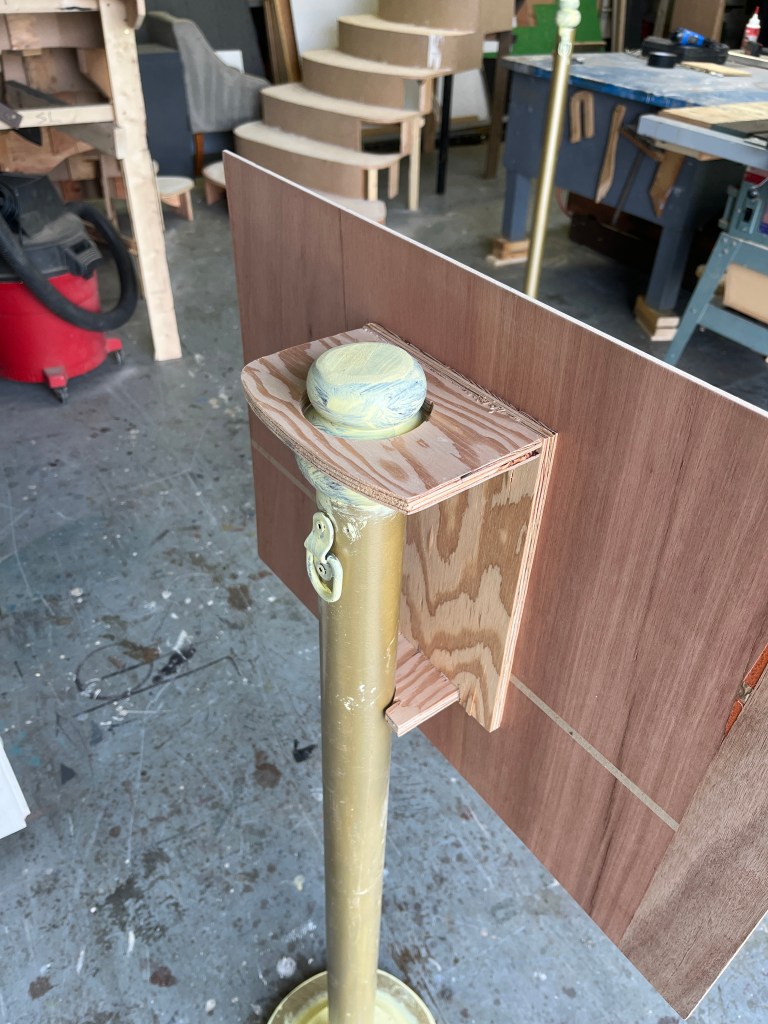
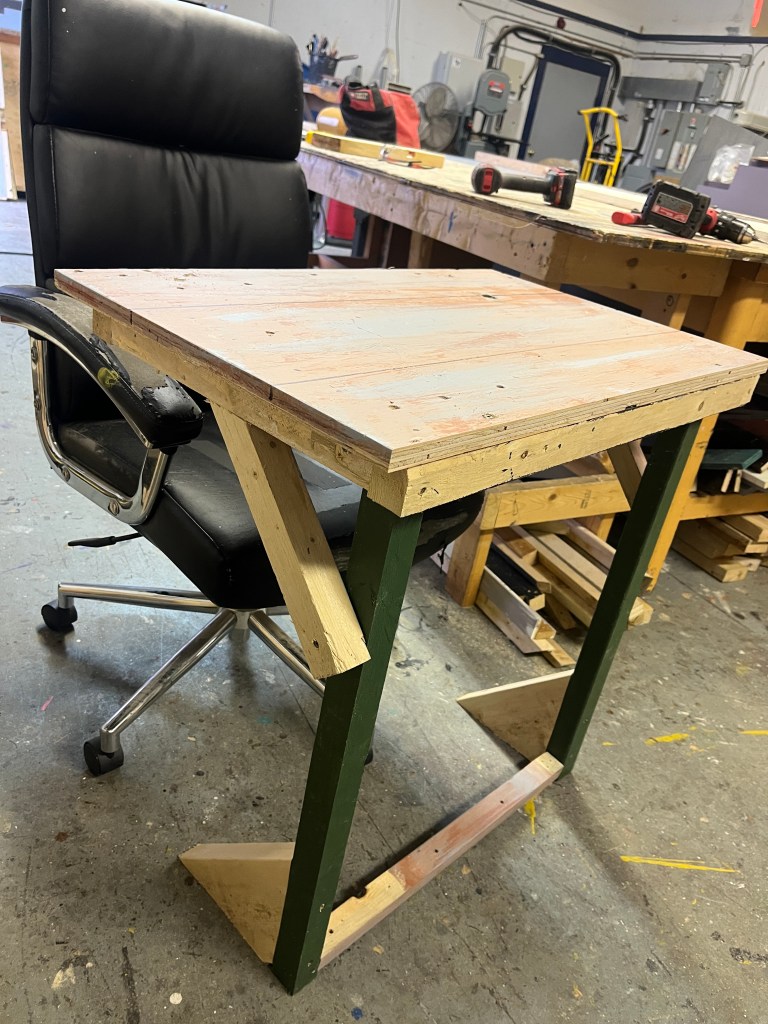
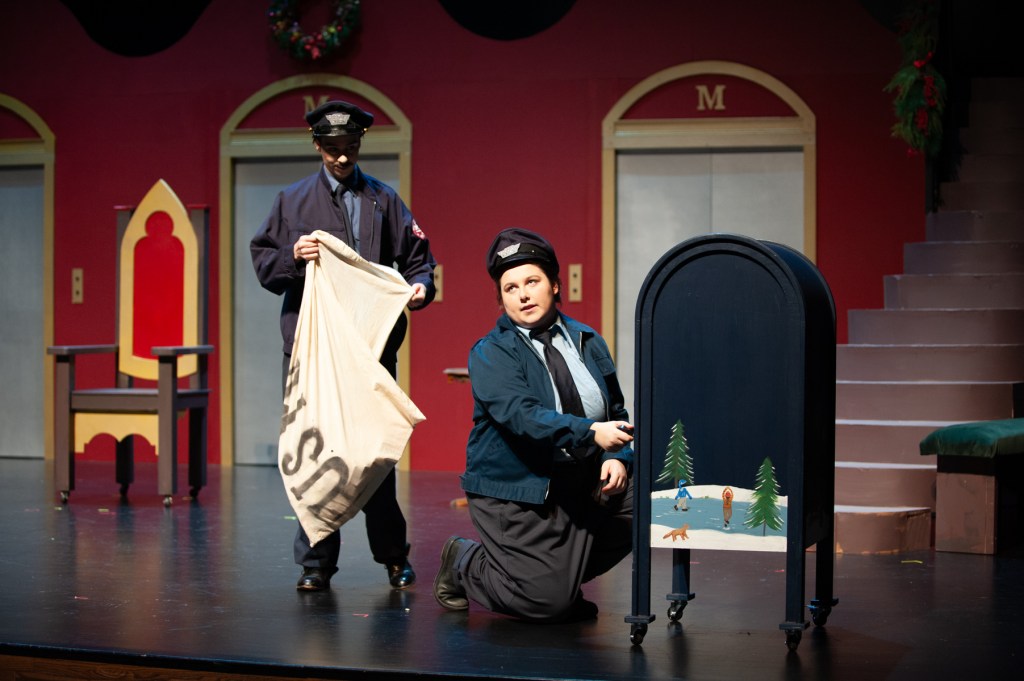
Then there were some curvy flats with 3 elevator doors (thanks to my dad for helping with those!), some stanchions, a “Macy’s” cut-out, and (les Pièce de résistance) 3 ugly desks.

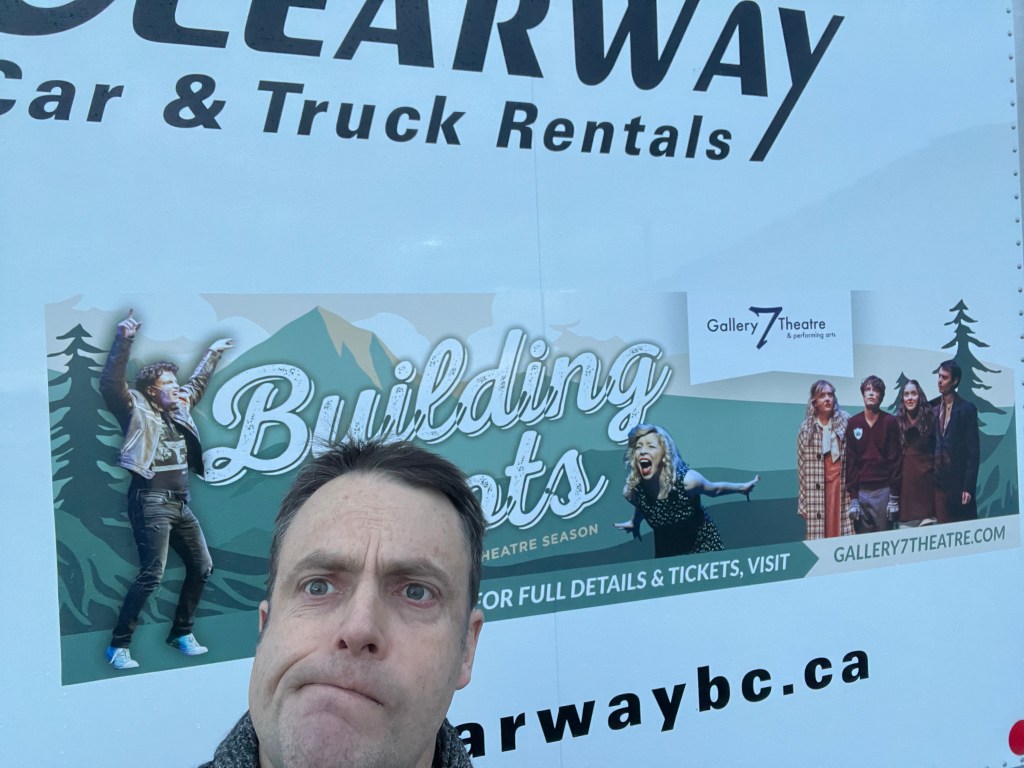
Alright… how did Dalton manage to get on here twice?? (not that he didn’t deserve it) (truck ad: load-up day)
The coroplast cityscape gave us a few problems. It needed extra reinforcement because it was sitting on the second story platform, which despite being quite solid, did move a little…just enough to make the cityscape “wave in the wind…” fortunately some of our volunteers were kind enough to come help fix (most of) that! Thanks Josh, Steve, and Chris!
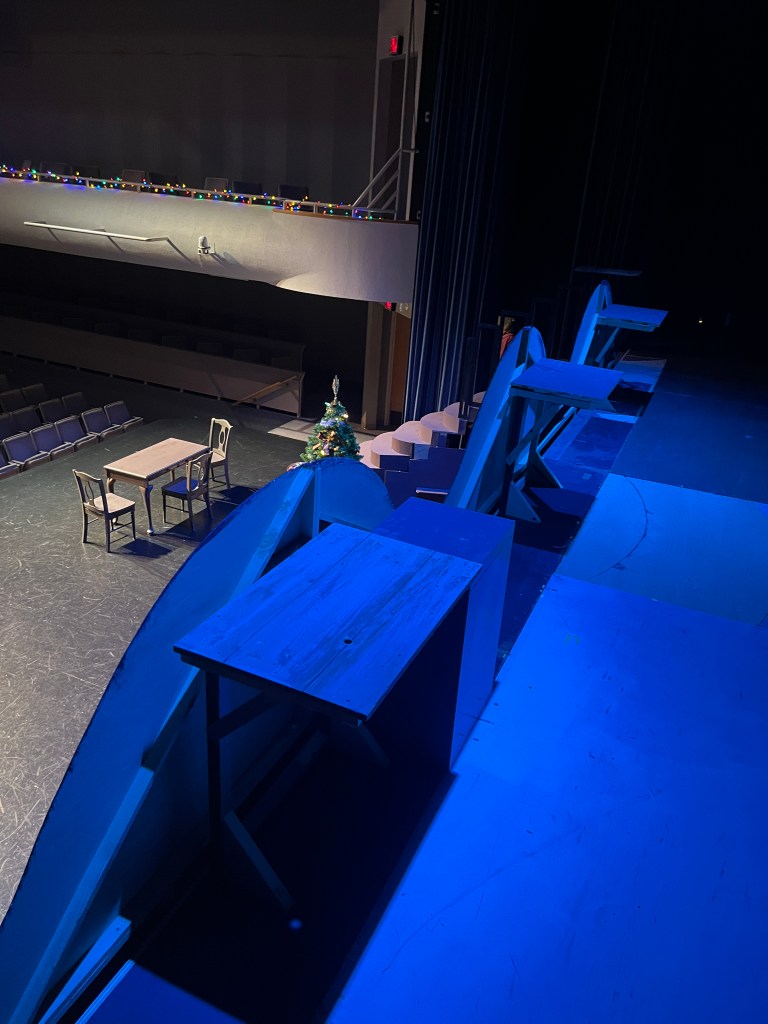
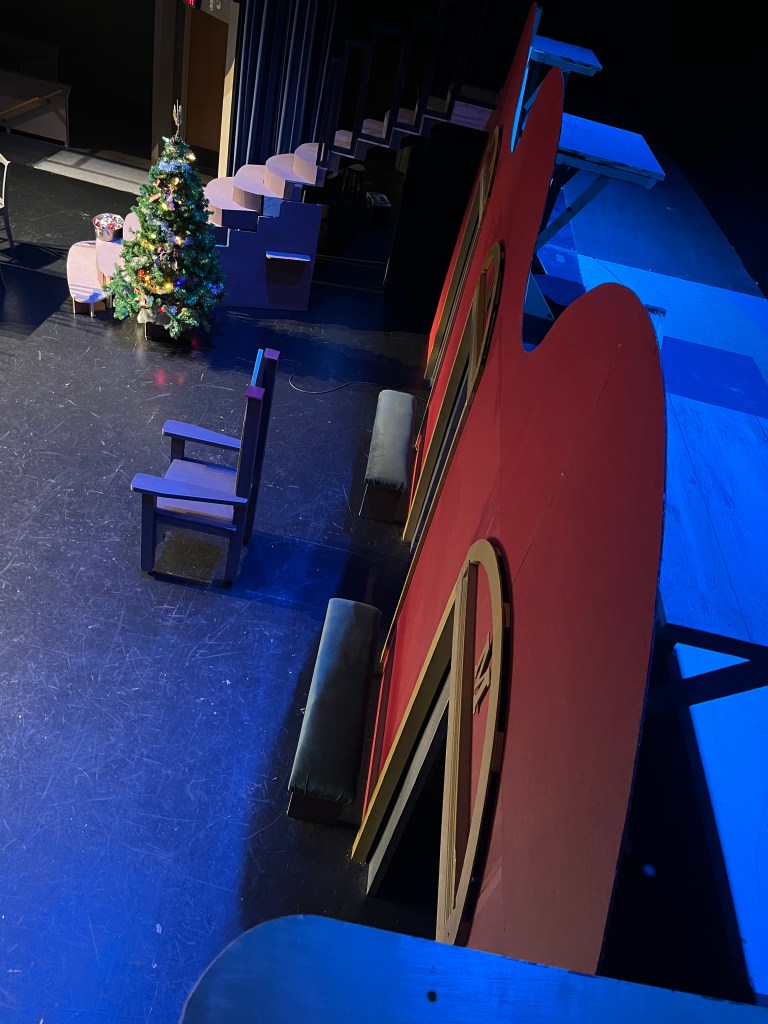
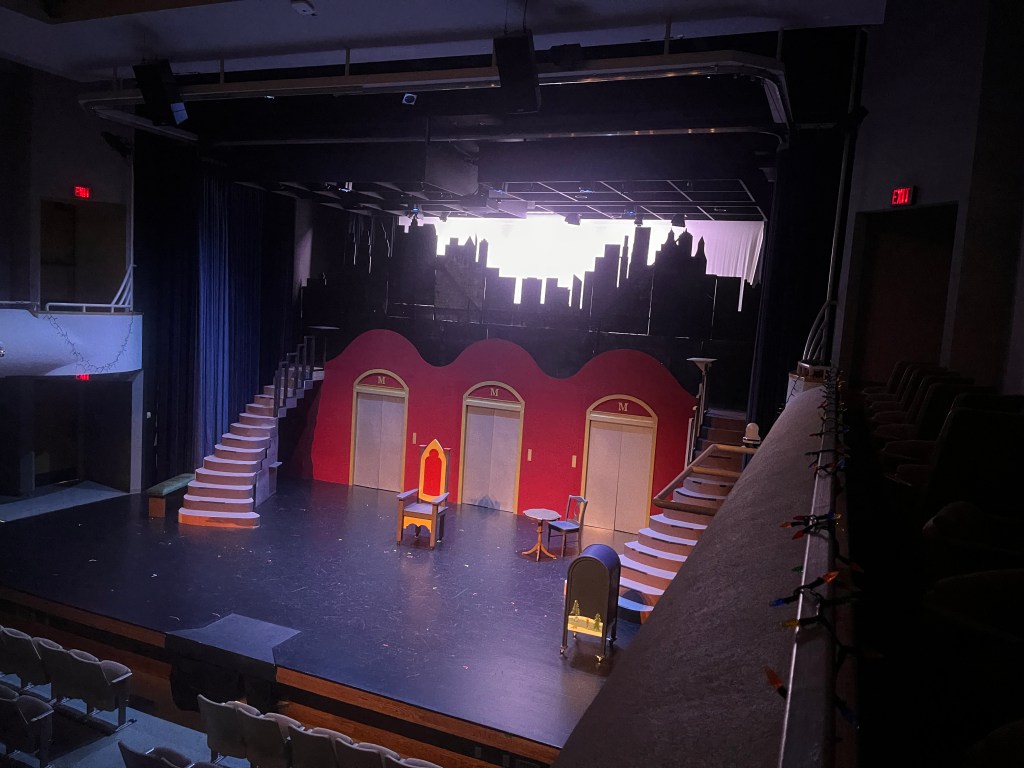
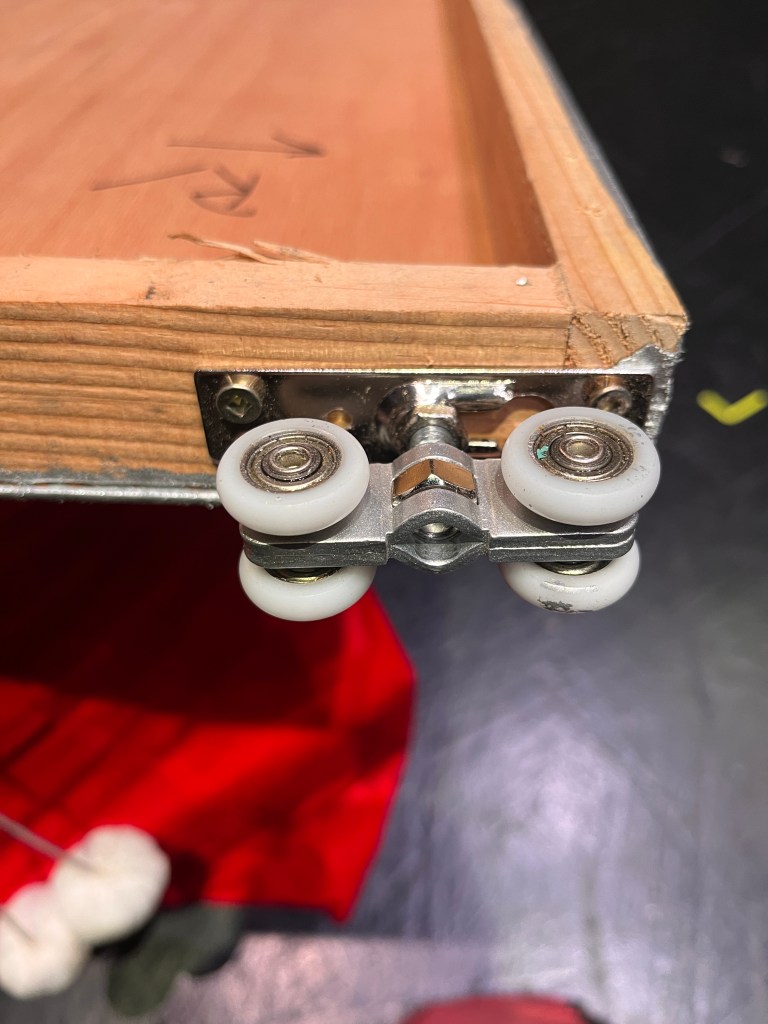
It was a cool, abstract set–great design work by Mr. Jeans! However with the curved stairs, the large platform, the 40 foot wide x 19 foot high city-scape and the six elevator doors…it was time consuming to put together. Plus…I will not mention the half-unexpected mid-run strike! =)
Here is a time-lapse video I took of the main load-in day. It doesn’t show the final bit but you get the idea of the amount of work involved!
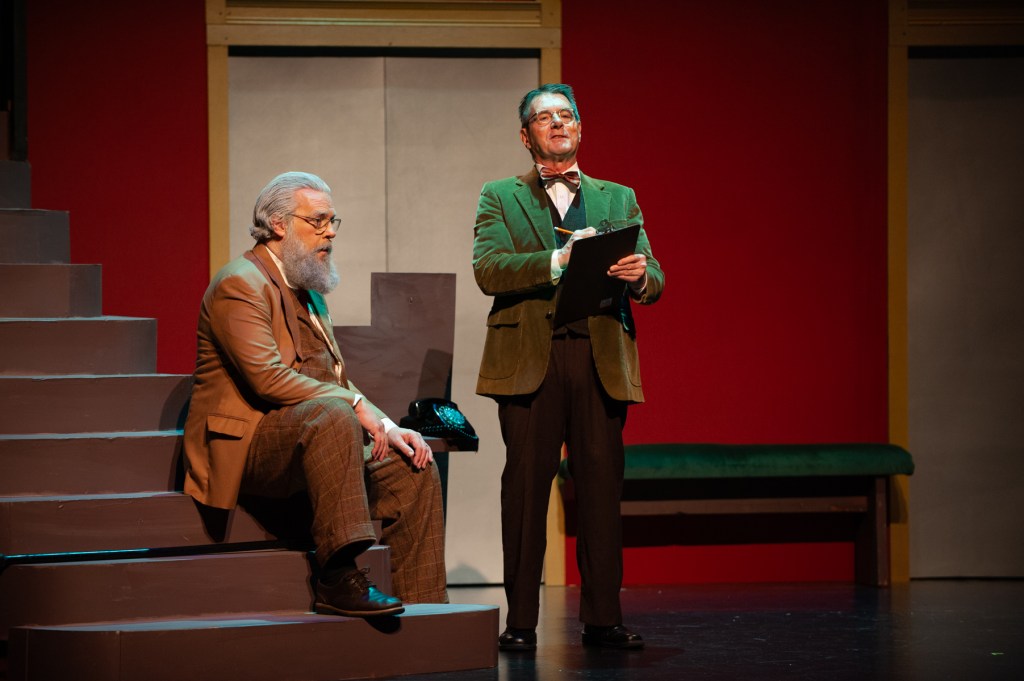
The following official Gallery 7 rehearsal/publicity photos are copyrighted and may not be altered or used for other purposes. They were taken by Dianna Lewis Photography. (Lighting by Arty Urdabayev, Directed by Sarah Green, Set Design by Sheldon Jeans, props by Evan Rachwalski, costumes by Kimberley Perkins, Hair and Makeup by Jessica Blanchard)



Anne (of Green Gables) Set Design and Build
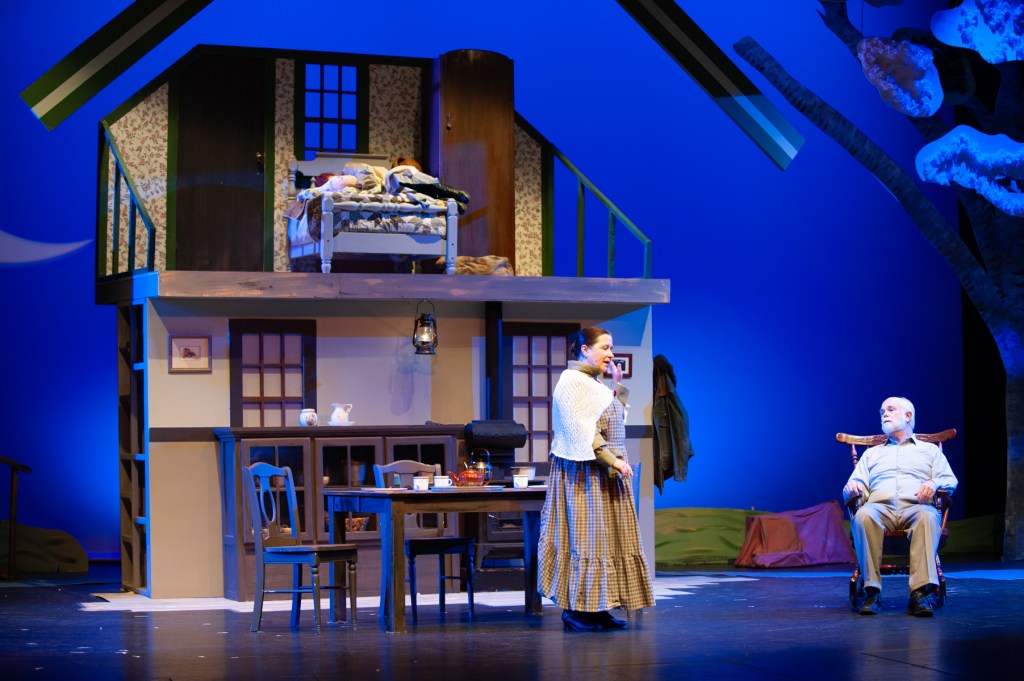
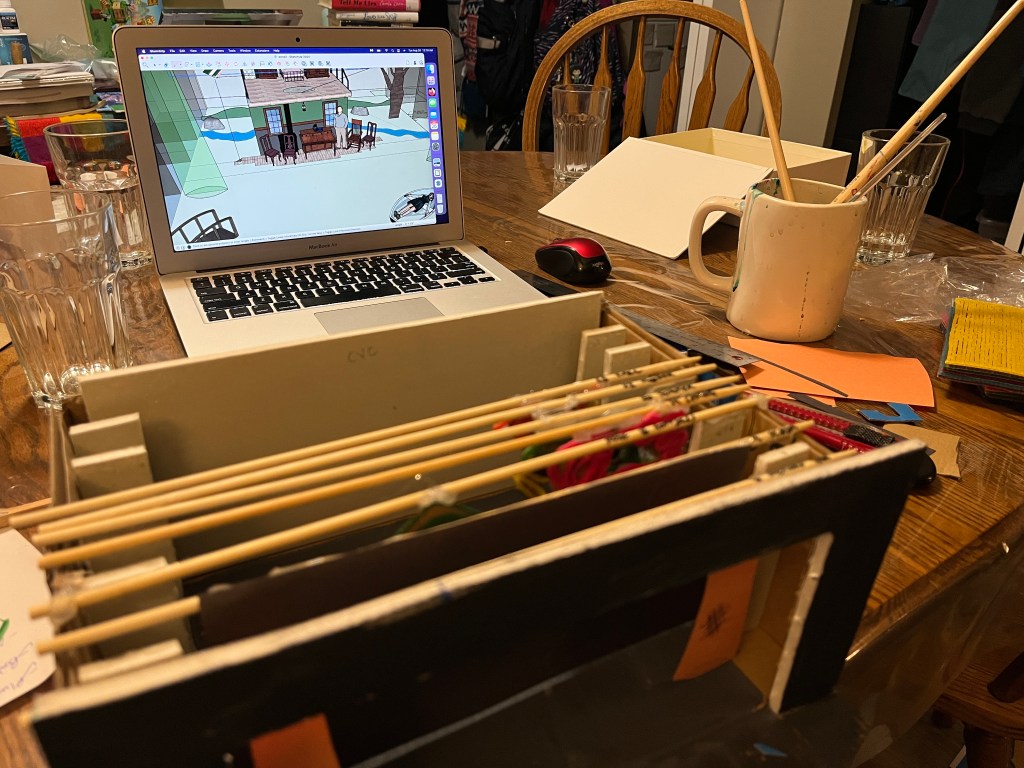
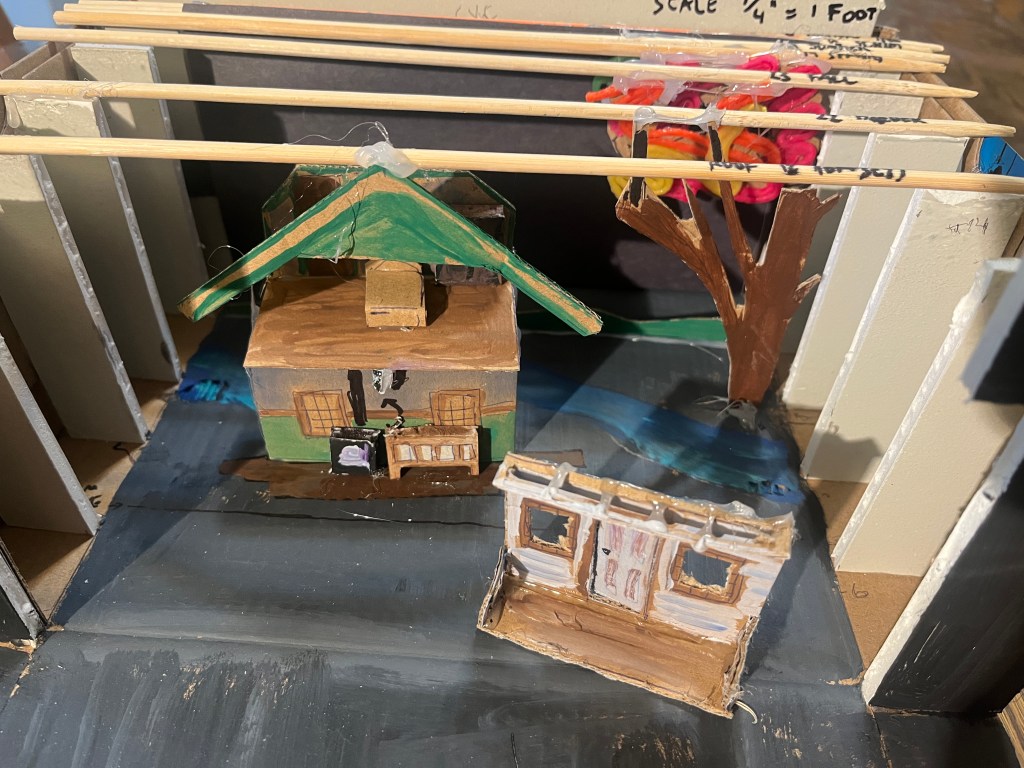
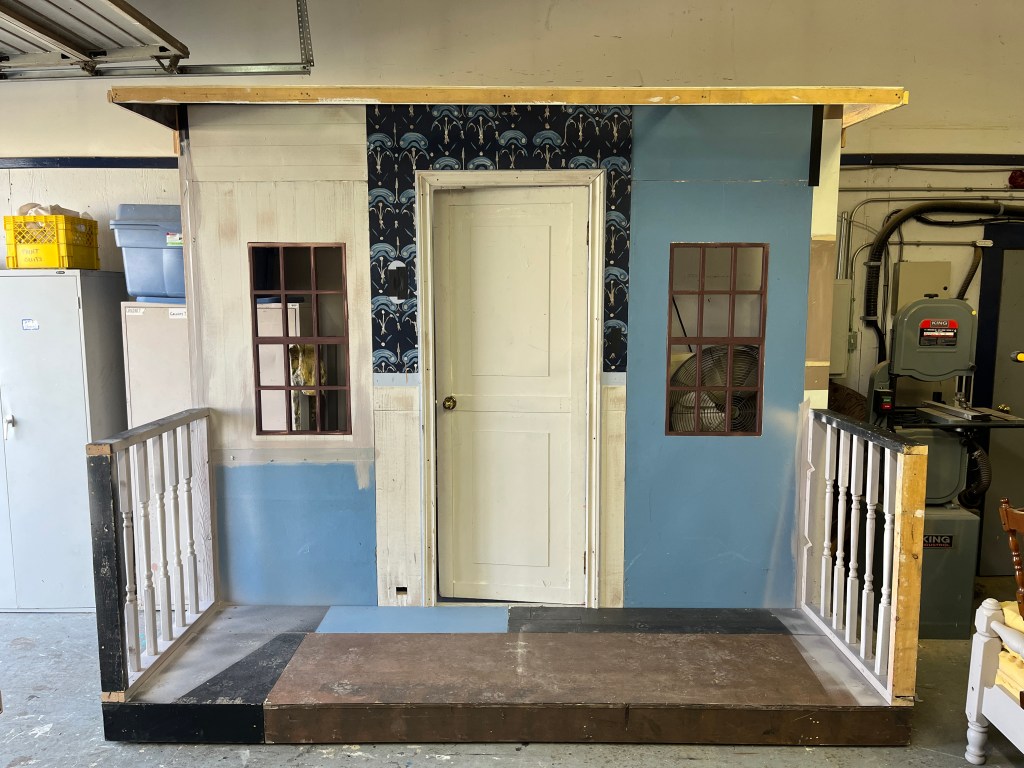
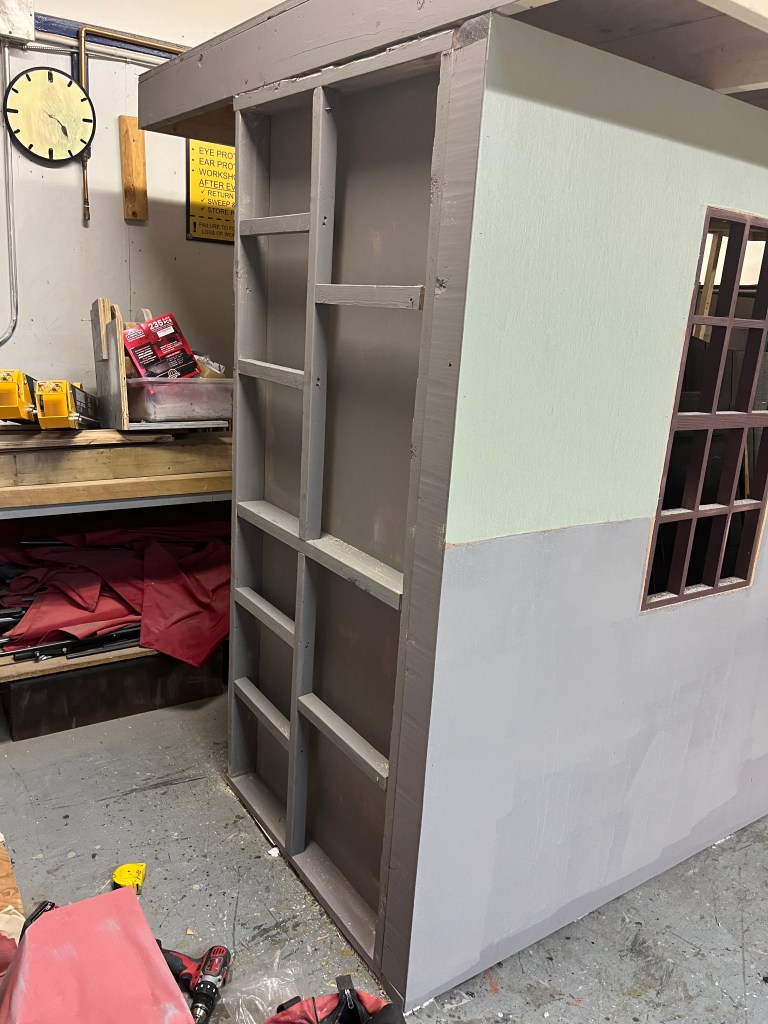
Anne recently closed a successful run at Gallery 7 Theatre in Abbotsford in November. Set design started in the summer, and building happened in October. Below are some pictures of the model I made. The concept was simple: a block house, a tree, and a truck and flat that moved on/off in front of a sharktooth scrim.
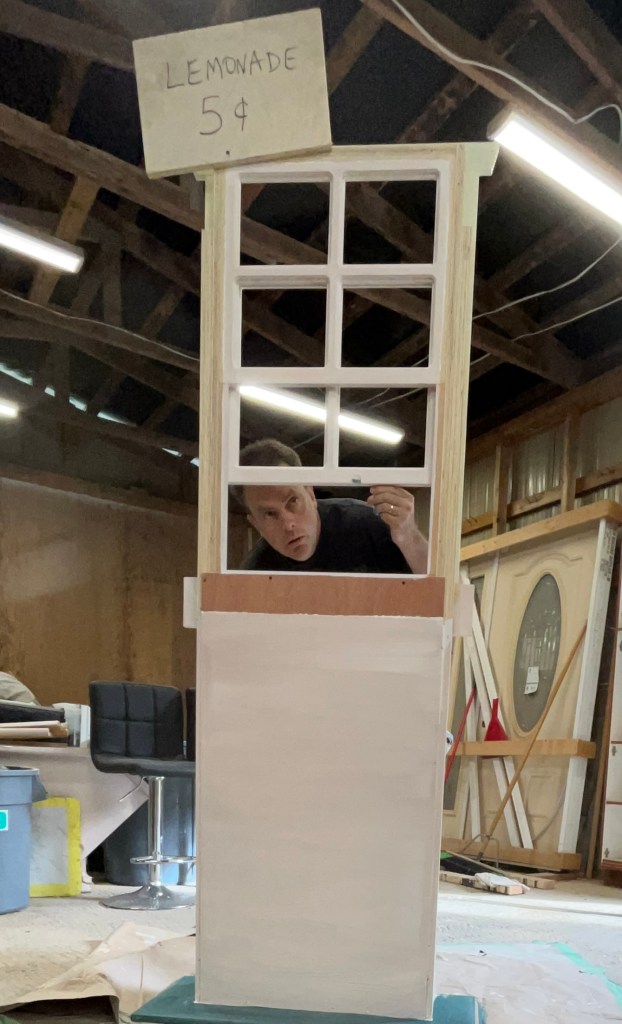
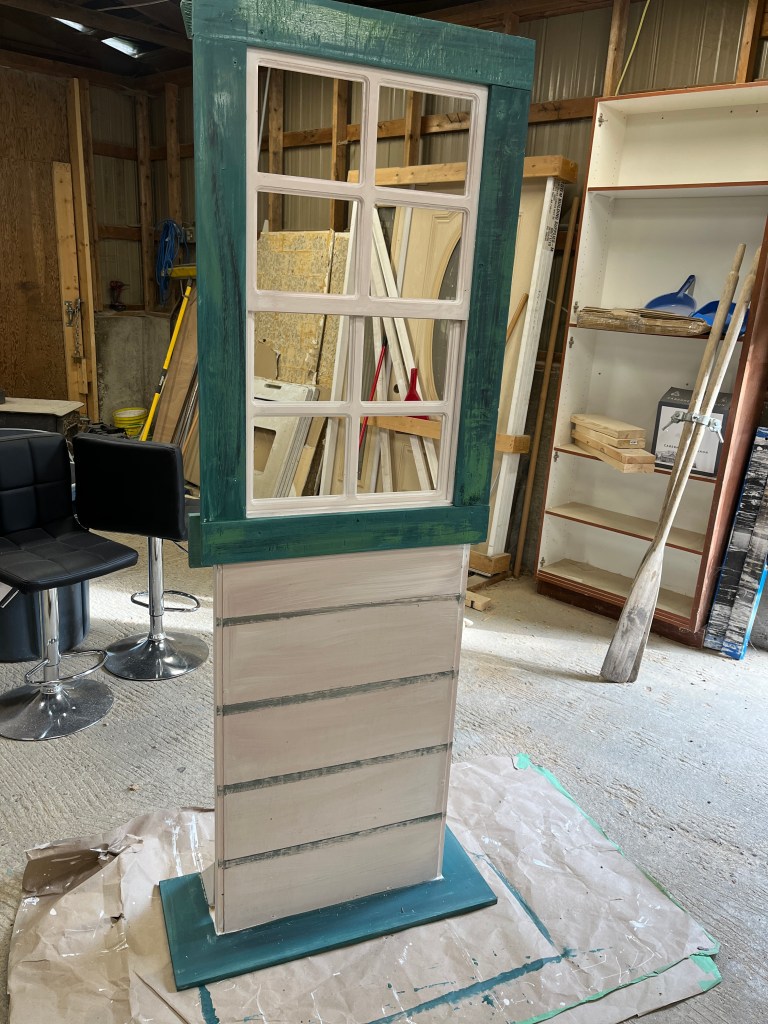
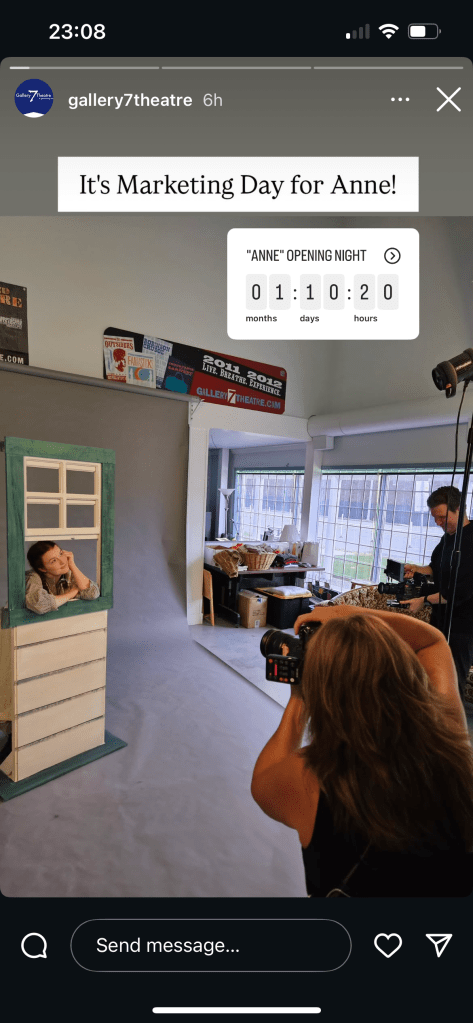
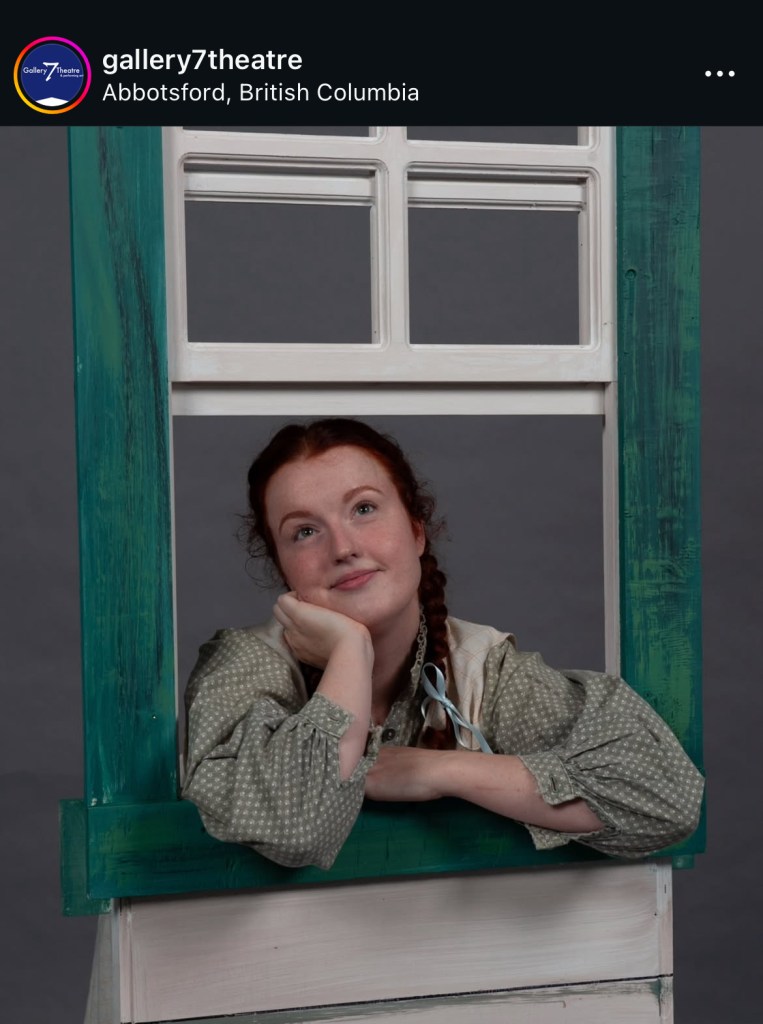
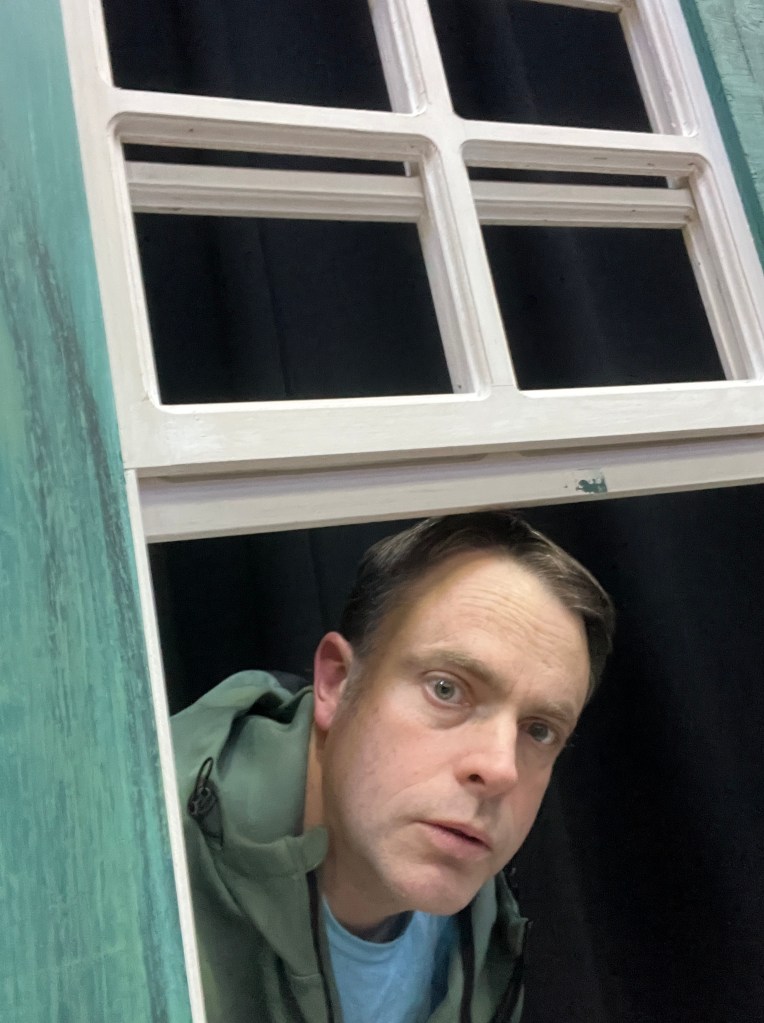
New this year, I was asked to make a window for marketing photos as well as for patrons to take selfies with. I asked one of our volunteers, Steve, to make a sliding window, and then I build a small stand for it:
Then I started the “real” build…
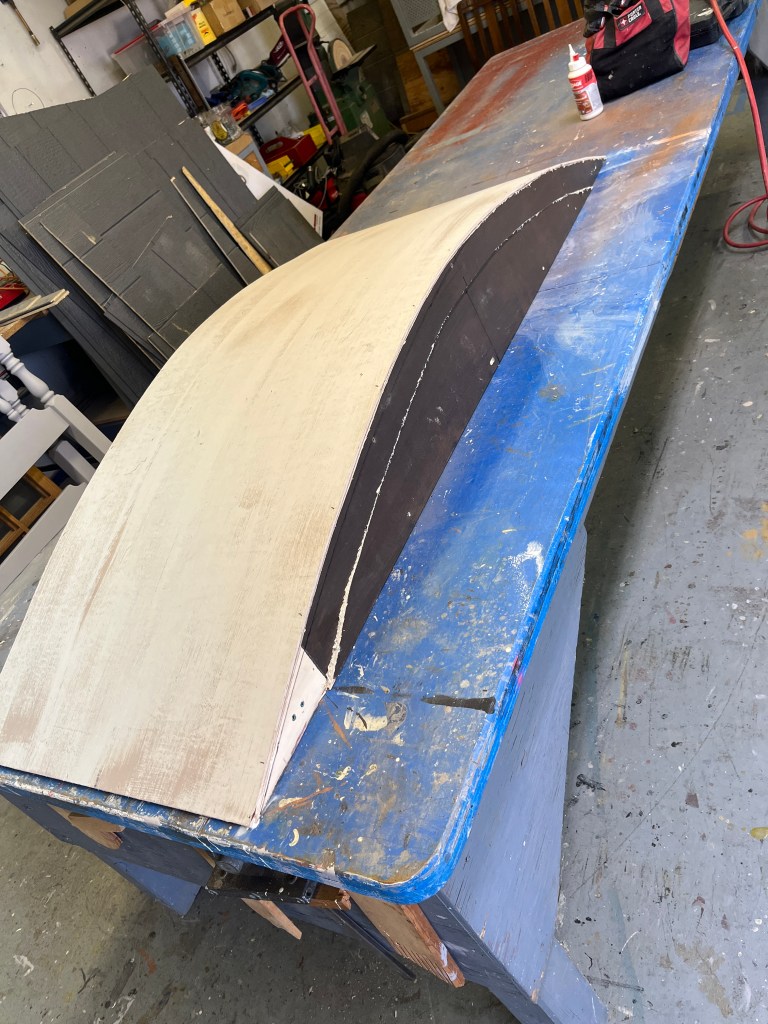
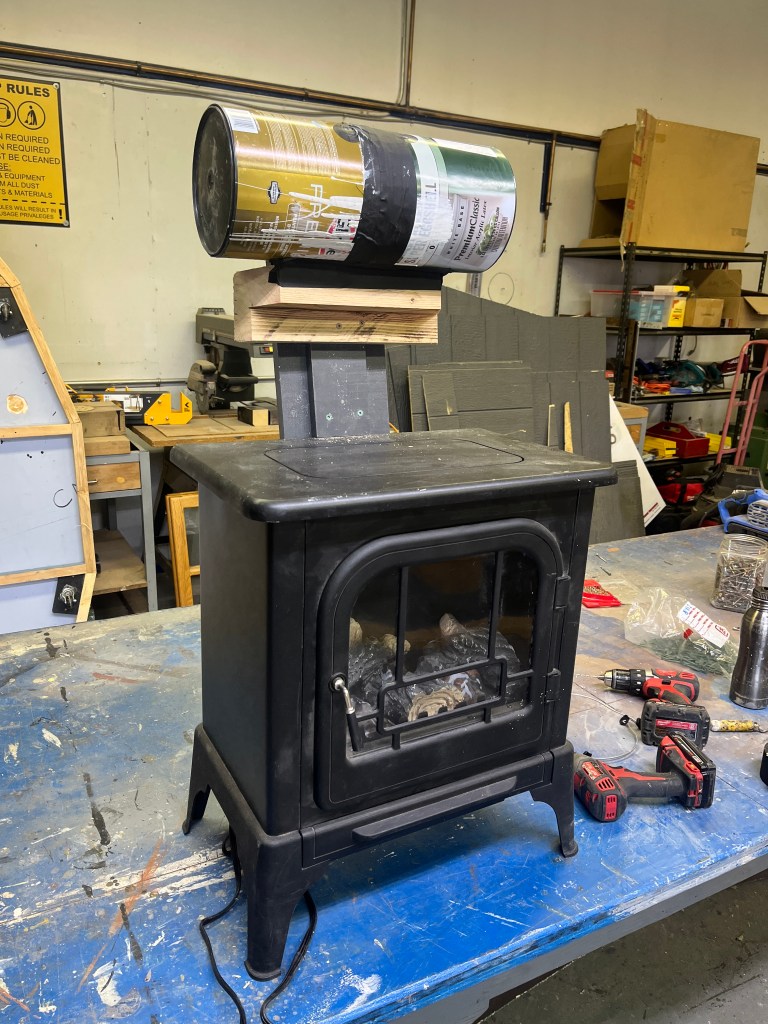
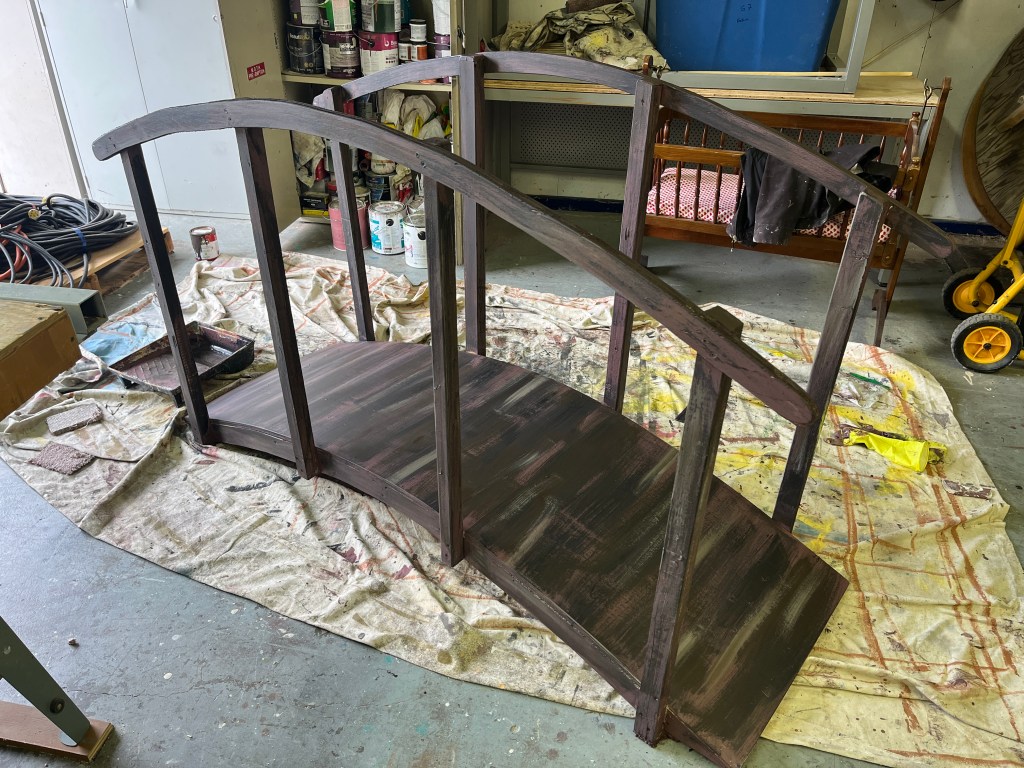
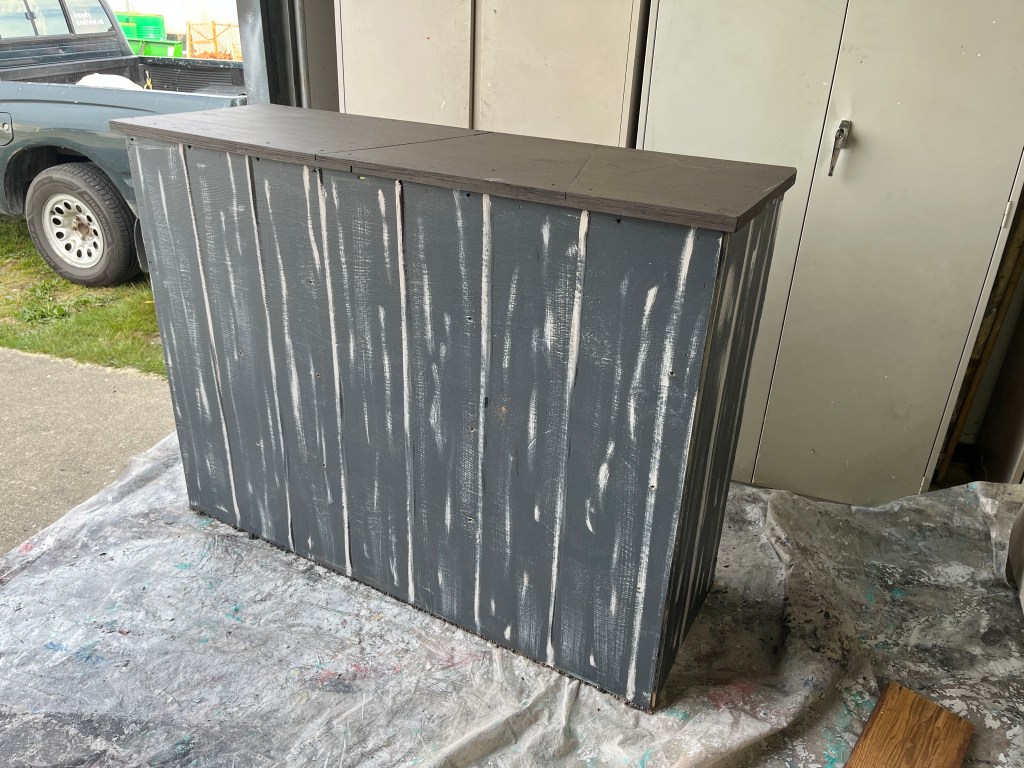
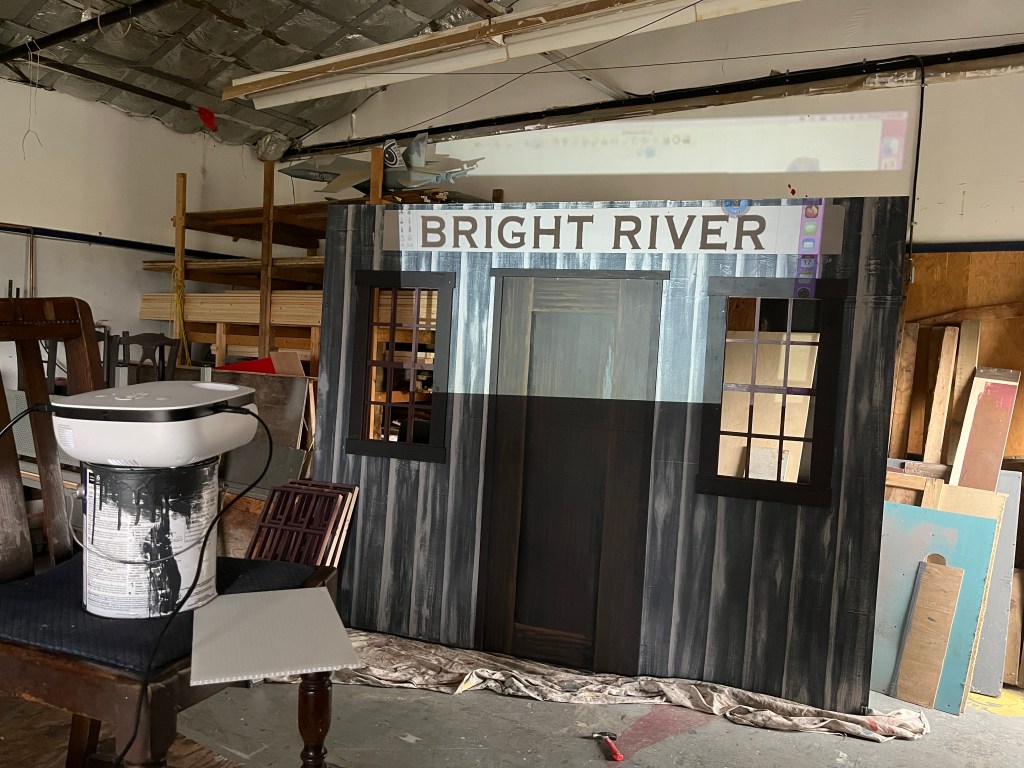
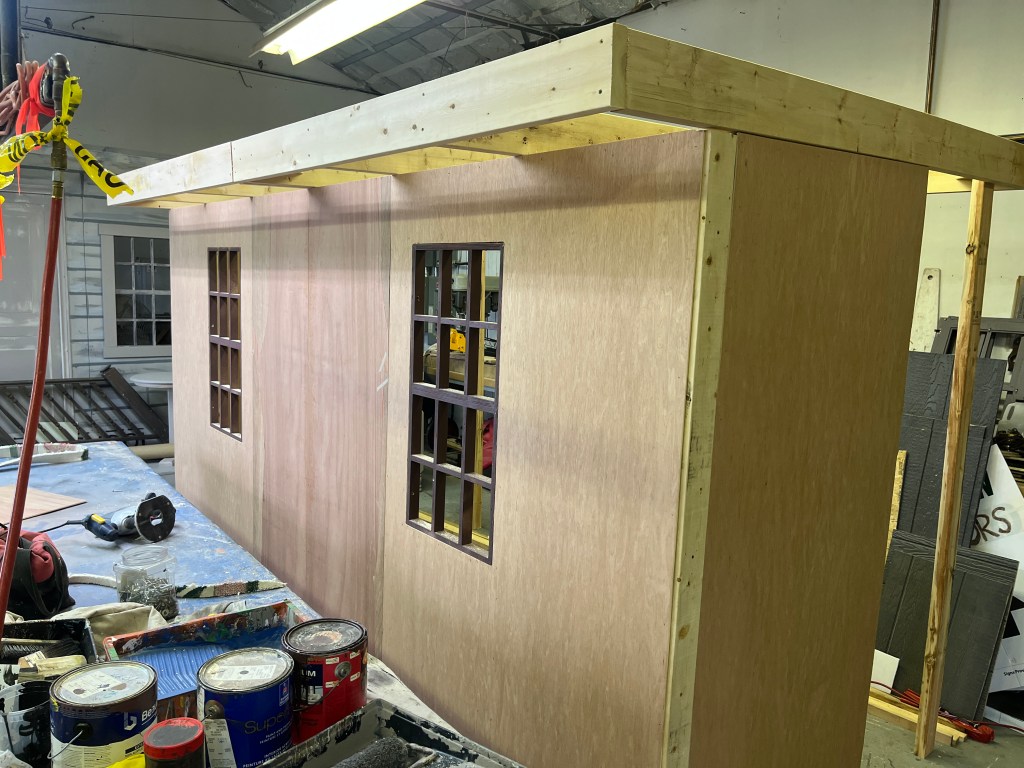
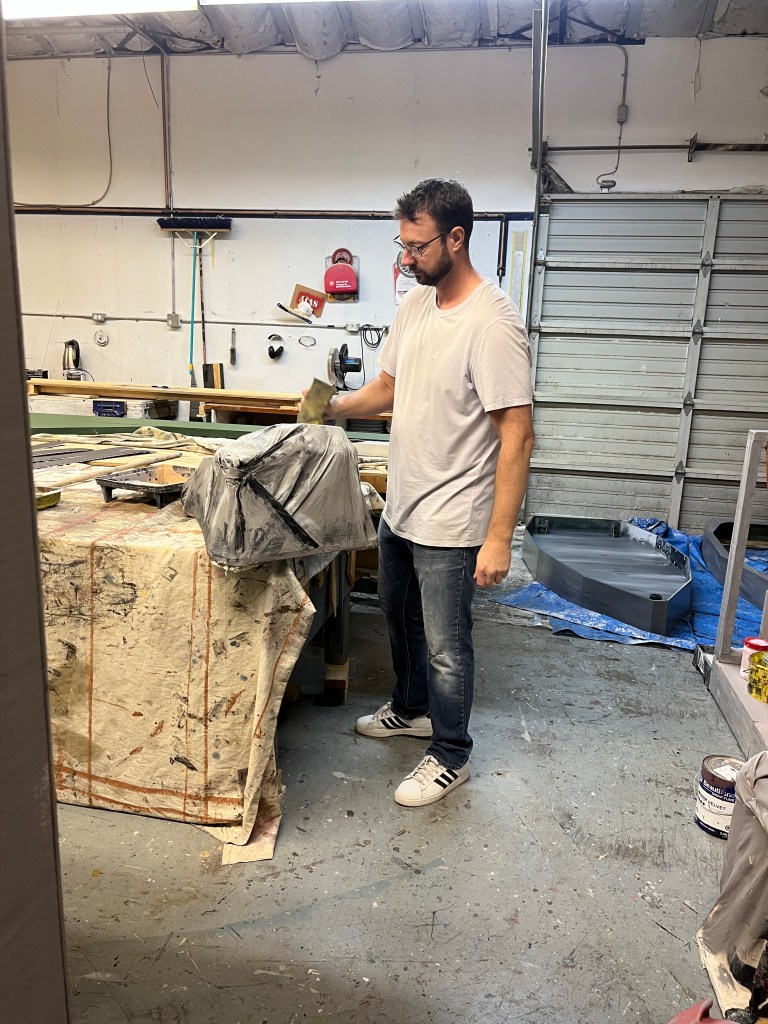
My volunteer, Linda, helped a lot those first few weeks as we built and painted our way through Avonlea.
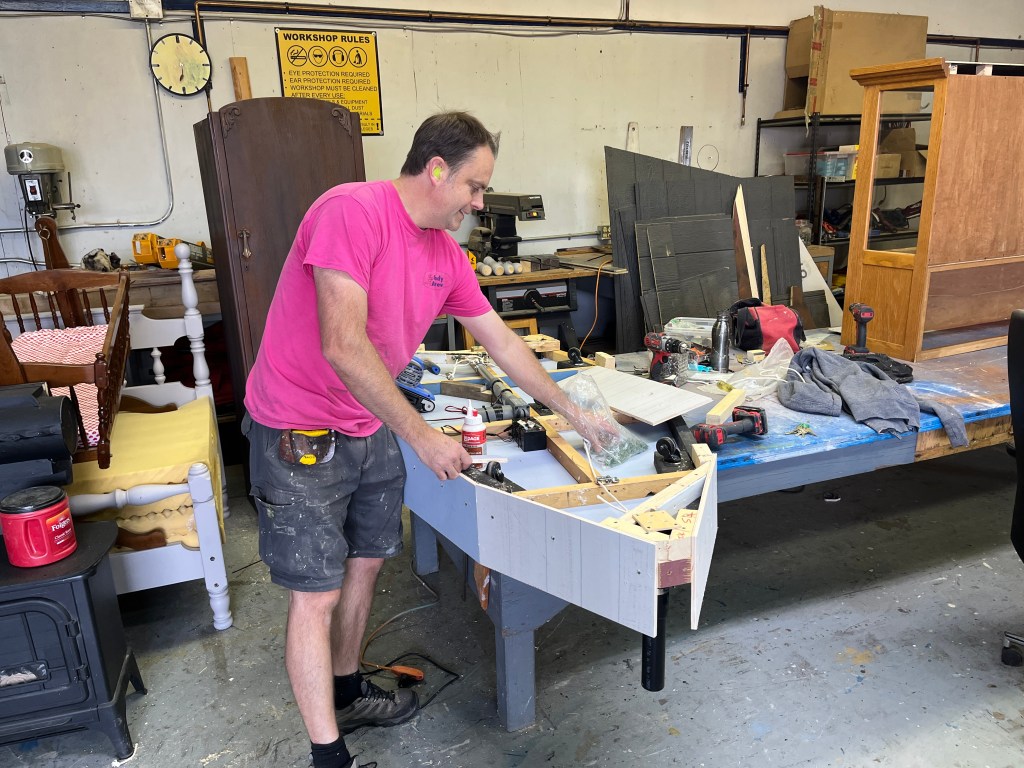
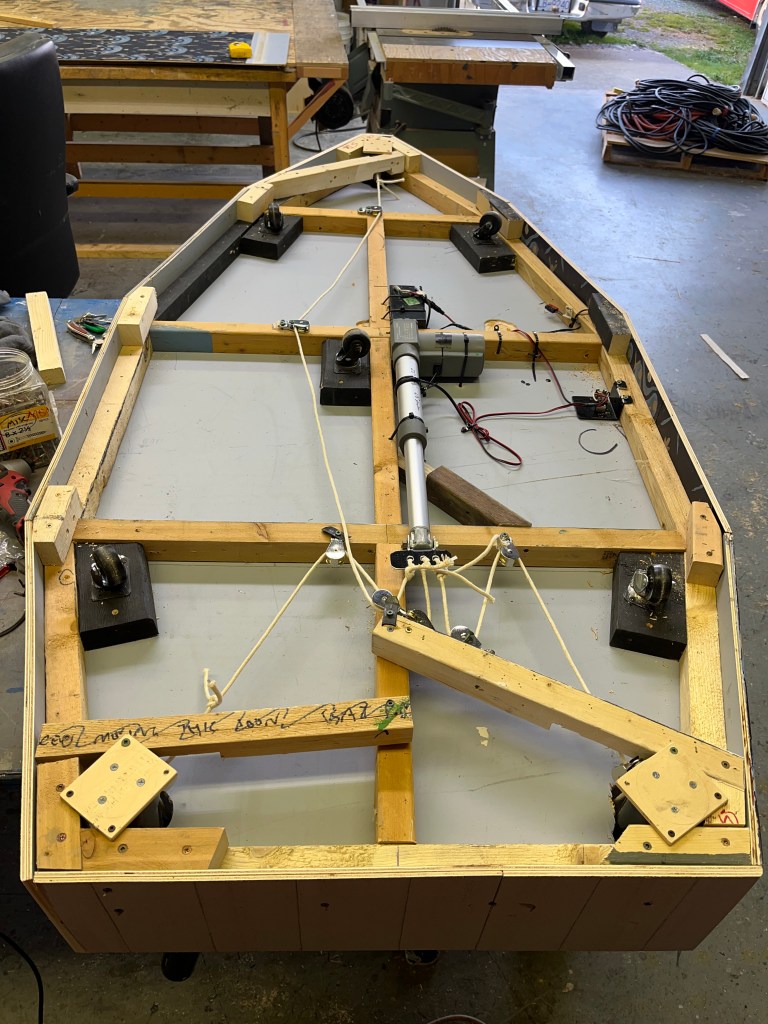
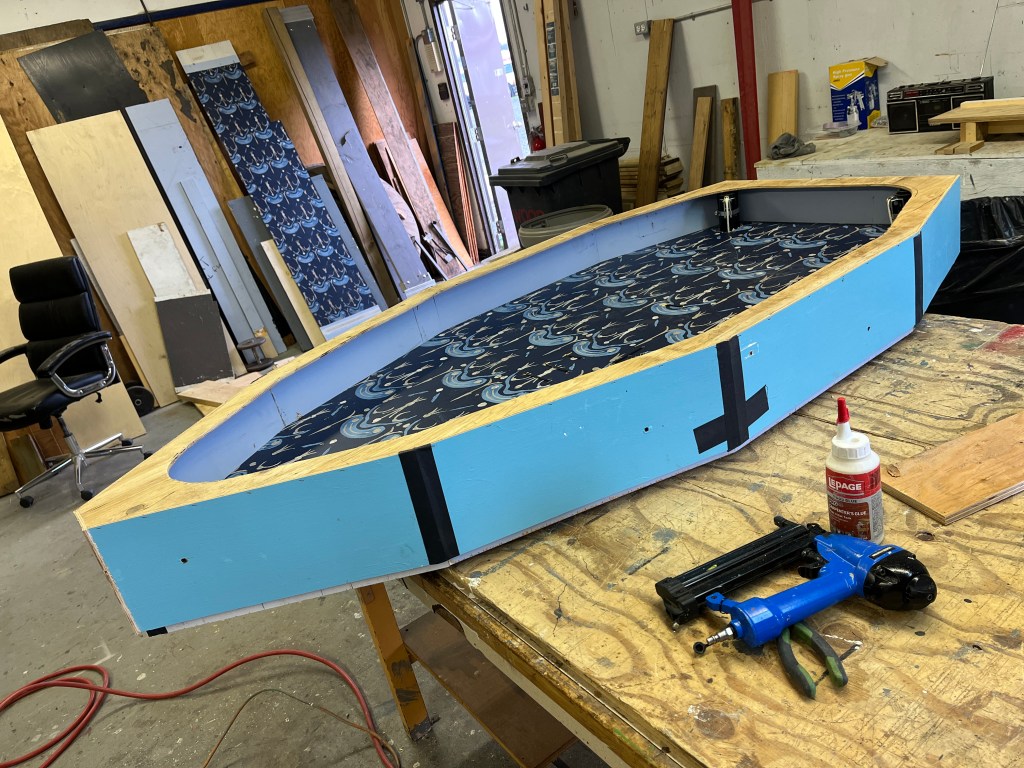
My dad, Chris, was kind enough to help with some special effects – we had some motorized wagon wheels and a motorized “sinking” boat. He also helped build a floor and a roof:
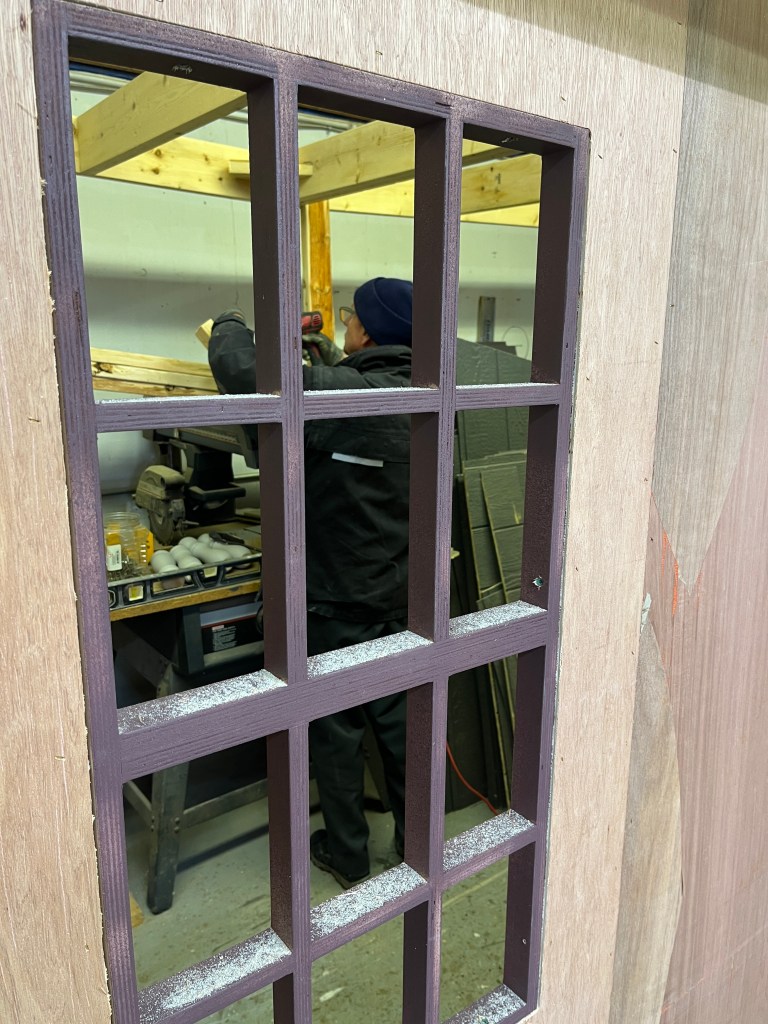
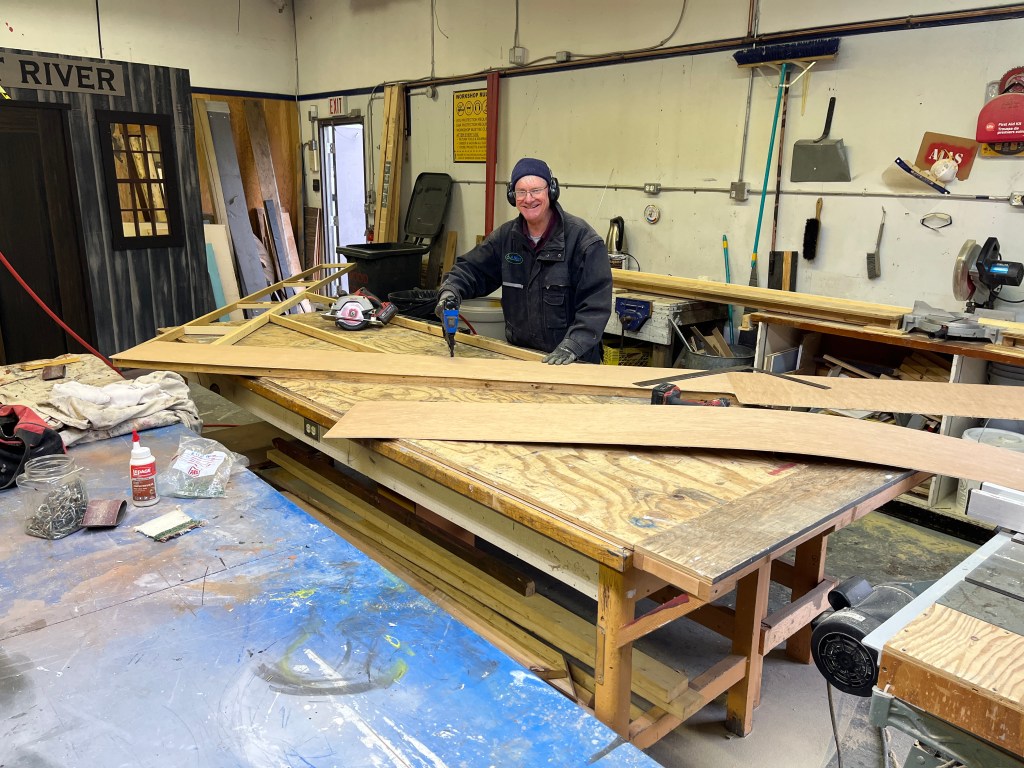
More building…
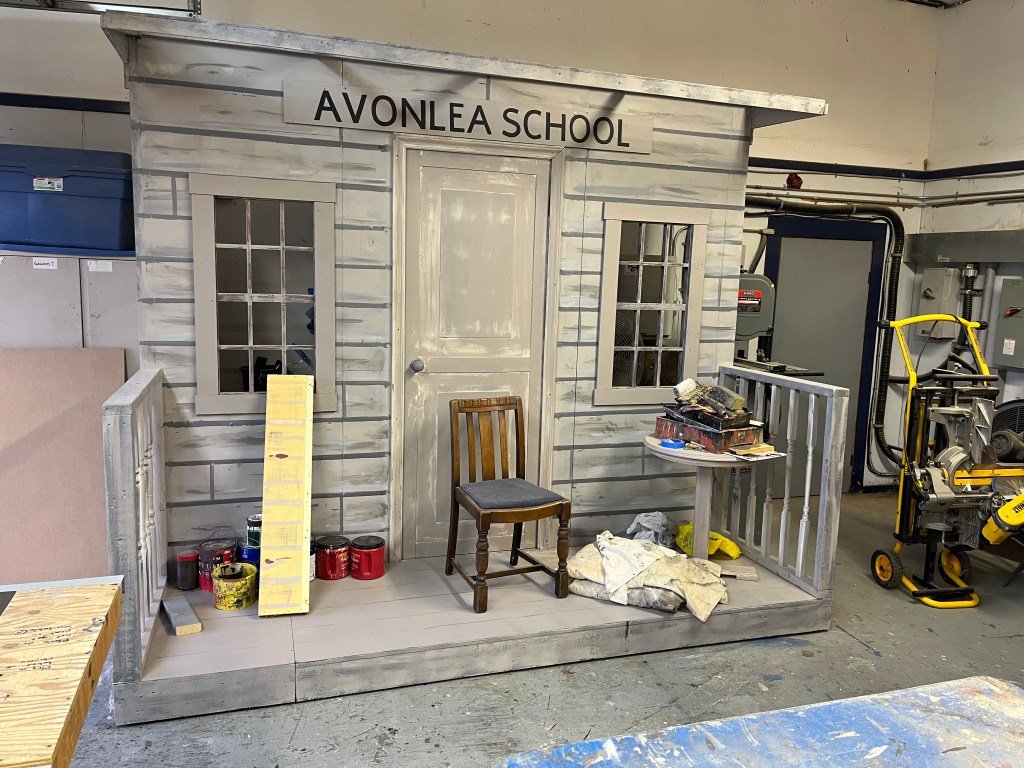


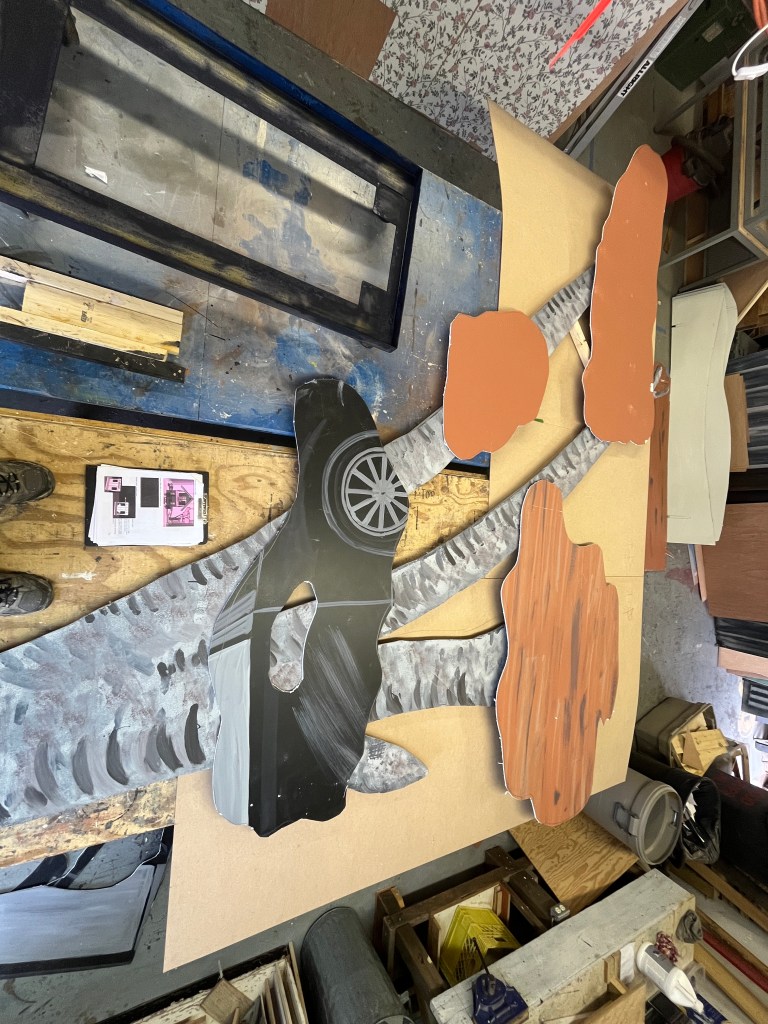

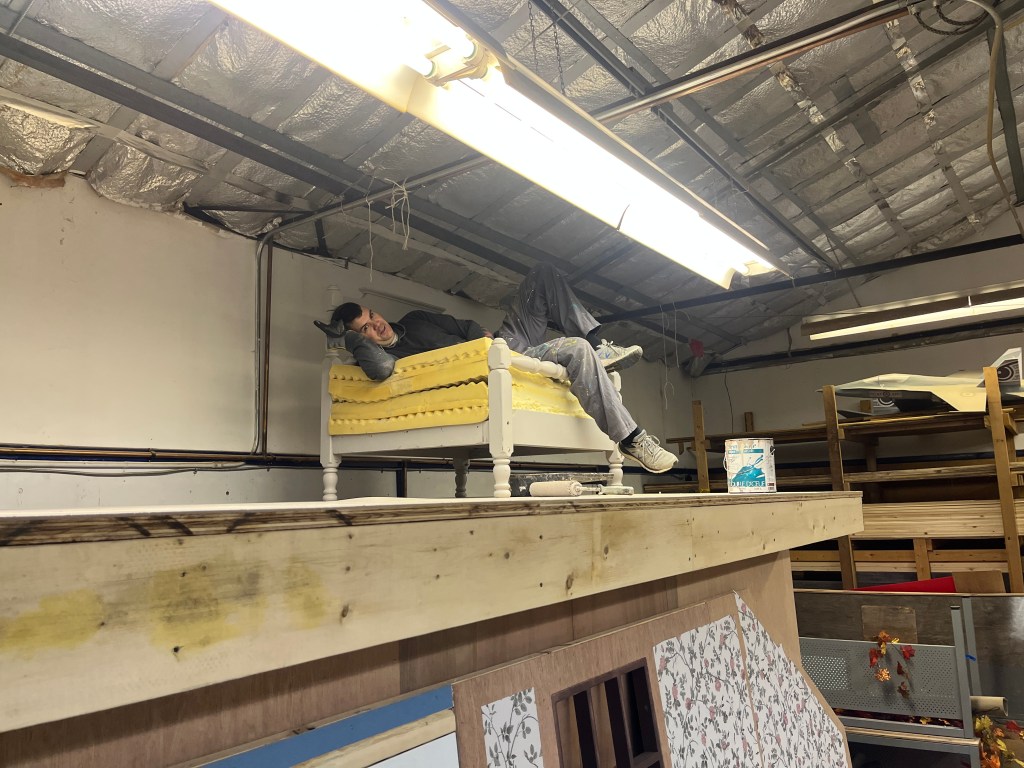
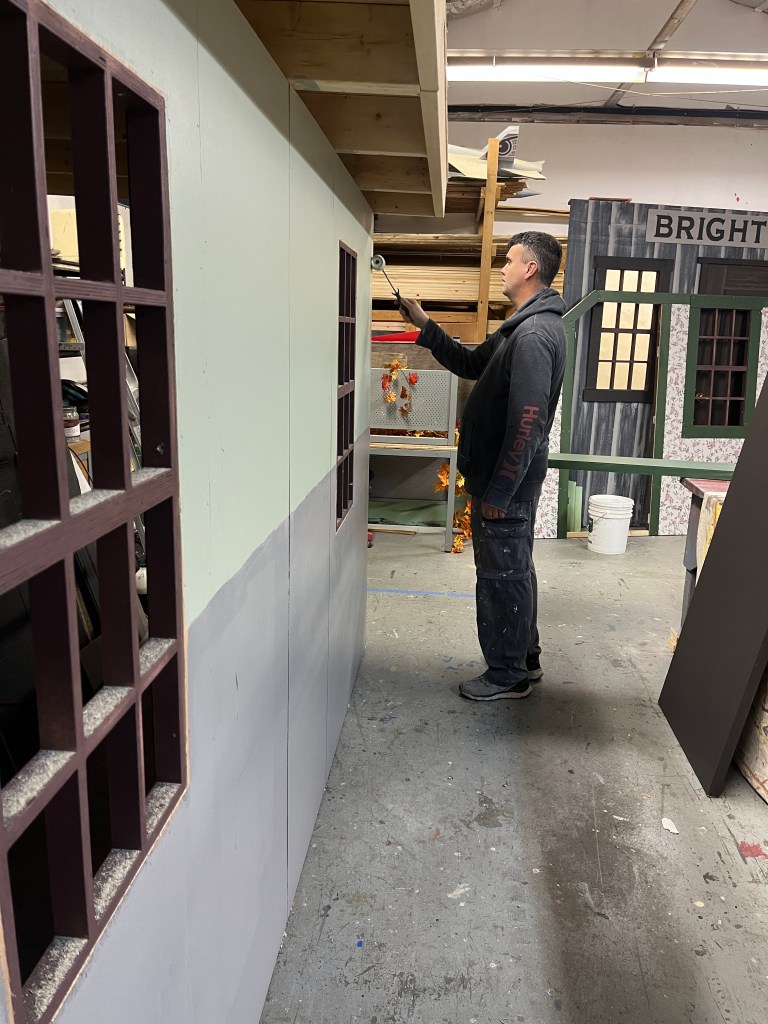
Chris, Rachel, and Dayton were a big help on a chilly paint day:
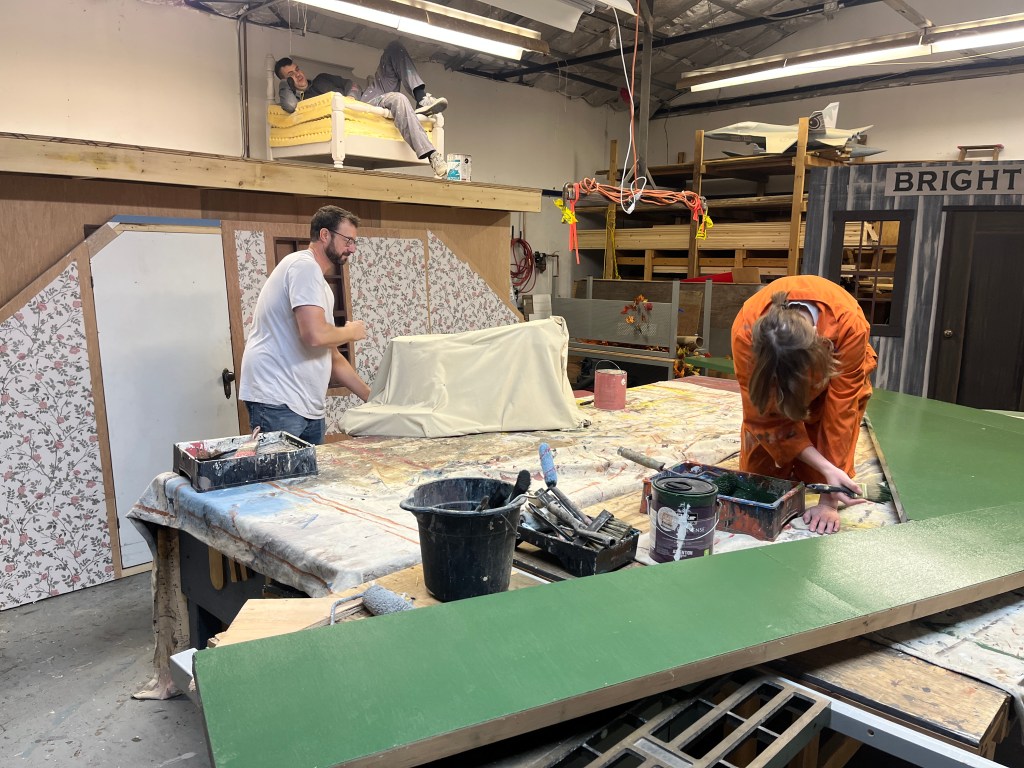
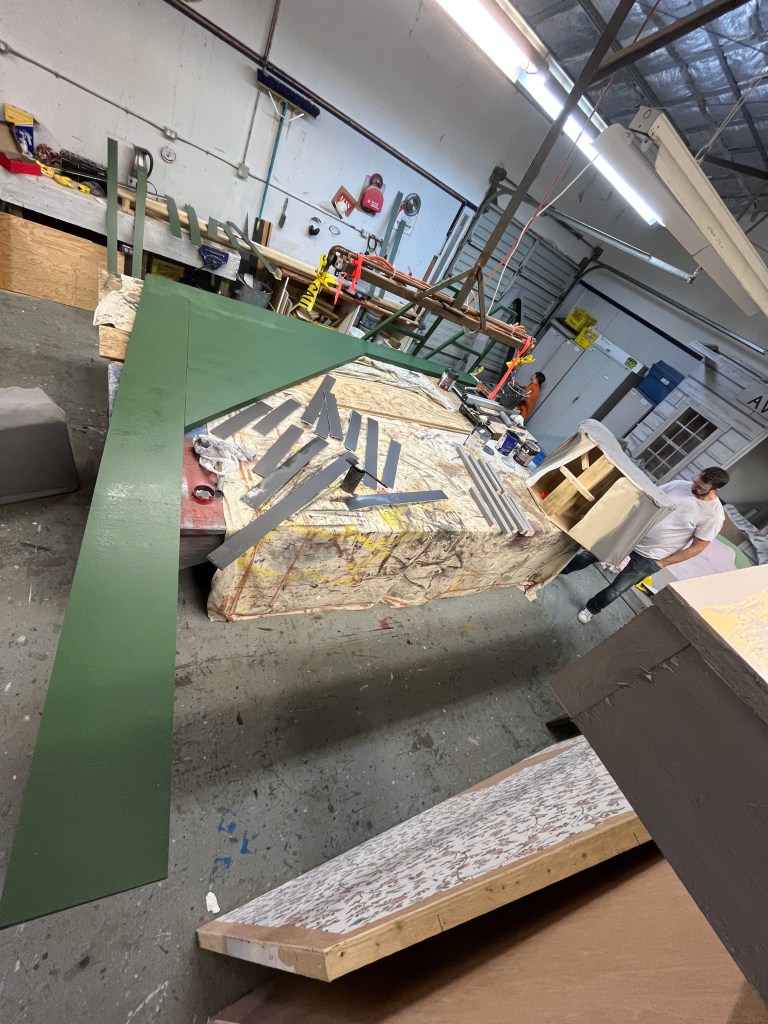
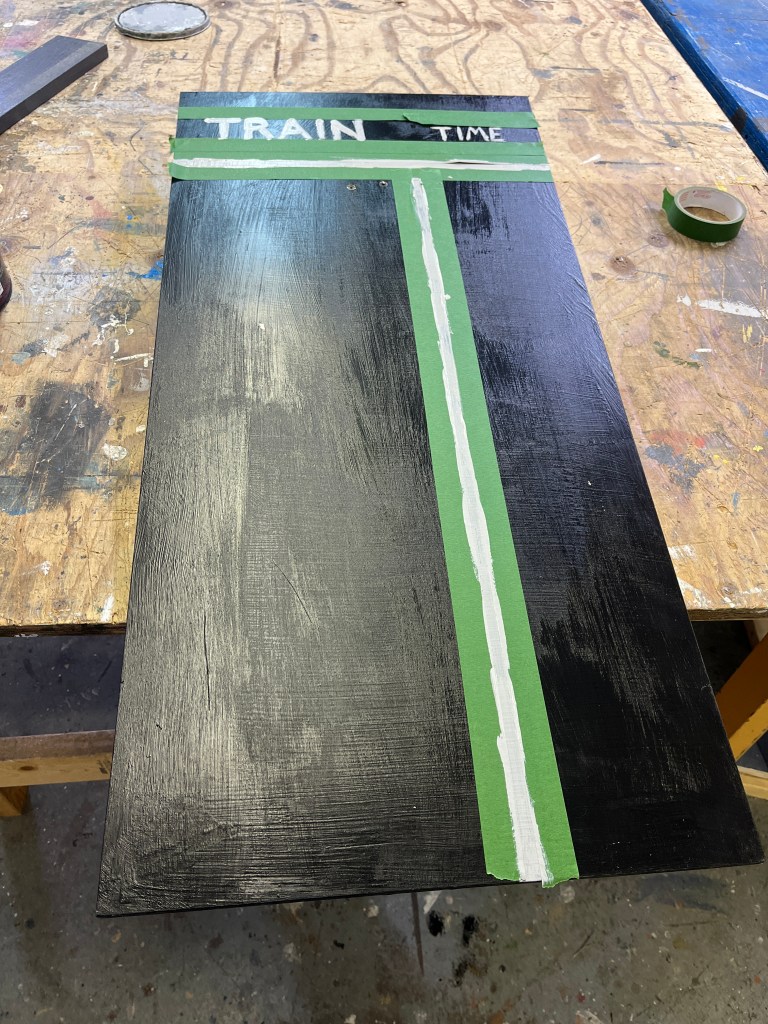
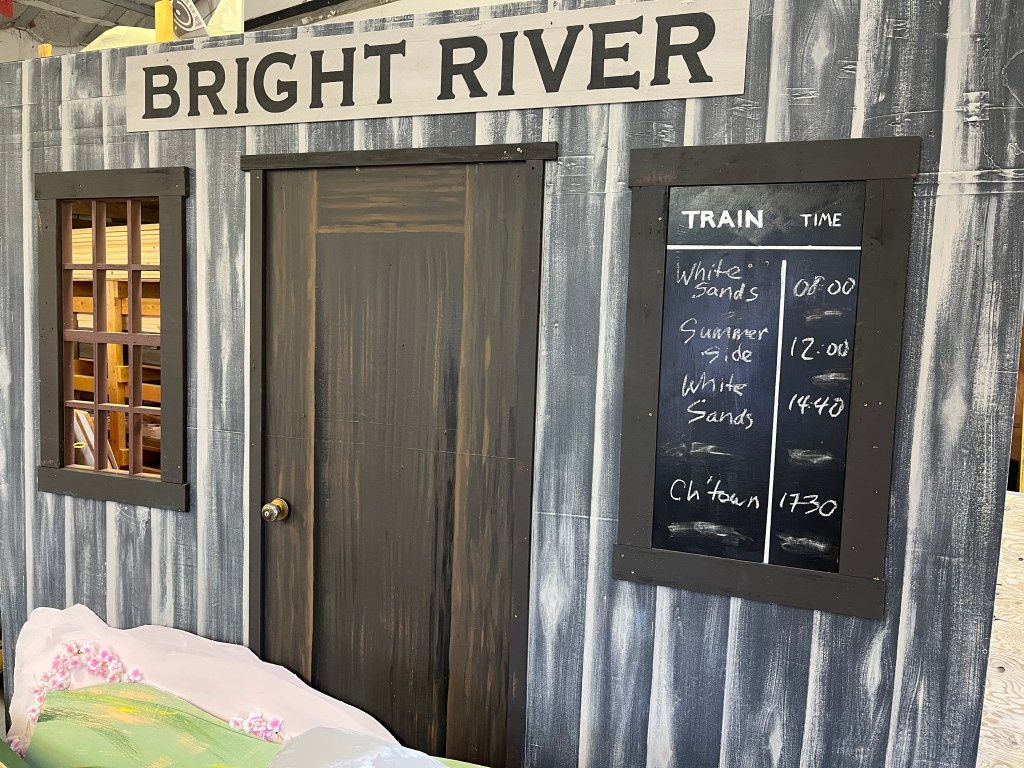
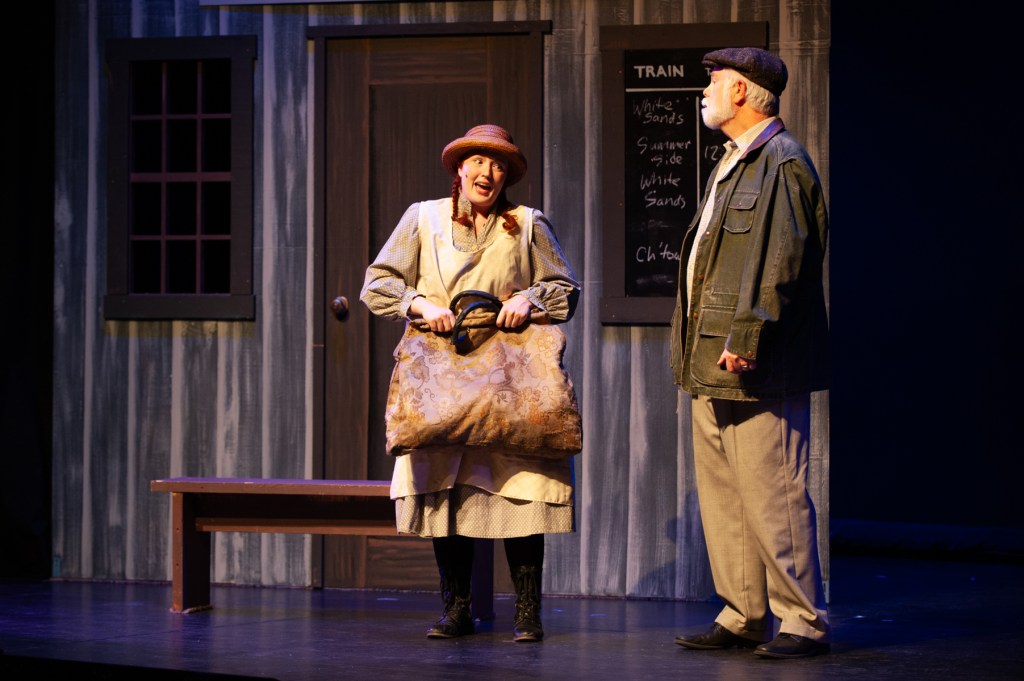
The train schedule was a fun little detail to add:
And then it was load-in day! Always appreciate help on this full day!
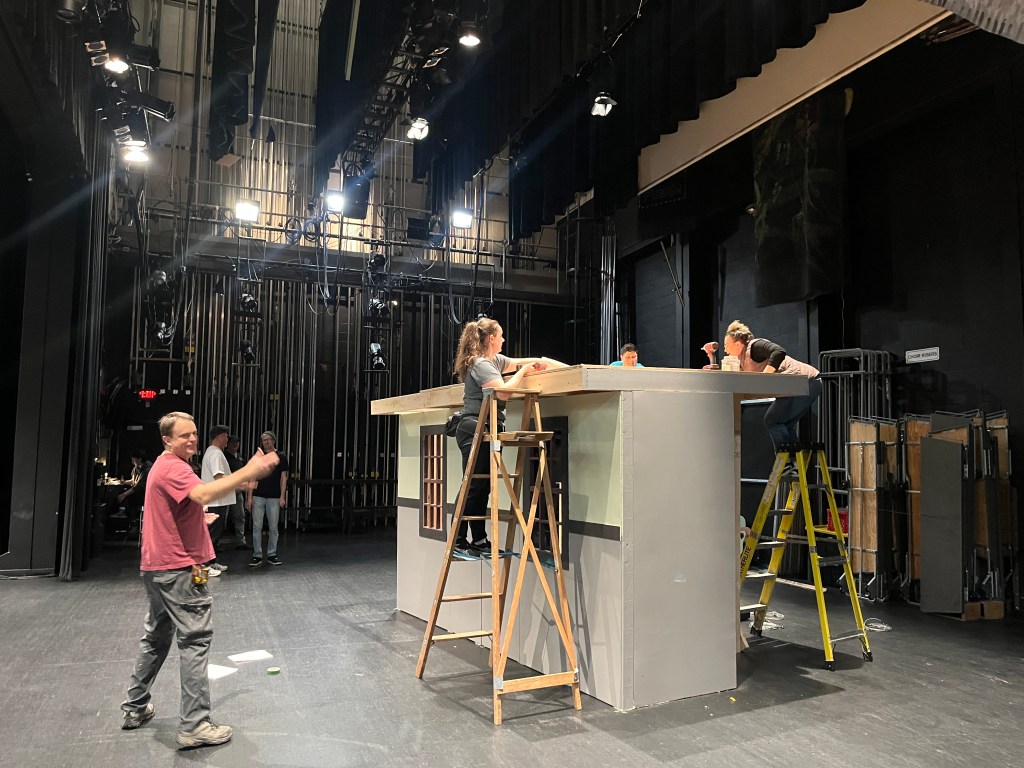
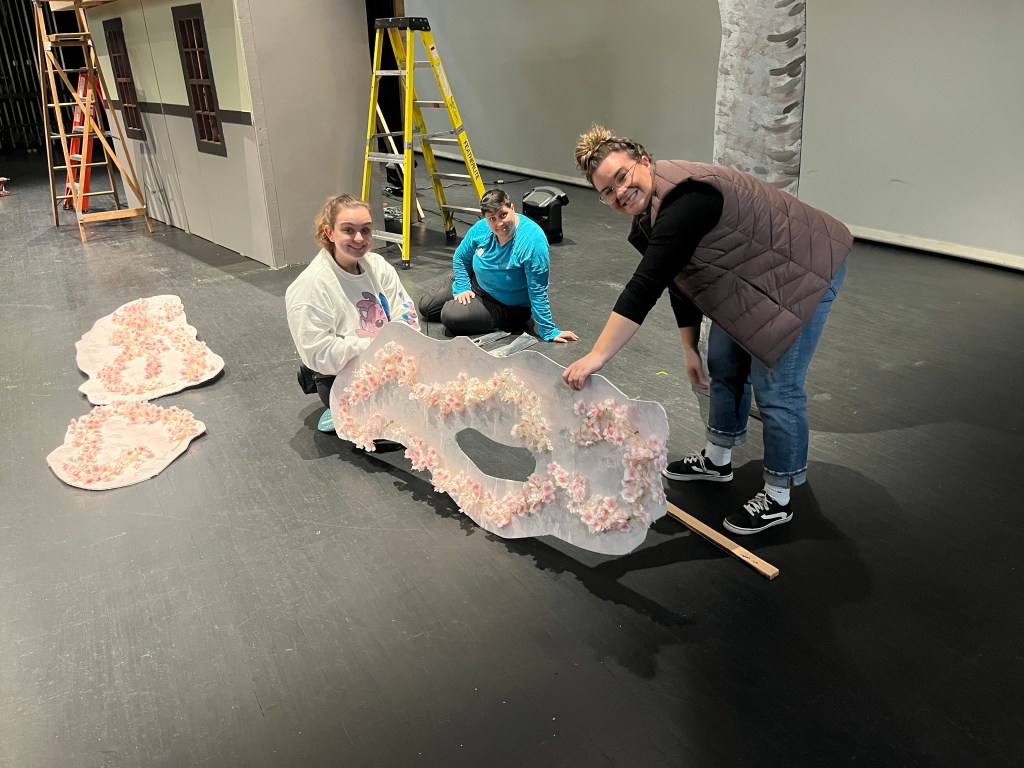
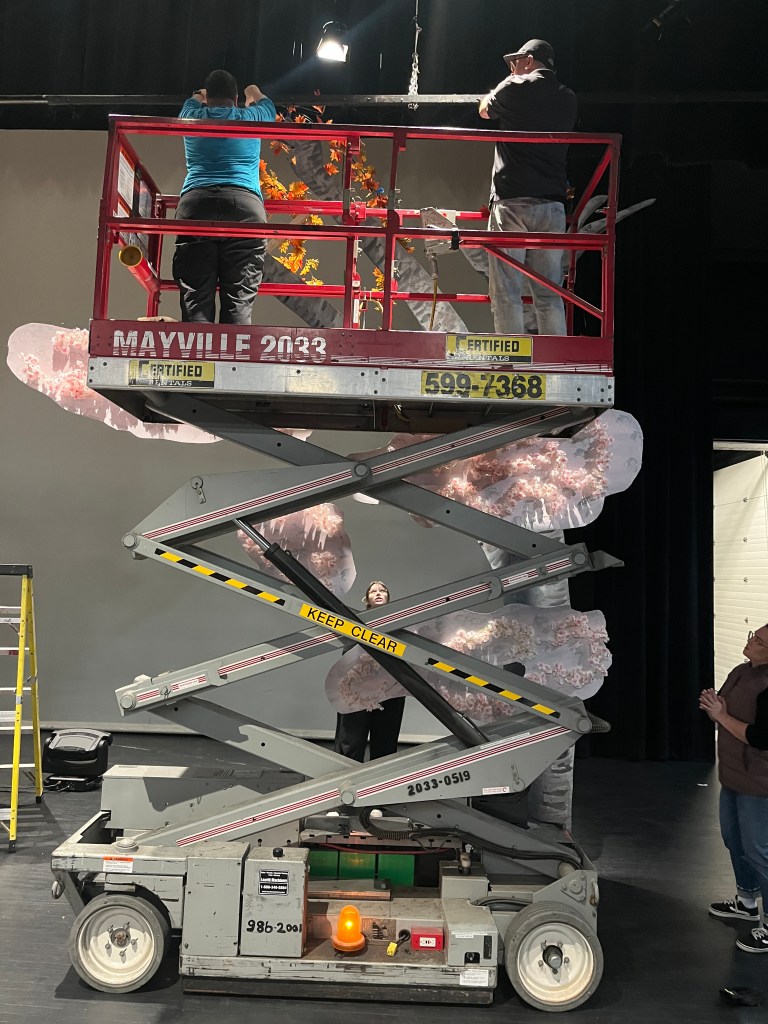
Here are a few photos from tech week – lighting was starting to build their cues:
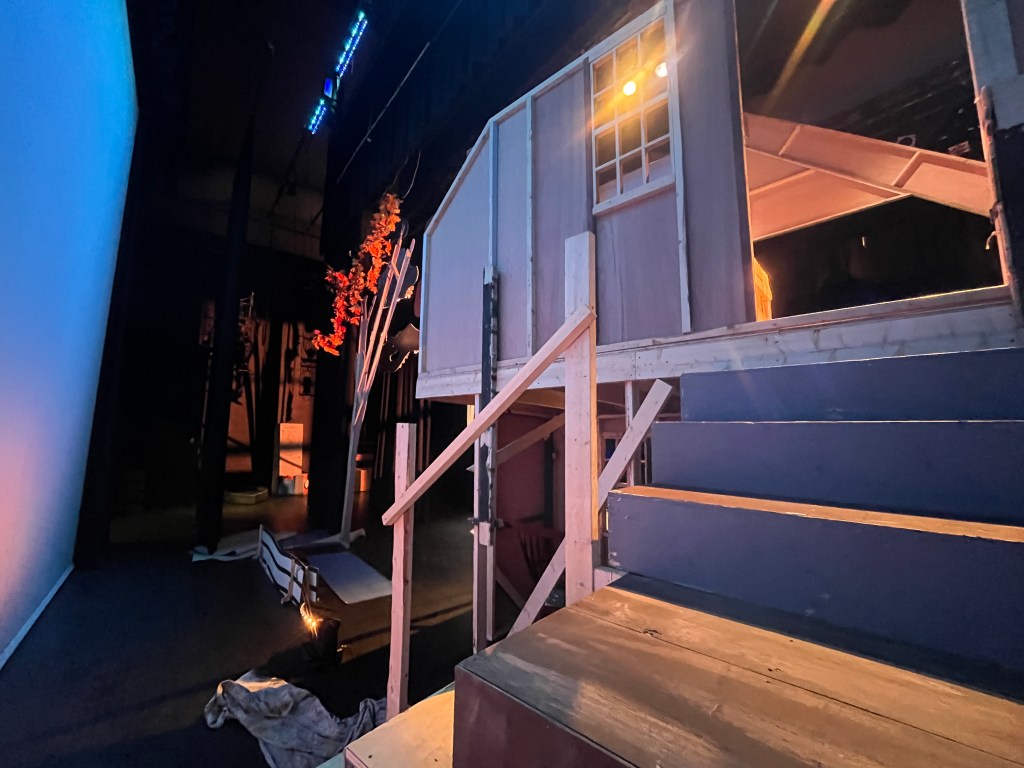

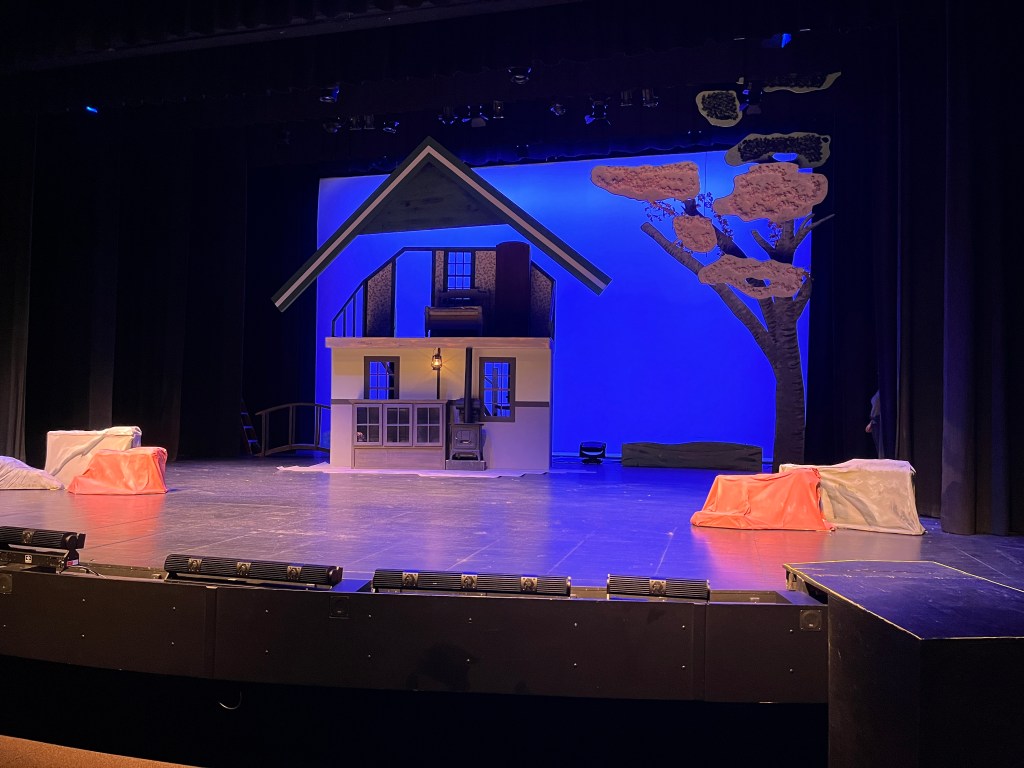
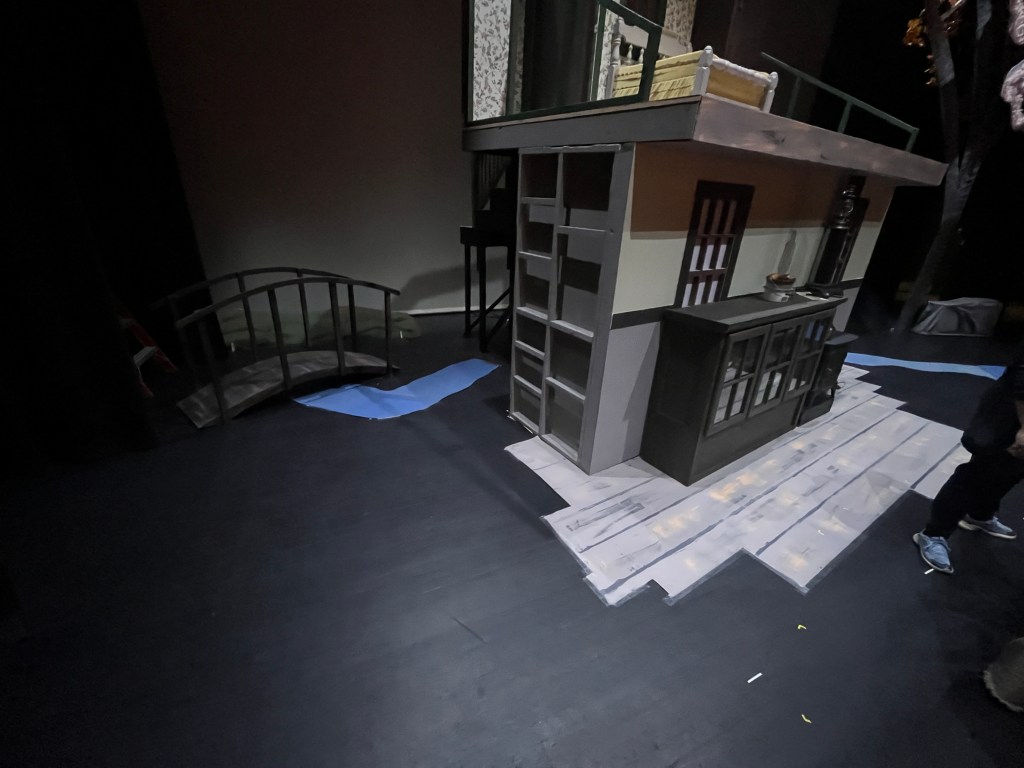
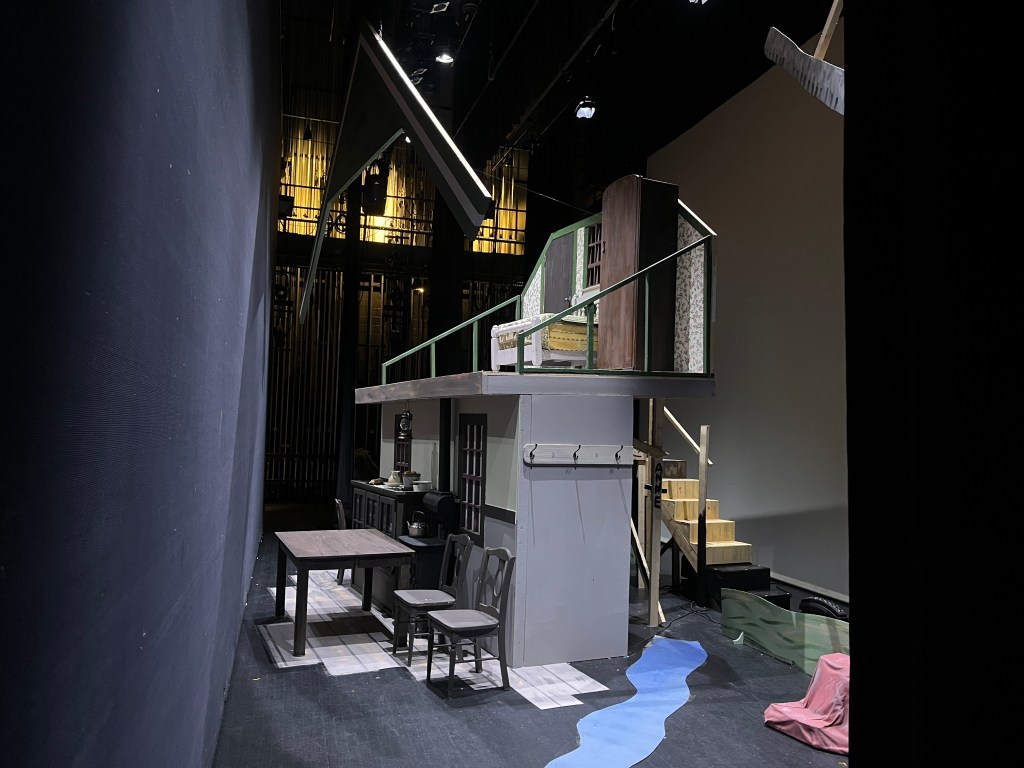
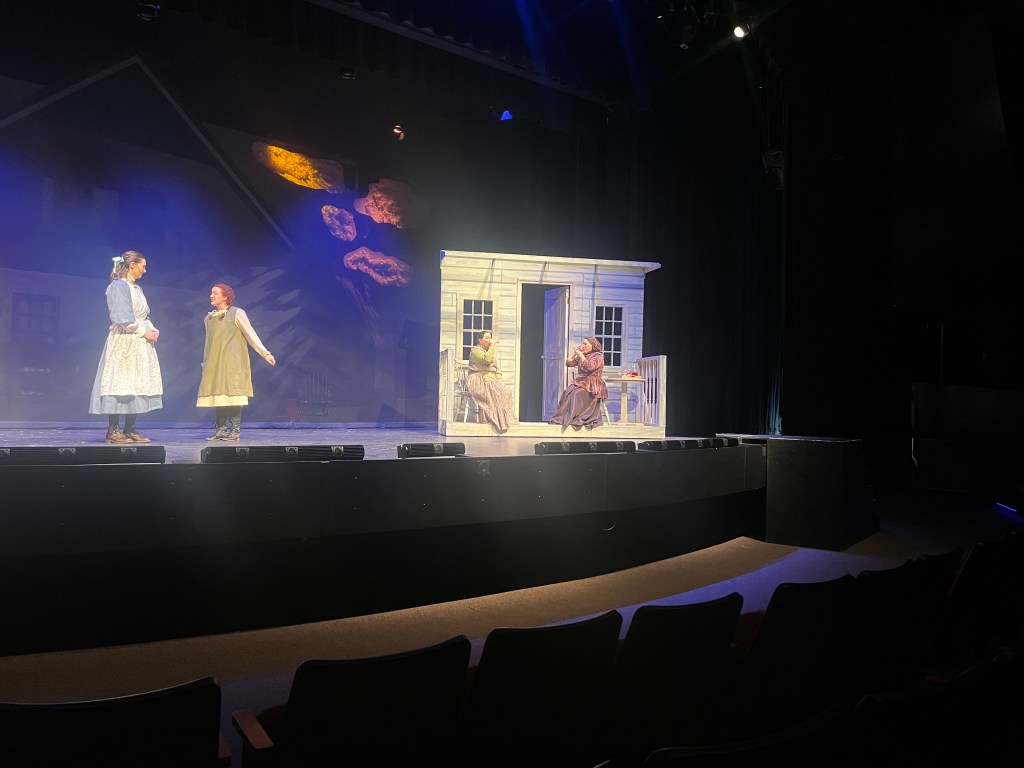
Opening Night came! Can you spot the outline of Green Gables behind the scrim?

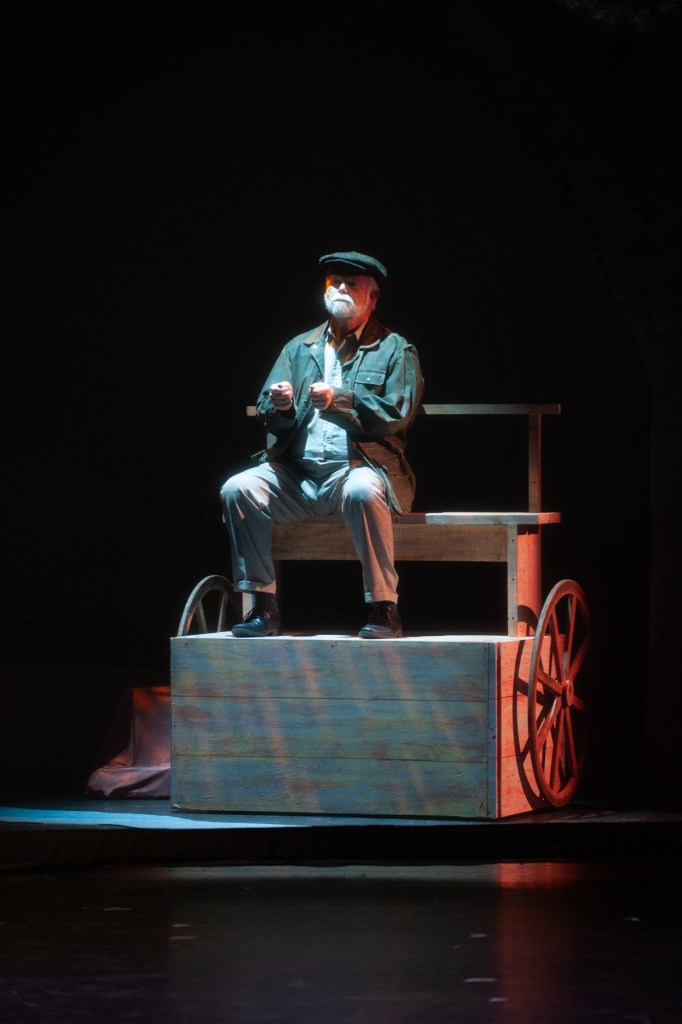
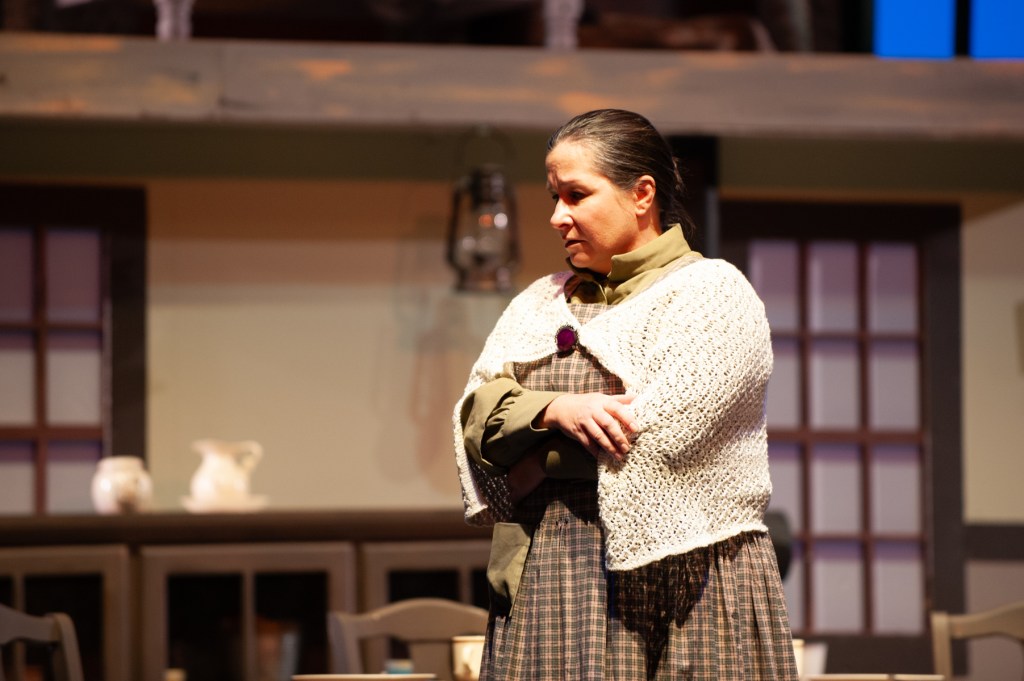
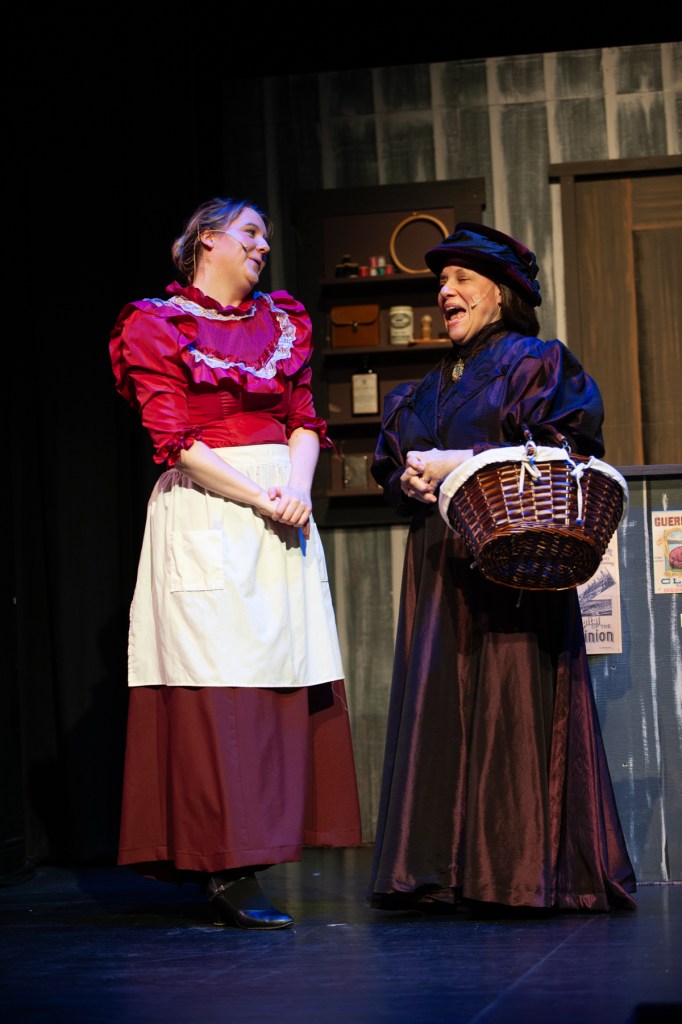
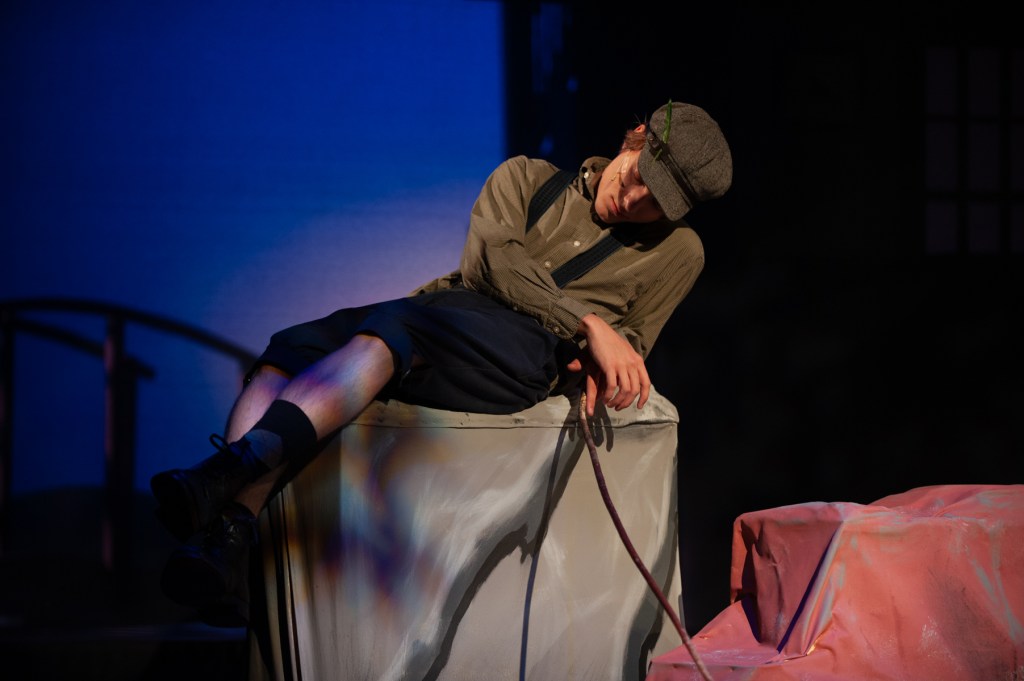
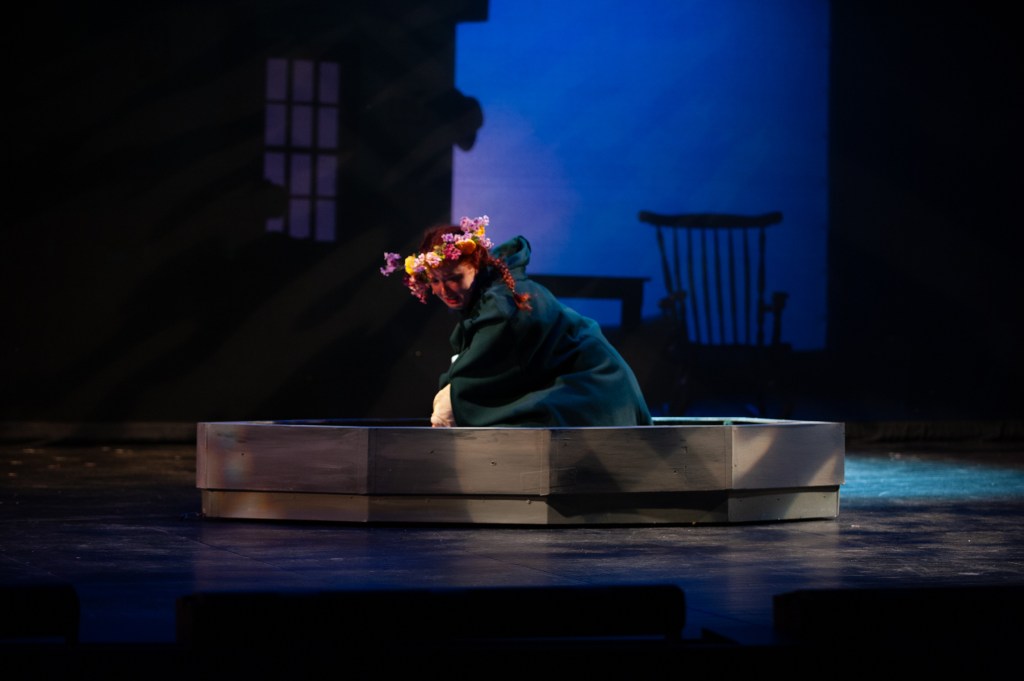
More official company photos:
Photos below are copyrighted; please do not alter them or use them for other works. Photos by Dianna Lewis Photography. (Set by Andrew Potts, Directed by Nelly Fargeon, Lighting by Ken Hildebrandt, Costumes by Vicki Bolan, Hair and Makeup by Avrey JantzKrahn, Props and some set dec by Dianna Lewis)




Transforming a Playhouse into a Storage Shed
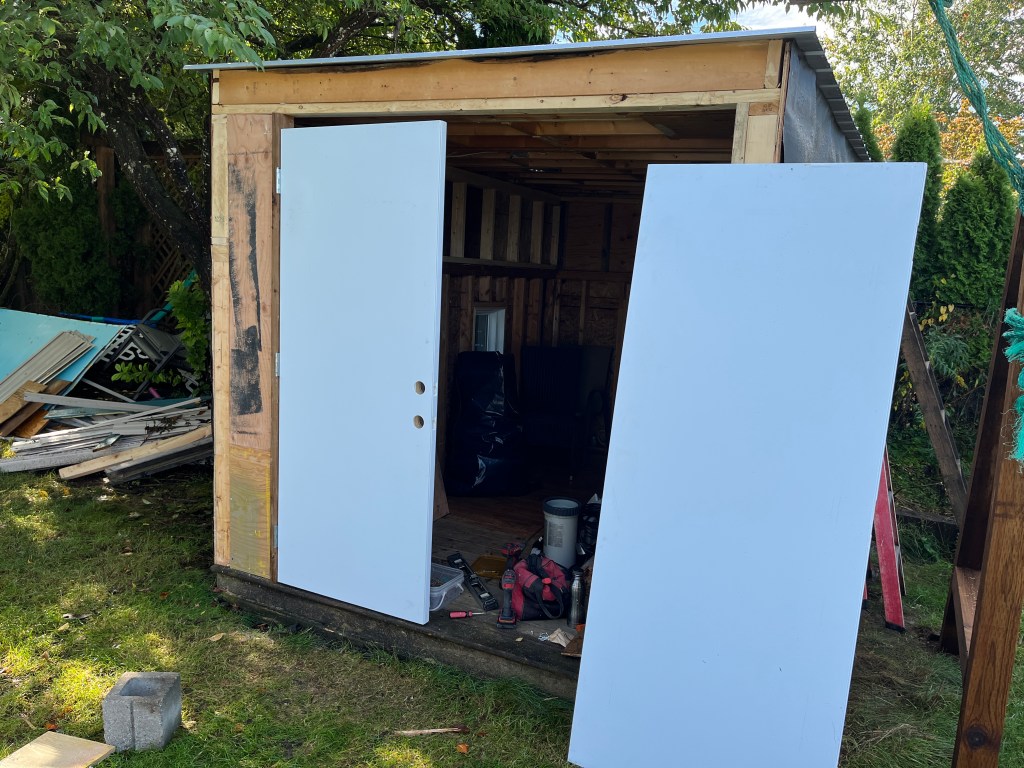
My customer Misty had a nice playhouse in her backyard, but the kids had outgrown it and it had some water damage on the deck/roof. So I provided an estimate with a cost comparison between dismantling and disposing (to build a new shed) versus using the existing structure, which had a solid foundation, to expand it into a use-able shed.
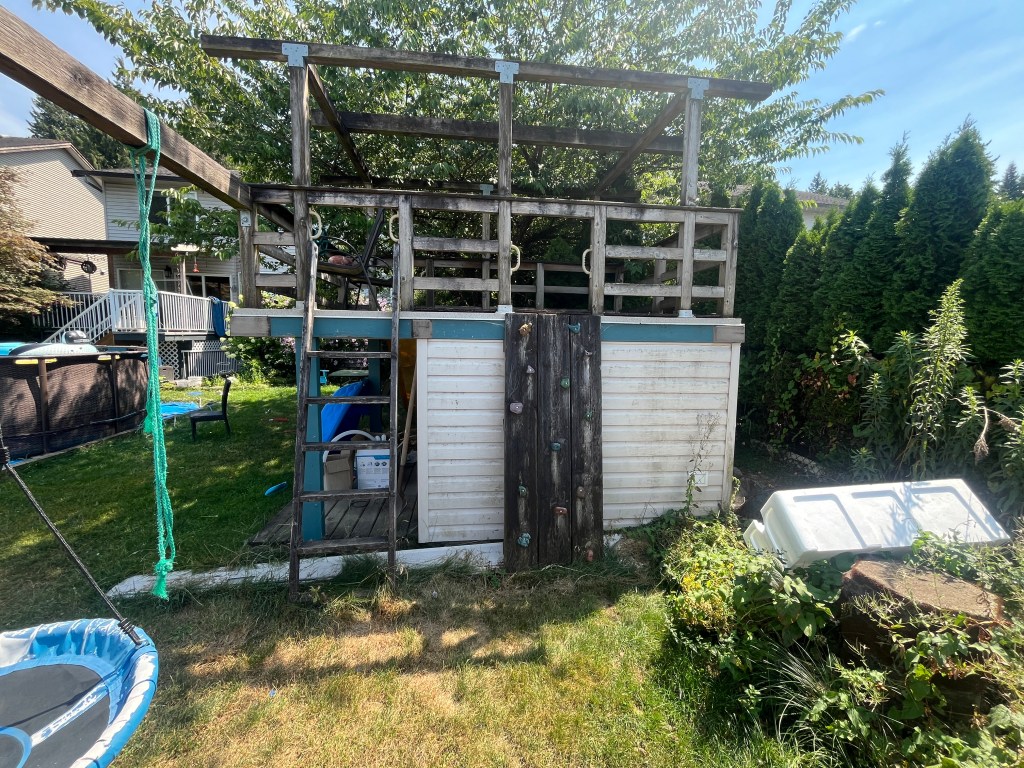
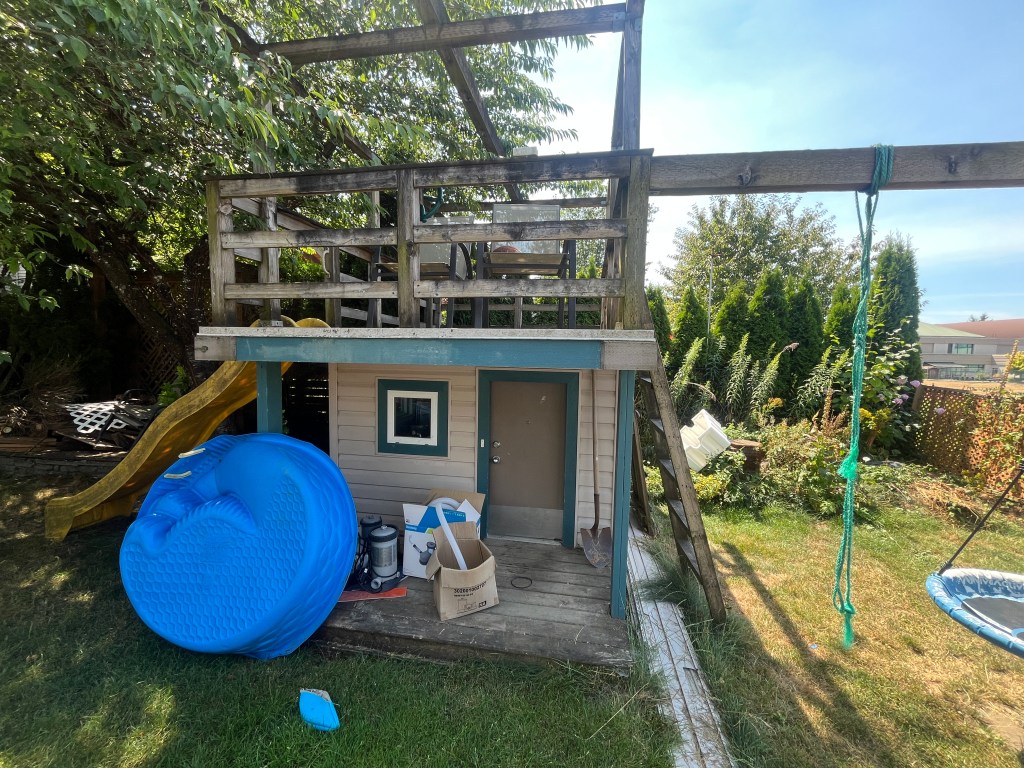
She decided to go with the second option, so I added a new post for the swingset (which was attached to the playhouse), and then dismantled the top railing etc. I found water damage in some areas of the roof.
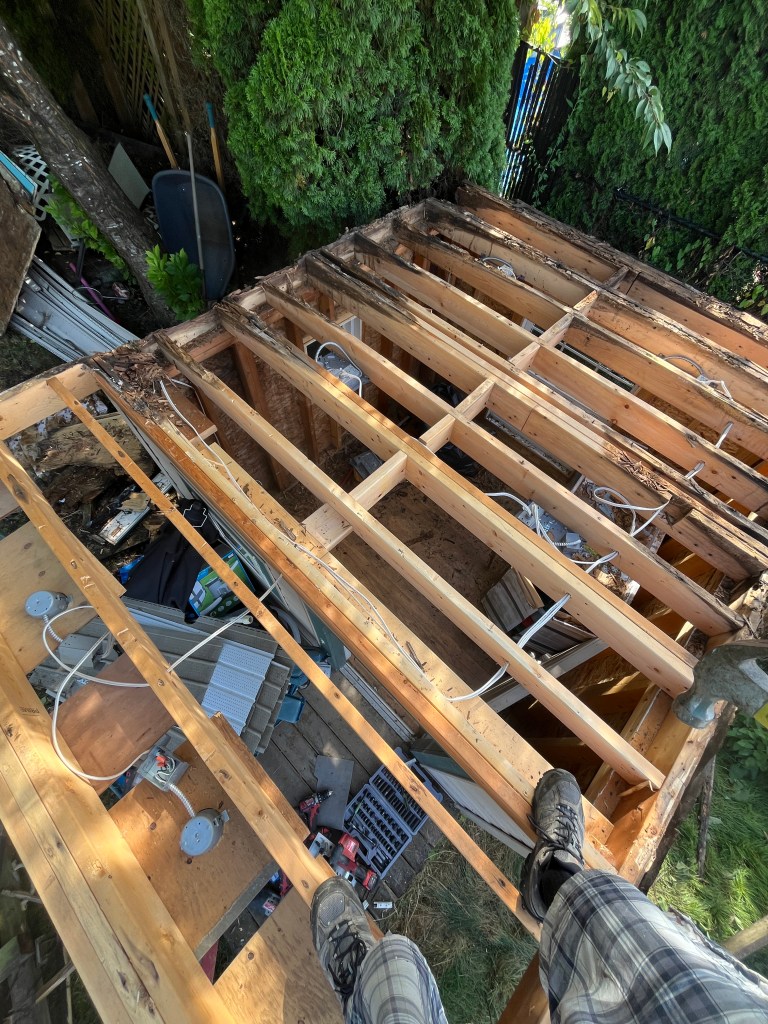
But, for the most part it was stable, so I replaced some joists, jacked them up, moved the front walls out to the edge of the deck, and added about 2 feet to the wall height. I had to repair a few soft spots on the walls as well.
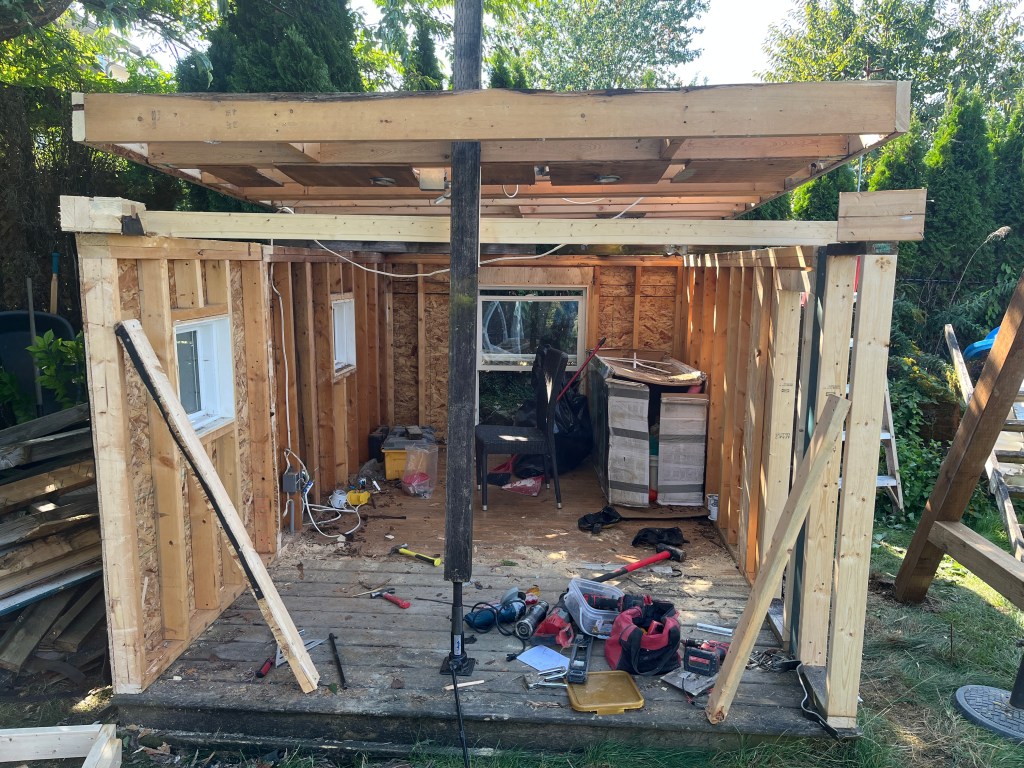
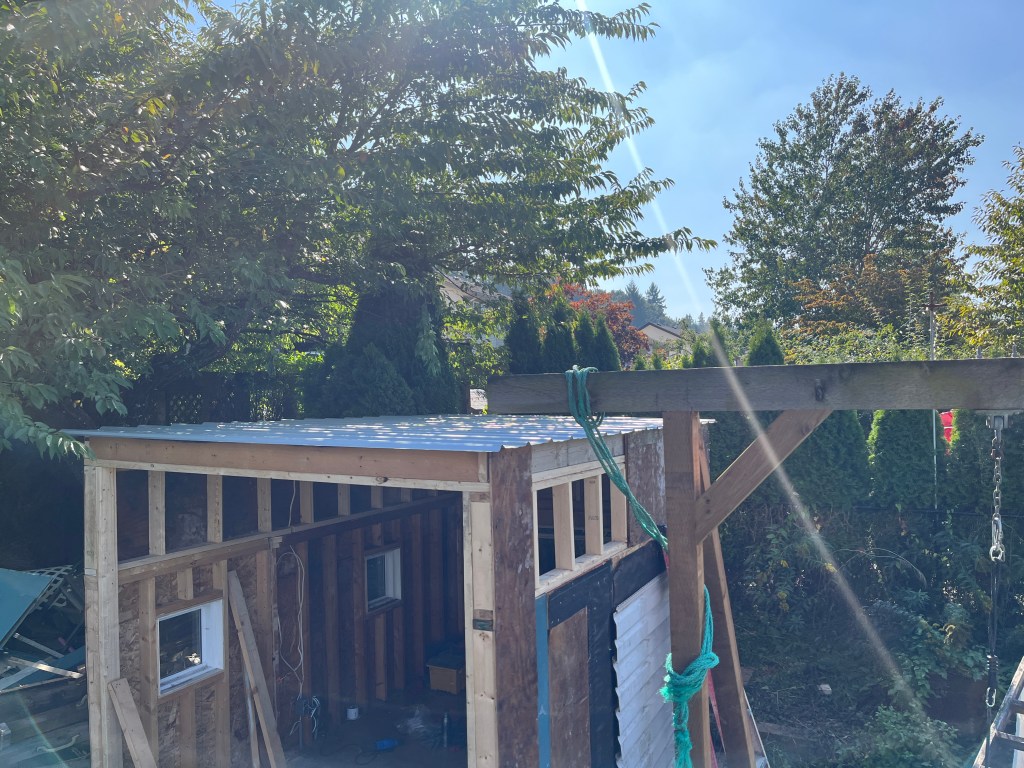
Then I added a metal roof, some exterior doors and replaced/added to the siding.
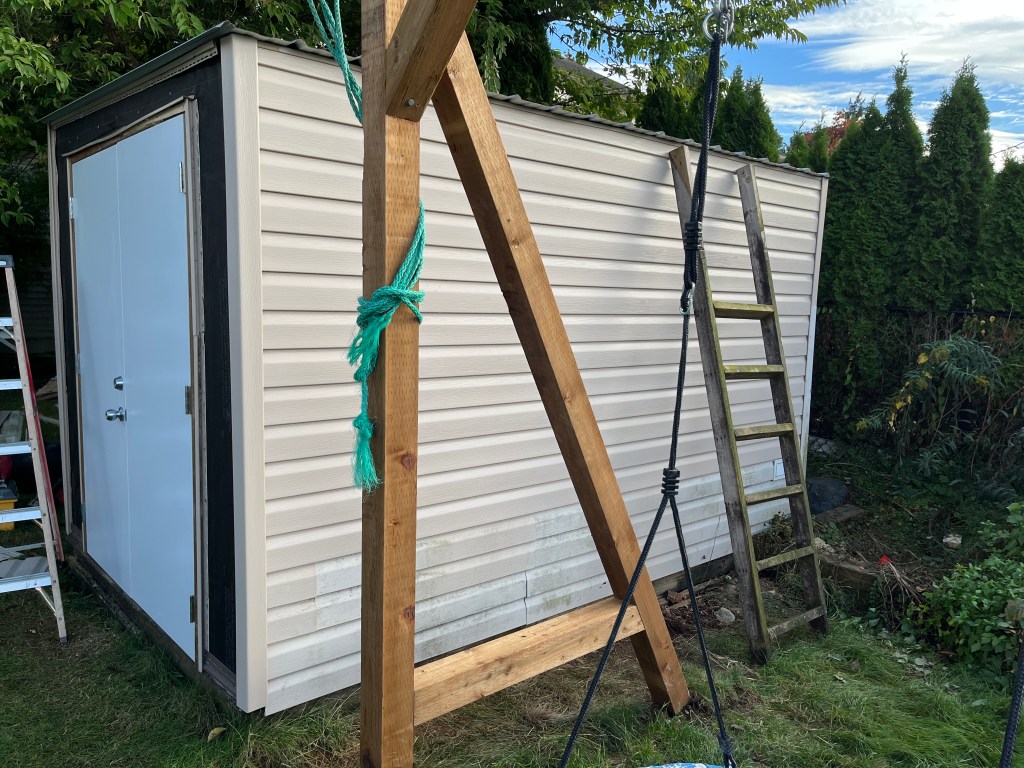
I was fortunate with the September weather to be able to time it where I could get the roof on before the rains started…


Simple plywood stands to hold foamcore 2D set pieces (flats)
This is mostly for my own reference, but maybe you can use it too. I build sets every summer for Gotta Sing Gotta Dance and they like to use foamcore set pieces (ie “flats”) because they are so lightweight and easy to manoeuvre.
The problem with 3/16″ foam core is that it doesn’t quite stand up straight on its own and it needs a frame (when standing higher than 4 feet, anyway). So most of my time is spent building lightweight frames for the foamcore to be zap-strapped to.
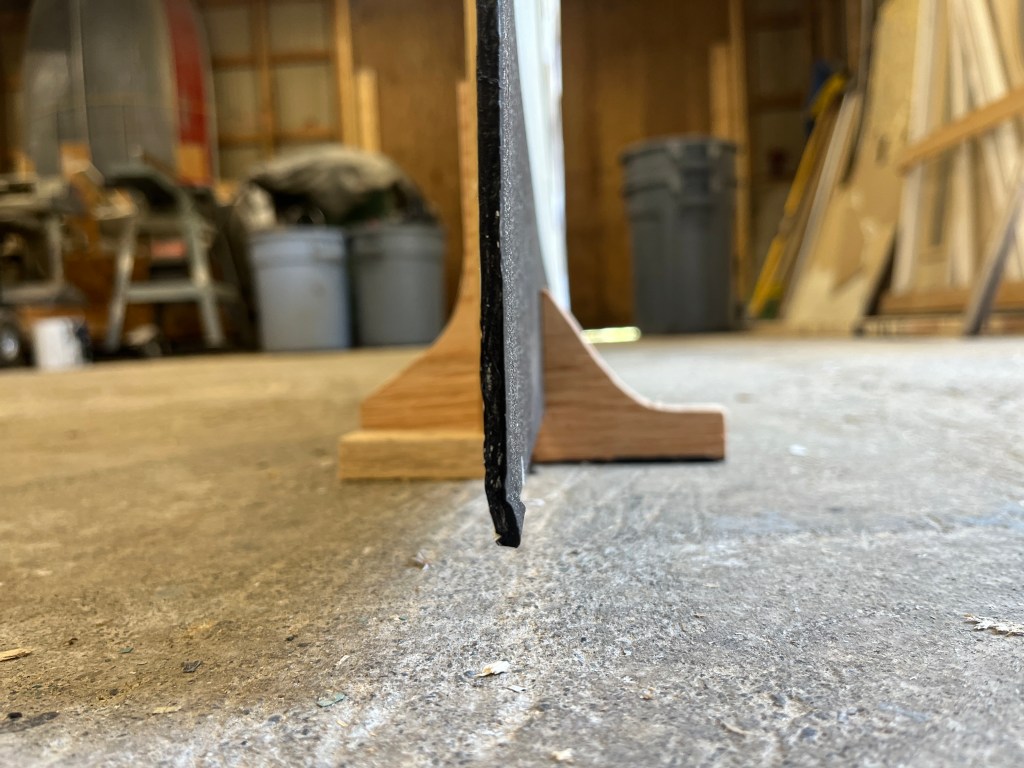
However when the foam core piece is 4 feet high or less, it can be held up with very little effort. I made some wooden blocks that worked quite well for quite a few pieces. Here they are:
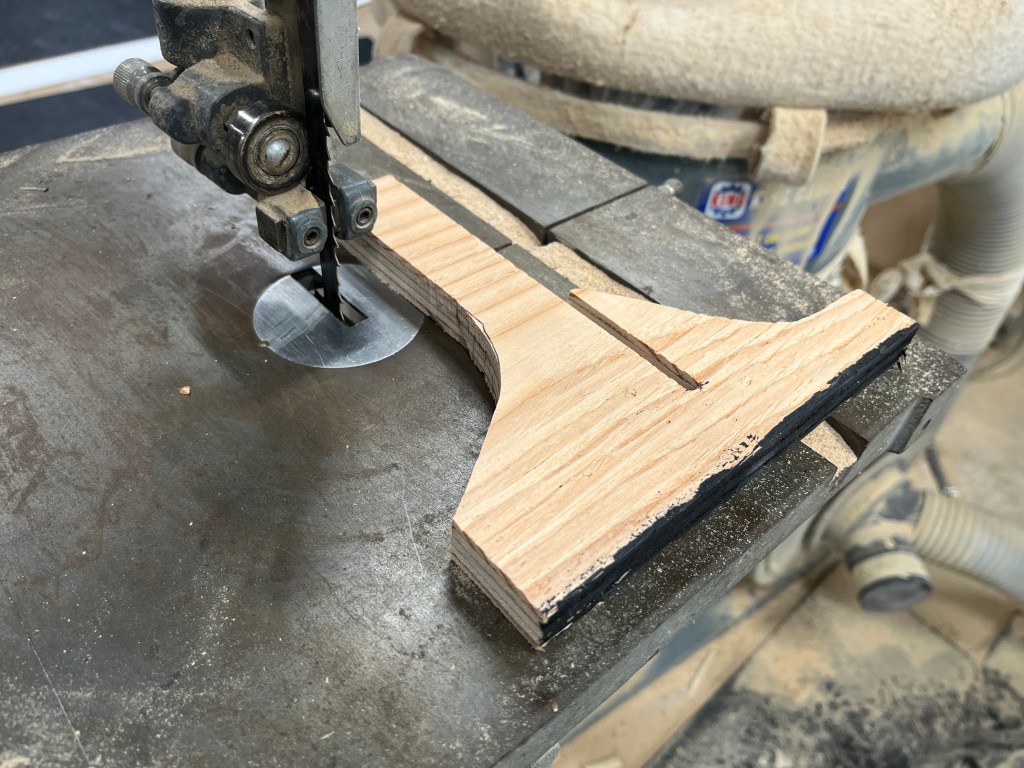
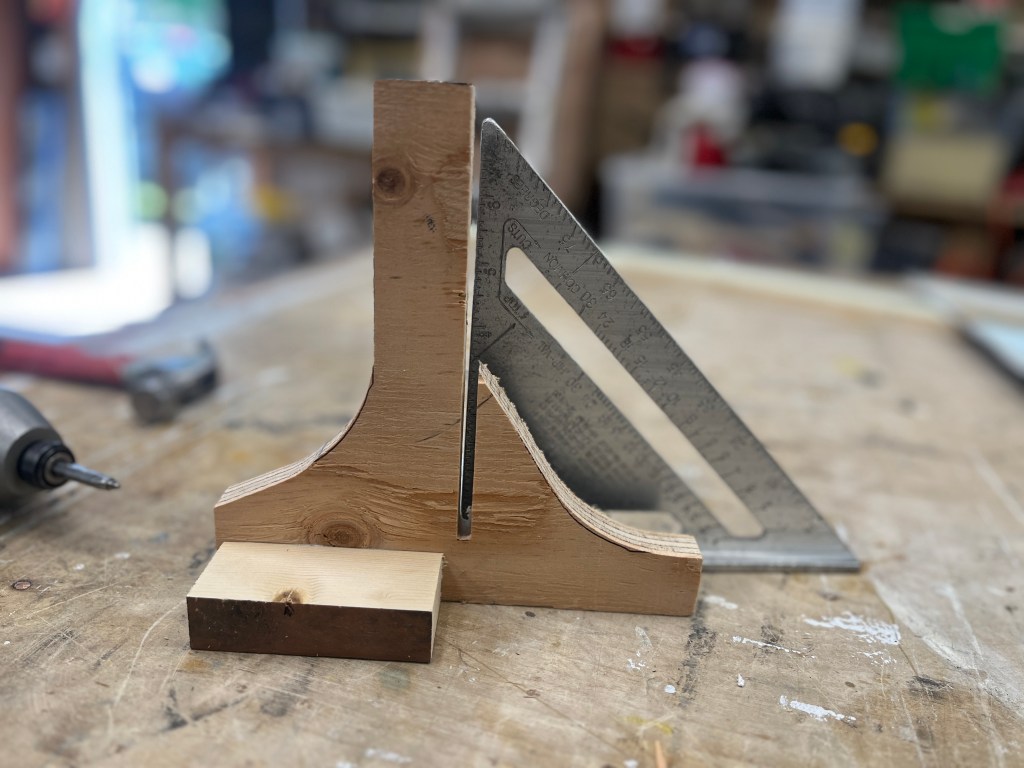
I cut a scrap piece of 3/4 plywood into the odd shape above. The slot is for the foam core to fit snugly in. The angle of the slot is not 90 degrees – it is slanted back slightly (1 or 2 degrees) so that the foam core rests mostly on the back (taller) side.
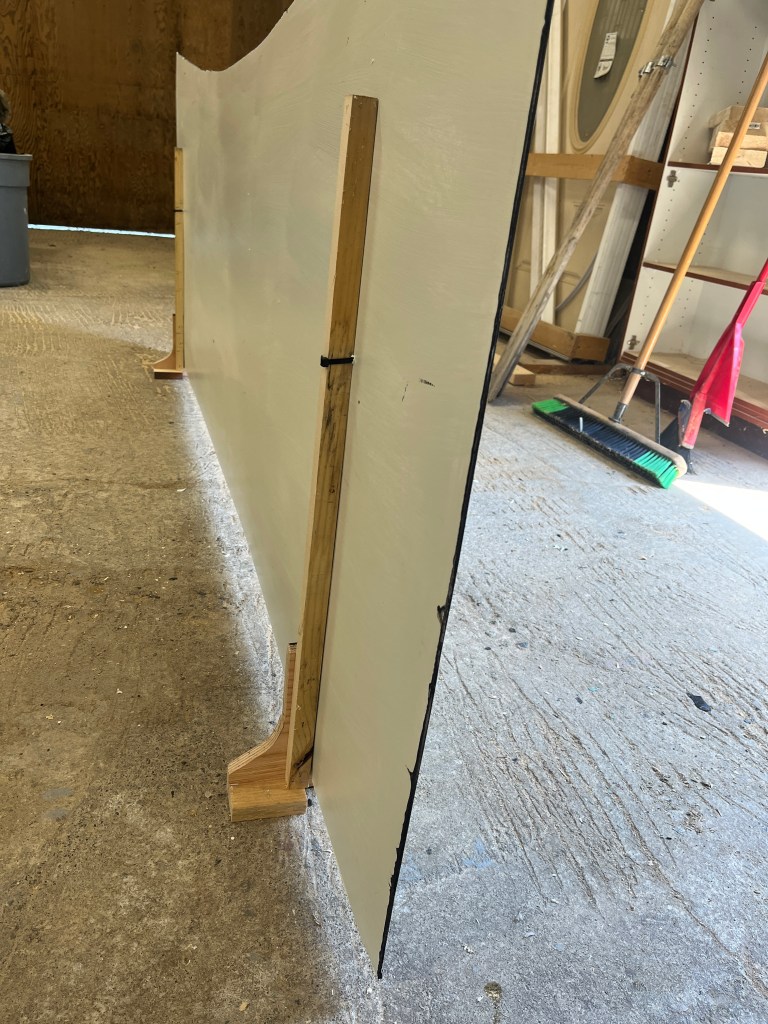
I then glued+stapled a vertical stick to help with rigidity. Then zap strapped the stick to the foamcore (yes, you can sometimes see it protrude through the front if you look for it)
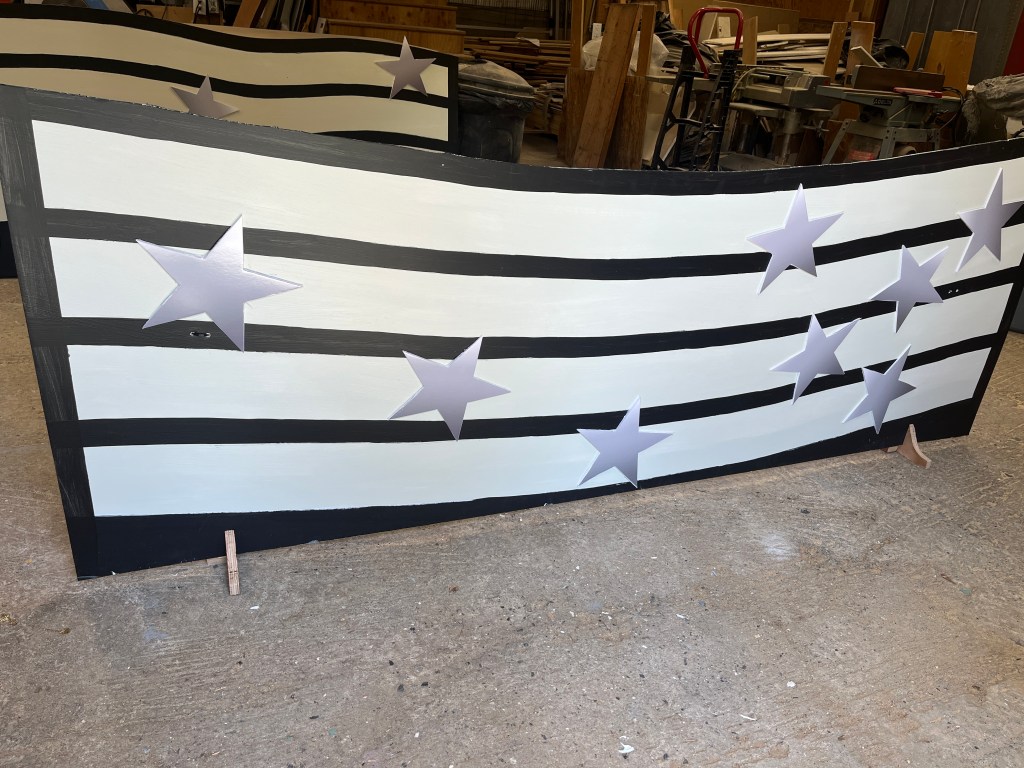
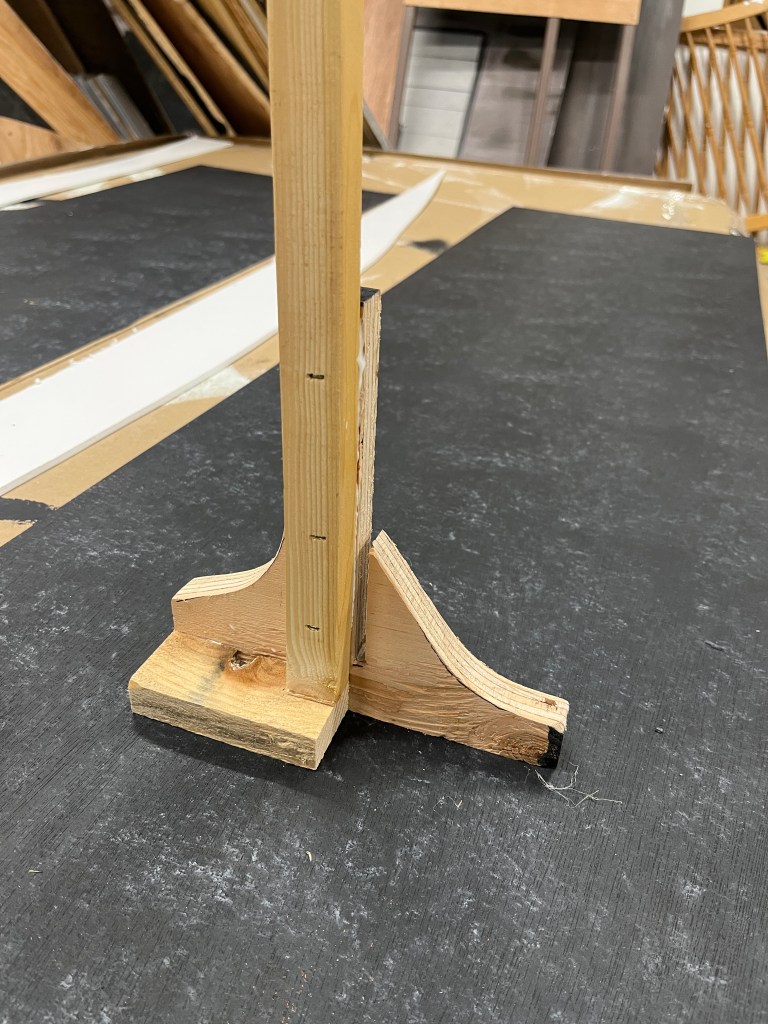
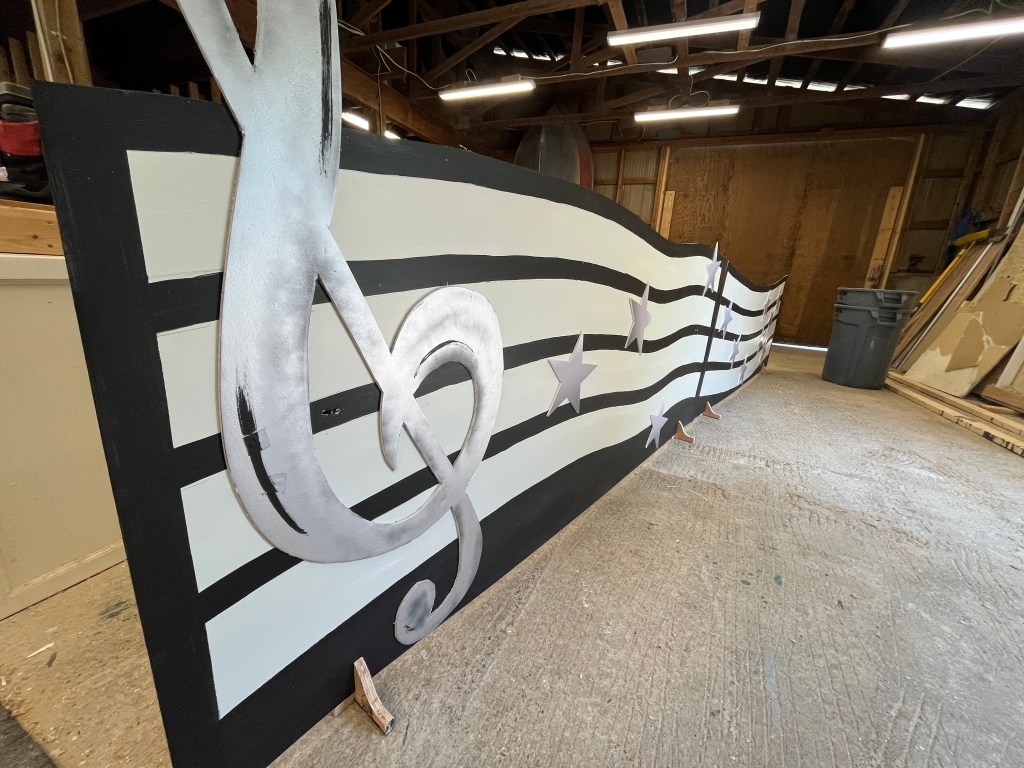
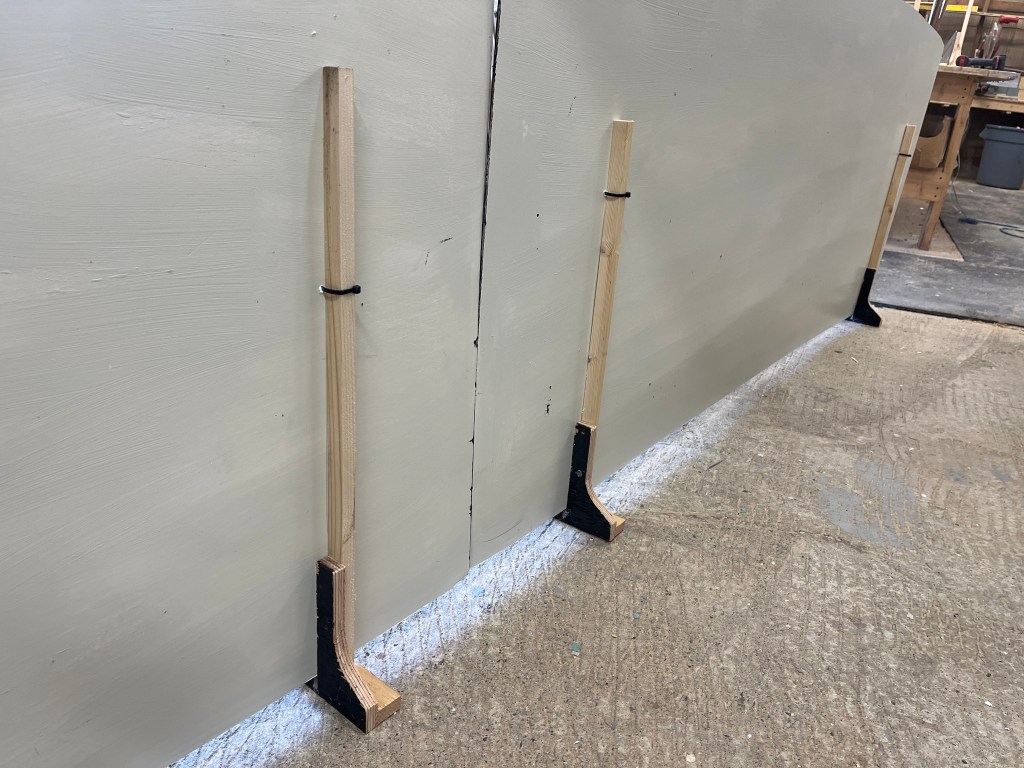
The zap straps just slide off the sticks if you want to remove the bases for transport. You have a set piece light enough to pick up with one hand, that stands up by itself.
Bonus tip: when painting foamcore, always paint both sides, or you get major warpage.
Bonus tip #2: foamcore is generally more expensive than plywood of the same thickness. But it can be ordered in bulk in 4×8 sheets from your local printshop for some savings.
Custom fold-down, wall-mounted, low-tech, space-saving Tables
Move over, IKEA. Andrew’s Tiny Tables are here. (Ha ha)
Noel asked for some small lunch tables for his clinic staff that wouldn’t take up much space. I whipped these together in a couple of hours and was quite proud of them, and he said they work well.
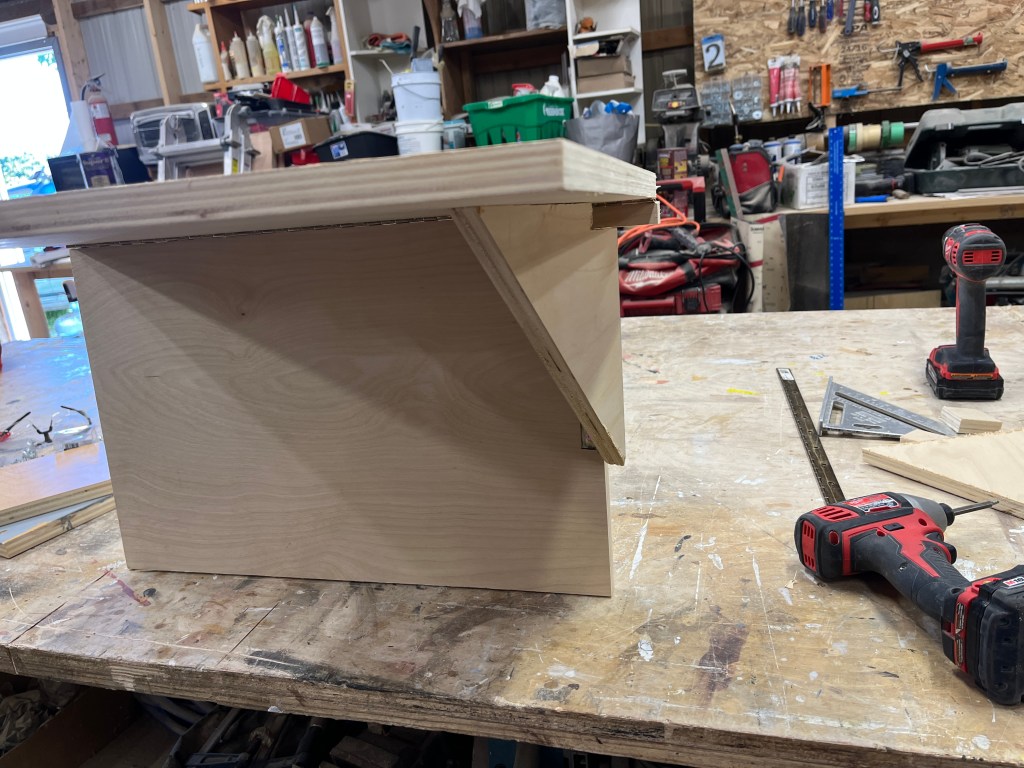
They are made of 3/4″ birch plywood and brass piano hinges. And they are fastened to studs in the wall. They stay in place using gravity, plus a tiny bit of friction.
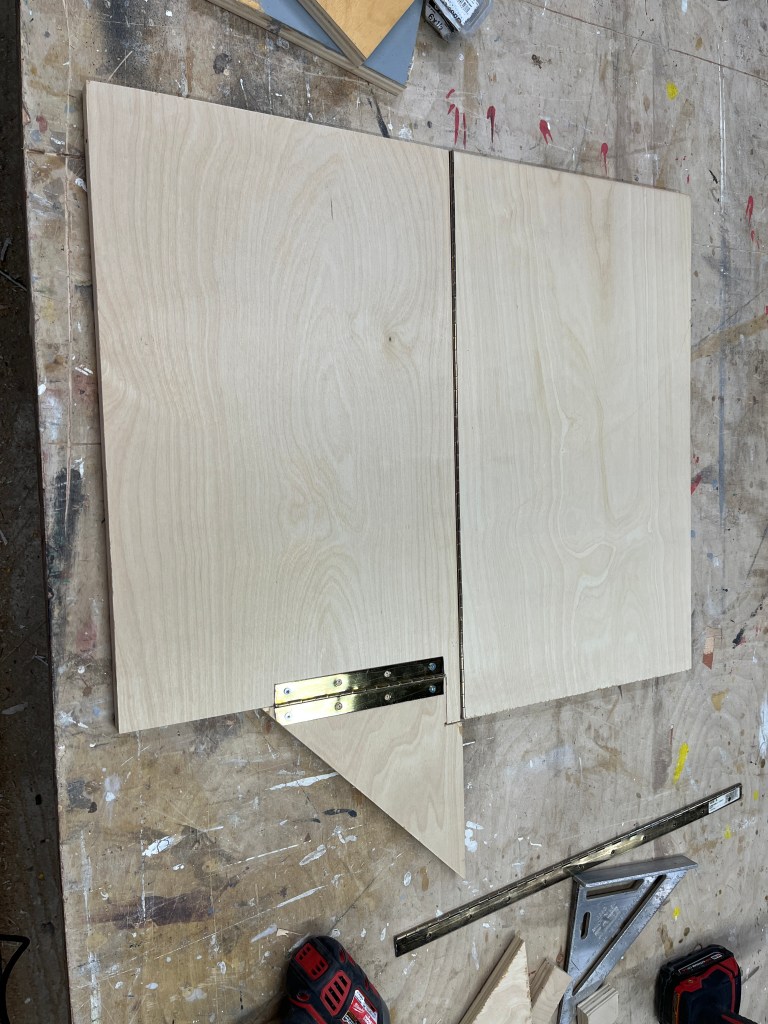
I finished them with Watco (Danish oil, golden oak colour) which is very easy and fast to use, so they could be installed the same day as being built and finished.

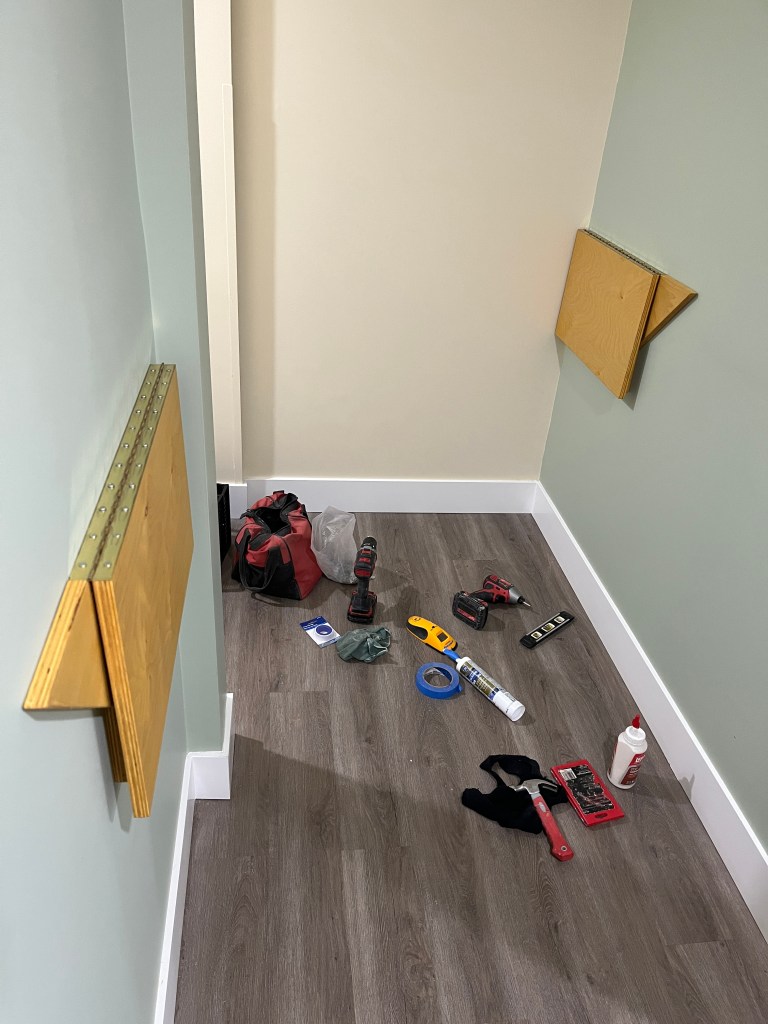
When folded up, they stick out from the wall a hair over 1.5 inches.
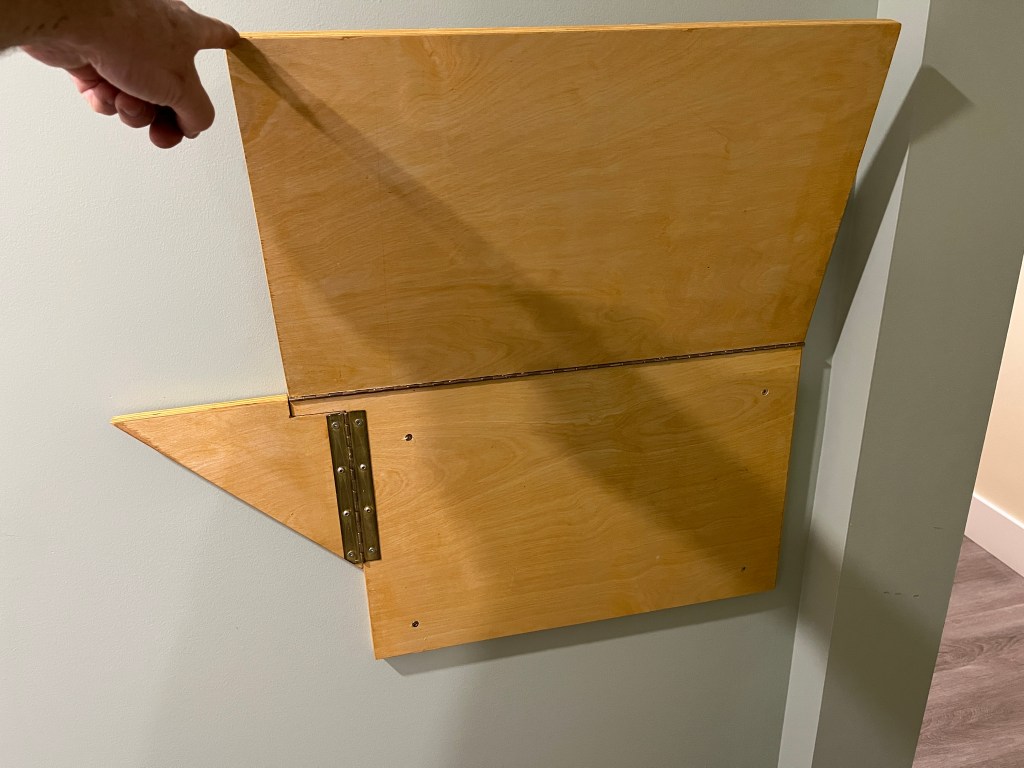
To set them up, simply lift up the flap, and then pull the triangle piece out to use as a support, ensuring it is below the table.
I guess I need to give them a Swedish-sounding name. How about “Schmöggledblork”?
Large Bookshelf with 1″ boards
Carol ordered a custom bookshelf, specifying 1 inch thick boards that were 9 inches deep. She also wanted the edges taped when she heard I wanted to use plywood. Fair enough; but I haven’t had a lot of success with iron-on tape (and it wasn’t available that wide) so I made my own by cutting thin strips of plywood and gluing them on. The shelf was painted with Arrow Wood cabinet paint.


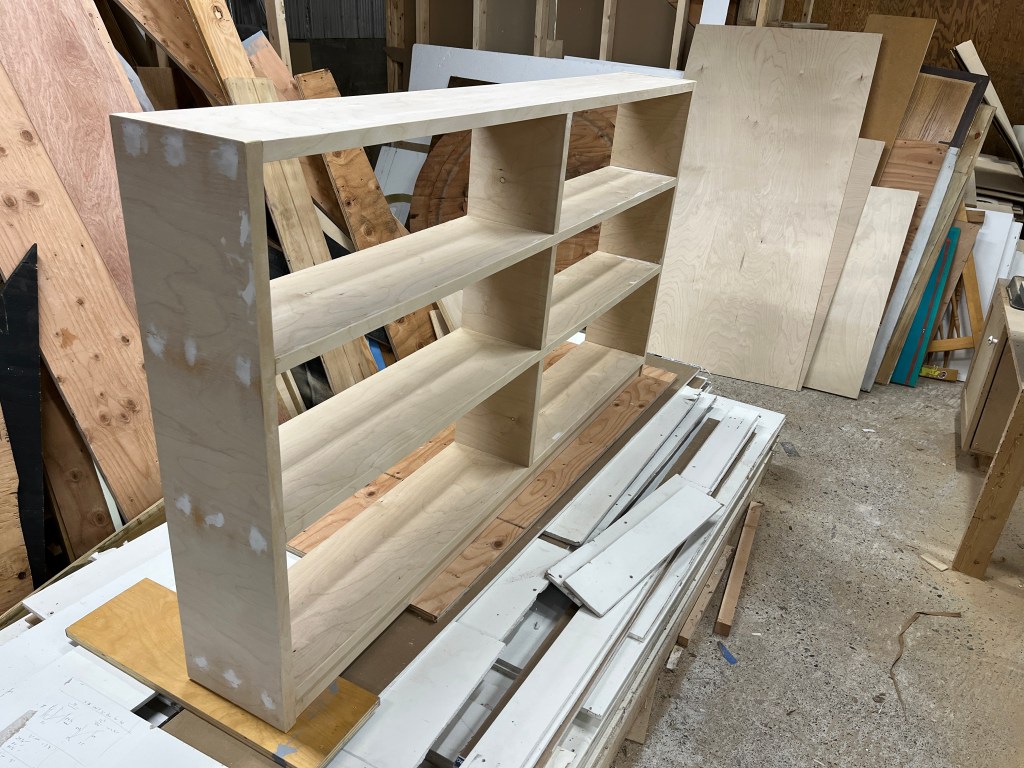
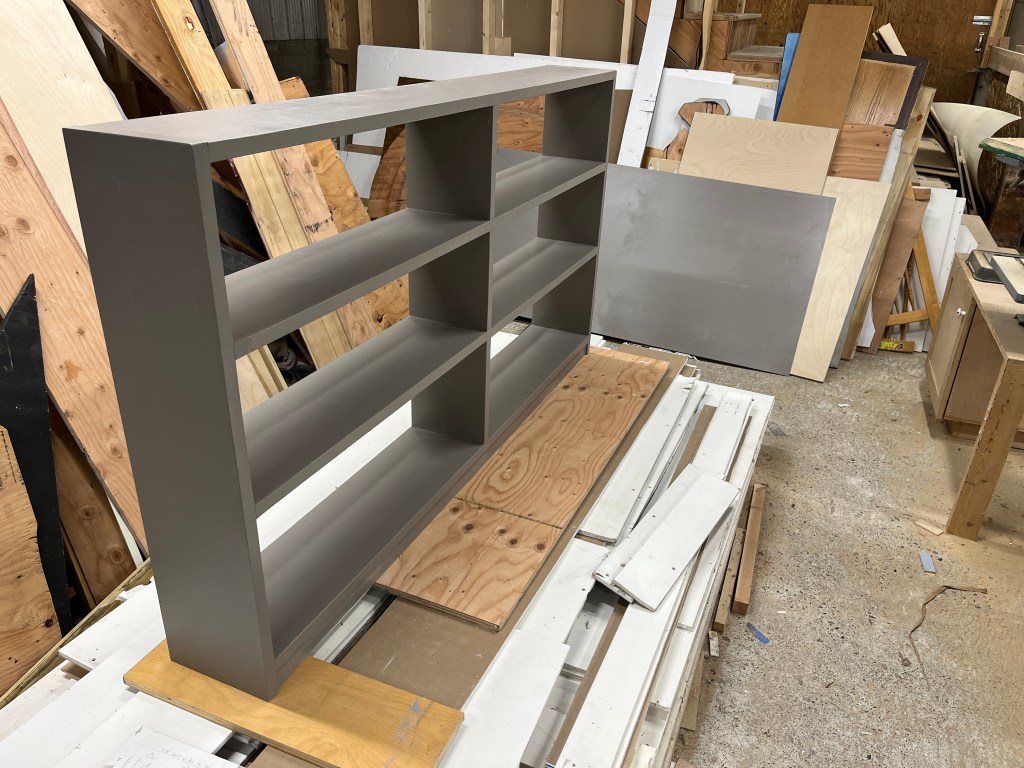
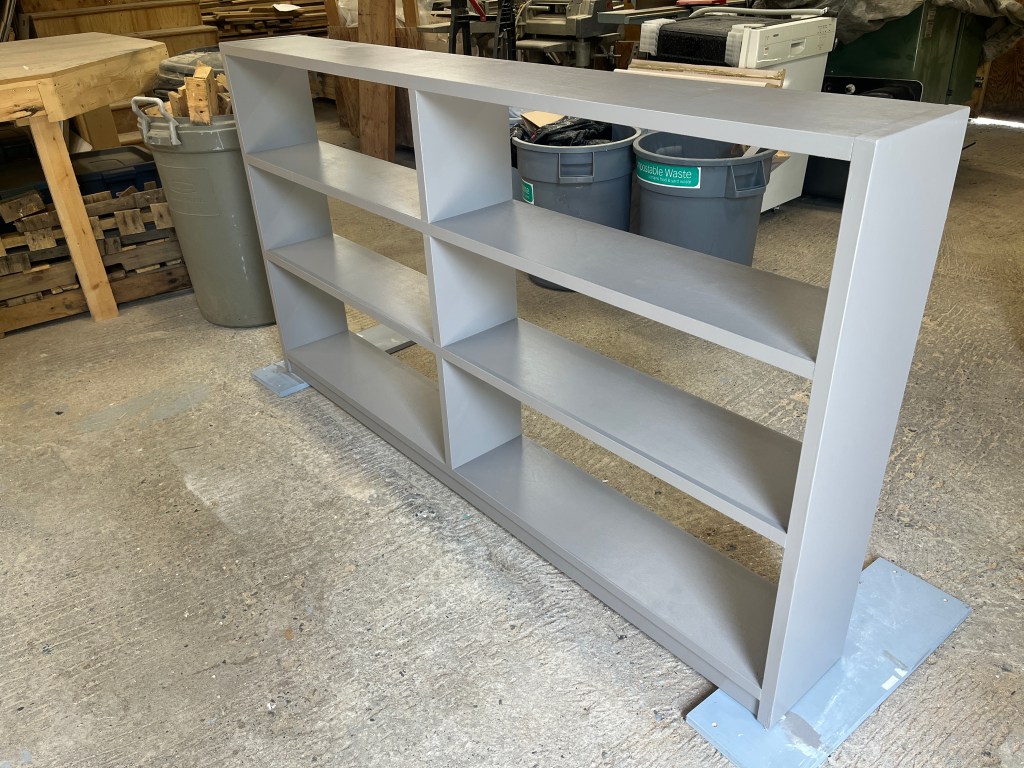
It was quite heavy/awkward to deliver, so I left the back off (inset; pictured in the 4th picture), and stapled it on after carrying the shelf up the steps to the 2nd floor.
 handyandrew.ca