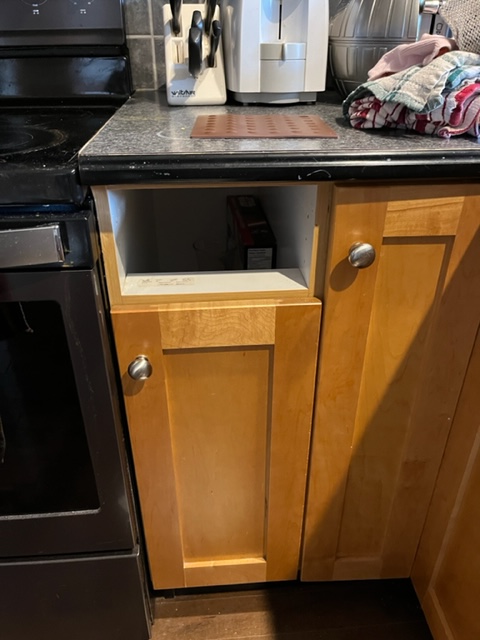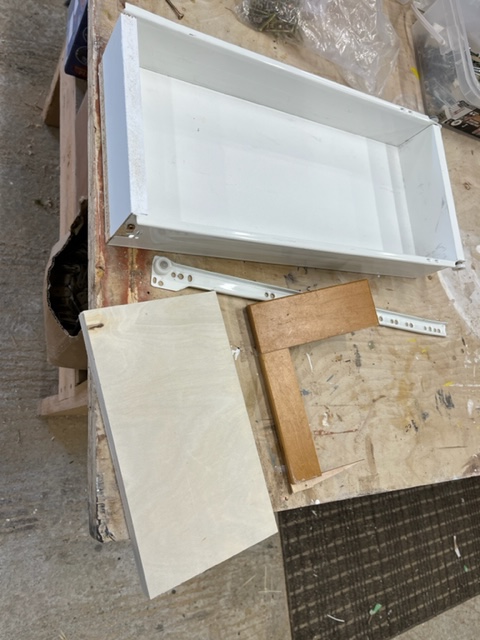
Ken was missing a drawer face – the drawer had gotten stuck somehow in the past and broken.
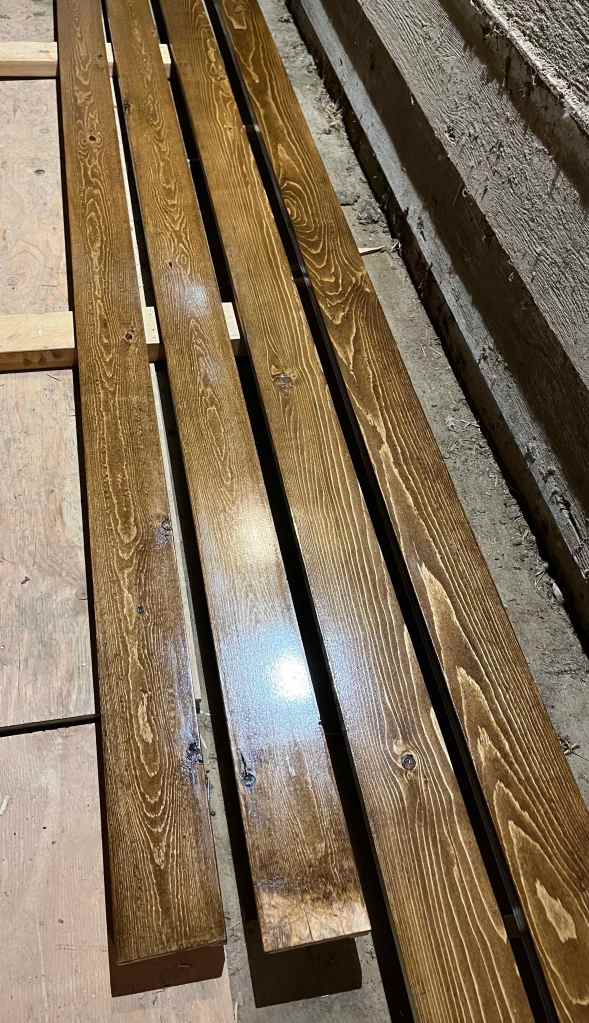
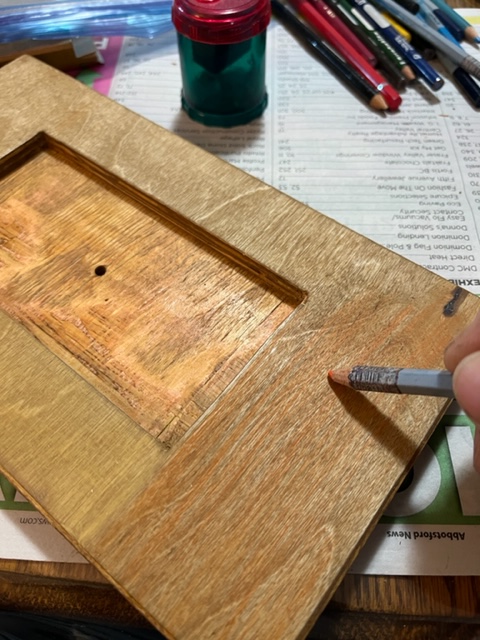
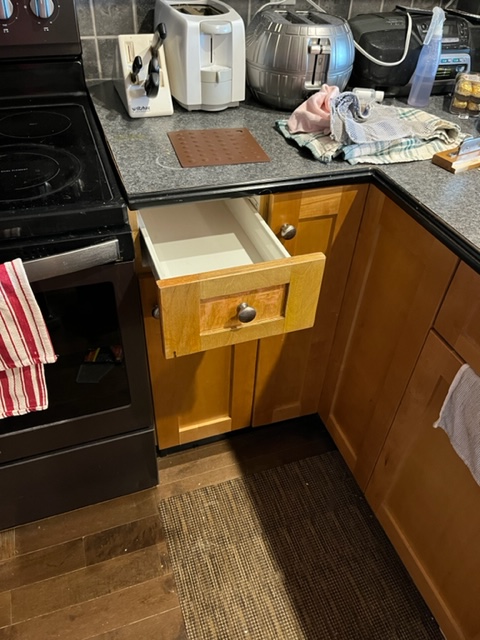
I repaired the drawer and then looked at the leftover pieces of the drawer face and decided to make a one-piece face out of plywood instead of trying to start a tiny stile and rail project. I routered out the inside panel, stained it and then colour matched it a bit with a pencil crayon before wiping on some polyurethane.
Definitely not a perfect match…but better than before!
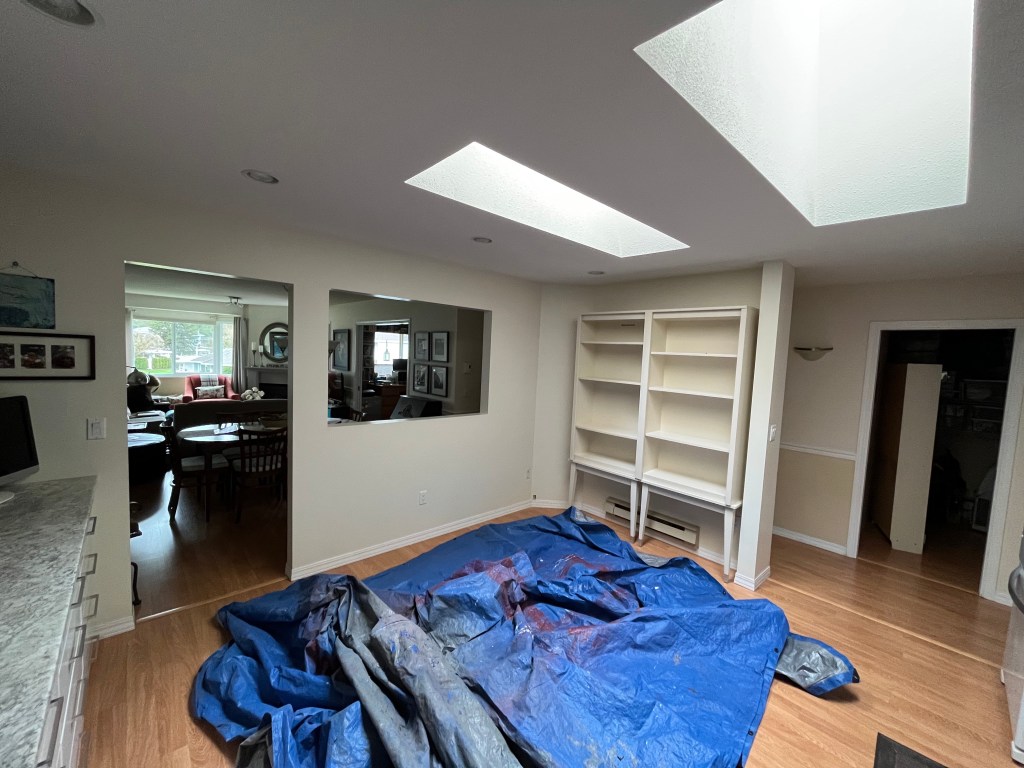
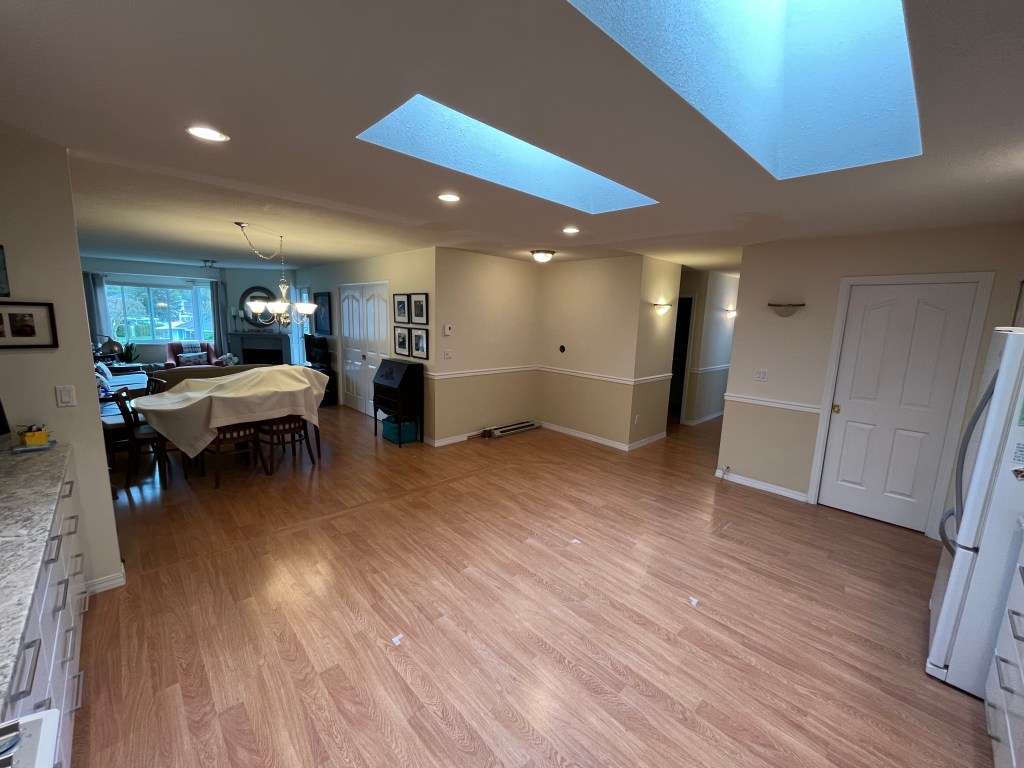
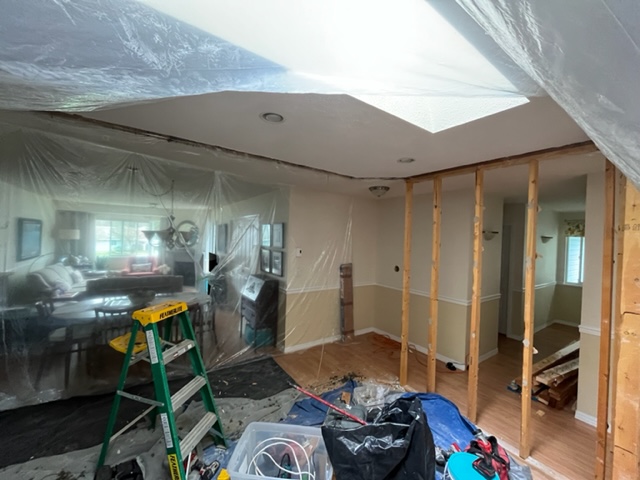
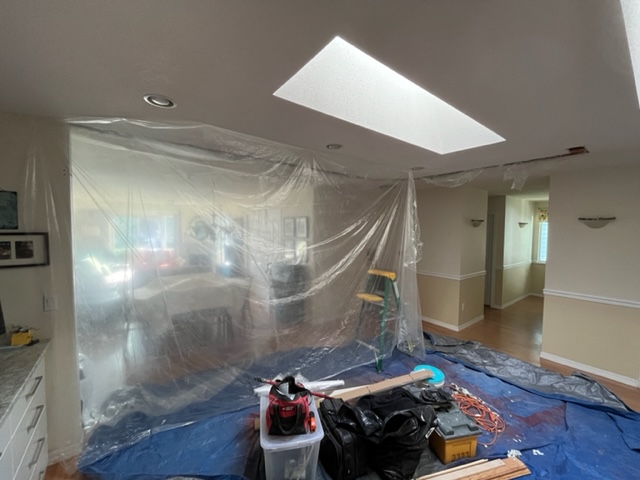
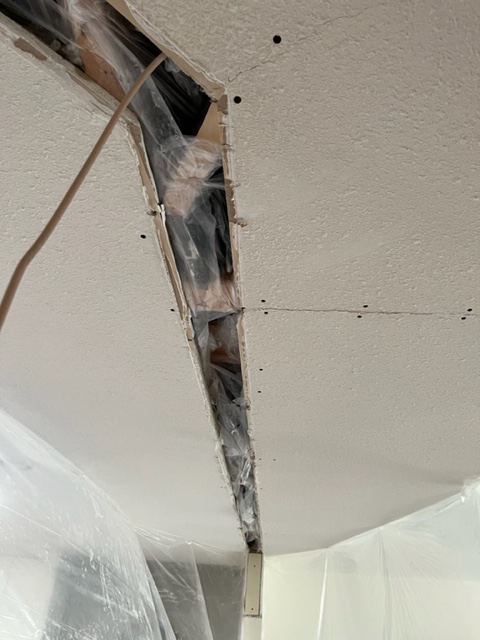
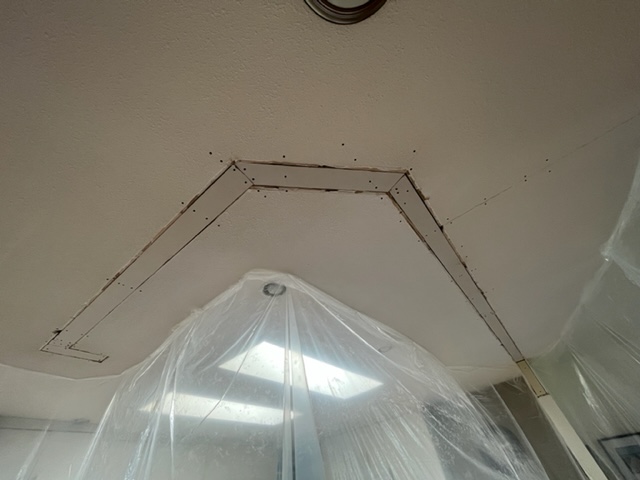
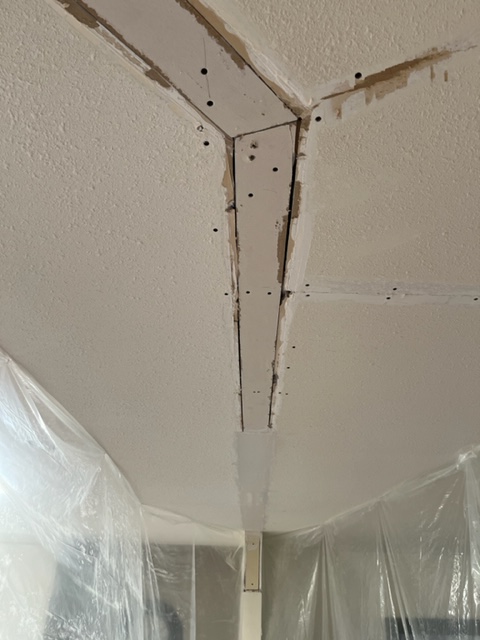
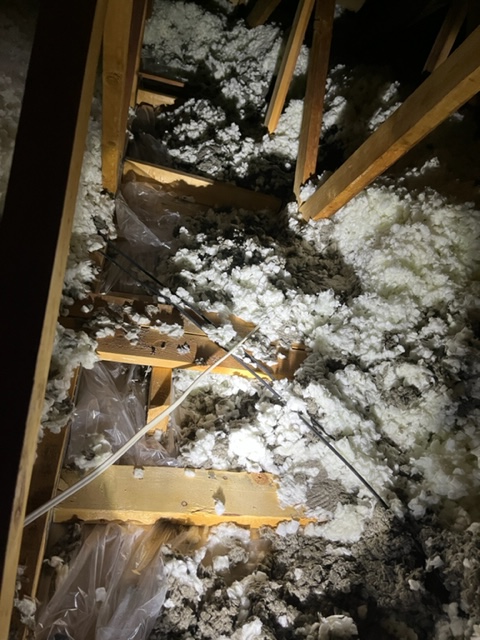
Carol hired me to remove an interior non-load-bearing wall. She got a permit from the city and tested the drywall for asbestos. We knew the wall was not supporting the ceiling because the trusses ran the length of the attic.
Before and After:
BeforeAfter
During:
The drywall came down pretty nicely. The studs were a little bit harder – mostly one top plate which was attached to part of one of the trusses.
I called an electrician to re-wire the switch and heater. He also had fun climbing around in the attic. 🙂
The ceiling was more challenging. Some blocking needed to be adjusted to keep things level. There was also a cablevision cable running floor to ceiling that was a bit of a mystery. Shaw came and tested it and cut it, luckily.
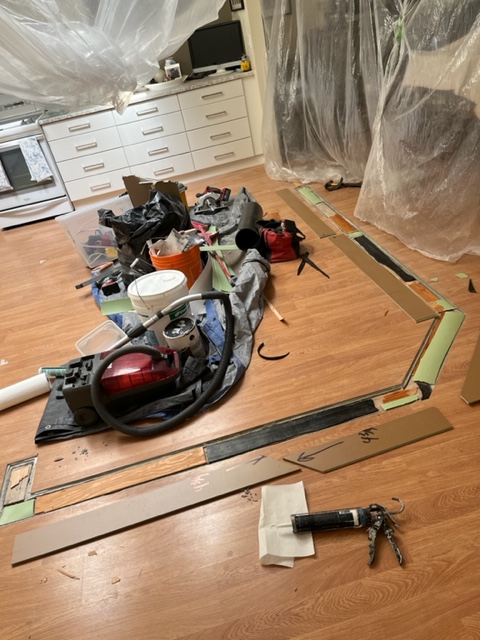
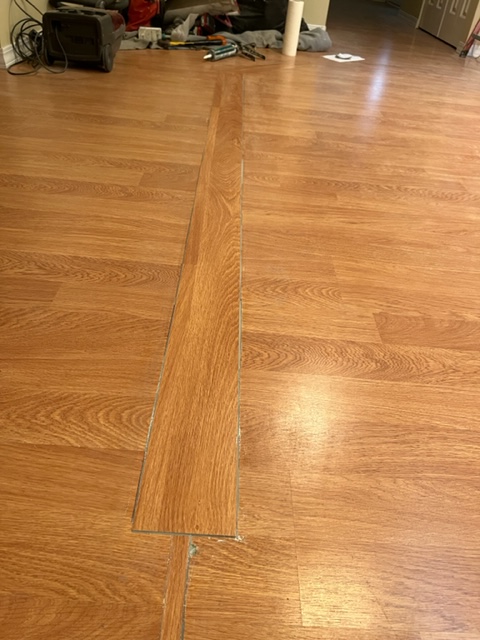
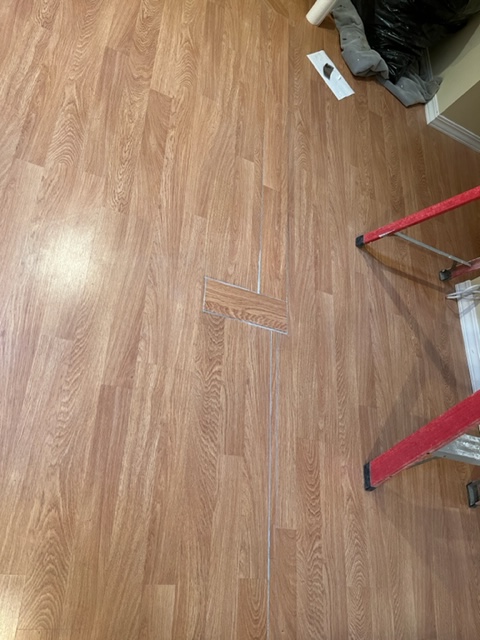
The floor was also a challenge. It is laminate and going to be replaced at some point, but can’t be done for a few months…so I was asked to patch it. I ripped some pieces to fit with a gap for silicone. It is not ideal…but should last for a few months.
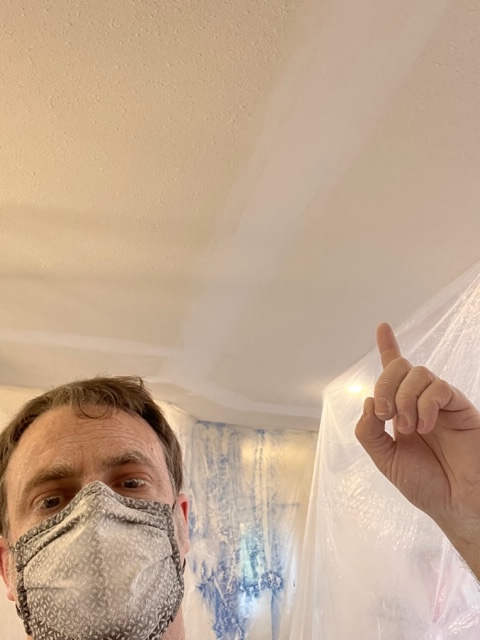
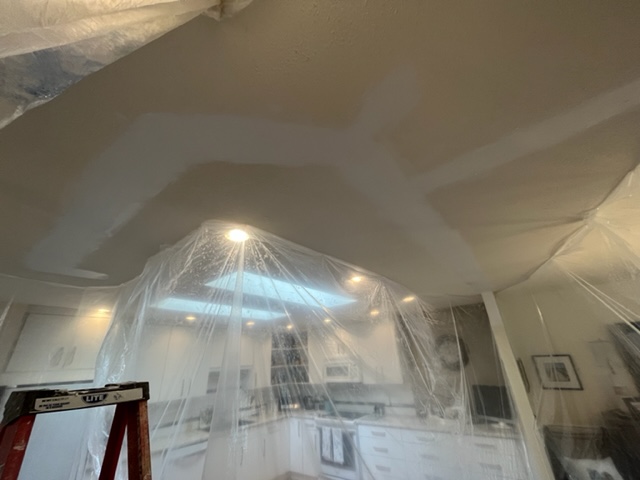
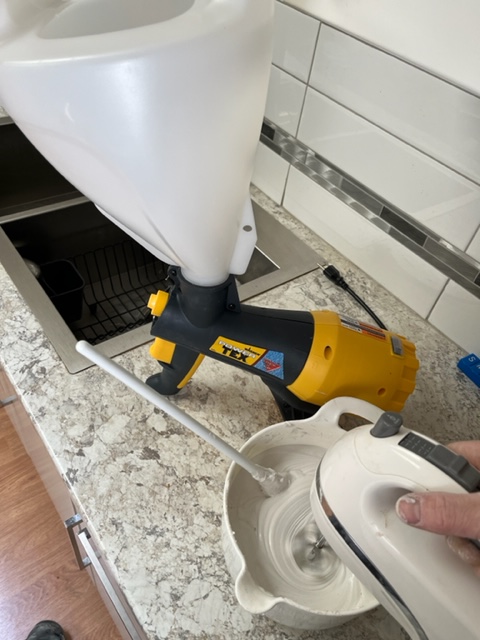
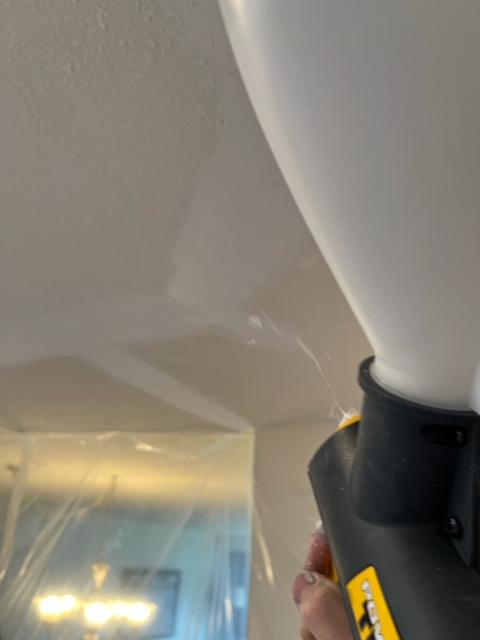
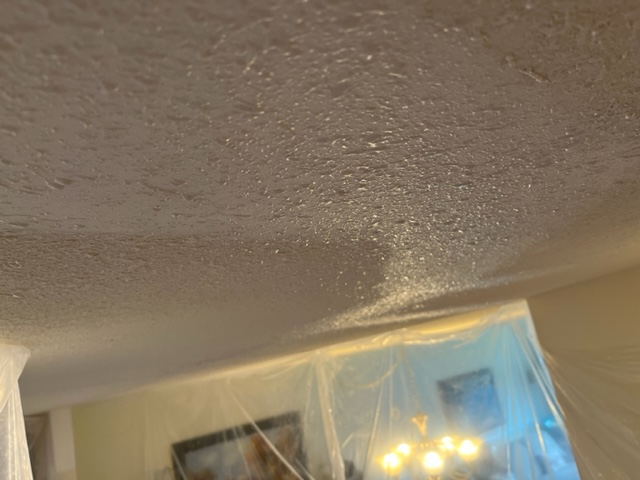
The ceiling got taped and 2 coats of mud. Then sanded and texture sprayed:
maybe don’t mention to my wife that I used our mixer for drywall mud
After the texture dried, I attempted to match and paint the ceiling (off-white). It took quite a few tries but I got close. Very rarely do I get a perfect ceiling.
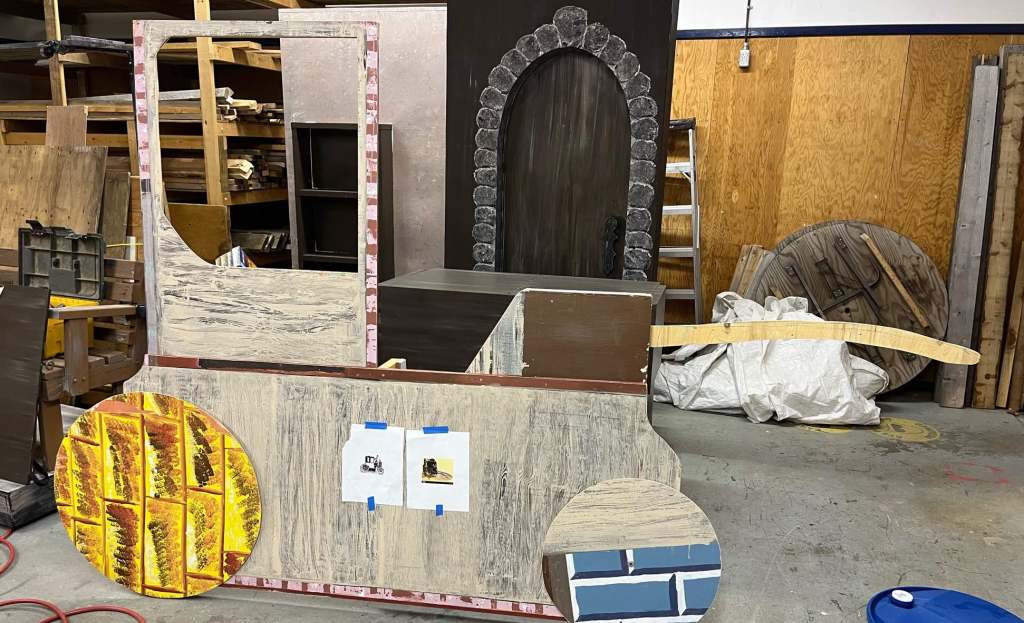
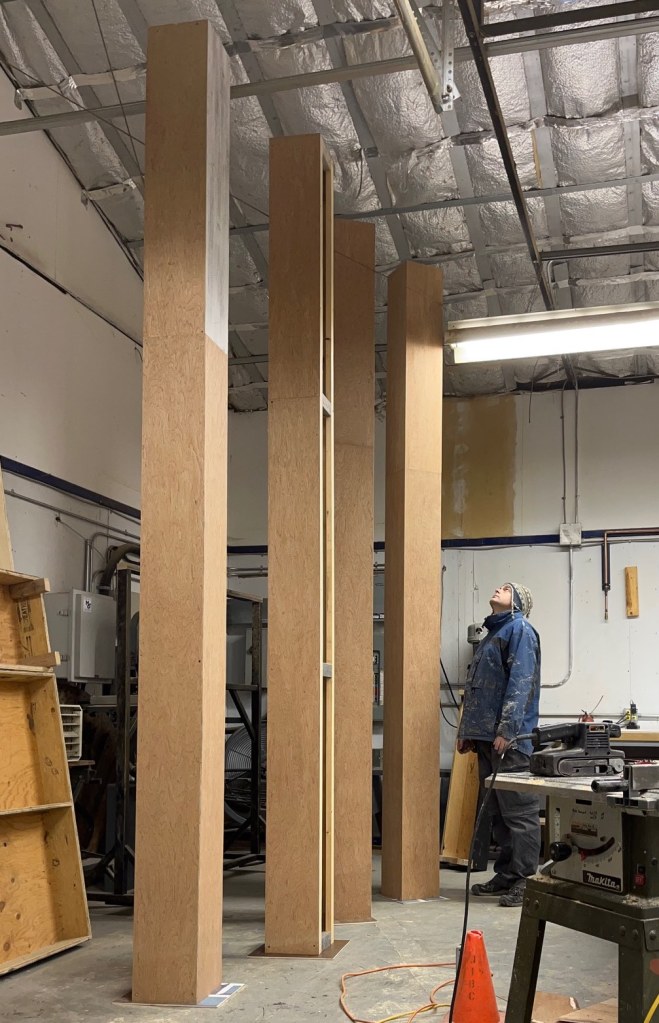
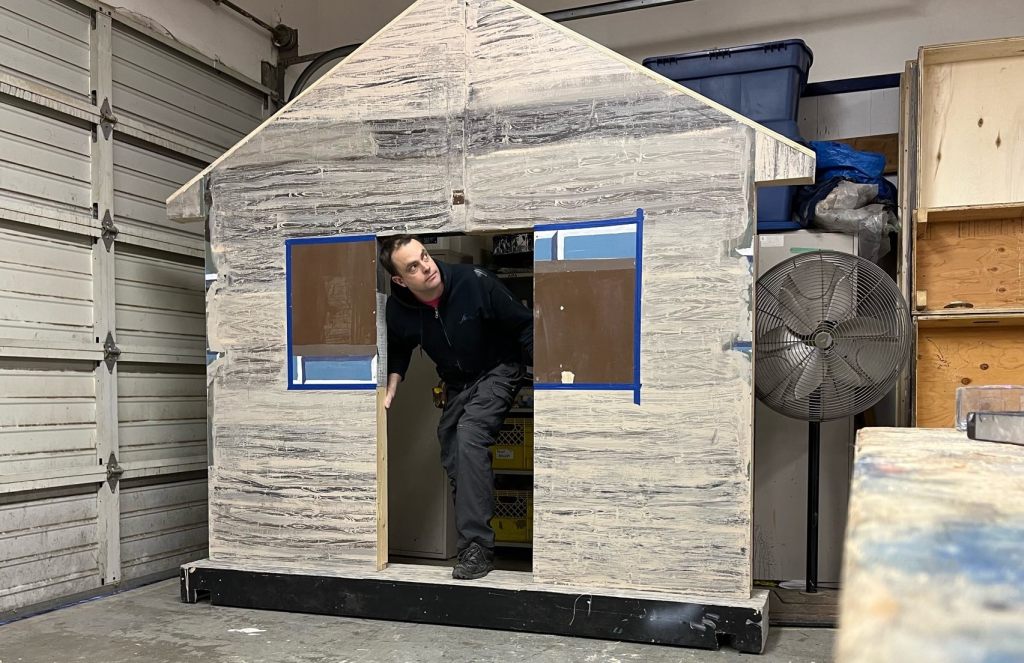
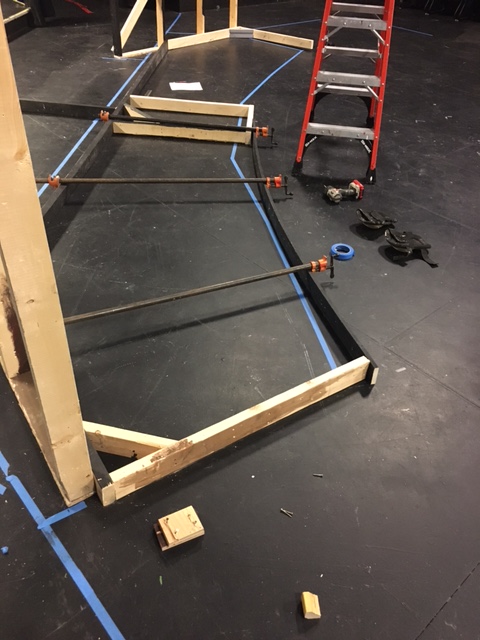
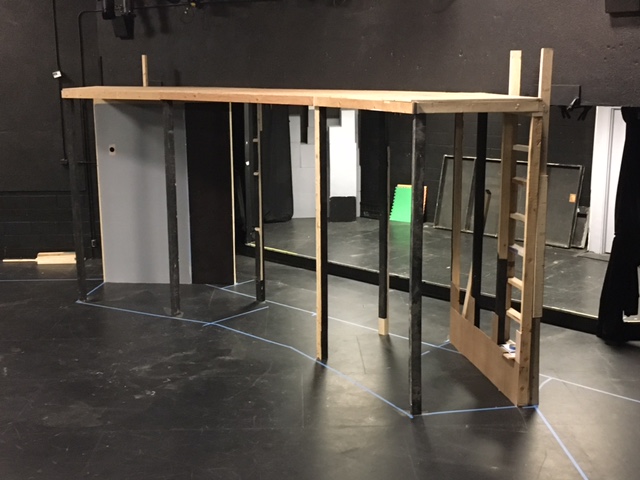
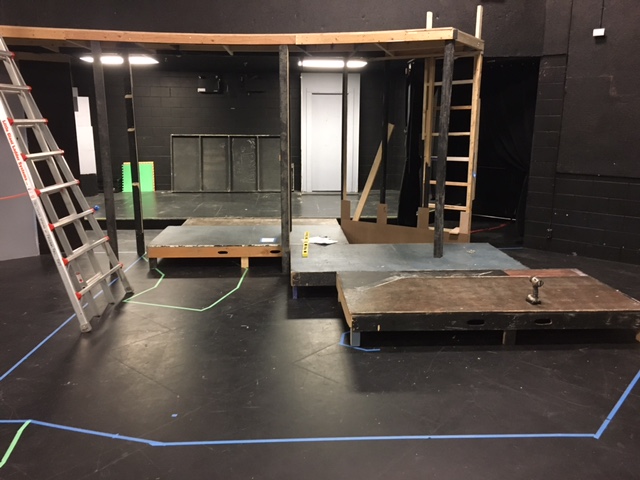
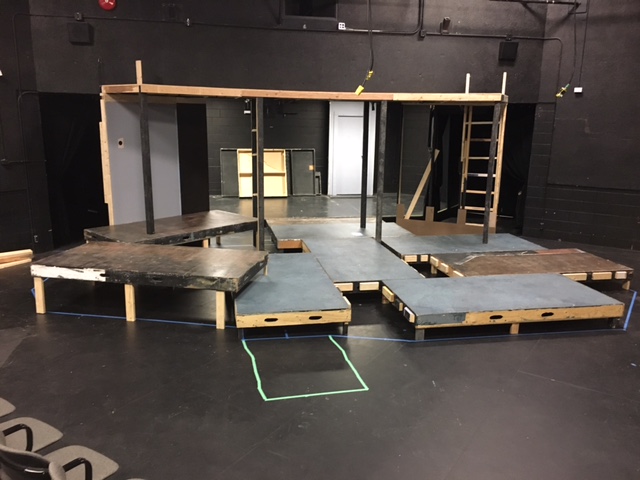
Another set build! They just don’t stop. I guess that’s why I’m so behind on my other work!
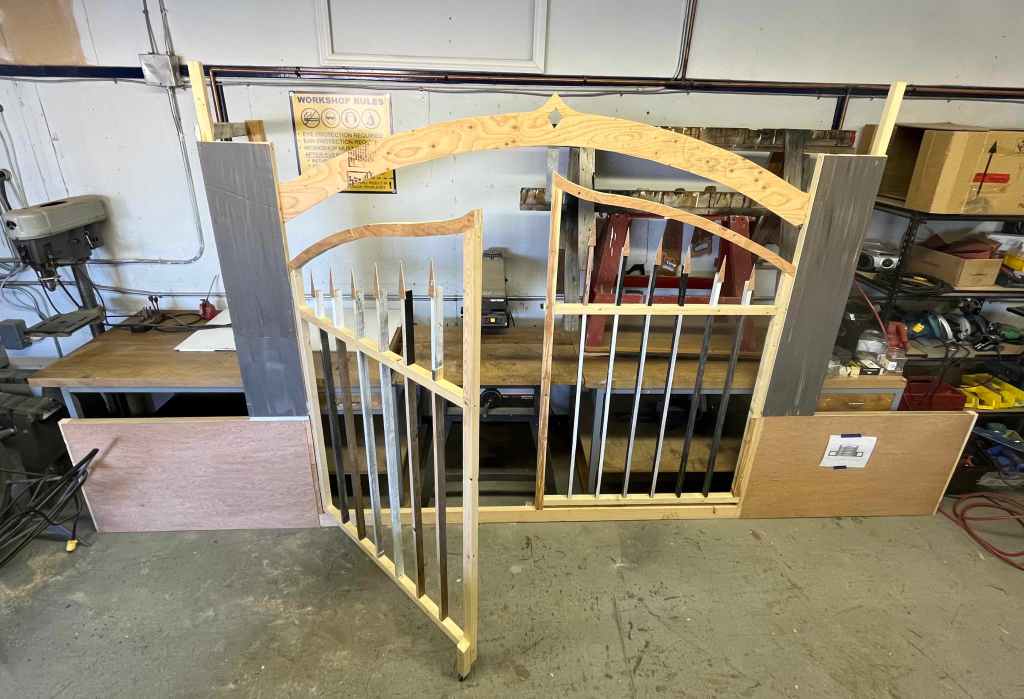
This one is for Baskerville: A Sherlock Holmes Story, playing at Abbey Arts in March. See Gallery 7 for more details.
Set Design is by Jeff Kiers.
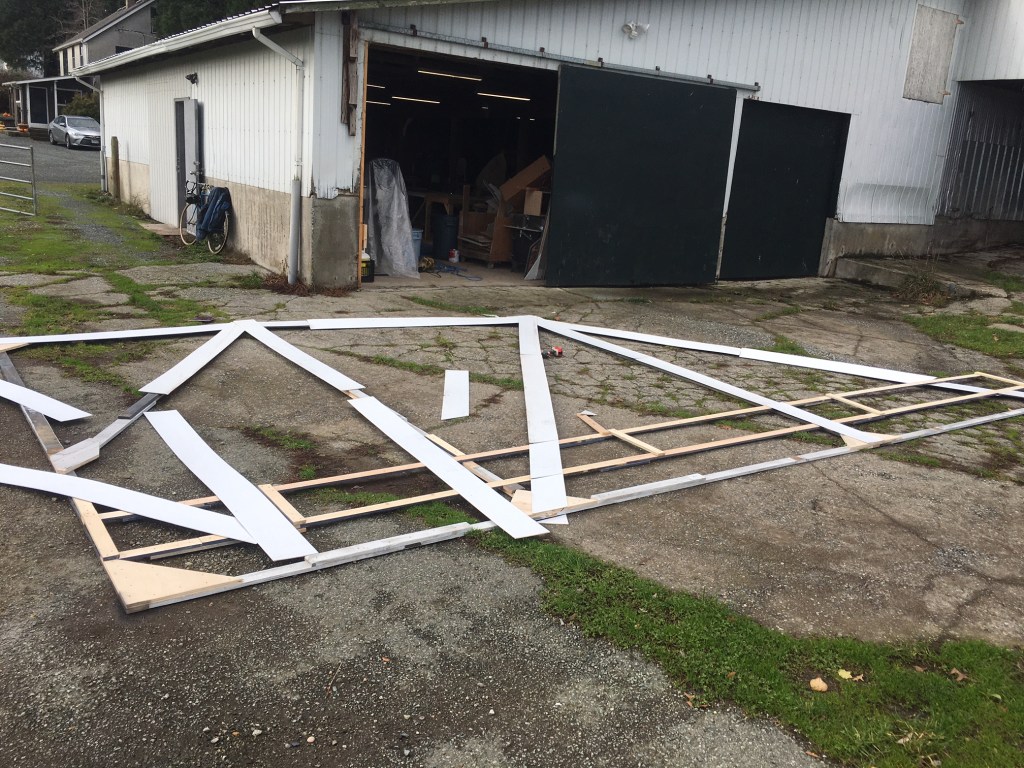
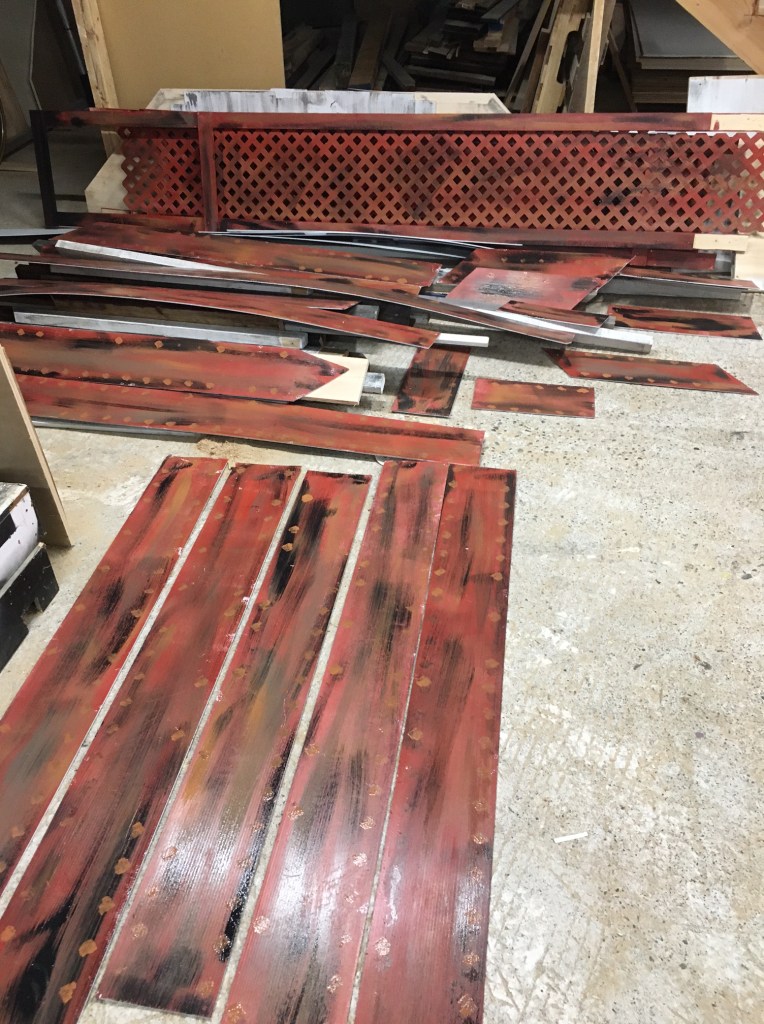
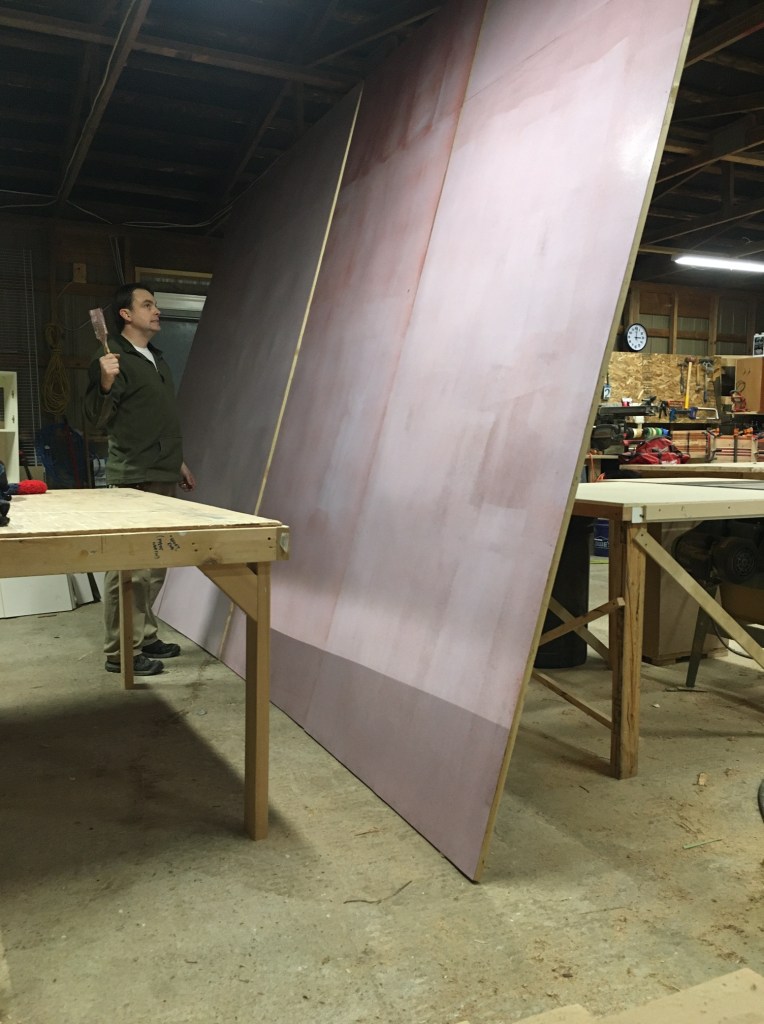
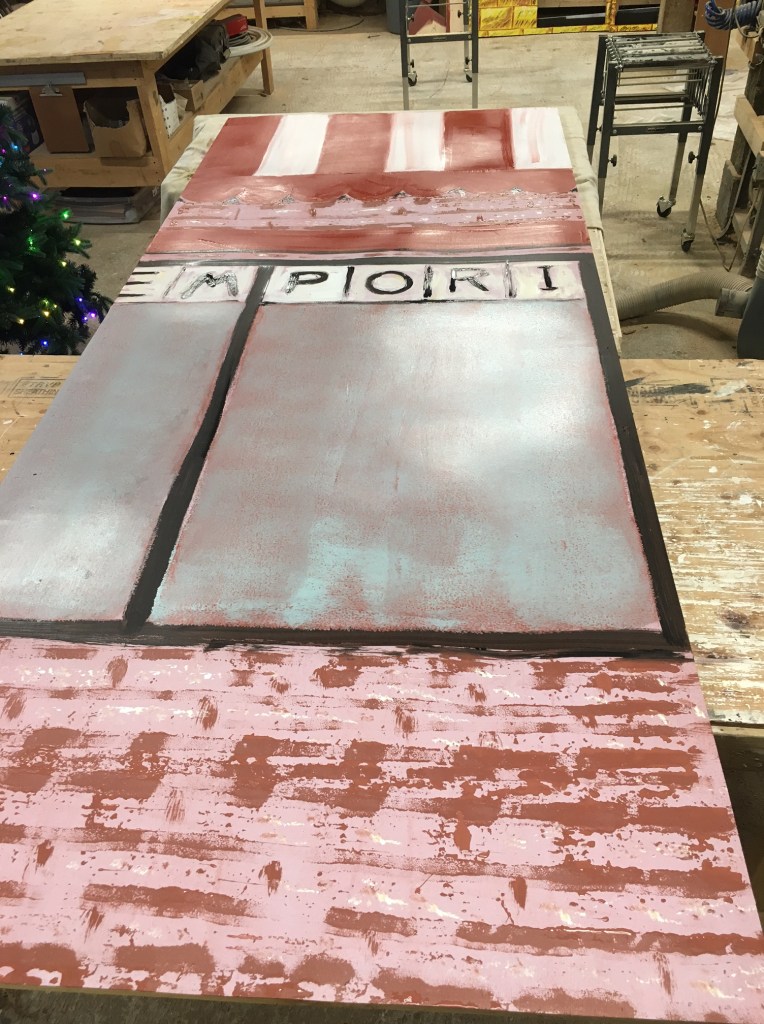
Here are a few pictures of parts of the set in production (1.5 weeks). The stage itself is relatively simple, but there are quite a few pieces that are flown in or wheeled in. It is ready for painting!
gate flybookshelf flyround stagetaxi12 foot columnsstraw hut
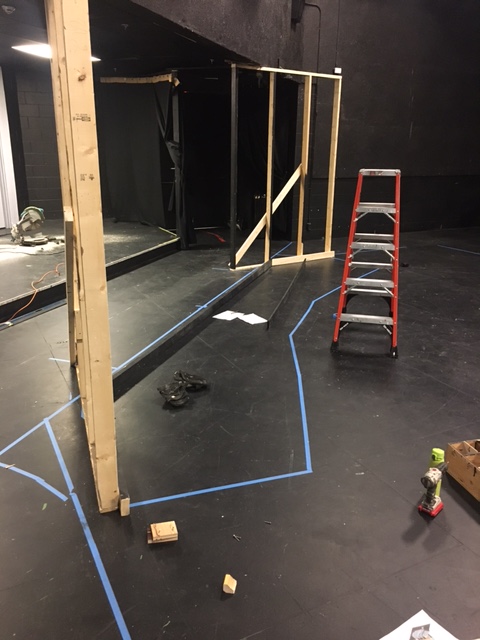
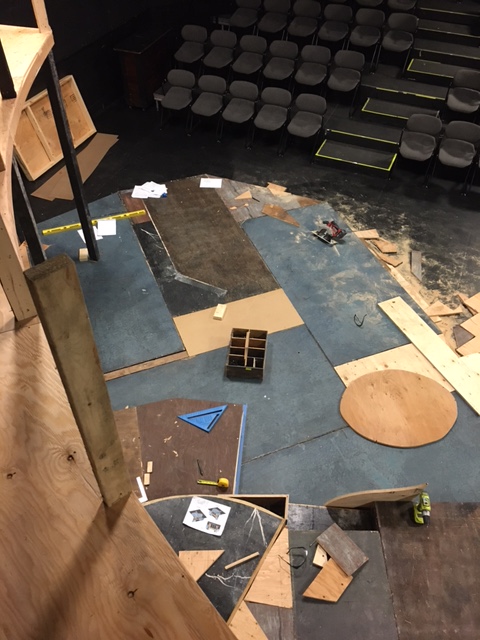
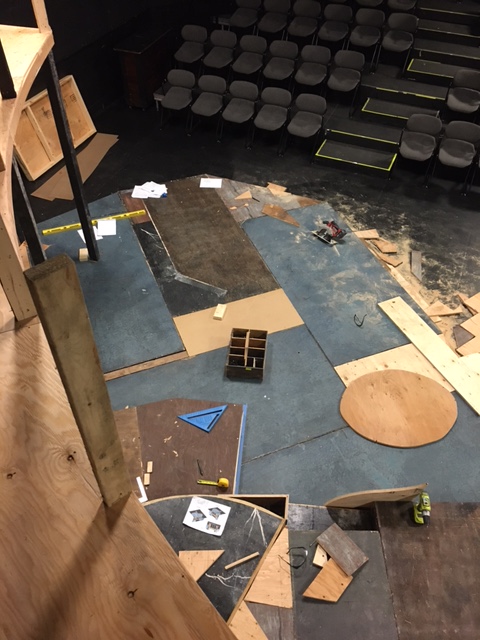
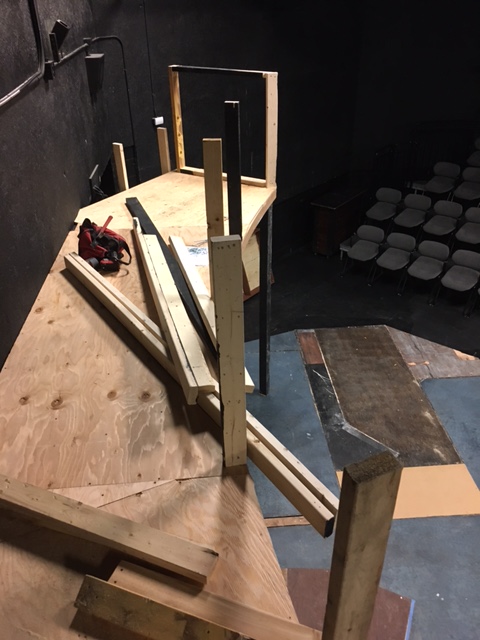
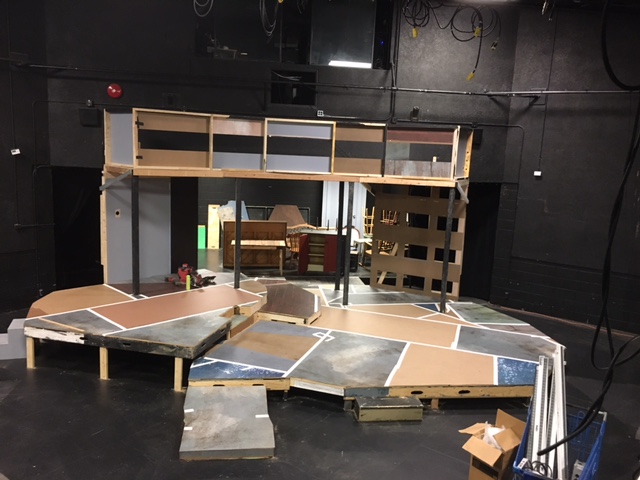
I was contracted by TWU to build the base set for their upcoming Spring Musical. I wasn’t able to commit to the entire project, but I did give them a full week to get the balcony and stage going. I had a lot of help from the students at various times as well. (Design credit – V. Salim)
Balcony BuildPatchwork RisersView / Railings from BalconyFloor done
The set design is very creative and I look forward to seeing it after the TWU Production Team is done with all the scrims, paint, flats, doors, and other finishing touches!
Bright Star runs March 15-April 2 at SAMC Langley.
I designed the set for Gallery 7 Theatre’s current production of Trying:
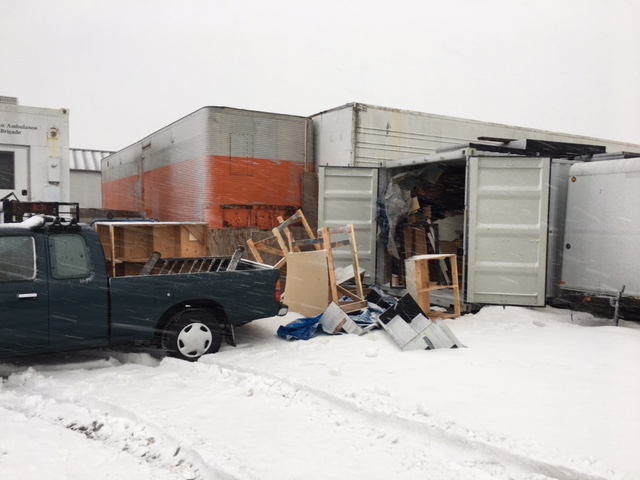
But first, I had to pull some stock in a blizzard.
snow blowing into the container
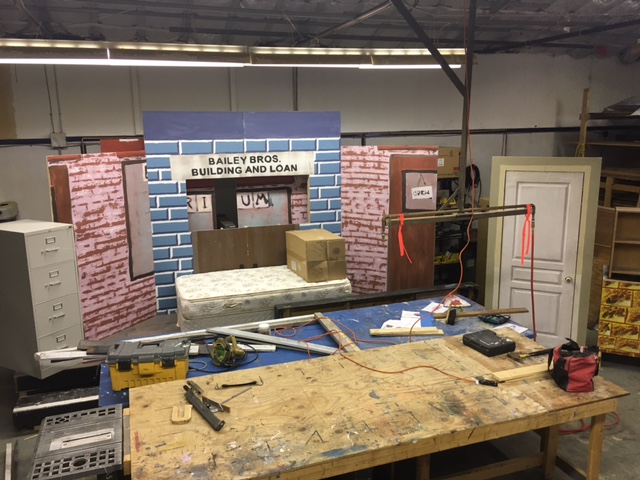
I used stock from our previous show to build some heaters and flats…
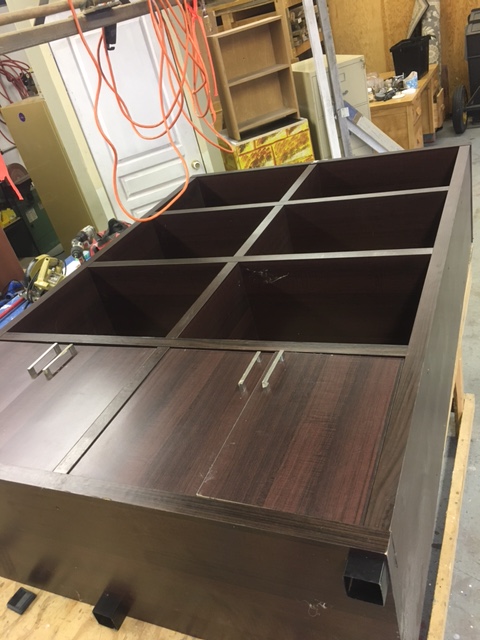
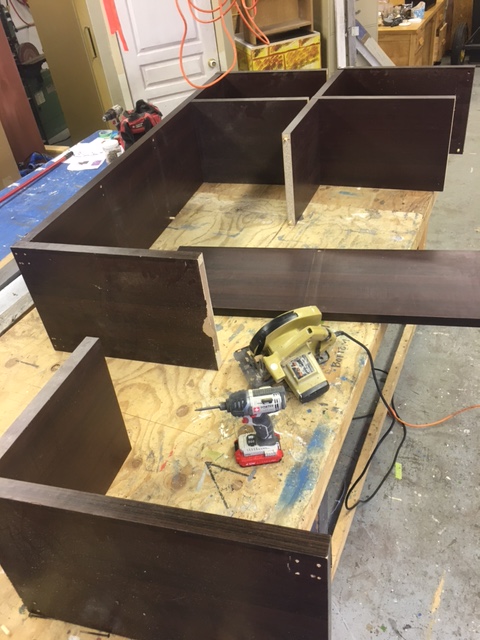
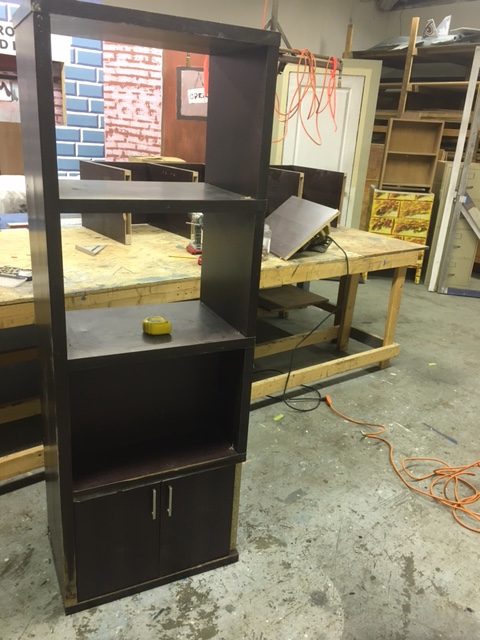
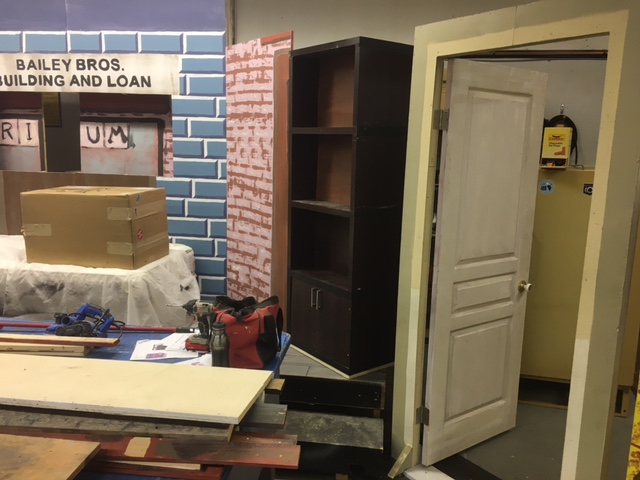
I modified a double bookshelf ($17 at MCC) to make two bookshelves. I was proud of these because they have false backs, and spin around for fast scene changes.
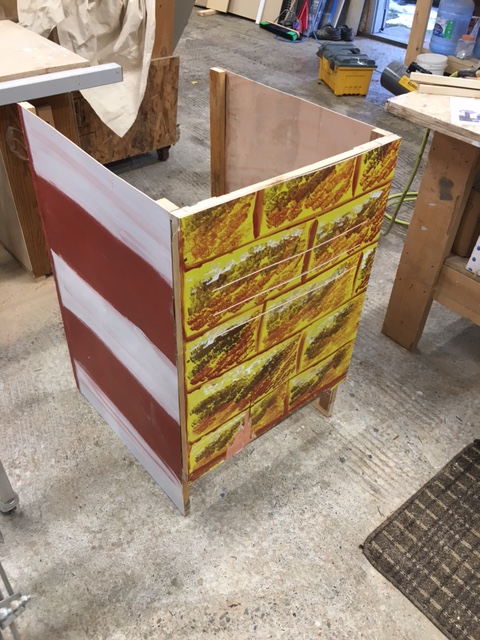
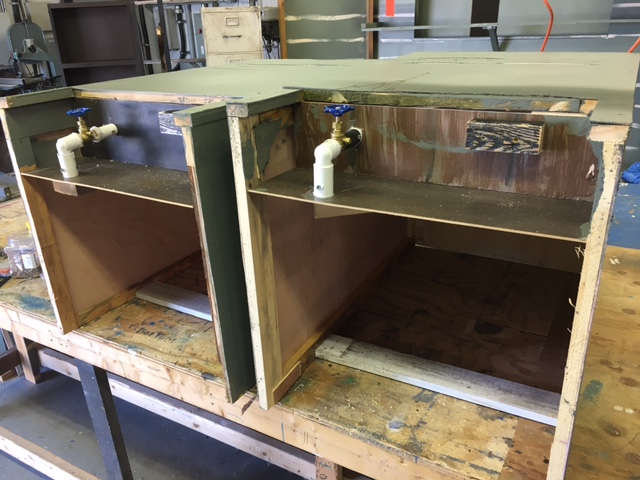
I made some 1960’s gas heaters…or something like them anyway!
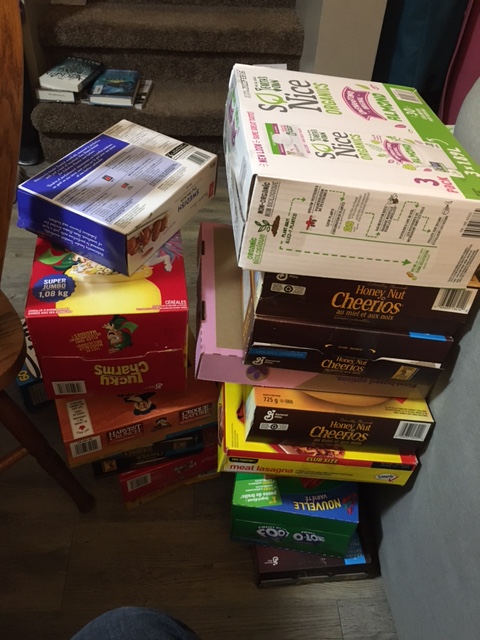
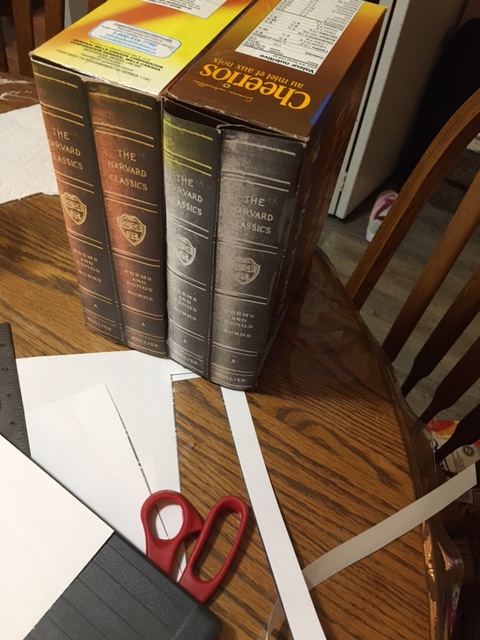
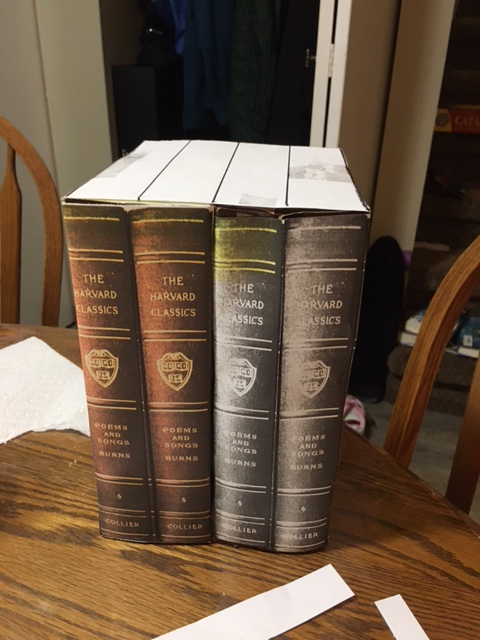
I needed a few shelves full of books…they had to be light. My volunteer, Linda, found a bunch of covers, and I borrowed some from our Props manager, Dianna; but the bulk I made out of cereal boxes and printer ink:
Then it was time to move the set to our venue:
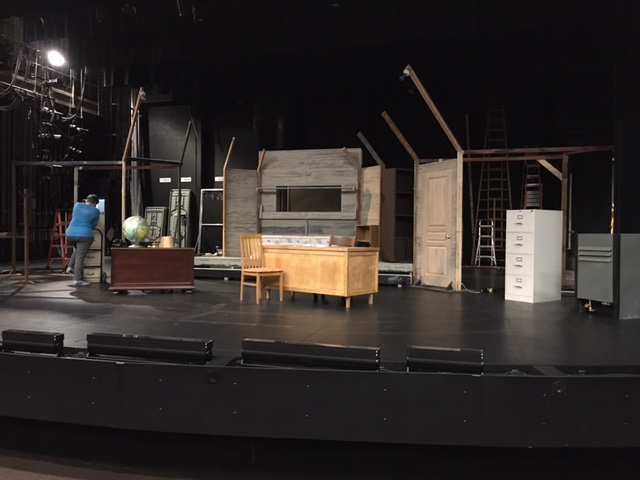
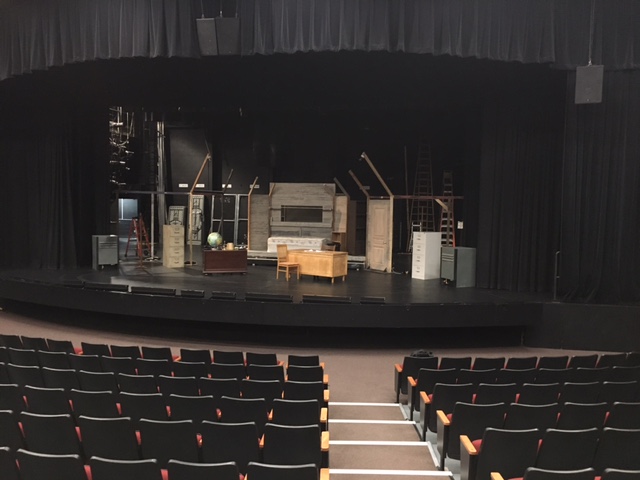
One challenge was to build a “light box” behind the window. It was a bit more involved than simply shining a light at a flat.
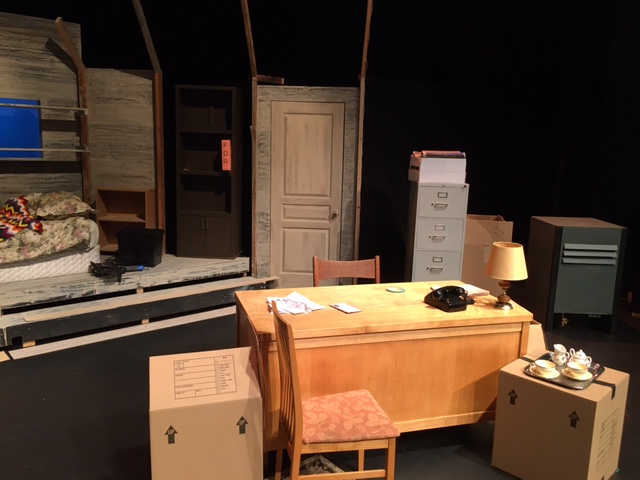
The part that should be the funnest is the set dec: all the little knick knacks that get added to add some detail to the space. However, I was tired at this point and blanked a bit…but felt it was enough.
Tech run
The show runs until February 5th, 2022 at the Abbey Arts Centre! Buy tickets at gallery7theatre.com.
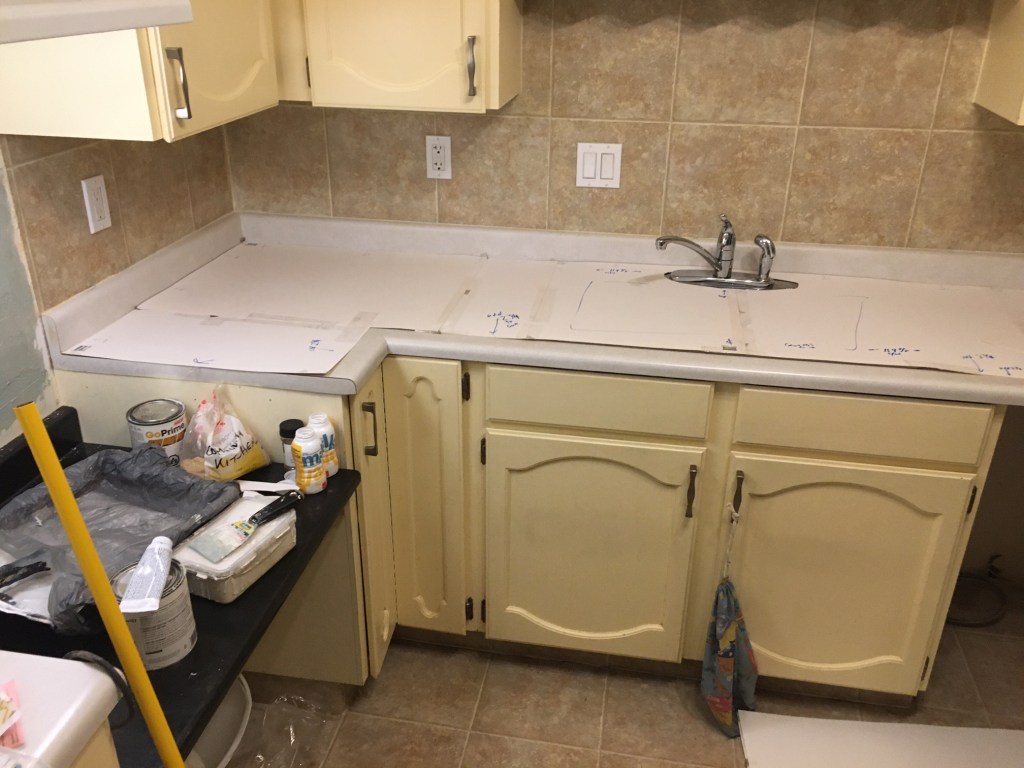
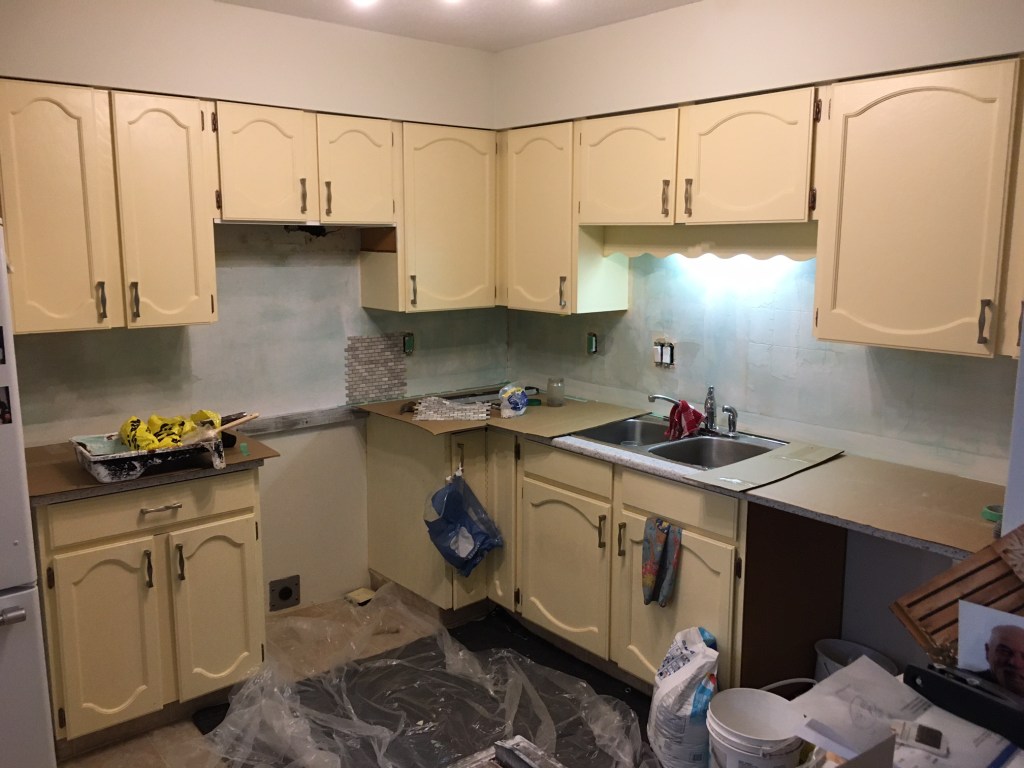
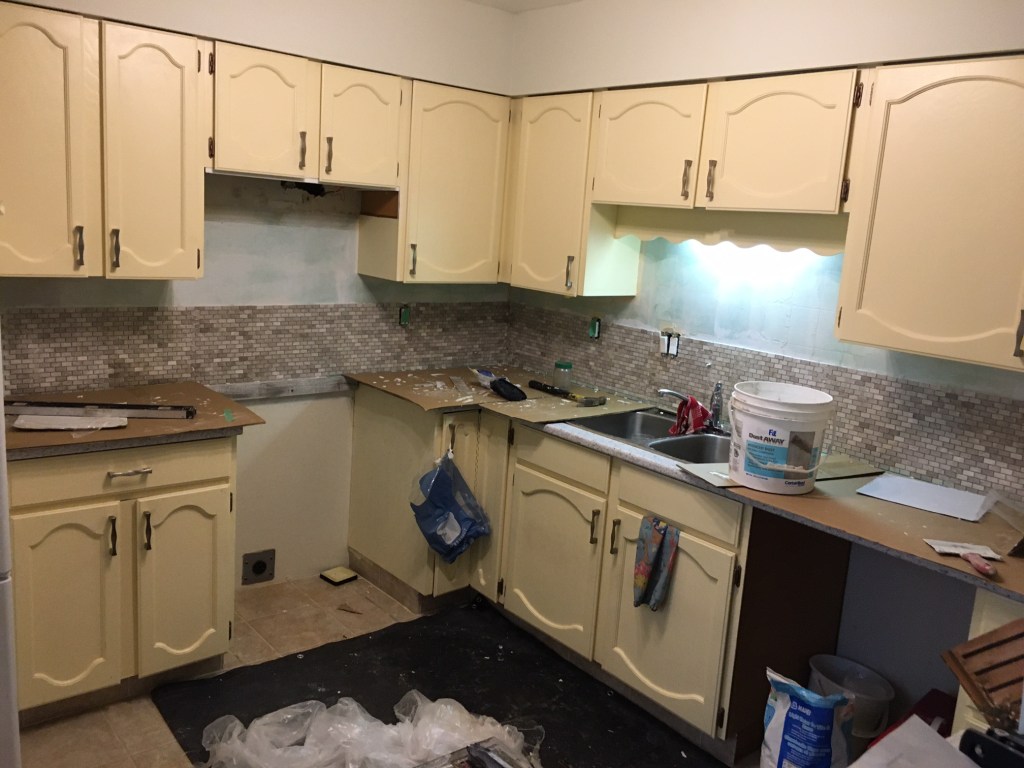
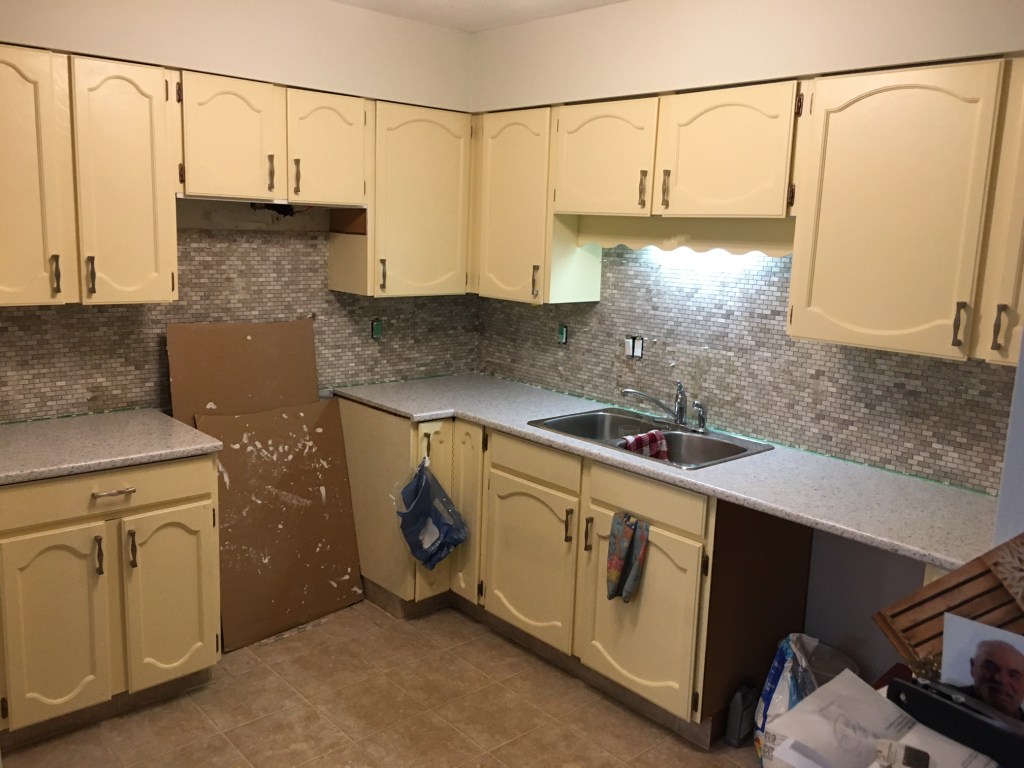
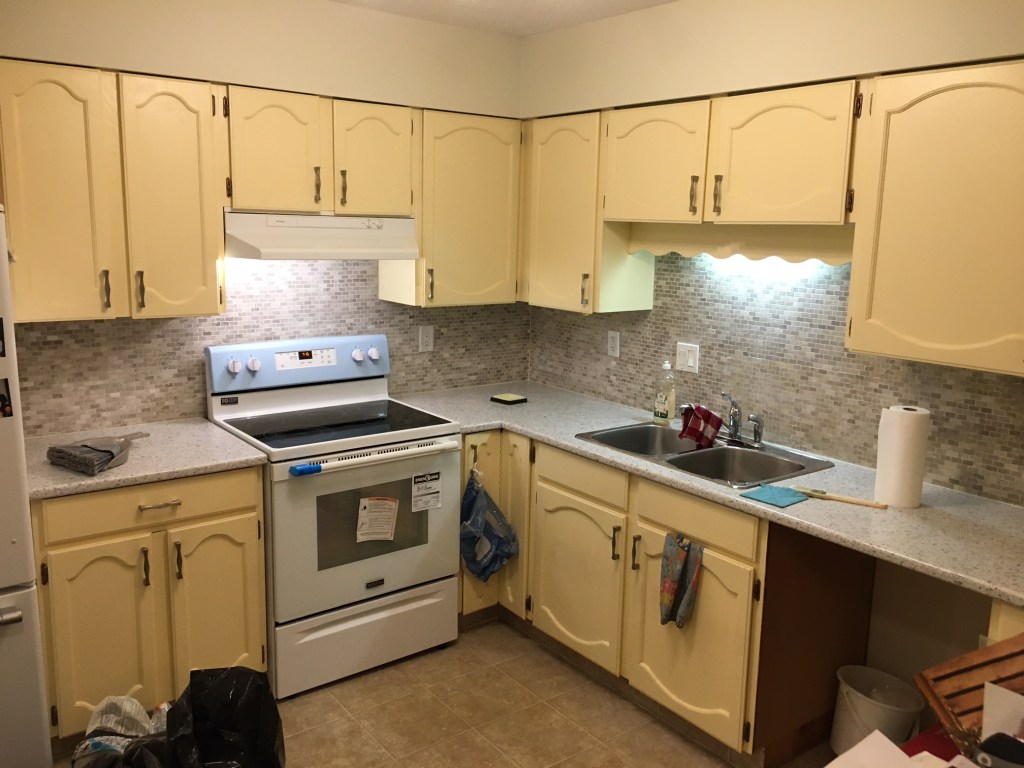
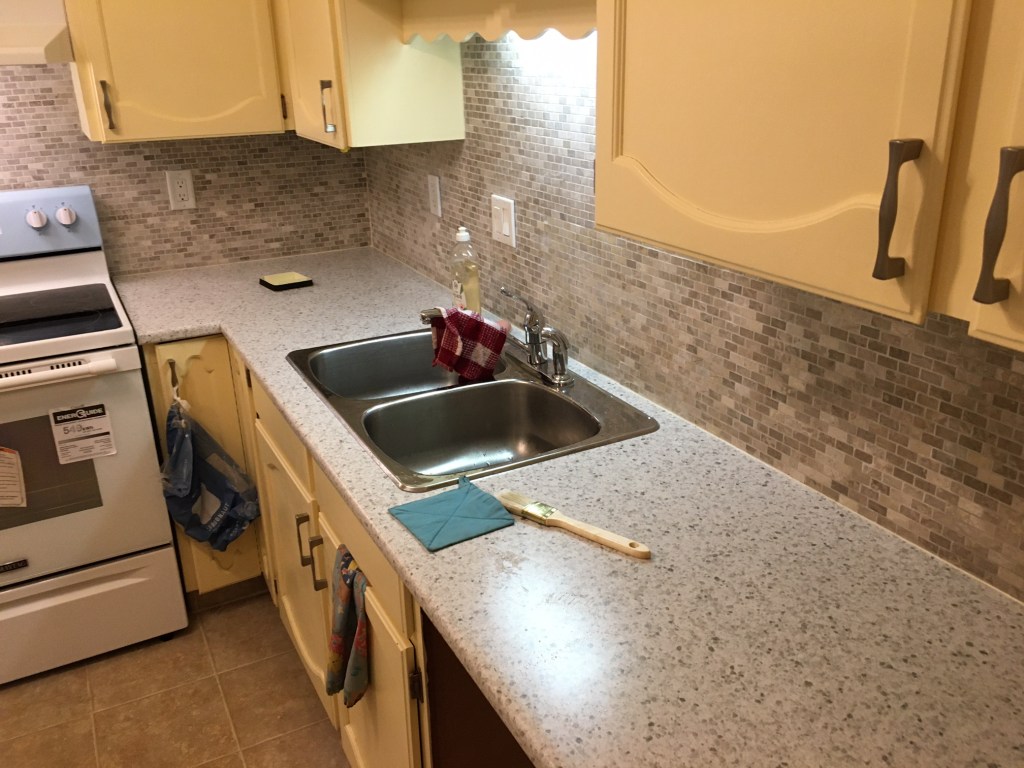
A long time ago Sandy talked to me about re-doing her kitchen backsplash. It was previously done using leftover vinyl flooring (and looked alright in my opinion). She waited while doing other small renovations and then was ready. I discussed changing the countertops first, mostly because they had a cove backsplash and things would look cleaner with that removed.
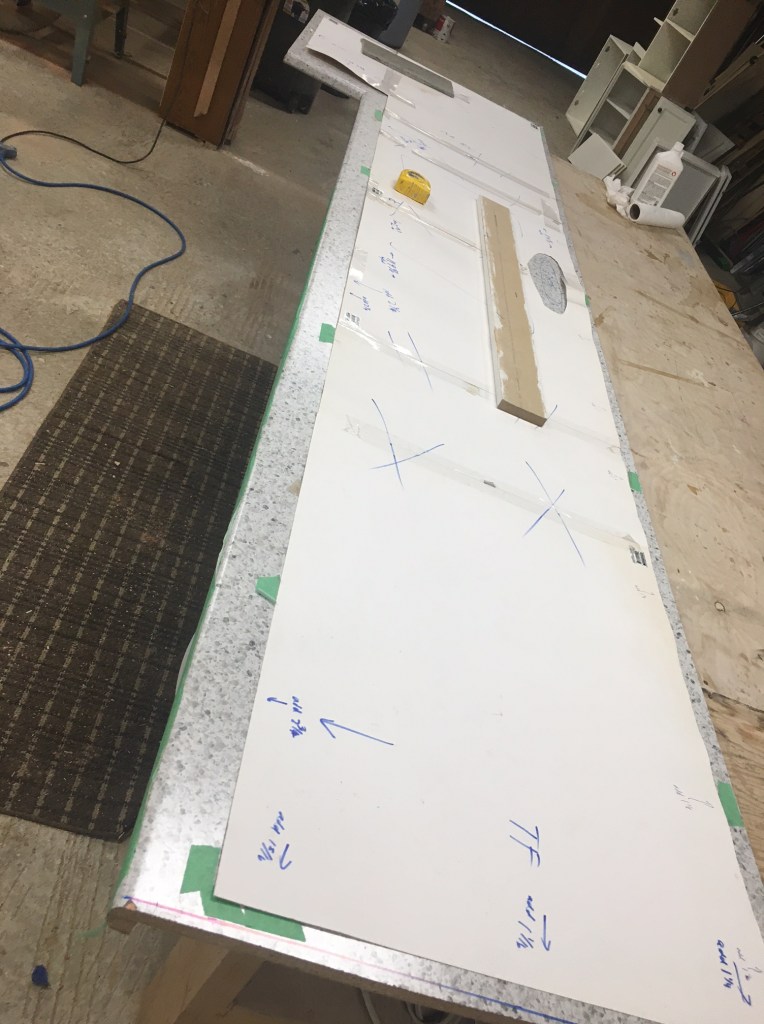
Templating for new countertops with cardstock
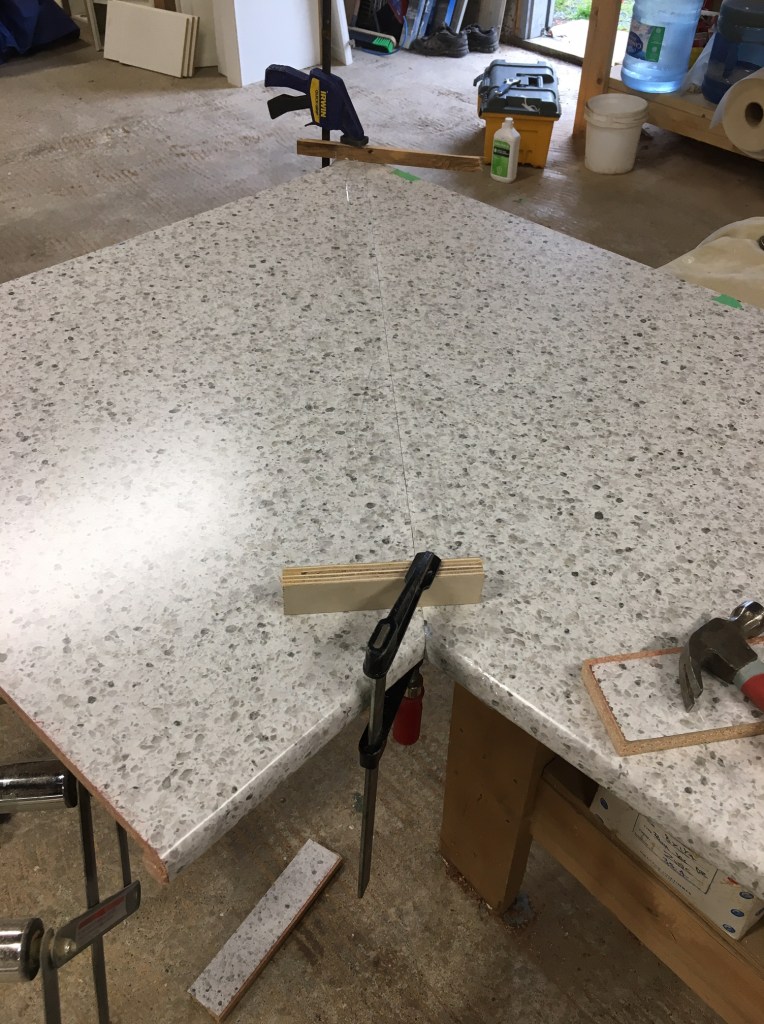
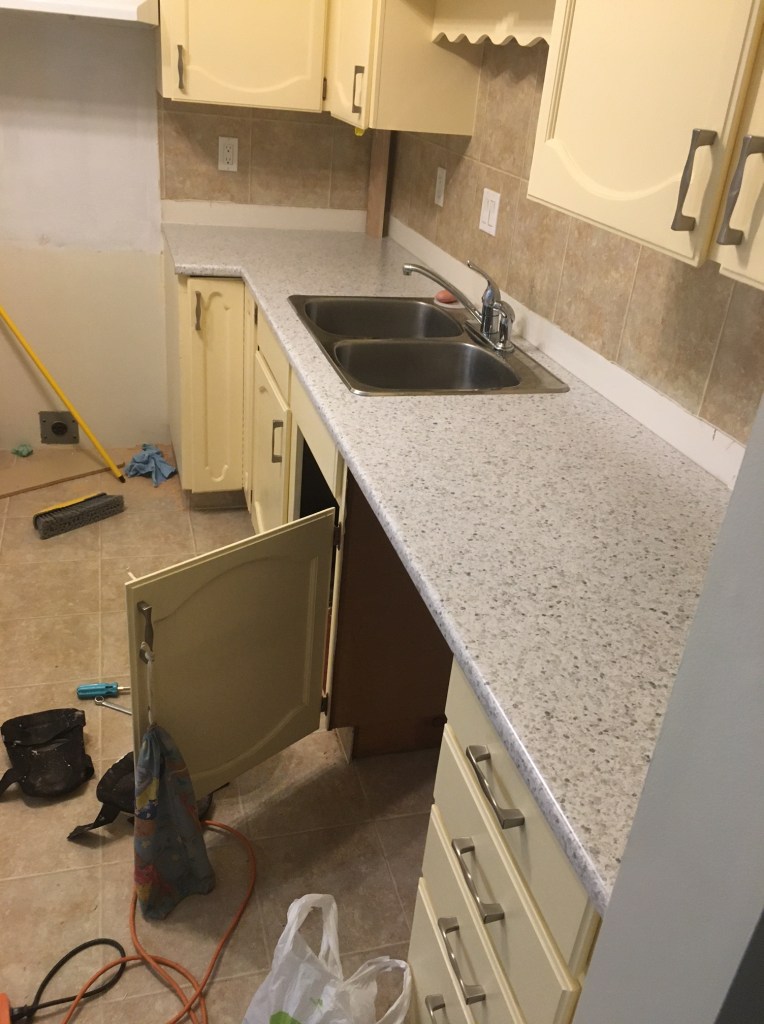
So we went ahead with the countertops. After choosing a colour, I ordered laminate blanks and cut the mitre with a router. I pre-glued the mitre as it would have been difficult to glue onsite.
mirror seam
After countertops were installed, it was time to choose tile for the backsplash. This was a long process with many trips to the tile stores and several samples.
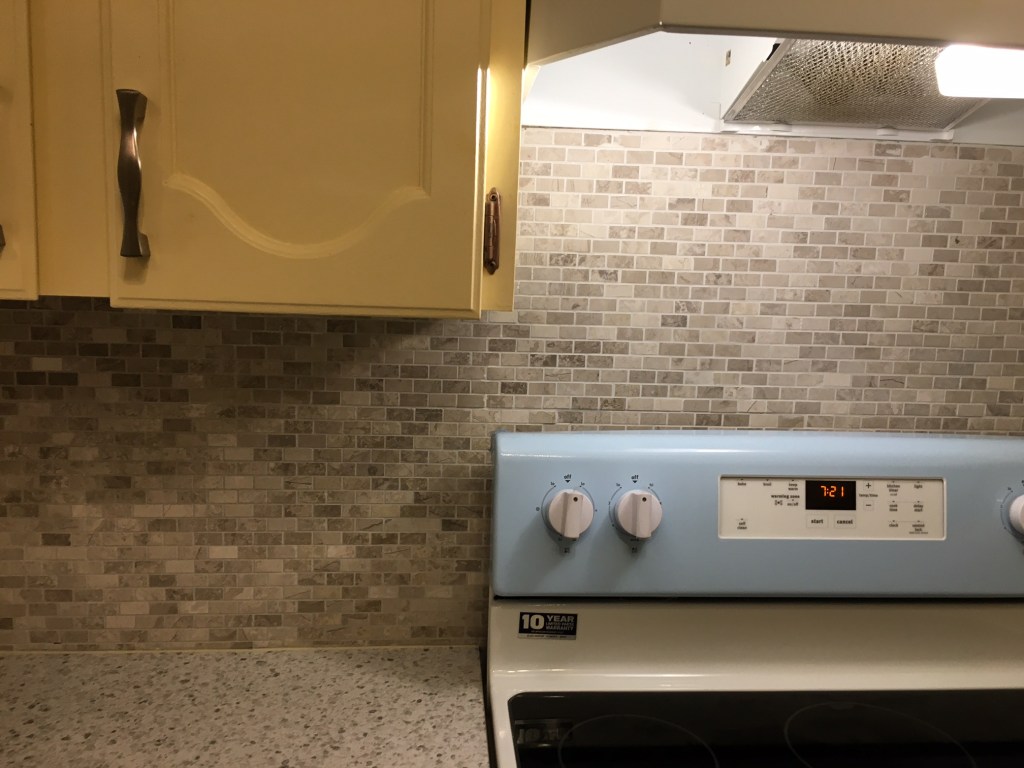
The old vinyl backsplash peeled off reasonably easily. After scraping off as much extra paper as I could, I coated the wall with a quick coat of Mapei Aquadefence to give my thinset something to bond to. Then it was time to install thousands of mini-tiles! I bought them at Lowe’s, and they come in 12×12 sheets.
before groutafter grout
I sealed the natural-stone tiles before grouting. Grouting took a long time, presumably because with such tiny tiles, there was more grout space than I expected.
See previous post for more about the 1-man play This Wonderful Life.
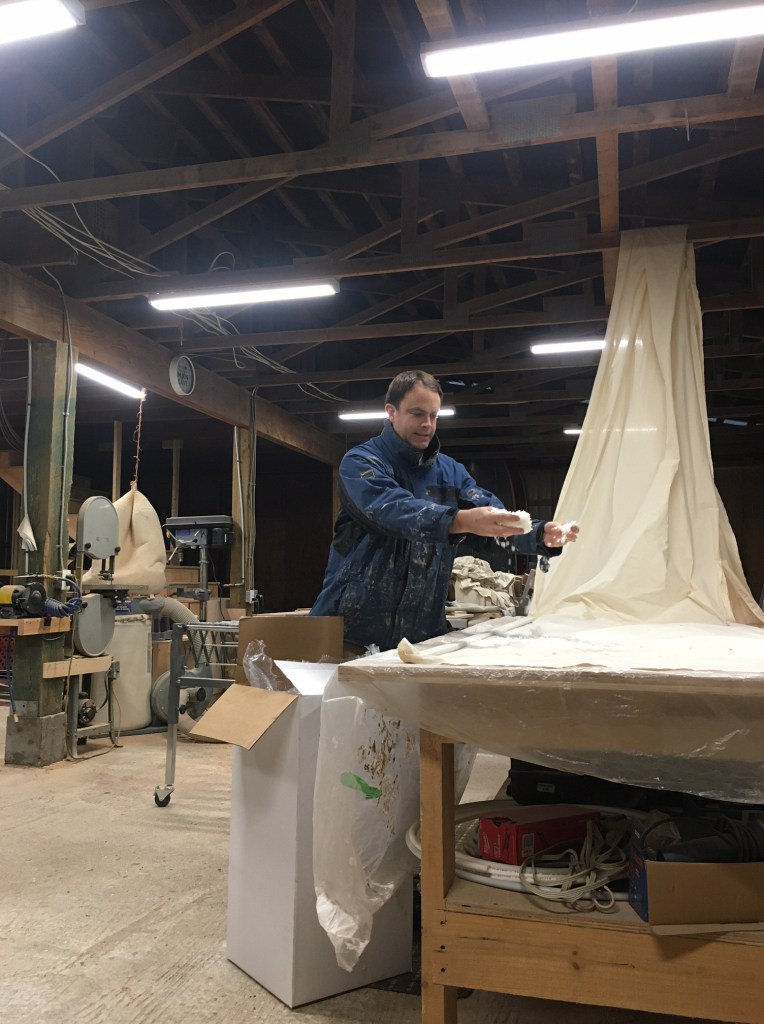
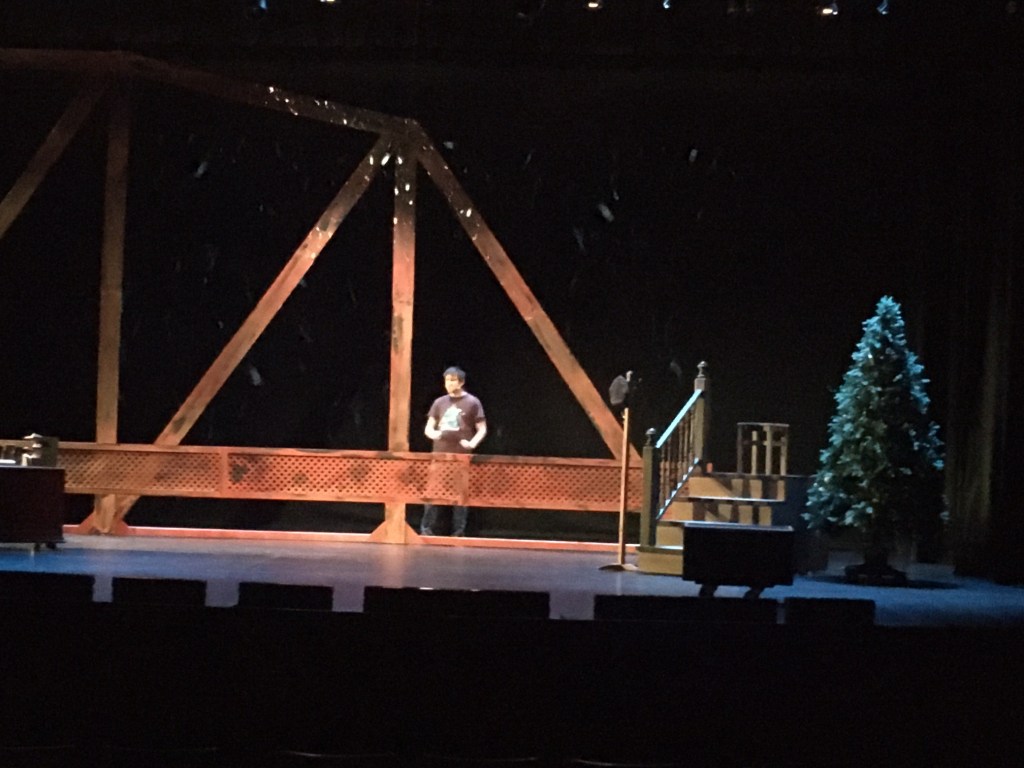
My director asked for a quiet snowfall during the scene where George is on the bridge, ready to live again. The venue (Abby Arts Centre) does have a soap flake snow machine, but it is noisy and wouldn’t work with the quietness of this scene. So I decided to make a snow cradle.
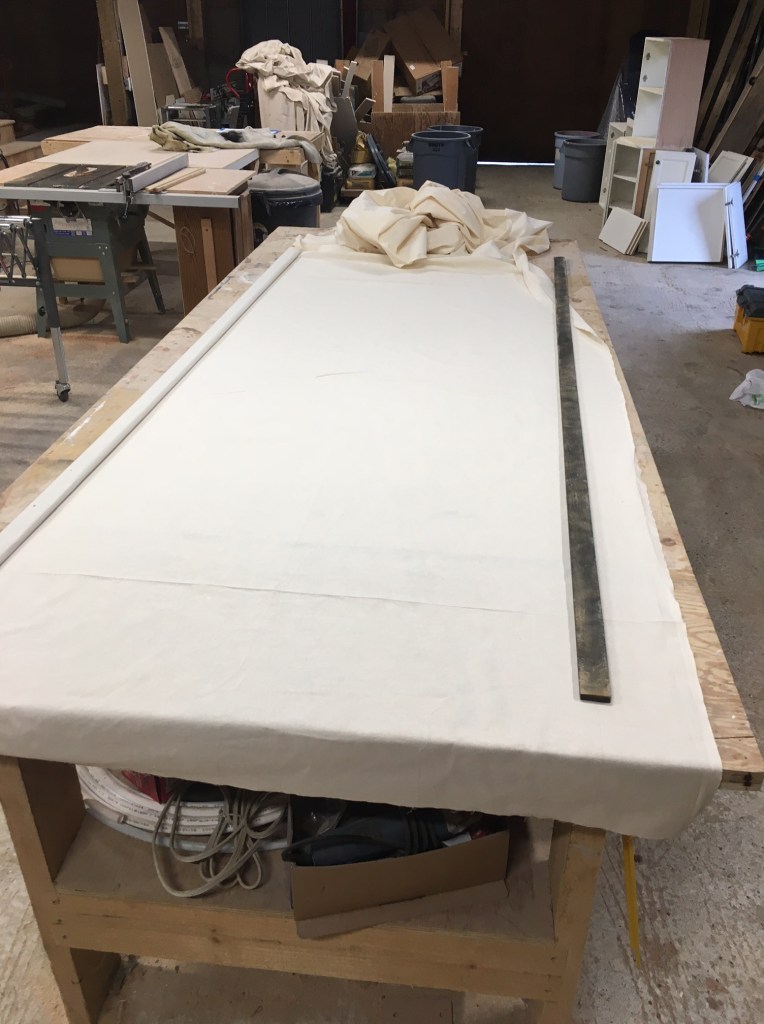
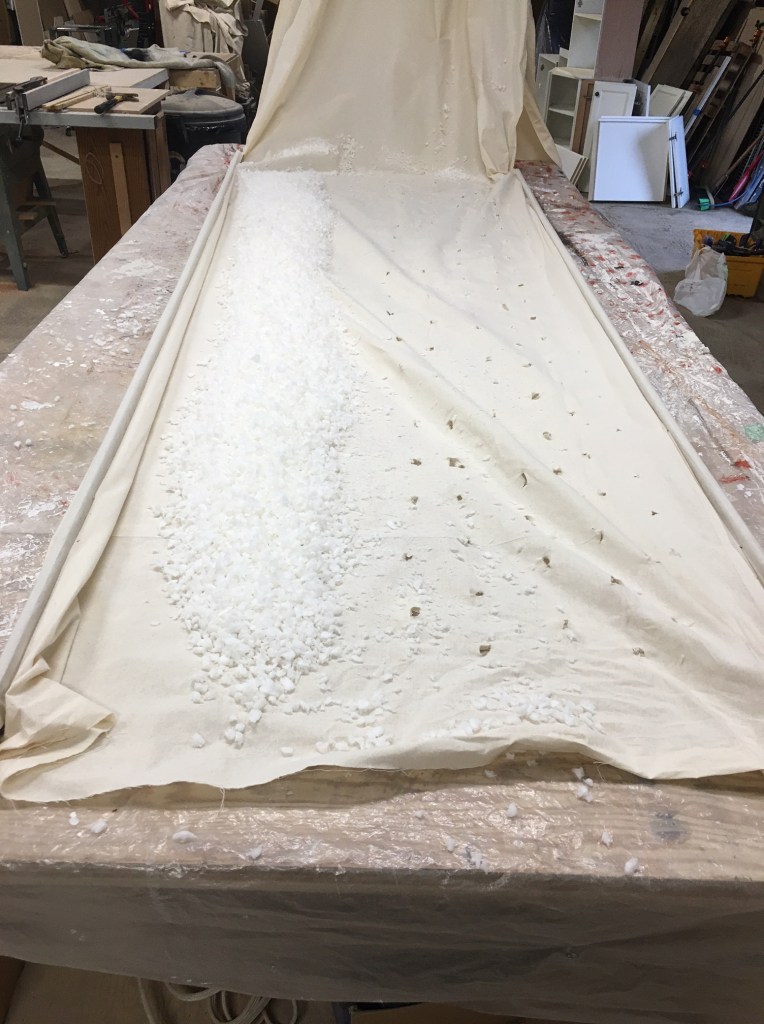
We did have the advantage of a fly system and a fly operator. Flies are basically long pipes on ropes that can be lowered and raised – and in this case, moved up and down to shake fake snow through the holes of a muslin tarp…
Adding stick support to edges
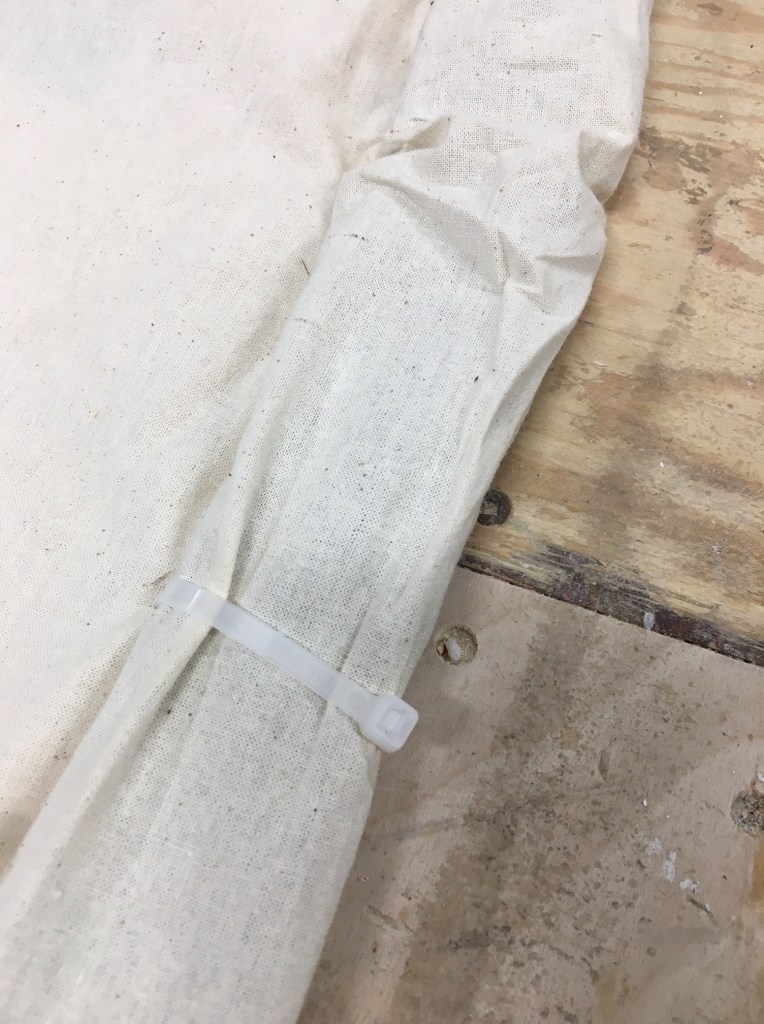
While researching snow cradles online, I found plenty of drawings (they all seemed to have the same source) but no practical photos. So things were a bit experimental. I bought 32 feet of 4-foot wide muslin. I then stapled thin sticks along the edges (sewing would be better but stapling is faster). This gives support for the edges so they don’t sag. Lastly I wrapped the sticks with zap straps every 4 feet so they could be attached to fly pipes easily later.
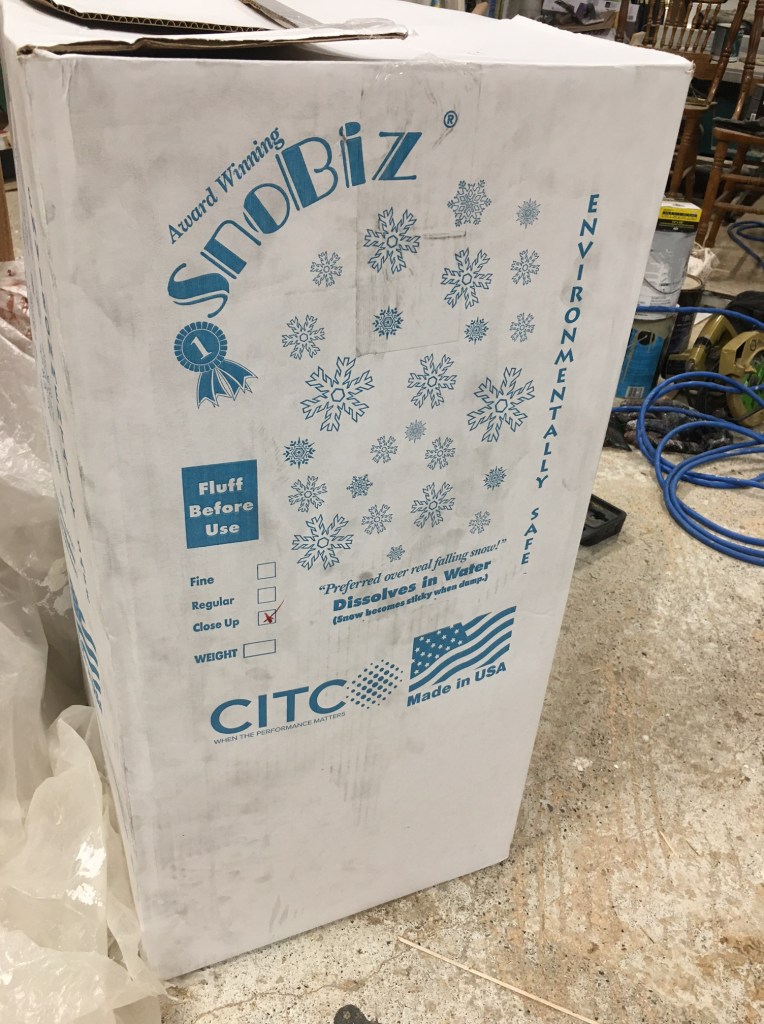
Next I added some fake snow. I bought some at HollyNorth, which is a cool store in Vancouver that caters to film companies. I wanted something light-plastic flakes would have been preferable-but settled on their biodegradable stuff.
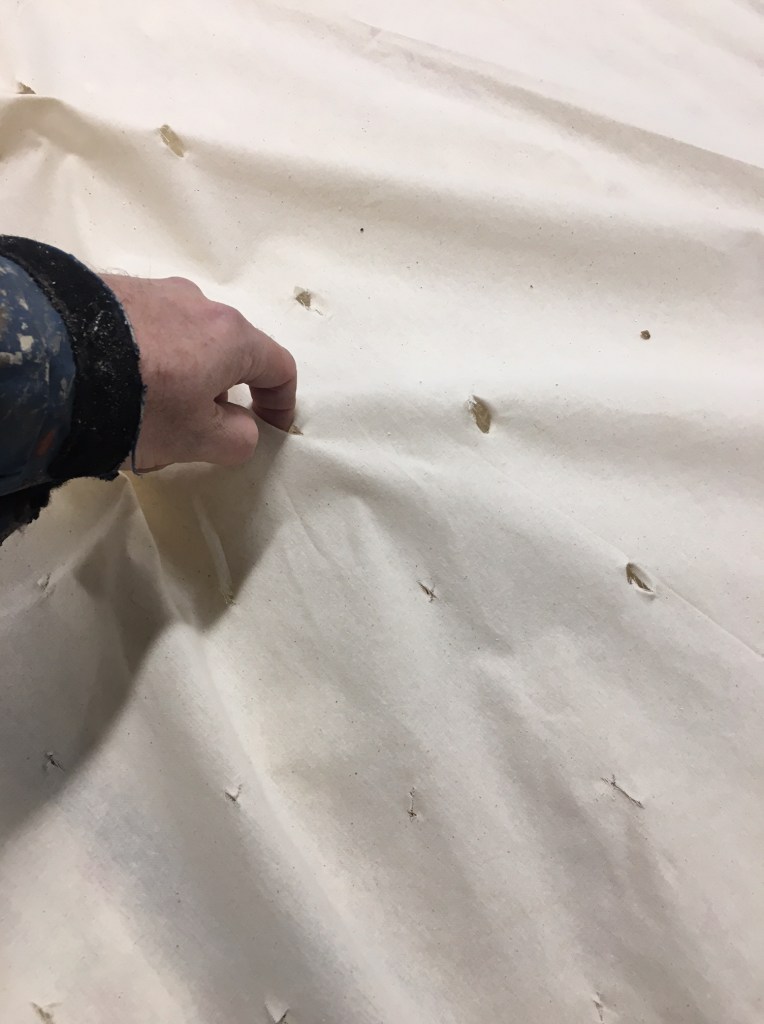
I tested it and realized my holes needed to be bigger. To make holes (only on one side!) I made an X with an exacto knife. It was easy to make the holes bigger by simply sticking my finger in them and pulling a little. Note that when we tried it at the venue, we had to make the holes even bigger!
Here is a link to my test video. It gives you an idea how it works. Note: In the venue, the fly operator doesn’t shake the edges – he moves 2 flies up and down in opposite directions to help the snow settle into the holes.
I designed the set for Gallery 7’s theatrical production of This Wonderful Life. It is a play based on the classic movie.
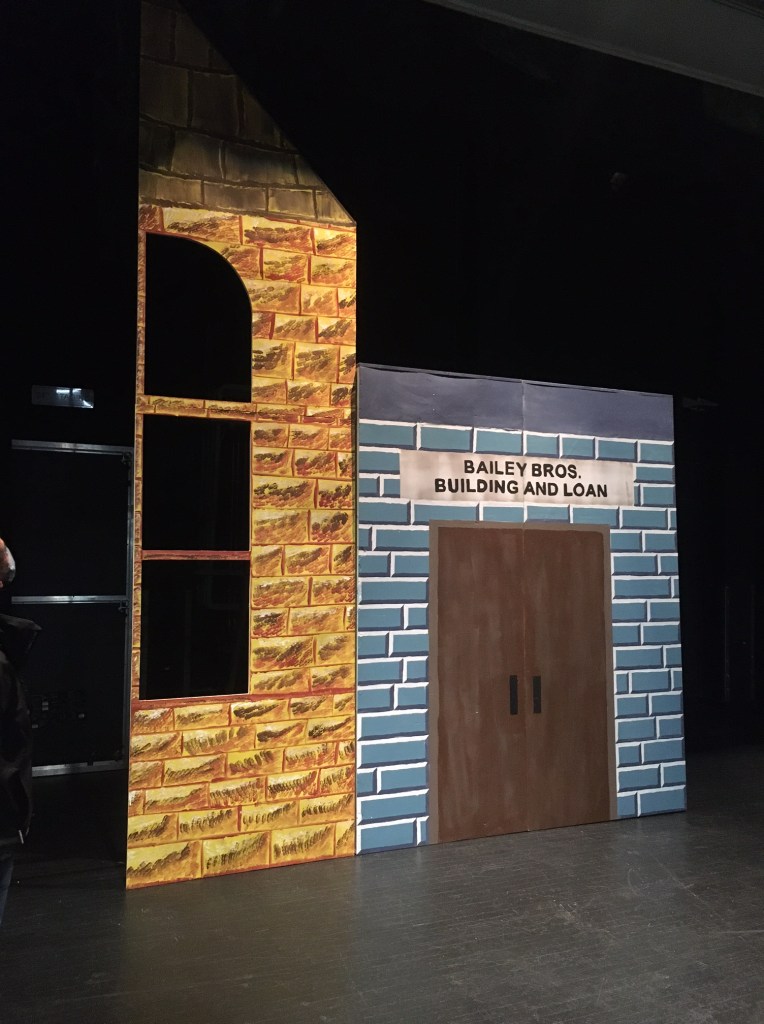
Much of my design was simply black and white background image projections. However to spice things up I added a town made of 2D flats at the back. And in the foreground was some furniture.
For additional spice I added a 16 foot high bridge and a snow cradle.
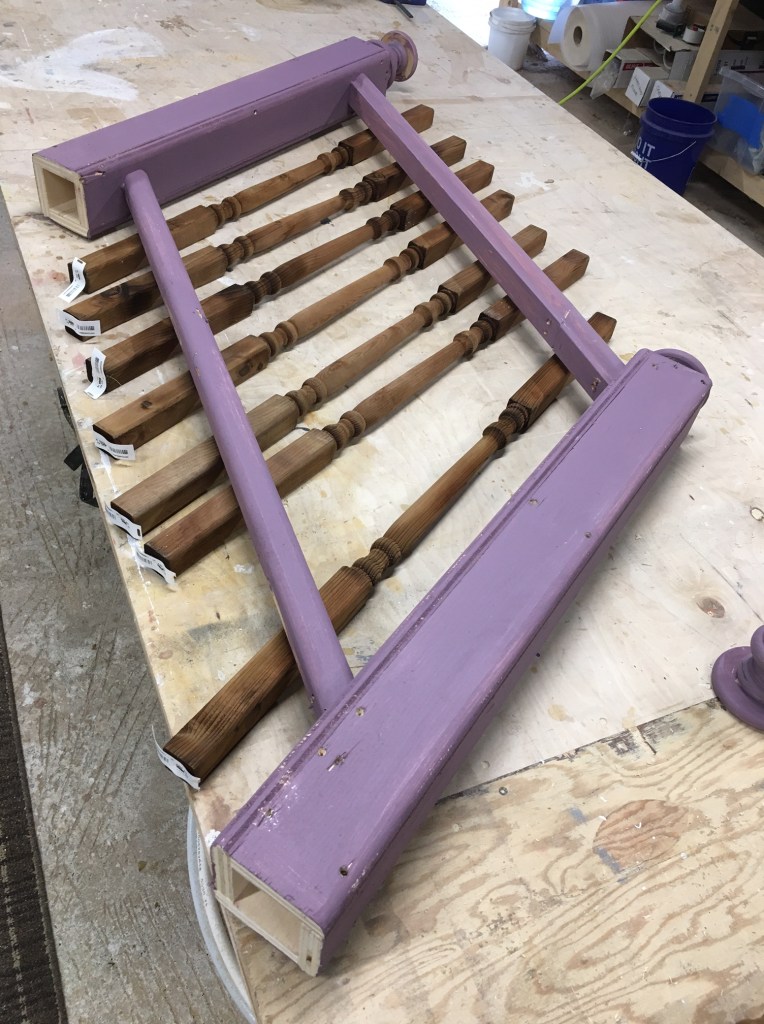
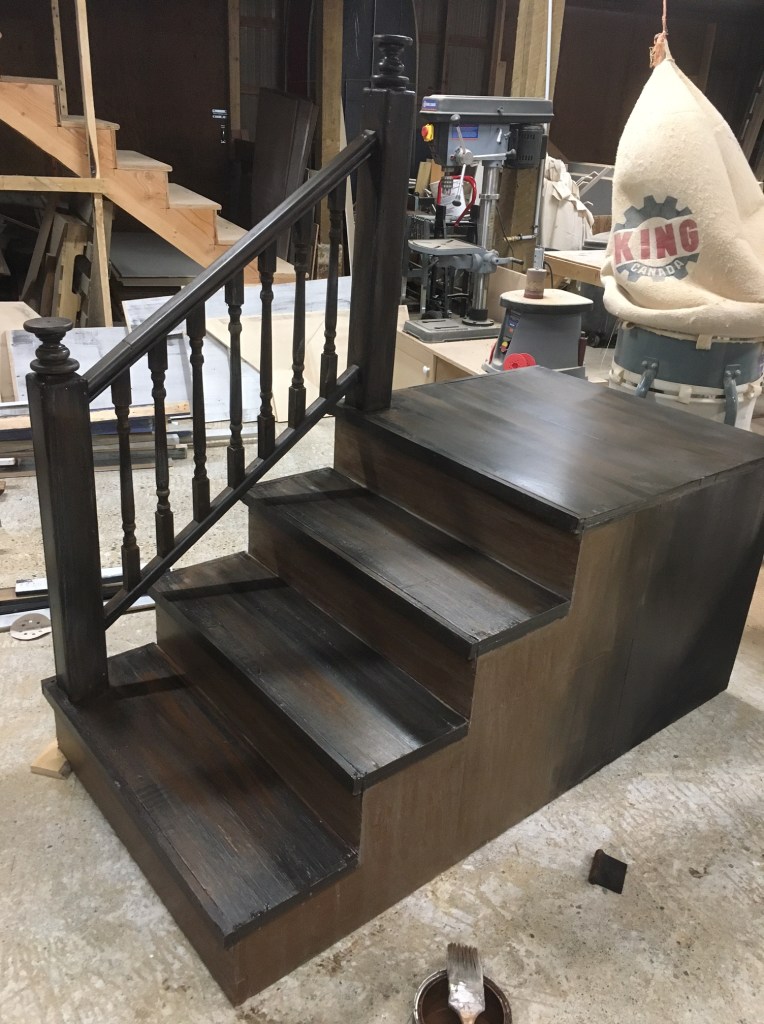
A scene from the movie that had to be in here is the loose stair post knob…
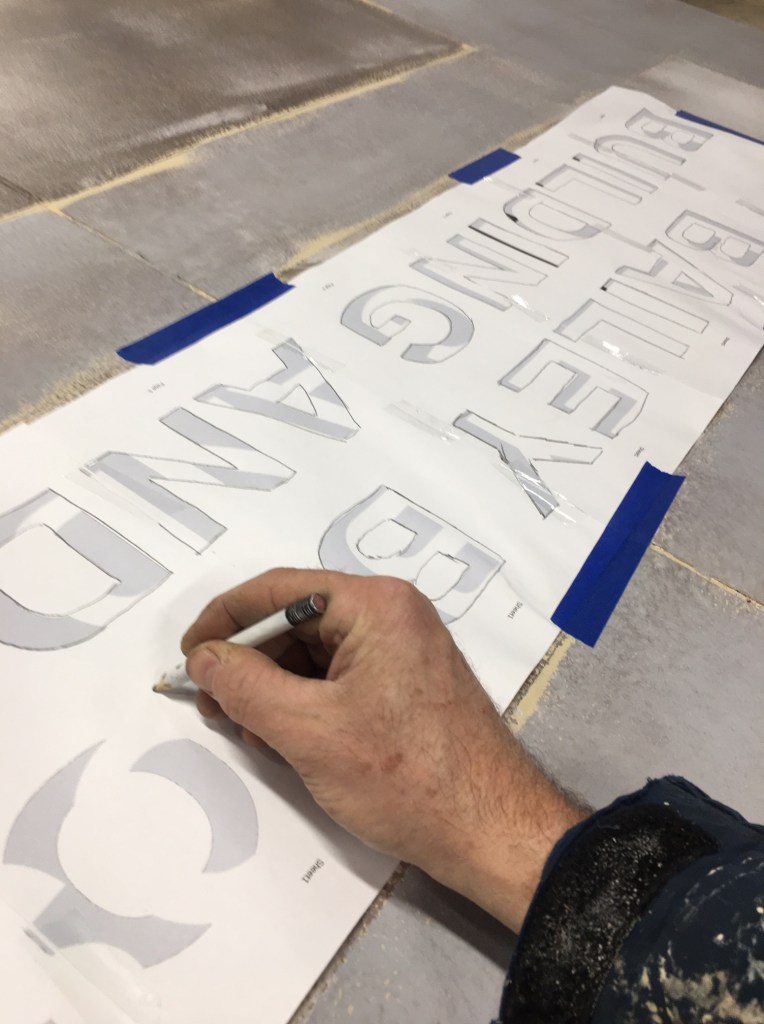
I had some help painting some of the flats. The theatre class at Abby Senior took the “Building and Loan” flat. And my boss / Production Manager painted the church.
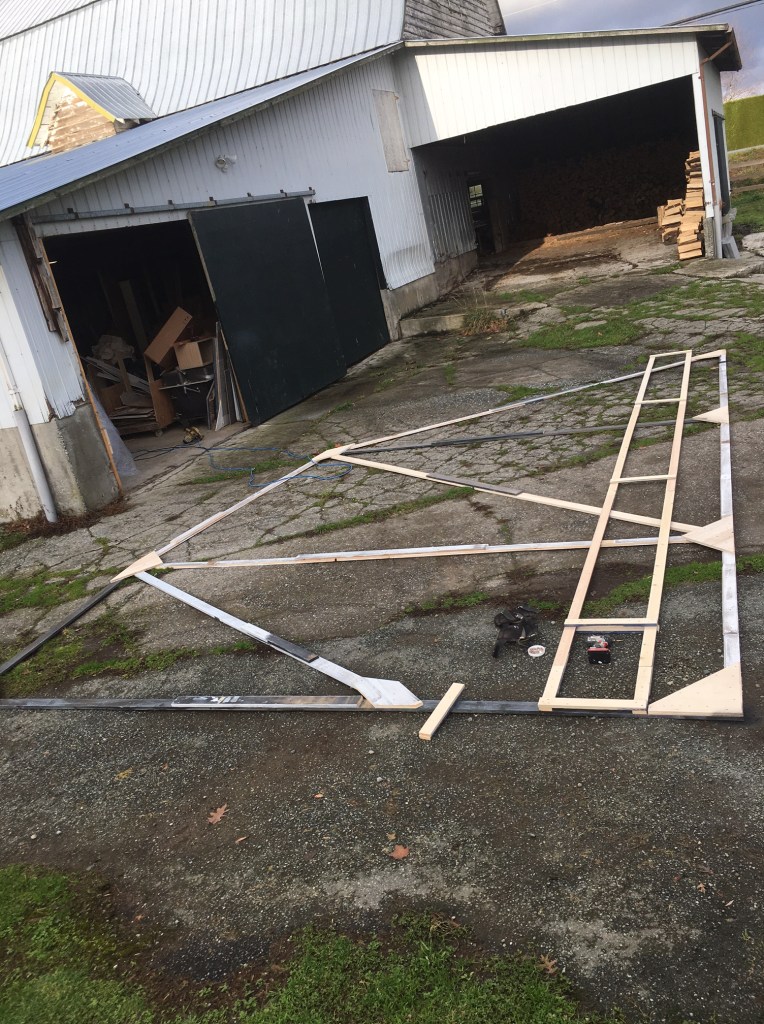
Building the bridge flypainting the 2D townHow to fit a 27 foot x 16 foot bridge in a truck???Tech week
It was a great challenge…more work than I expected but satisfying to see everything come together. The actor, Michael, is phenomenal as well.
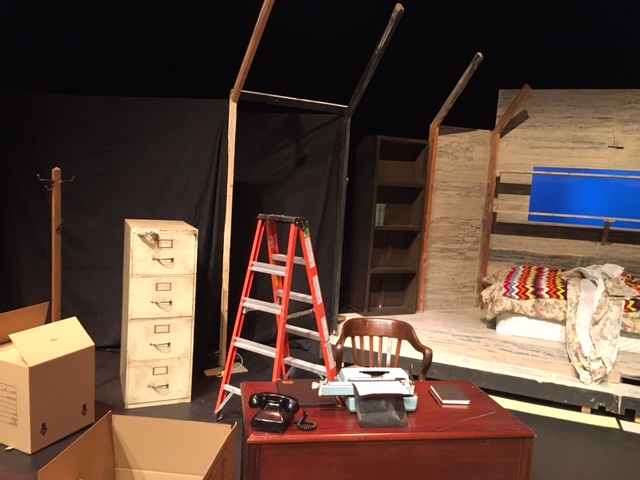
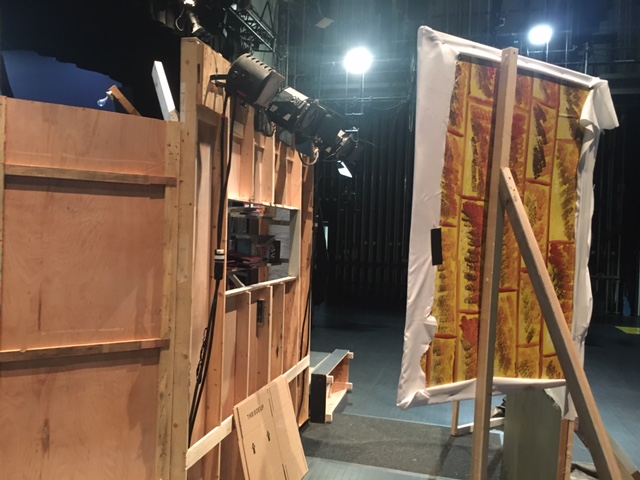
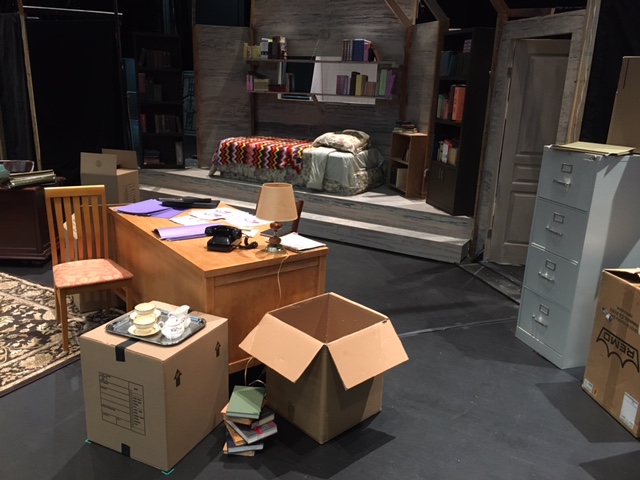
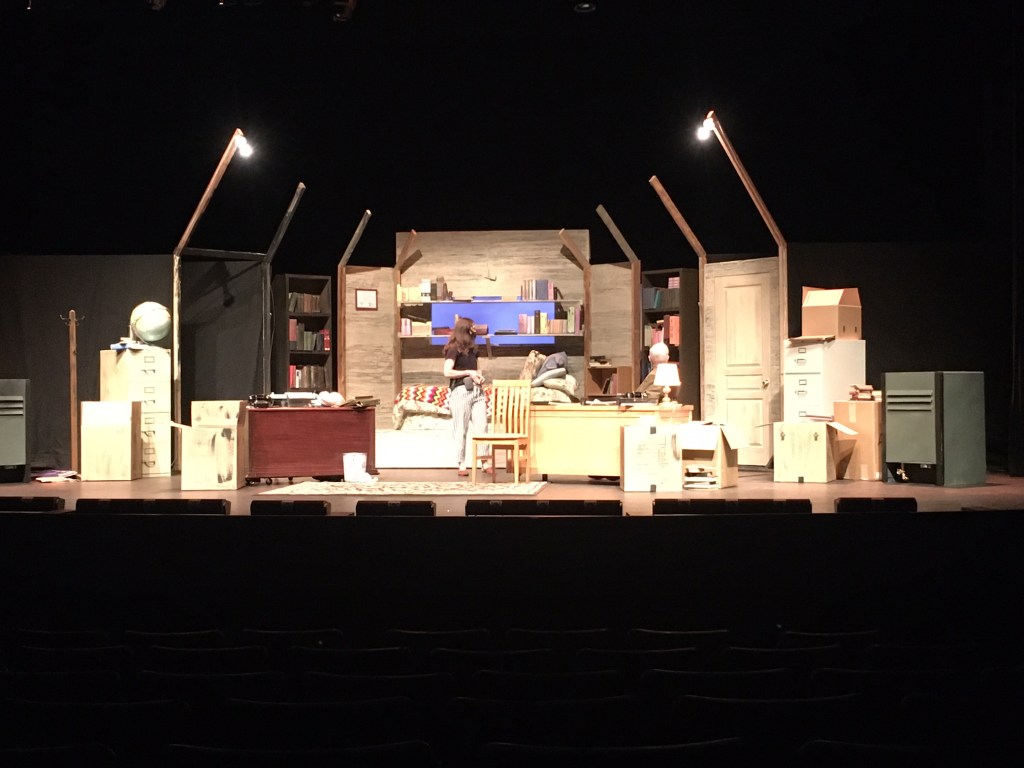
Gallery 7 recently completed their first in-person live theatre show in 18 months. It was called Last Train to Nibroc. Here are some pictures of set-building and load-in..
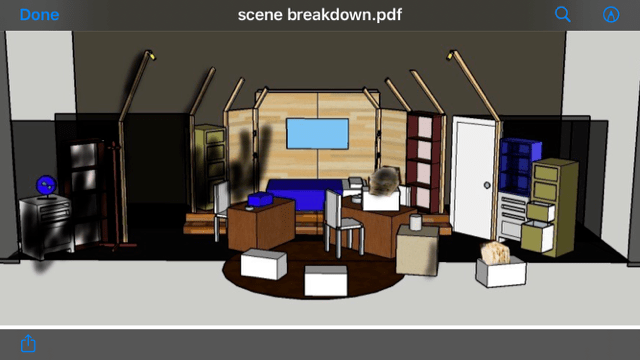
First, here is a portion of the model made by Set Designer Jeff Kiers. It is to-scale and the large set is based off of it.
Some challenges I had were related to scene changes. There were 3 scenes and no intermission. So set changes had to happen quickly (2 mintues or less). The pieces were large, odd-sized, and complicated. They were on casters, had brakes, flies, stairs, hinges, etc…The ASMs did a great job of working with all of it.
The floor had rotted through in a couple of places due to water issues. I estimated 60 hours time plus materials at cost.
Before Pictures:
Fortunately the bathroom is over a decent crawl space. This enabled me to have an idea what I was getting into beforehand, and also to fix up the floor fairly easily. Some of the floor joists had sunk due to rot, which in turn caused the tile floor to sink, which caused more issues and rot over time.
Gilles said the shower was done about 10 years ago. Based on the date on the cement board it could have been up to 15 years. As I had not waterproofed a shower before I had to do quite a bit of research.
Was the original shower waterproofed properly? Most things were done well. But from what I could tell, the waterproof membrane that was laid had a seam that wasn’t sealed. Water easily got underneath and spread all over.
area where membrane overlapped without a sealed seam
After I fixed the structural issues as well as I could, I put down a new floor wherever it needed:
Next I laid a sand mortar bed and let it dry for 3 days before waterproofing it with AquaDefence.
Then it was time to tile!
Finishing touches: New sheet vinyl floor, new toilet, new vinyl baseboards, lots of caulking, new windowsill, stainless steel bump plate, painted aluminum ramp, corner shelves, frosted window tint…